

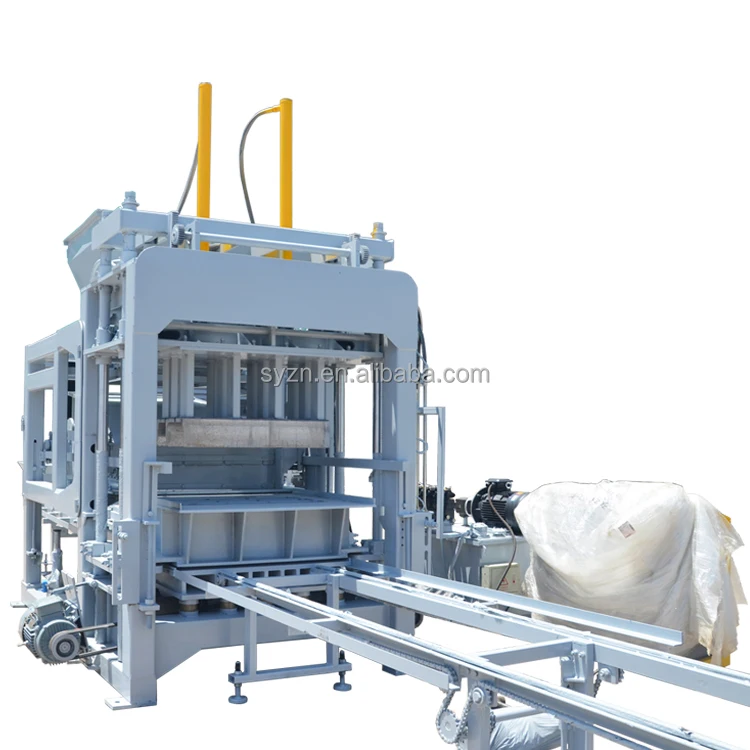
Description
Stocked QT7-15 units ship within days, not weeks — each machine is factory-tested against the buyer’s actual aggregate and block format before container loading, so dispatch timing holds firm even on tight project schedules.
Technical Specifications
| Parameter | Value |
|---|---|
| Model | QT7-15 |
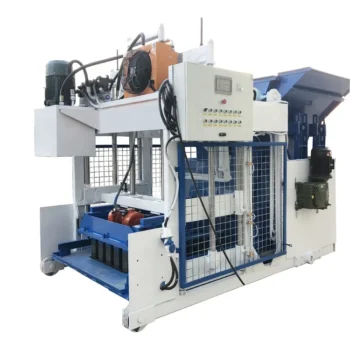
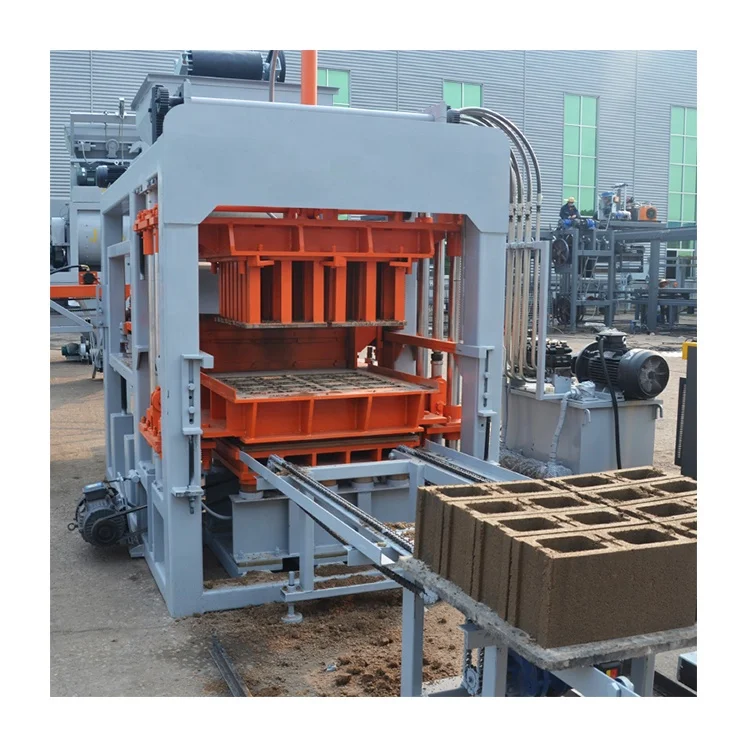
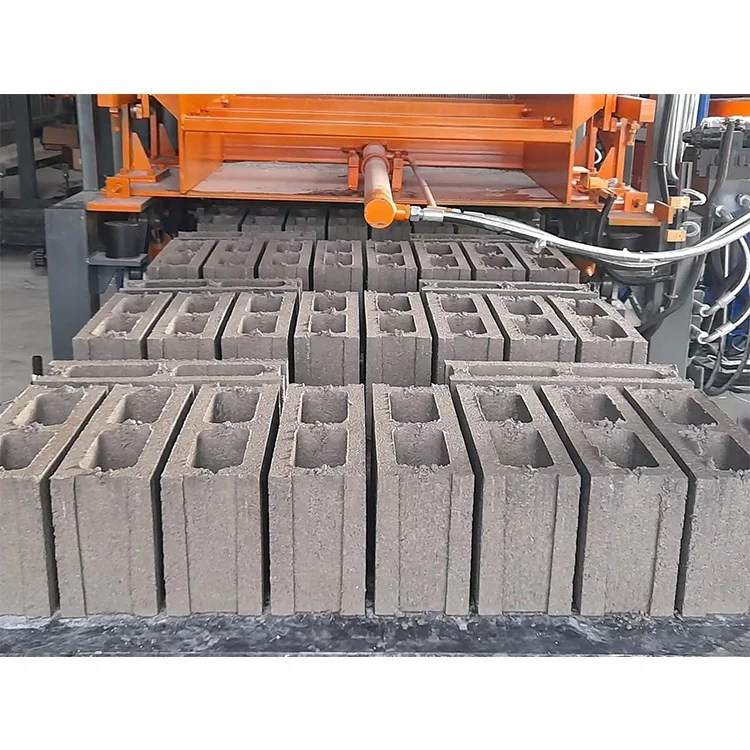
| Product Type | Automatic Hollow Block Making Machine |
| Pallet Size | 1150×700 mm |
| Molding Cycle | 15–20 s |
| Overall Power | 45 kW |
| Vibration Force | 100 kN |
| Vibration Frequency | 0–60 Hz |
| Vibration Form | Platform Vibration |
| Demolding Method | Hydraulic |
| Control System | PLC with touch screen interface |
| Total Mass | 8 T |
| Output (400×200×200 mm hollow block) | 1,260–1,680 pcs/hour; 10,080–13,440 pcs/8 hr |
| Output (400×150×200 mm hollow block) | 1,440–1,920 pcs/hour; 11,520–15,360 pcs/8 hr |
| Output (200×100×60 mm rectangular brick) | 3,888–4,860 pcs/hour; 31,104–38,880 pcs/8 hr |
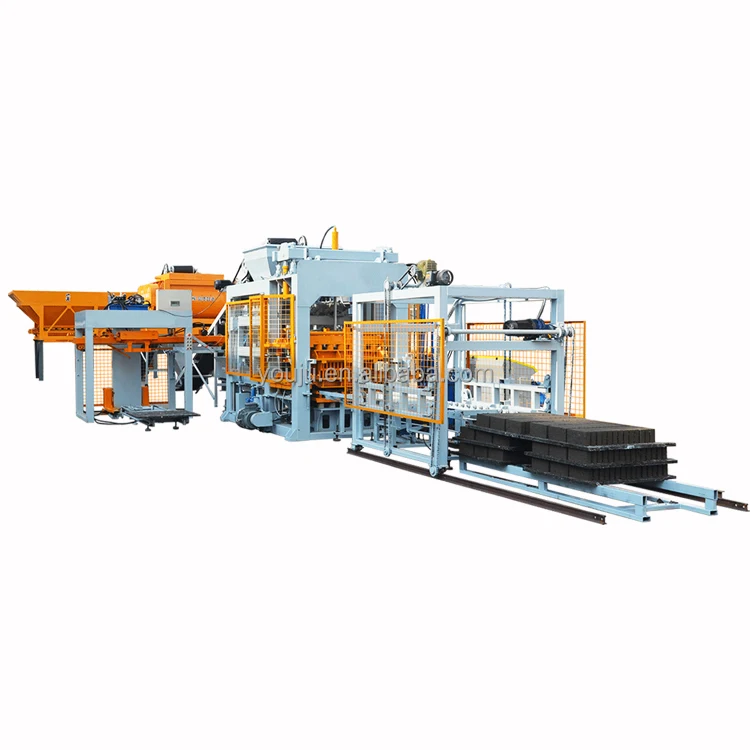
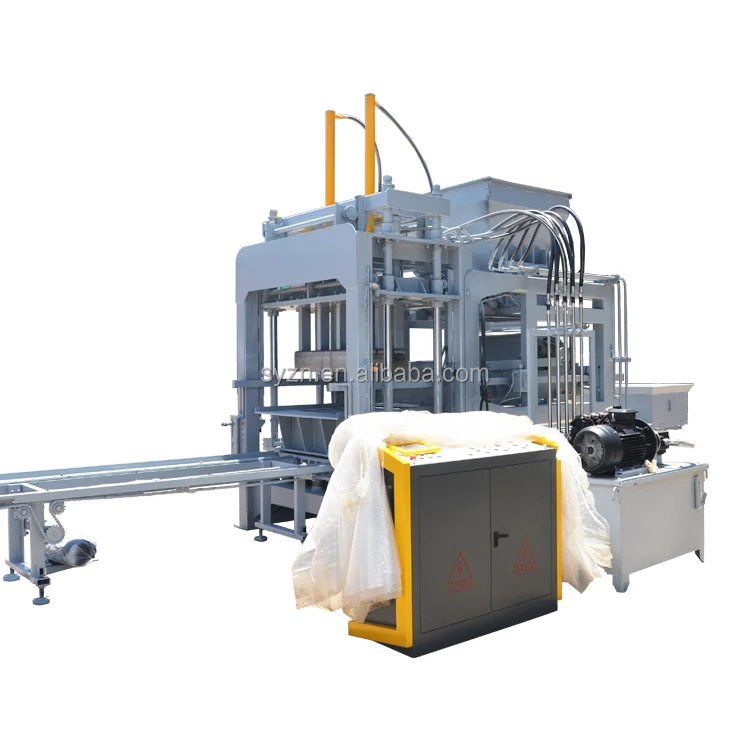
| Standard Components | Pallet feed machine, block making machine, storage hopper, conveyor, hydraulic unit, PLC control cabinet |
| Warranty | 1 year for the whole machine (excluding spare parts) |
| Voltage & Frequency | (basis not stated in source — confirm with manufacturer) |
| Overall Dimensions | (basis not stated in source — confirm with manufacturer) |
| Certification | CE |
Application Suitability
| Application | Material or Output |
|---|---|
| Hollow block production | Crushed stone, sand, cement, and water mixed to local aggregate gradation |
| Multicellular brick production | Lightweight aggregate blends with controlled moisture content |
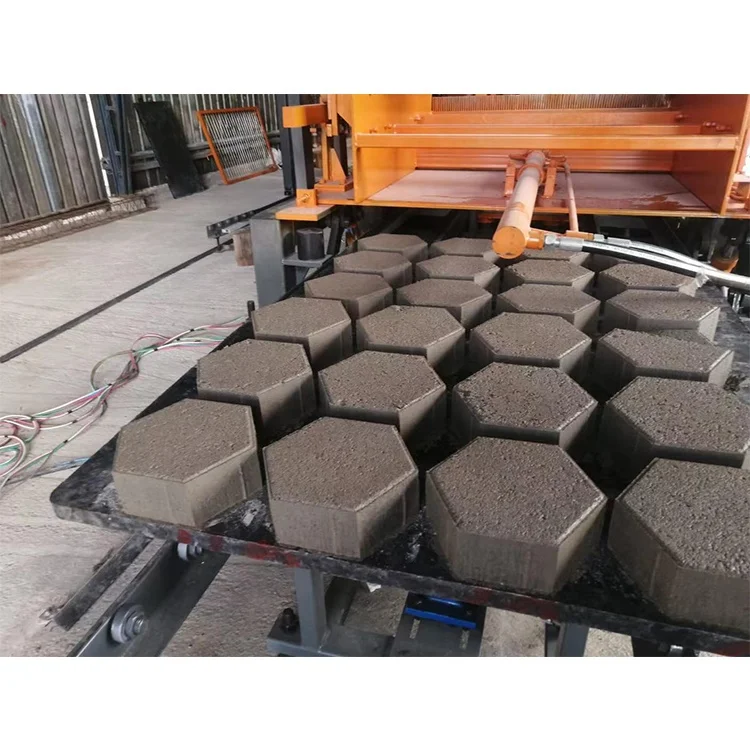
| Paving brick production | Dense aggregate mixes with fine sand and cement binder |
| Standard solid brick production | Quarry dust, stone powder, and cement at site-specific ratios |
| On-site contractor production | Local raw materials sourced within hauling distance of the building project |
What "12,600 Blocks per Shift" Leaves Out When You Buy Off a Brochure
Stated output assumes a specific block format, a controlled mix, and uninterrupted pallet flow — change any one of those and the real number drops.
I have watched QT7-15 block machine in stock orders arrive in West Africa only to discover the local stone powder carried high clay content. The vibration table compacted the mix, but the blocks cracked during curing because the clay absorbed water unevenly. The machine was fine; the assumption behind the quoted capacity was not. When buyers see a shift output figure without reading which block size it references, the disappointment lands squarely on the production floor [NEED_CITE: common causes of block machine underperformance in tropical climates]. That is why every stocked unit here is trial-run with the buyer’s own material sample before it is cleared for dispatch.
Stock Means Tested and Ready, Not Just Sitting in a Warehouse
A QT7-15 block machine in stock is only useful if it has already passed a factory test on a mix close to what you will run on-site. Our stocked units go through a full cycle test with standard aggregate before they are listed as available. When your order comes in, we pull the machine, swap to your specified mould, run a second test with your material data sheet, and adjust vibration frequency and hydraulic pressure to match. The machine does not leave the factory floor until blocks from that test pass a visual density check and dimensional tolerance review.
Container Loading and Arrival Timing You Can Plan Around
The QT7-15 block machine in stock is dismantled into main frame, hydraulic station, PLC cabinet, and pallet feeder for loading. Each component is bolted, not welded, so reassembly at your site uses standard tools. We provide a container loading plan showing exactly which piece goes where, so your port agent can arrange customs clearance before the vessel docks [NEED_CITE: standard container loading practices for heavy industrial machinery]. Estimated transit time is quoted against your destination port at the point of order, not after the bill of lading is issued.
Reading the Specs That Actually Matter on Site
The 100 kN vibration force works together with hydraulic pressure to compact the mix into the mould cavity. Higher vibration alone does not guarantee stronger blocks — if the hydraulic head pressure is too low, the top surface stays porous and the block crumbles at the edges. The 1150×700 mm pallet size dictates how many blocks sit on each board and, more importantly, whether your existing curing racks and forklifts can handle them without modification. The 15–20 second molding cycle is achievable on standard hollow block formats; switching to a thin paver or a tall kerbstone will extend that cycle because the fill depth and compaction path change. The PLC touch screen interface displays fault codes in your chosen language, which matters when the first hydraulic sensor trips at two in the morning and your operator needs to read the alarm without calling a translator.
When the Wrong Pallet Size Costs More Than the Machine Itself
I once visited a site in East Africa where the block machine ran fine but the curing yard was built for smaller pallets. Every board had to be re-stacked by hand onto their existing racks, wiping out the time saved by the automatic pallet feeder. The pallet size, the curing area layout, and the forklift fork width must all agree before the machine ships. When they do not, you pay twice — once for the handling equipment you ordered and again for the labour you hire to work around it [NEED_CITE: material handling mismatches in block production plants].
Why Buyers Come Back for a Second Line
Block machinery is our single focus, which means the press, mould, pallet, and handling equipment are specified as one system rather than sourced from separate vendors and bolted together in the field. We configure each QT7-15 against your actual mix design and target block format, not a catalogue default. Moulds are designed and machined for the formats your local market buys, and custom drawings are accepted. Automation level is selectable, so you can start with the standard pallet feed and add stacking later. Installation support includes operator training on your specific mould set and mix, not a generic walkthrough.
Documentation & Verification
- Factory test record showing cycle time on your specified block format before dispatch
- Machine specification sheet with confirmed voltage, frequency, and PLC language
- Mould drawing and format list covering every block type in your order
- Pallet specification matched to your curing rack and forklift dimensions
- Hydraulic and electrical schematic for on-site troubleshooting
- Packing photographs documenting component condition before container sealing
Installation, Commissioning & Support
- Foundation plan sized to the 8 T total mass and vibration load of the QT7-15
- Dedicated power circuit rated for the 45 kW overall draw with correct voltage and frequency
- Bolted dismantling design allows reassembly with standard hand tools on arrival
- First-run commissioning includes vibration frequency tuning to your local aggregate
- Operator training covers PLC touch screen fault diagnosis and mould change procedure
- Wear parts and mould inventory list provided with recommended reorder intervals
What We Need to Confirm Your Dispatch Date
Send us your target block format and daily output requirement, your local aggregate type and source, and the voltage and frequency at your site. If you already have curing racks or a forklift, share the pallet dimensions they accept so we can confirm the 1150×700 mm pallet is compatible. The sooner we have these details, the faster we can pull a stocked QT7-15, run your material test, and give you a firm loading date.
Frequently Asked Questions
Q: Is the QT7-15 currently in stock or do I need to wait for production?
A: Stocked QT7-15 units are available and listed by serial number. Once your material test passes and voltage is confirmed, dispatch typically follows within days rather than weeks. If no unit matches your exact mould requirement, a short production run is scheduled and a firm dispatch date is provided upfront.
Q: How is the machine packed for container shipment?
A: The QT7-15 is dismantled into main frame, hydraulic station, PLC cabinet, and pallet feeder. Each component is secured with bolted connections for standard container loading. A detailed loading plan is shared before shipment so your port agent can prepare customs paperwork in advance.
Q: What is the estimated arrival time from order to destination port?
A: Transit time depends on your destination port and current shipping schedules. We quote an estimated arrival date at the point of order confirmation, based on the confirmed dispatch date and known vessel routes, so you can plan site preparation accordingly.
Q: Can I review actual stock photos and test records before purchasing?
A: Yes. We provide photographs of the specific stocked unit along with its factory test record showing cycle time and block output on a standard format. If your material test has already been completed, those results are included in the same package before you commit.
Q: What voltage and PLC language options are available on stocked units?
A: Stocked QT7-15 units can be configured to your site voltage and frequency before dispatch. The PLC touch screen display language is set to your preference during the pre-shipment test, so the control interface is ready to read the moment the machine is powered on at your site.