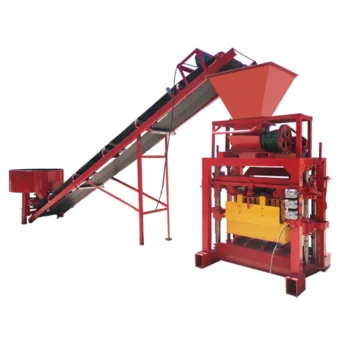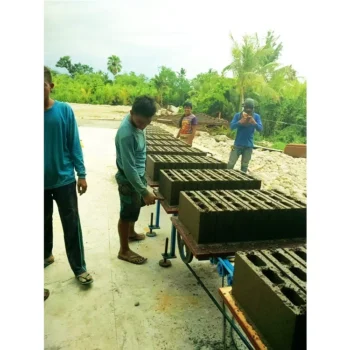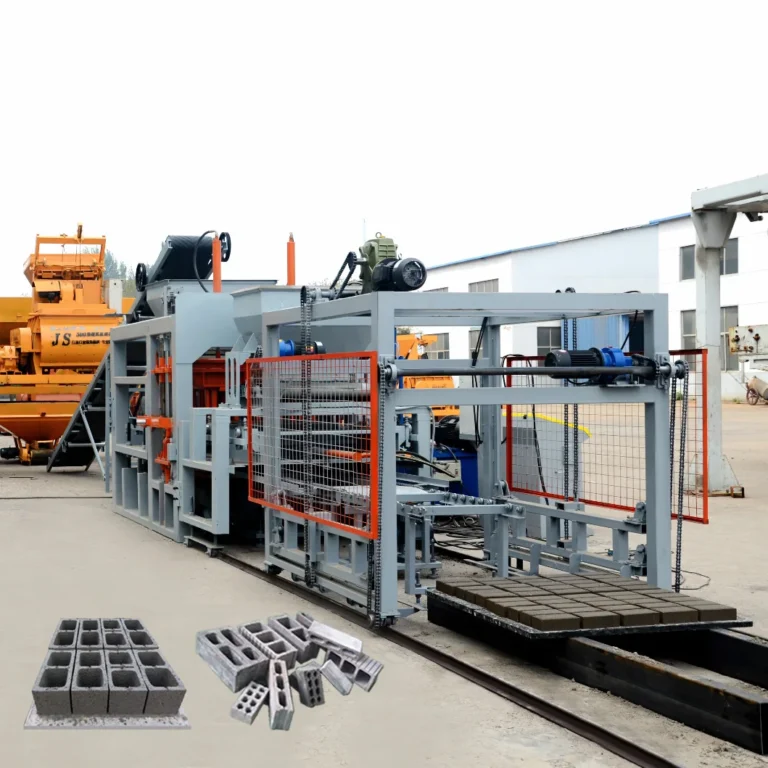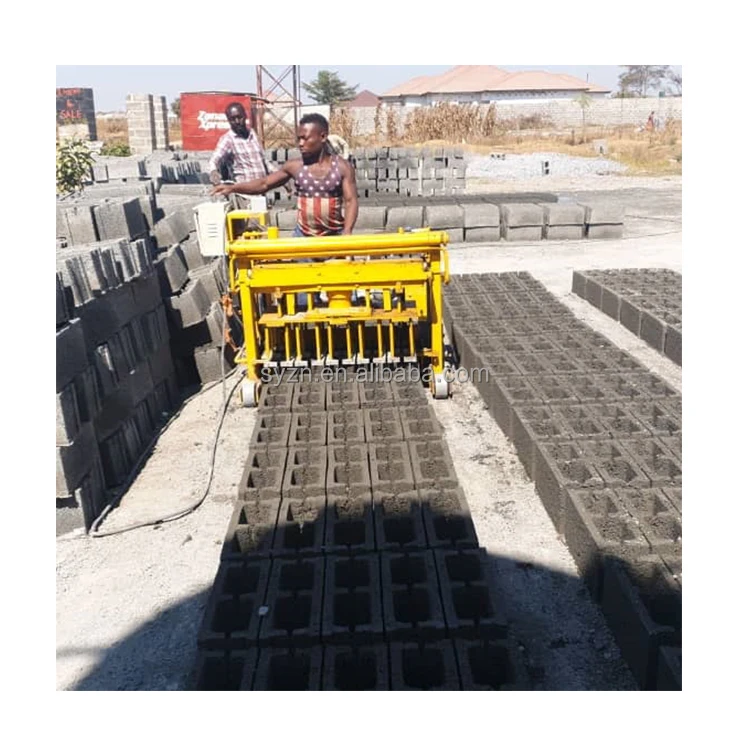

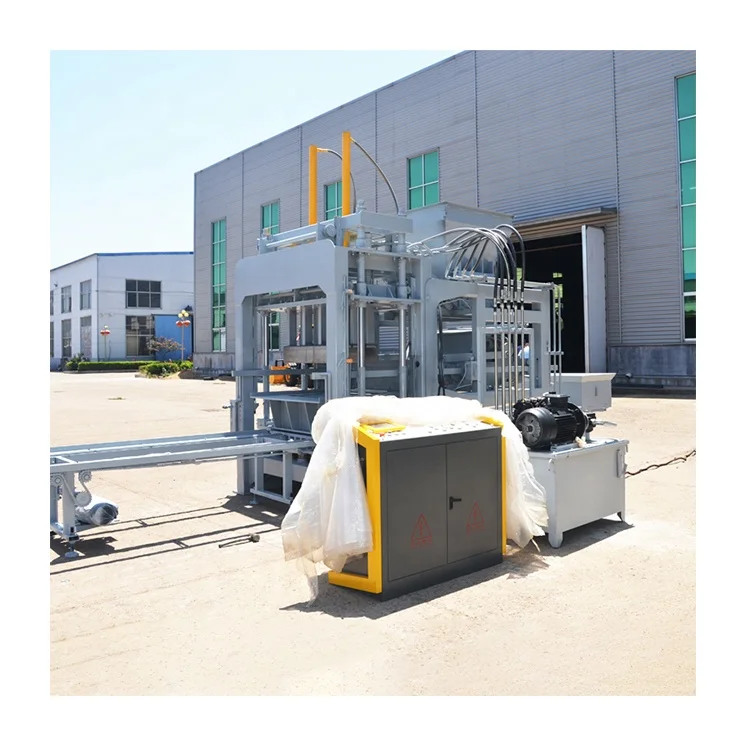


Description
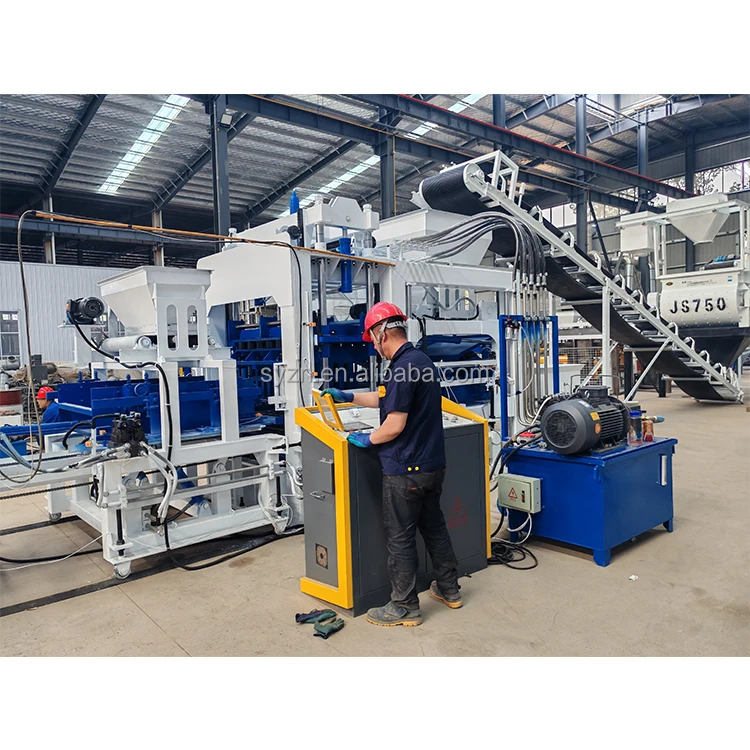
Fast Dispatch From Tested Stock — QT7-15 block machines built, tested, and staged for container loading before your inquiry arrives, so dispatch counts in working days, not production weeks.
Technical Specifications
| Parameter | Value |
|---|---|
| Model | QT7-15 |
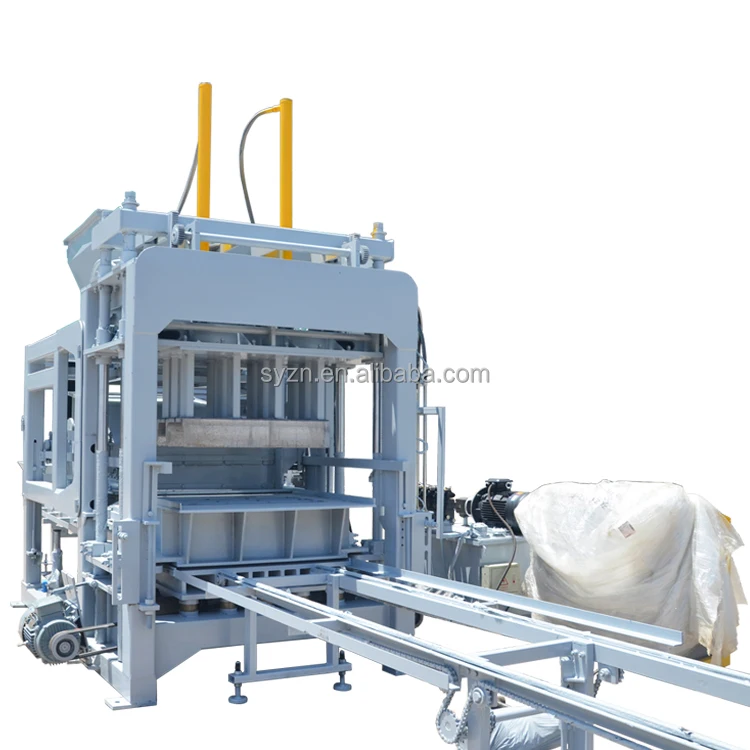
| Product Type | Hydraulic Concrete Block Making Machine |
| Pallet Size | 1150×700 mm |
| Molding Cycle | 15–20 s (basis not stated in source — confirm block format / material / thickness) |
| Overall Power | 45 kW |
| Vibration Force | 100 kN |
| Vibration Frequency | 0–60 Hz |
| Vibration Form | Platform Vibration |
| Demolding Method | Hydraulic |
| Control System | PLC with touch screen interface |
| Total Mass | 8 T |
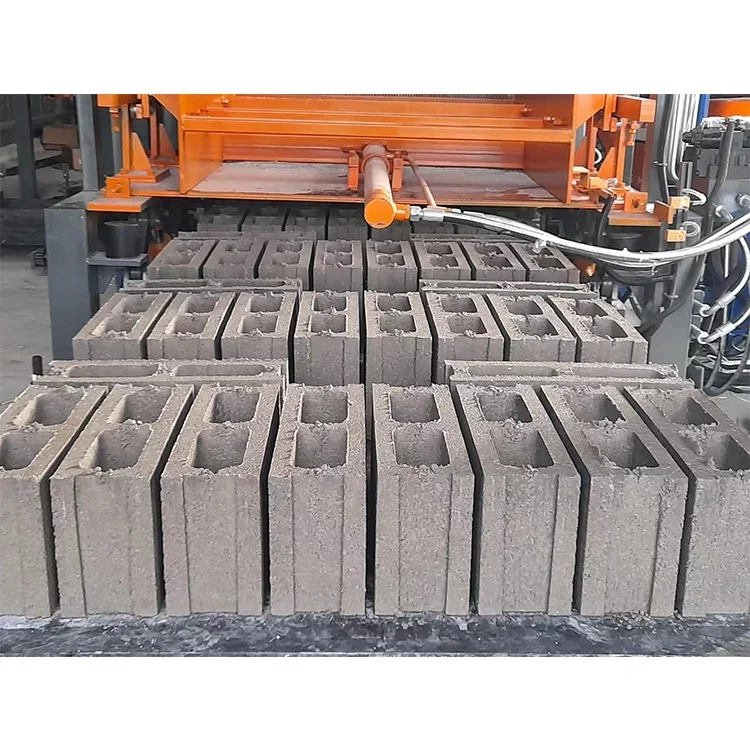
| Output Capacity — Hollow Block 400×200×200 mm | 1260–1680 pcs/hour, 10080–13440 pcs/8hr |
| Output Capacity — Hollow Block 400×150×200 mm | 1440–1920 pcs/hour, 11520–15360 pcs/8hr |
| Output Capacity — Rectangular Brick 200×100×60 mm | 3888–4860 pcs/hour, 31104–38880 pcs/8hr |
| Key Features | Remote diagnostics supported, simple mould replacement, factory assembled |
Application Suitability
| Application | Material or Output |
|---|---|
| Hollow block production for housing projects | Crushed stone, river sand, cement blends on 400×200×200 mm and 400×150×200 mm formats |
| Paving brick manufacturing for municipal contracts | Aggregate and cement mixes producing 200×100×60 mm rectangular pavers |
| On-site block production for development contractors | Multi-cellular bricks and standard blocks using locally sourced sand and gravel |
| Block plant inventory replenishment for distributors | Hollow blocks, solid blocks, and kerbstones with quick mould changeover |
Why "In Stock" Means Different Things to Different Suppliers
A stocked QT7-15 block machine in stock fast delivery should mean the unit is built, factory-tested, and sitting on the floor — not scheduled for next month’s production run.
I have watched project timelines collapse because a supplier called a machine "available" when it was really just a bill of materials waiting to be ordered. The contractor had already committed to a construction phase start date, the curing area was prepared, pallets were stacked in the yard, and then the machine arrived six weeks late. By that point the crew had been reassigned and the wet season had started. [NEED_CITE: typical shipping delays caused by supplier production backlogs] When you are working to a fixed deadline, the difference between a machine that ships this week and one that ships after a production slot is the difference between hitting your milestone and explaining delays to a project owner.
What Dispatch Lead Time Actually Covers
When we confirm a QT7-15 block machine in stock fast delivery, the clock starts from payment receipt and covers container gate-out — not just the day the machine leaves the factory floor. The unit has already passed its factory test cycle, the hydraulic pressure and vibration force have been verified against specification, and the PLC touch screen has been checked for the correct control language. Dispatch preparation then covers dismantling to the agreed shipping configuration, securing hydraulic lines and electrical cabinets for transit, and completing the packing photographs and customs documentation. Buyers working to a project deadline need this timeline stated in working days with clear milestones, not vague estimates.
Container Loading Without Surprises
The QT7-15 block machine in stock fast delivery ships within standard container logistics because the total mass of 8 T and the 1150×700 mm pallet size fit within a 40HQ container loading plan without requiring a flat-rack or special heavy-lift arrangement. [NEED_CITE: standard container loading practices for industrial block machinery] The machine is dismantled at predefined points — the hydraulic unit, pallet feed machine, and storage hopper are separated and secured — so that reassembly on site follows a clear sequence. Moulds and pallets are packed alongside the main press to arrive in the same container, eliminating split shipments that delay commissioning.
Reading the Specs That Matter at Arrival
The 45 kW overall power rating means the QT7-15 connects to standard three-phase industrial supply without requiring a custom transformer, which removes one of the most common commissioning delays at destination ports. The PLC control system with touch screen interface supports remote diagnostics, so troubleshooting can begin before the installation engineer arrives on site — a significant advantage when port-to-port transit has already consumed several weeks. Platform vibration at up to 100 kN force and 0–60 Hz frequency determines the compaction density of every block format this machine produces, and these values are locked in at the factory rather than adjusted through external add-ons. The hydraulic demolding method provides consistent block release across formats, reducing damage during extraction and keeping the cycle time within the stated 15–20 second range for standard configurations.
When "Arrives Next Month" Becomes "Sits in Customs"
A machine can leave the factory on schedule and still arrive late if the customs documentation package is incomplete or the voltage and frequency confirmation was never formalized before production. [NEED_CITE: common customs clearance delays for industrial machinery imports] I have seen block machines sit at destination ports because the CE declaration was missing from the shipping documents, or the electrical schematic did not match the actual wiring configuration inside the cabinet. The result is demurrage charges that accumulate daily while the project site waits idle. A QT7-15 block machine in stock fast delivery only holds its timeline if the paperwork — packing list, commercial invoice, CE declaration, hydraulic and electrical schematics — is prepared and verified before the container is sealed.
Why Stock Availability Here Is Different
Single-focus manufacturing means every QT7-15 on the floor was built as a block machine, not assembled from a general machinery catalog alongside unrelated equipment lines. Factory testing covers the full molding cycle with the actual hydraulic pressure and vibration settings that will ship to the buyer, not a shortened bench test. Moulds and pallets are specified and packed as one matched system with the press, so the buyer does not discover after arrival that the pallet size does not fit their existing curing racks. Dispatch lead time is quoted from the container gate-out date, not the production start date, giving project-deadline buyers a number they can actually plan around. Documentation — from the factory test record to the customs package — travels with the shipment rather than following weeks later by email.
Documentation & Verification
- Factory test record confirming vibration force and hydraulic pressure before dispatch
- Voltage and control language confirmation sheet matched to destination country
- Machine specification sheet with pallet size, cycle time, and power rating detailed
- Hydraulic and electrical schematic for on-site commissioning reference
- CE declaration included in customs documentation package
- Packing photographs documenting dismantling configuration and securing method
Installation, Commissioning & Support
- Foundation pad must accommodate the 1150×700 mm pallet footprint plus feeding and stacking clearance
- Dedicated 45 kW three-phase circuit required, with voltage and frequency confirmed before dispatch
- Machine ships factory assembled at defined dismantling points for standard container loading
- PLC touch screen language and remote diagnostics activated during on-site commissioning
- Mould change procedure covered during operator training, using the specific formats ordered
- Hydraulic wear parts list and replacement schedule provided with the operation manual
What We Need to Confirm Your Dispatch Date
To lock in a realistic arrival estimate, share your destination port, preferred trade terms, and site readiness date so we can align the dispatch schedule with your construction phase. Confirm the local voltage and frequency, the PLC display language your operators need, and which block formats will run first so the correct moulds and pallets are packed in the same container.
Frequently Asked Questions
Q: Is the QT7-15 currently in stock or built-to-order, and what is the exact dispatch lead time?
A: Stocked units are built and factory-tested, with dispatch lead time counted in working days from payment receipt to container gate-out. Built-to-order units follow a separate production schedule. We confirm which category your unit falls into at the inquiry stage so you can plan your site readiness accordingly.
Q: How is the machine dismantled and packed for container shipment?
A: The QT7-15 is dismantled at predefined points — hydraulic unit, pallet feed machine, and storage hopper — and loaded into a 40HQ container. Total mass of 8 T fits standard container logistics without flat-rack requirements. Moulds and pallets ship in the same container.
Q: What customs and shipping documents are provided at dispatch?
A: The documentation package includes the commercial invoice, packing list, CE declaration, hydraulic and electrical schematics, factory test record, and operation manual. All documents are prepared in English and matched to the destination country’s import requirements before the container is sealed.
Q: Can I reserve a stocked unit now and schedule dispatch to match my site readiness?
A: Yes. A reservation secures a specific QT7-15 unit from current stock, and dispatch can be scheduled to align with your foundation completion date. The unit remains factory-tested and staged until your confirmed shipping window.
Q: What is the estimated port-to-port transit time to my destination?
A: Transit time depends on the destination port and shipping route. We provide a port-to-port estimate based on your confirmed discharge port at the quotation stage, along with the trade terms included so you can calculate your total landed timeline.