

Description
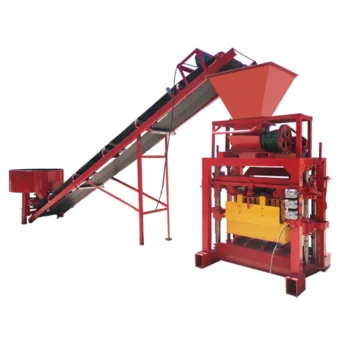
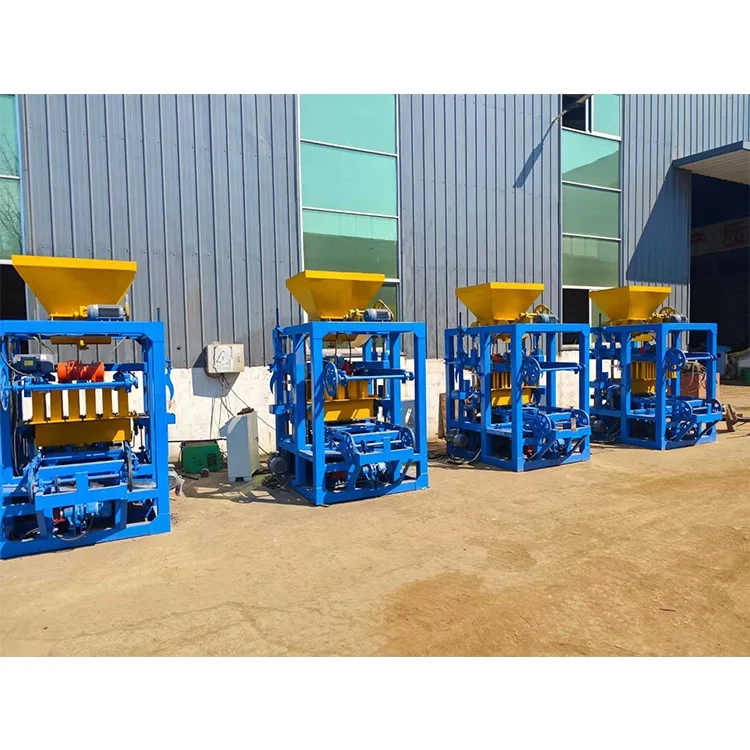
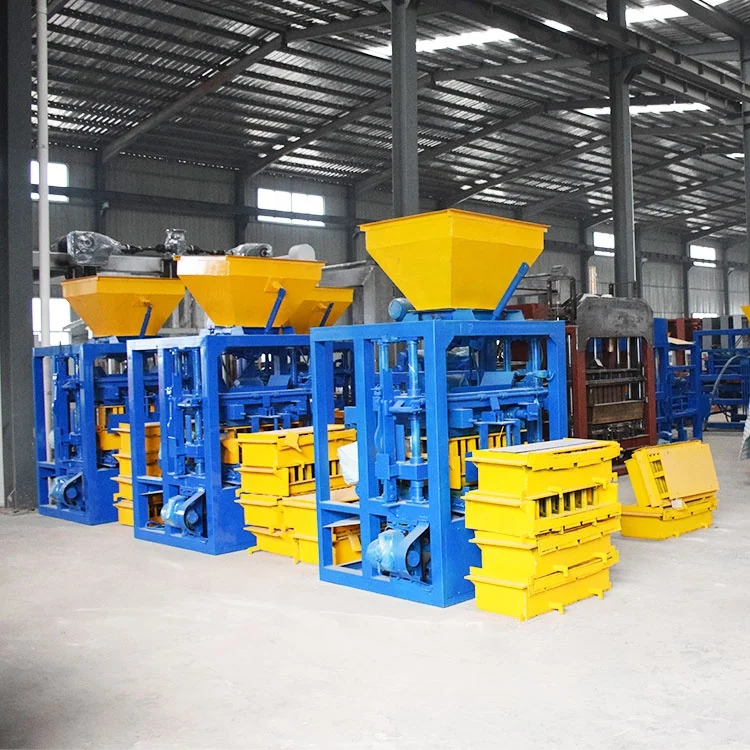
Stock & Delivery Focus — QTJ4-24 semi-automatic block machine held in stock with standard moulds, dispatch lead time confirmed at quotation stage so your project schedule stays intact.
Technical Specifications
| Parameter | Value |
|---|---|
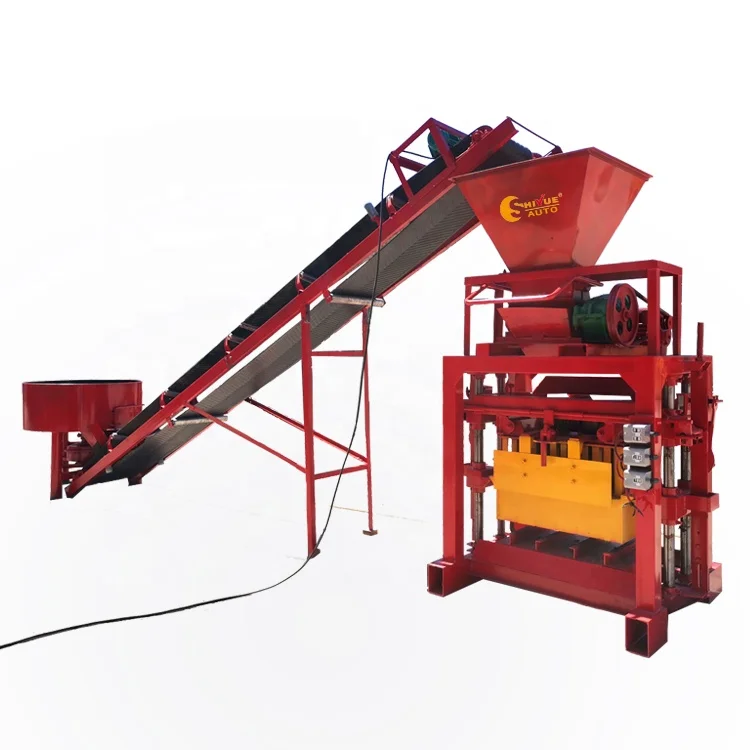
| Product Type | Semi Automatic Concrete Block Making Machine |
| Model | QTJ4-24 |
| Main Machine Power | 11.95 kW |
| Overall Dimensions (L×W×H) | 3600 mm × 1700 mm × 2560 mm |
| Net Weight | 3.5 T |
| Pallet Size | 900 mm × 450 mm |
| Molding Cycle | 24–26 s |
| Mould Formats Available | 400×200×200 mm (4 pcs/mould), 390×240×190 mm (3 pcs/mould), 390×120×190 mm (6 pcs/mould), 240×115×53 mm (21 pcs/mould) |
| Output Capacity | 4 pcs/cycle for 400×200×200 mm hollow block; 6 pcs/cycle for 390×120×190 mm block; 21 pcs/cycle for 240×115×53 mm solid brick (basis: per mould cycle at 24–26 s) |
| Automation Level | Semi-automatic (manual feeding, electrical control with mechanical interworking) |
| Feed Method | Manual feeding, two feed ways available |
| Vibration Type | Table vibration feeding, fluctuation vibration molding |
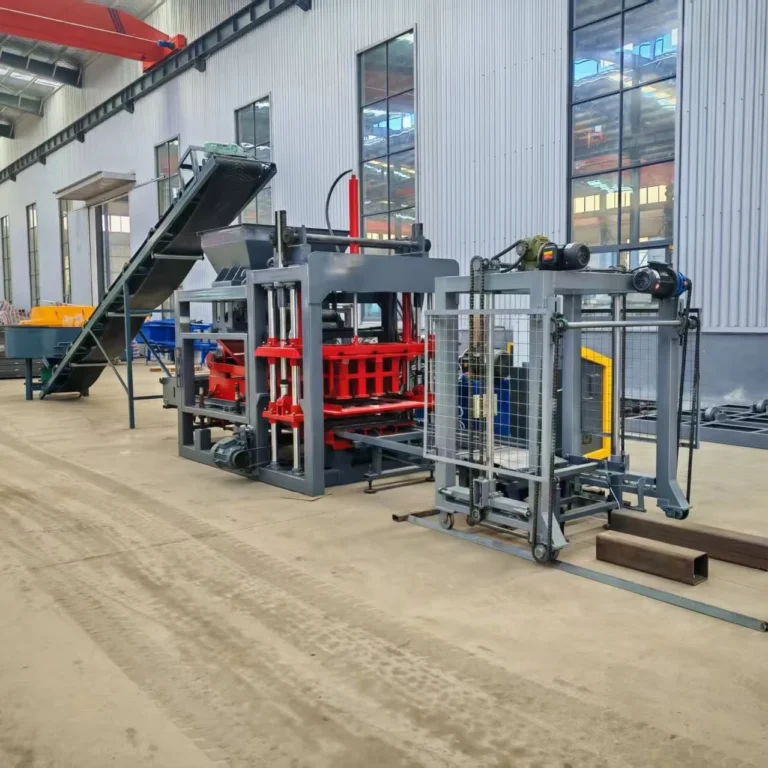
| Compatible Line Equipment | J350 or JQ500 vertical mixer, 6 m or 8 m belt conveyor |
| Control System | Electrical control cabinet with knife switch (PLC availability to be confirmed) |
| Voltage & Frequency | To be confirmed for target market |
| Wiring Specification | Main power 3×16 mm², main machine 3×6 mm², mixer 3×4 mm², conveyor 3×2.5 mm² |
| Assembly State | Stationary installation on precast concrete ground |
| Warranty | 1 year for whole machine (excluding spare parts) |
Application Suitability
| Application | Material or Output |
|---|---|
| Hollow block production for building construction | Crushed stone, sand, cement, water |
| Solid standard brick production | River sand, fly ash, cement blends |
| Paving block production | Aggregate, cement, pigment additives |
| Multi-cellular brick production | Lightweight aggregate and cement mix |
| Small to medium block plants | Standard concrete mixes with local aggregate |
| On-site production for contractors | Project-specific formats on temporary ground |
| First plant setups | Lower investment, simple operator requirements |
Why the Voltage Question Must Come Before the Dispatch Date
A QTJ4-24 block machine in stock means nothing if the control cabinet does not match your site supply.
I once watched a semi-automatic press sit idle on an Ecuadorian job site for three weeks because the motor was wired for 380 V / 50 Hz while the local grid ran 220 V / 60 Hz. The contractor lost production every single day while a variable-frequency retrofit was arranged. That QTJ4-24 semi automatic block machine fast delivery promise only holds when voltage and frequency are locked before the crate is nailed shut [NEED_CITE: voltage and frequency standards by export market]. Buyers focused on arrival timing often skip this confirmation step, and the cost of getting it wrong lands squarely on the construction schedule.
Stocked Units and What "Ready to Ship" Actually Covers
When a buyer asks for a QTJ4-24 block machine in stock, the conversation must go beyond the press itself. Standard moulds for 400×200×200 mm hollow blocks and 240×115×53 mm solid bricks are typically held alongside the main machine, but pallet size, mixer model, and belt conveyor length each affect container loading plans. Confirming these line components at the quotation stage prevents a situation where the press arrives but the matching 900×450 mm pallets are on a separate shipment weeks later.
Container Loading and the Dismantling Decision
The QTJ4-24 stands 2560 mm tall and weighs 3.5 T, which means a standard 20-foot container can accommodate the main frame with the upper vibration assembly lowered or removed. Deciding whether to ship the machine assembled or partially dismantled influences both ocean freight cost and on-site reassembly time. A clear loading plan with photographs before the container doors close removes guesswork for the receiving crew and speeds commissioning on arrival [NEED_CITE: container loading practices for heavy machinery exports].
Reading the Specs That Actually Matter on Site
The 24–26 s moulding cycle is the baseline for every capacity conversation. At four pieces per cycle for 400×200×200 mm hollow blocks, a single-shift operation can calculate realistic daily output by multiplying available working minutes against that cycle, then deducting mould change and pallet handling intervals. The 900×450 mm pallet size must match the curing racks and forklift tines already on site; a mismatch here forces manual re-stacking and erodes whatever speed the press delivers. Table vibration combined with fluctuation vibration molding works well with standard crushed-stone aggregates, so buyers do not need to source specialist sands or graded fines. The 11.95 kW main machine power requirement dictates the dedicated circuit specification — undersizing that cable run causes voltage drop that weakens the vibration force and produces inconsistent block density.
What Happens When the Line Is Ordered in a Hurry Without Matching Components
Rushing a QTJ4-24 semi automatic block machine fast delivery without confirming the mixer capacity against daily output targets leads to a press that waits for material. The J350 mixer handles smaller batches, while the JQ500 keeps pace with back-to-back moulding cycles. Skipping this check means the operator stands idle between mixes, and the quoted cycle time becomes irrelevant [NEED_CITE: production line bottleneck analysis for concrete block plants]. Equally, ordering without verifying the control cabinet language leaves a Spanish-speaking crew guessing at fault codes on a Chinese-character display.
Why Buyers Working to Deadlines Source Here
Stock availability is only useful if the supporting documentation ships with the machine. Shandong Shiyue Intelligent Machinery specifies the QTJ4-24 as part of a matched system — press, mould, pallet, and conveyor confirmed together rather than assembled from separate suppliers. Dispatch lead time is stated at quotation, not revised after the deposit is paid. Voltage and frequency are confirmed against the destination grid before the wiring harness is cut. Factory test records are generated on the exact block format the buyer intends to produce. Packing photographs document the crate condition before the container is sealed, giving the buyer leverage if transit damage occurs.
Documentation & Verification
- Capacity calculation sheet stating output per block format per shift
- Mould drawing and format list matching your local market requirements
- Voltage and control language confirmation signed off before wiring
- Factory test record run on your target block format
- Packing photographs documenting crate condition before container sealing
- CE declaration documentation where applicable for your import market
Installation, Commissioning & Support
- Precast concrete ground required; overall footprint 3600 mm × 1700 mm for main machine placement
- Main power 3×16 mm² cable run with dedicated circuit breaker for 11.95 kW load
- Machine shipped partially dismantled; vibration assembly re-mounted and aligned on site
- First-cycle test run with operator present to confirm 24–26 s moulding cycle and block release
- Operator training covering manual feed sequence, mould change procedure, and daily greasing points
- Wear parts list supplied identifying high-friction surfaces for first reorder planning
Before You Request a Quote
Send the block formats your market actually sells, the daily volume you need per format, and the shift length you plan to run. Include your site voltage and frequency so the control cabinet can be built to match. If you already have curing racks or a forklift, share the pallet dimensions and fork spacing so the 900×450 mm pallet specification can be verified or adjusted before production starts.
Frequently Asked Questions
Q: How is daily output calculated per block format from the 24–26 s moulding cycle?
A: Daily output is derived by dividing available working minutes per shift by the 24–26 s cycle, then multiplying by the piece count per mould for that format. Mould change time and pallet handling intervals are deducted. A capacity calculation document is provided showing output for each block format individually rather than a single headline figure.
Q: What is the dispatch lead time for stocked QTJ4-24 units and standard moulds?
A: Stocked main machines with standard mould formats can be prepared for container loading within a typical multi-week window. Exact dispatch timing depends on the voltage and frequency confirmation required for your destination market. Lead time is quoted at the proposal stage, not after payment.
Q: Which voltage and frequency configurations are available for immediate shipment?
A: The standard control cabinet is configurable for common industrial voltages. The specific voltage and frequency must be confirmed against your site supply before the wiring harness is assembled. This step is non-negotiable to avoid on-site retrofit delays.
Q: What container type is used for shipping and is machine dismantling required?
A: The QTJ4-24 is loaded into a standard 20-foot container with the upper vibration assembly lowered or removed to clear the door height. A loading plan with photographs is shared before sealing. Reassembly on site requires basic mechanical tools and alignment checks.
Q: Are pallets included in the shipment or sourced separately by the buyer?
A: Pallets in the 900×450 mm size can be included in the container shipment. The material — timber, bamboo, or composite — is confirmed during the quotation to match your curing environment and local availability. Sourcing pallets locally is also an option if freight consolidation is preferred.