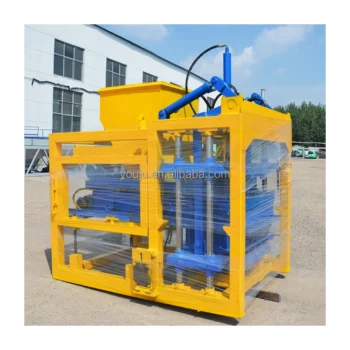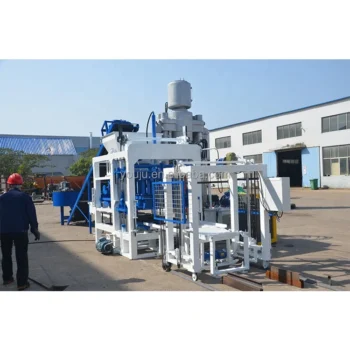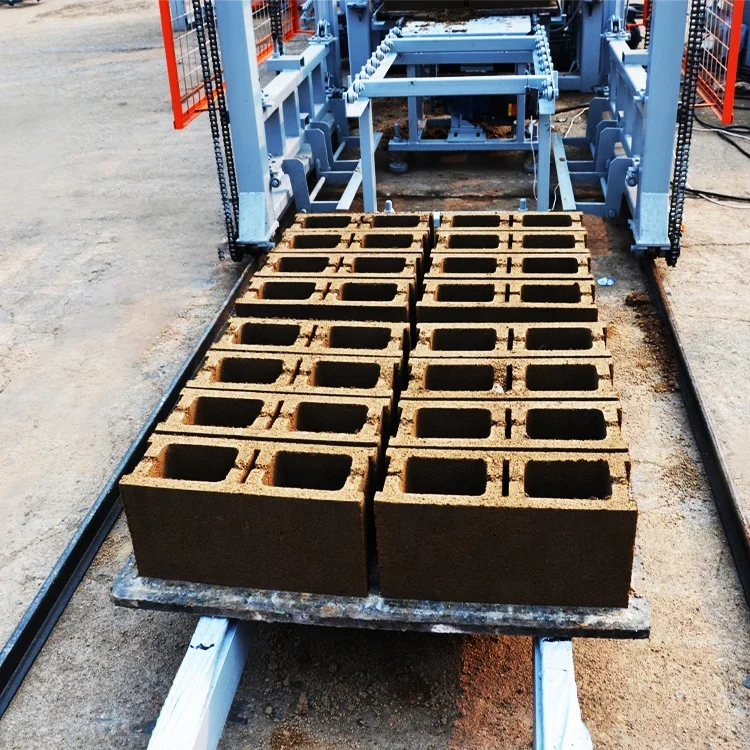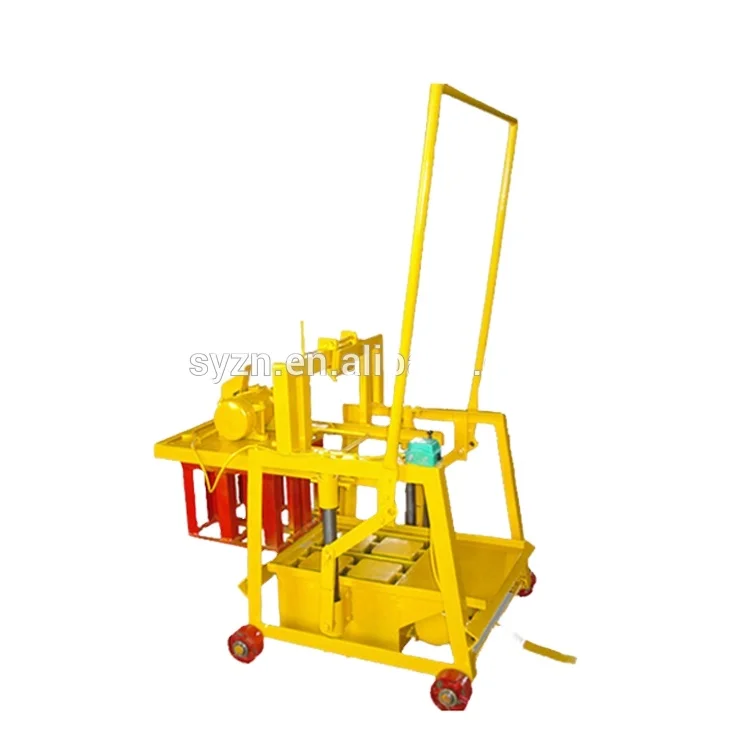

Description
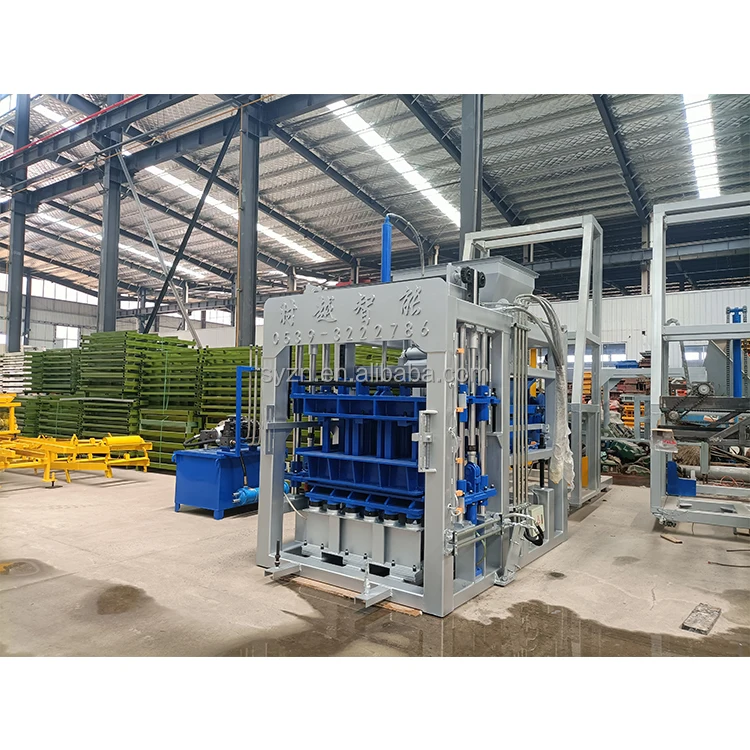
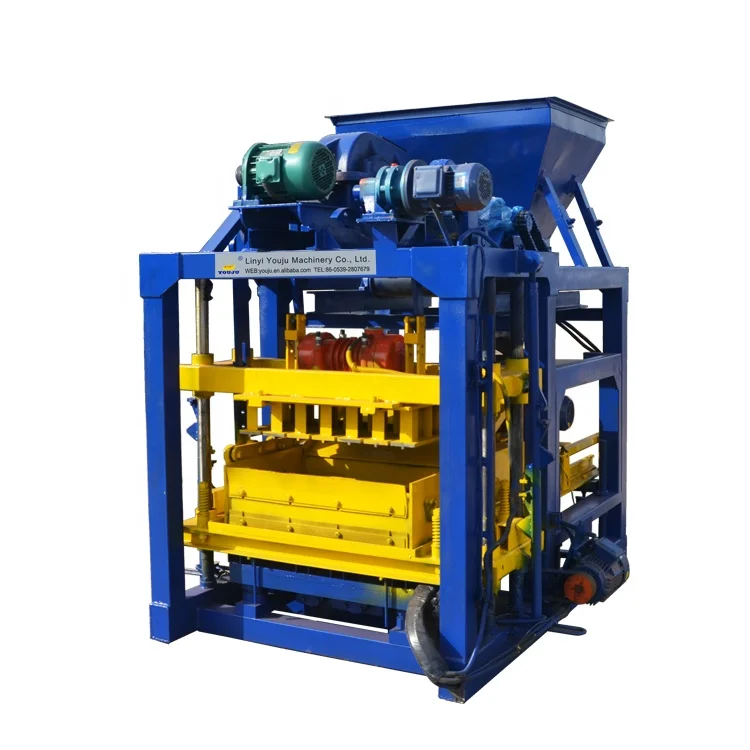
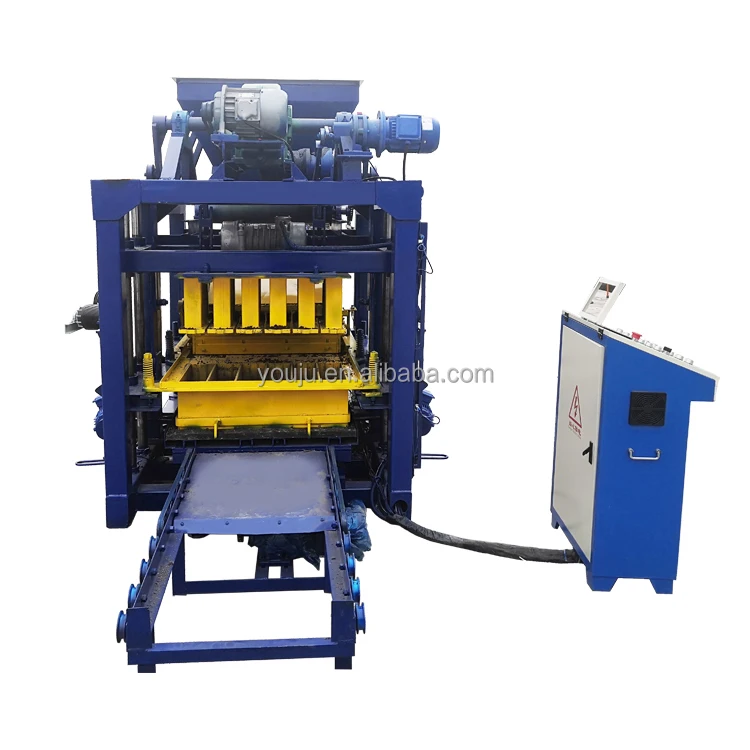
Dispatch-Ready Inventory — the QTJ4-25 semi-automatic block machine is held in stock configuration for immediate container loading, bypassing the build queue that delays custom lines by weeks.
Technical Specifications
| Parameter | Value |
|---|---|
| Model | QTJ4-25 |
| Product Type | Semi-Automatic Concrete Block Making Machine |
| Overall Dimensions (L×W×H) | 3000×1800×2680 mm |
| Total Mass | 3.5 T |
| Overall Power | 16.58 kW |
| Vibration Force | 60 kN |
| Main Vibration Form | Platform Vibration |
| Vibration Frequency | 2800–4500 r/min |
| Pallet Size | 850×480 mm |
| Molding Cycle | 25 s |
| Demolding Method | Mechanical |
| Guide Column | Four-column overlong guide design |
| Frame Material | National standard manganese steel |
| Surface Treatment | Chrome-plated |
| Factory Area | 300 m² |
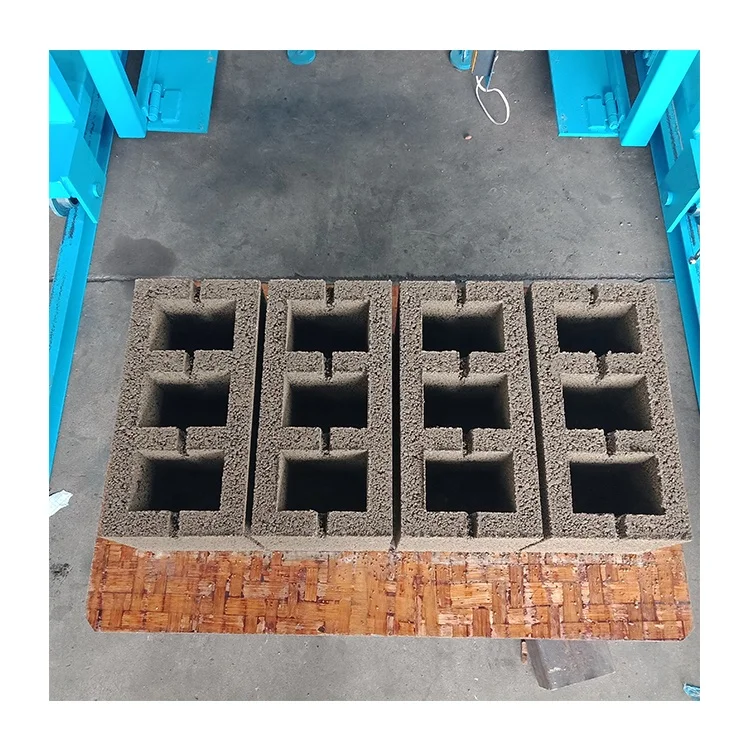
| Output — Hollow Block | 4640 pcs/day (basis: 400×200×200 mm, 8-hour shift) |
| Output — Multi-Cellular Brick | 11200 pcs/day (basis: 240×115×90 mm, 8-hour shift) |
| Output — Solid Brick | 26400 pcs/day (basis: 240×115×53 mm, 8-hour shift) |
| Mould Format Options | Hollow block, solid block, paving block, interlocking block, curbstone, colored paver |
| Mould Change System | Manual exchange |
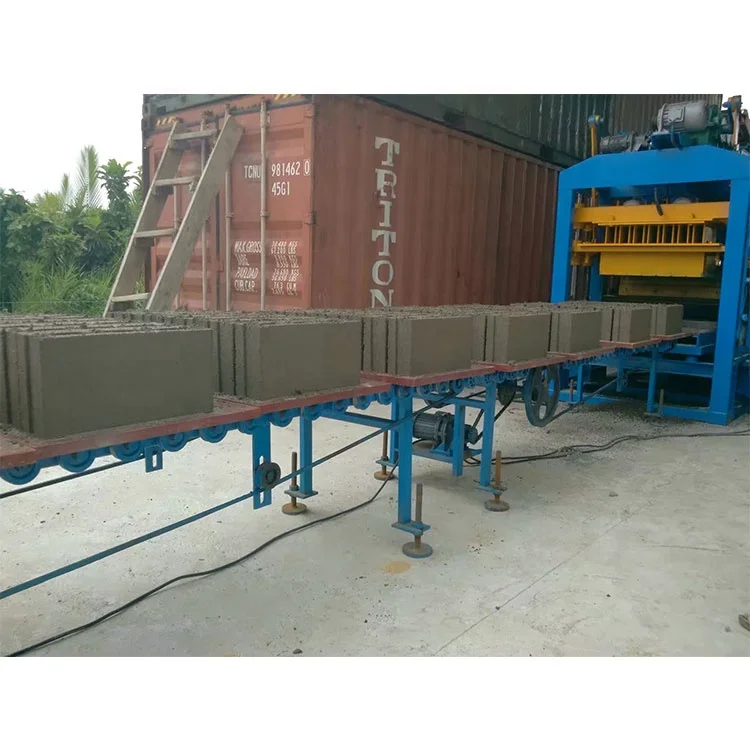
| Automation Level | Semi-automatic (mechanical demolding, manual pallet handling) |
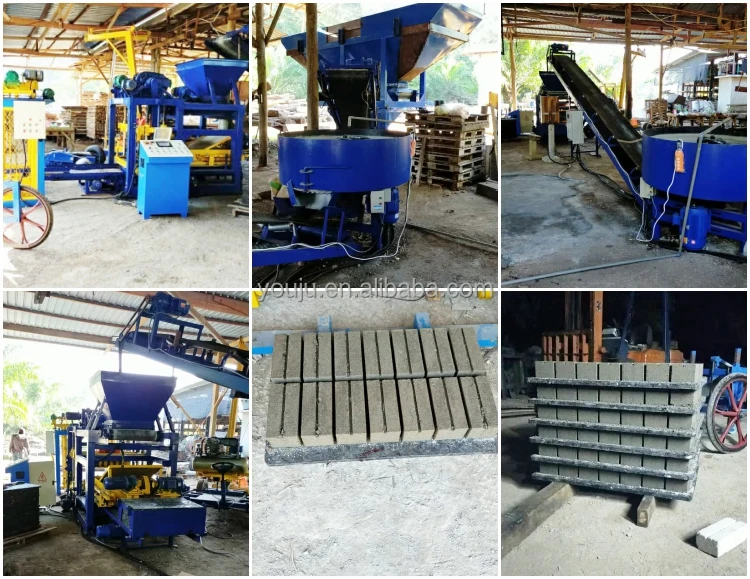
| Raw Materials | Crushed stone, sand, cement, fly ash, gravel, slag, dust |
| Key Features | Four-column guide, chrome-plated surfaces, platform vibration, mechanical demolding |
Application Suitability
| Application | Material or Output |
|---|---|
| Hollow block production for housing projects | Crushed stone, sand, cement, fly ash blends |
| Solid brick manufacturing for masonry walls | Sand, cement, gravel, slag mixtures |
| Paving block and colored paver runs for roads and walkways | Cement with fine aggregate and pigment |
| Interlocking block production for retaining walls | Gravel, sand, cement combinations |
| On-site block production by construction contractors | Locally sourced aggregate and cement |
| First block plant for entrepreneurs entering the market | Multi-format mould set on a single machine |
Why Voltage Confirmation Must Come Before You Pay the Deposit
A stocked QTJ4-25 block machine in stock ships within days, but a voltage mismatch will leave it silent on arrival.
I learned this the hard way. A contractor in West Africa needed a semi-automatic block machine fast delivery to meet a housing deadline. We pulled a unit from stock, dismantled it, and loaded the container within forty-eight hours. The machine arrived on schedule. But the site ran on 415V/50Hz, and the control cabinet had been wired for 380V. The machine sat idle while the crew waited three weeks for a replacement transformer. The project deadline slipped. Every day of that delay cost more than a voltage check ever would have [NEED_CITE: voltage and frequency standards by export market]. Now I refuse to let a machine leave the yard without a signed voltage confirmation sheet, even when the buyer is pushing for same-week dispatch. A QTJ4-25 semi-automatic block machine fast delivery only matters if the machine actually runs when it gets there.
What Fast Dispatch Actually Means for Your Timeline
A semi-automatic block machine fast delivery from stock means the unit is already assembled, factory-tested, and sitting in the yard. Once your voltage, frequency, and control language are confirmed, the machine is dismantled to container dimensions and loaded. There is no production queue to wait behind and no component lead time holding up your order. The dispatch lead time is measured in days, not the weeks or months a custom-built line requires.
How Container Loading Is Handled Before Shipment
The QTJ4-25 weighs 3.5 tonnes and measures 3000×1800×2680 mm in assembled form. For ocean freight, the machine is broken down into main frame, press head, vibration platform, and control cabinet. Each component is secured to prevent transit damage. Packing photographs are taken at every stage so you can verify loading integrity before the container is sealed. A container loading plan is shared in advance so your port agent knows what to expect [NEED_CITE: standard container loading practices for heavy industrial machinery].
Reading the Specifications That Actually Matter on Site
The 60 kN vibration force working with platform vibration at 2800–4500 r/min determines how densely the concrete is compacted into the mould. Density directly affects block strength. If your local aggregate is coarse or your mix runs lean on cement, the vibration parameters must match — otherwise blocks crack during demolding or fail compression tests. The four-column overlong guide design with chrome-plated surfaces keeps the press head aligned through thousands of cycles, preventing uneven wear that causes one side of the block to come out thinner than the other. The 850×480 mm pallet size must fit your existing curing racks and forklift tines; ordering a machine with mismatched pallets means rebuilding your curing area or buying new handling equipment. The 25-second molding cycle is consistent across formats, but actual daily output depends entirely on which block you are producing.
The Cost of Skipping Pallet and Voltage Checks Before Shipment
Buyers who rush a stock order without confirming pallet size often arrive to find the 850×480 mm pallets do not fit their curing racks. The curing area has to be rebuilt, blocks pile up on the floor, and the first week of production is lost to logistics instead of output. Voltage mismatches are worse — the machine physically cannot be powered on, and sourcing the correct transformer locally adds weeks of downtime while a project crew stands idle [NEED_CITE: common causes of commissioning delays in exported block machinery]. Manual mould exchange also means your team needs to budget a portion of a shift for each format change, which matters if you plan to run multiple block types in a single day.
Why Buyers Source This Stocked Model From Our Yard
Block machinery is our single focus, which means the QTJ4-25 is specified as a matched system — machine, mould, pallet, and handling — not assembled from separate suppliers who do not communicate. Configuration is checked against your actual mix design and local aggregate, not pulled from a catalogue default. Stocked moulds cover the formats your market actually sells, and custom mould drawings are available if your specification falls outside the standard set. Automation level is selectable, so you can start semi-automatic with manual pallet handling and upgrade to automatic stacking later without replacing the press. Factory test records on your target block format are prepared before dispatch, not after arrival.
Documentation & Verification
- Factory test record on your specified block format before the machine leaves the yard
- Voltage and frequency confirmation sheet signed prior to container loading
- Machine specification sheet covering all electrical and mechanical parameters
- Mould drawing and format list for every mould included in your shipment
- Packing photographs documenting dismantling and container loading at each stage
- Operation and maintenance manual in your required control language
Installation, Commissioning & Support
- Foundation must support 3.5 T total mass across the 3000×1800 mm footprint with level tolerance
- Dedicated power circuit matching confirmed voltage and frequency with correct breaker rating for 16.58 kW draw
- Dismantled components reassembled on-site following marked connection points and wiring diagrams
- First production run supervised to set vibration frequency and molding cycle for your specific mix
- Operator training covers manual mould exchange sequence and mechanical demolding procedure
- Wear parts list and hydraulic schematic provided for local sourcing of replacement components
What to Send With Your Inquiry
To get an accurate dispatch timeline for a QTJ4-25 block machine in stock, provide the block format you plan to produce most often, your local voltage and frequency, and the aggregate available at your site. Confirm whether your existing curing racks and forklift are compatible with 850×480 mm pallets, or if you need the pallet specification adjusted. Let us know which mould formats you need stocked versus built to order, and the control language your operators require.
Frequently Asked Questions
Q: Is the QTJ4-25 currently in stock and what is the dispatch lead time?
A: The QTJ4-25 is held as a standard stock model. Once voltage, frequency, and mould selection are confirmed, the machine is dismantled and container-loaded. Dispatch lead time depends on current stock rotation and container availability at the port. Confirm exact timing at the point of inquiry, as stock status changes with order volume.
Q: How is the machine dismantled and loaded into a container for shipment?
A: The QTJ4-25 is broken into main frame, press head, vibration platform, and control cabinet to fit standard container dimensions. Each component is secured against transit movement. Packing photographs are taken at each stage and shared with the buyer before the container is sealed. A loading plan is provided to your freight forwarder in advance.
Q: What voltage and frequency options are available for immediate-stock units?
A: Stock units are held in common industrial voltages. Before a machine is assigned to your order, your site voltage and frequency must be confirmed in writing. If the current stock does not match your supply, the control cabinet is reconfigured before loading. Never assume a stock unit matches your grid without written verification [NEED_CITE: industrial voltage standards across export markets].
Q: Which mould formats are stocked alongside the machine versus built to order?
A: Standard stock moulds cover hollow block, solid brick, and common paving block formats. Interlocking blocks, curbstones, and colored pavers may require additional lead time for mould fabrication. Confirm your required format list at inquiry so that all moulds ship together with the machine rather than following in a second consignment.
Q: What is the realistic daily output for the block format I actually sell?
A: Output varies by format. Based on an 8-hour shift with a 25-second molding cycle, the QTJ4-25 produces 4640 hollow blocks at 400×200×200 mm, 11200 multi-cellular bricks at 240×115×90 mm, or 26400 solid bricks at 240×115×53 mm. Your actual output depends on operator pace, pallet handling speed, and raw material feed continuity during the shift.