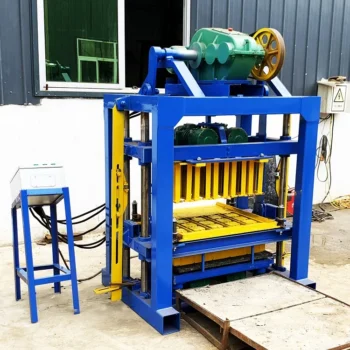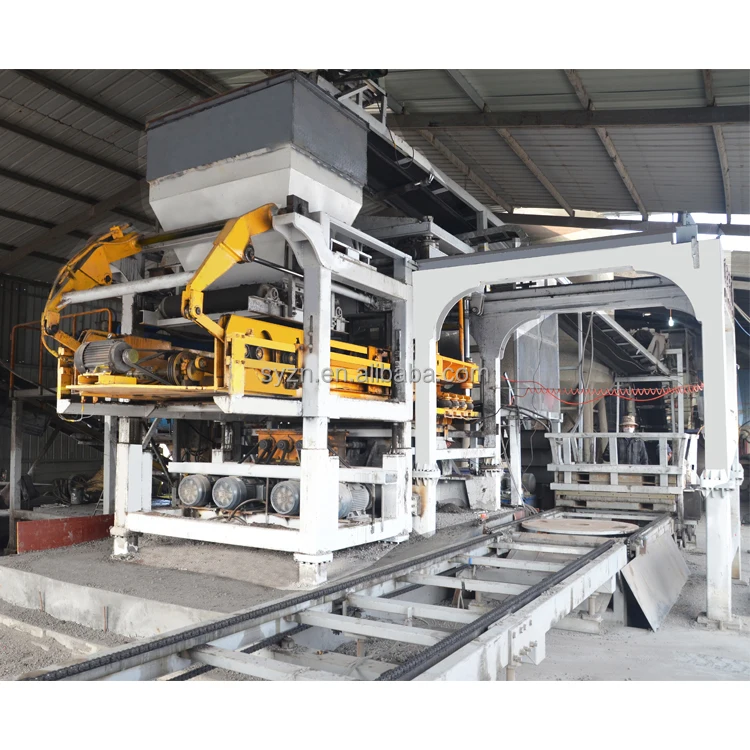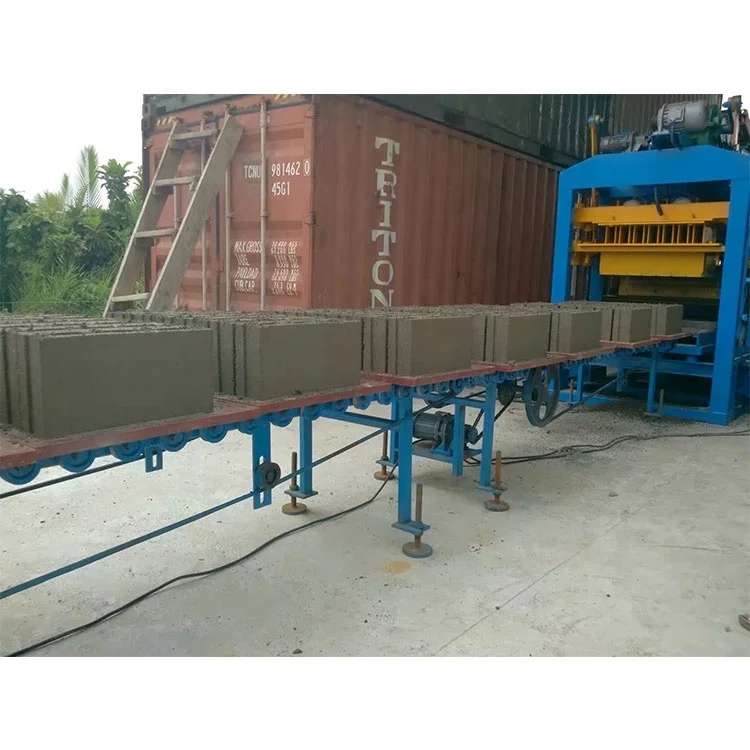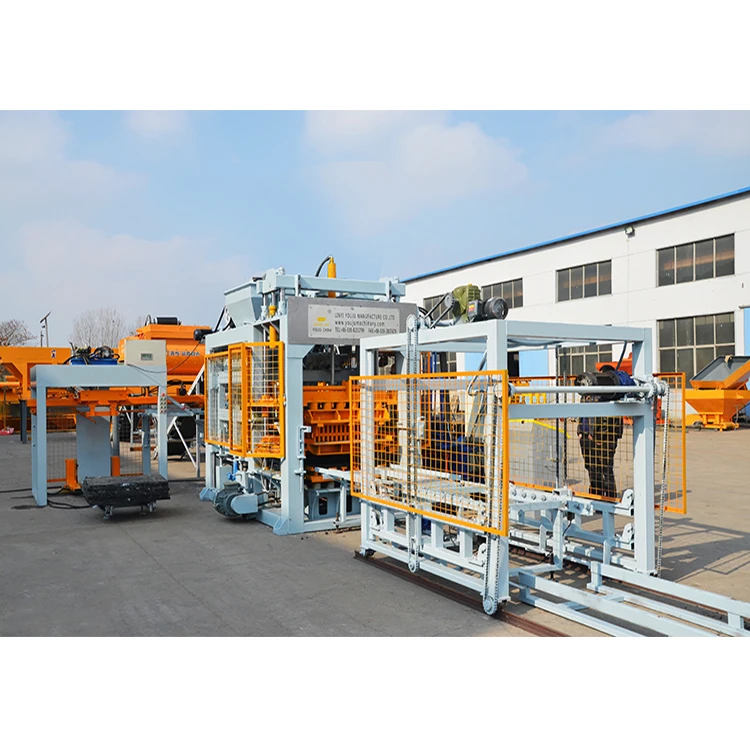


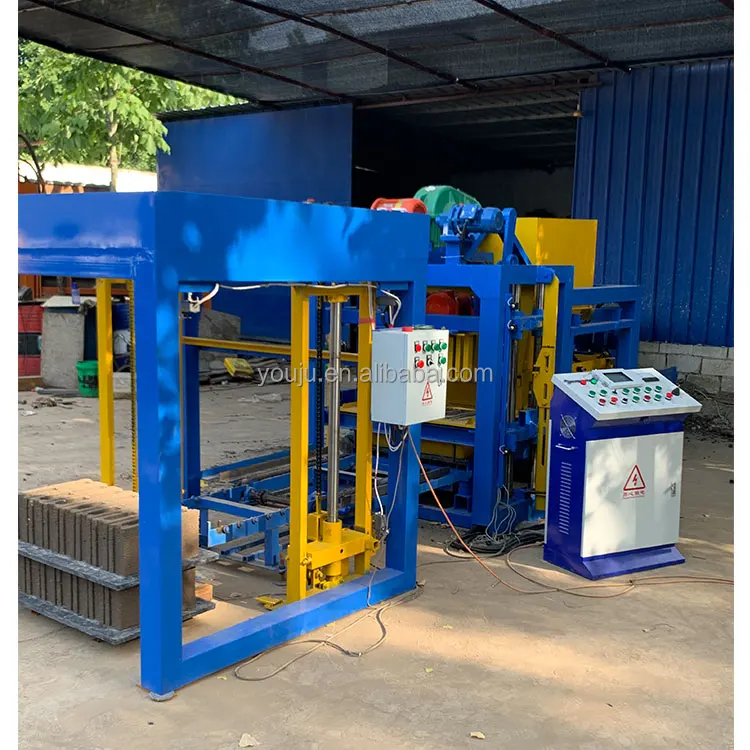
Description
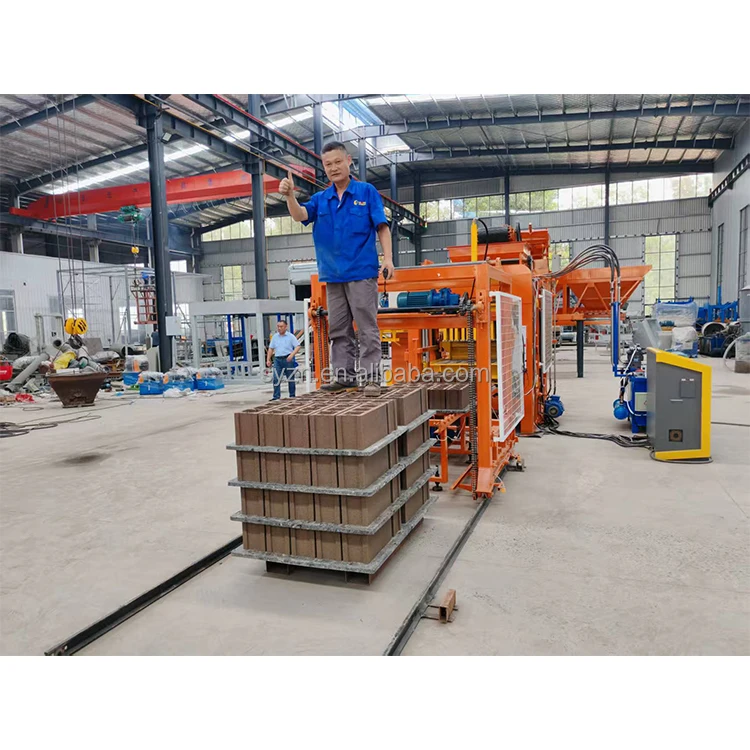
Rapid Dispatch Readiness — QTJ4-25 block machines are held in stock or near-completion status, with container loading plans and port arrival estimates confirmed before you place the order.
Technical Specifications
| Parameter | Value |
|---|---|
| Model | QTJ4-25 |
| Product Type | Semi-Automatic Concrete Block Making Machine |
| Rated Power | 17.9 kW |
| Overall Dimensions | 6400 × 1500 × 2700 mm |
| Net Weight | 2500 kg |
| Molding Cycle | 25 s |
| Vibration Frequency | 2800 r/min |
| Exciting Force | 60 kN |
| Pallet Size | 850 × 550 × 20 mm |
| Output Capacity | 960 pcs/h, 7680 pcs/day (based on 400×200×200mm hollow block, 4 pcs/mould) |
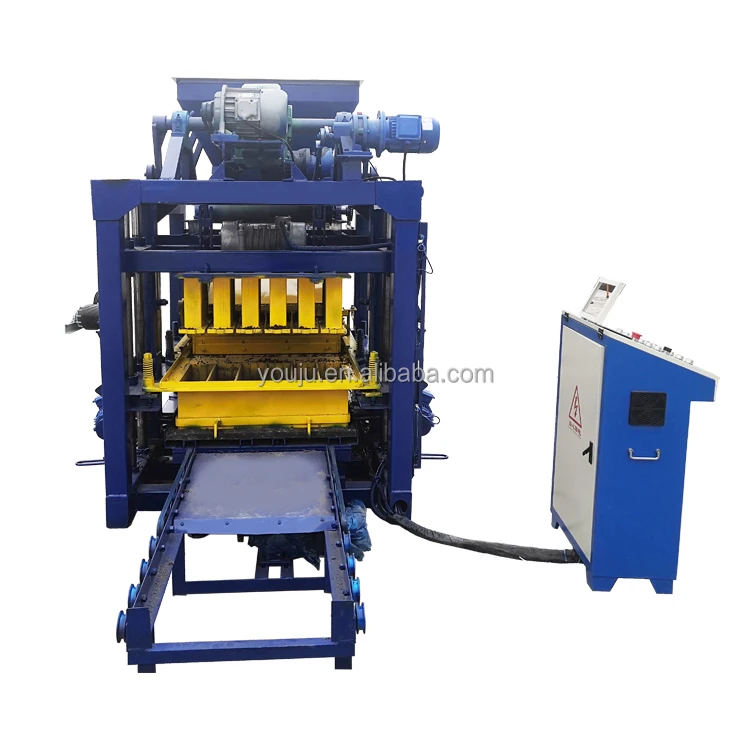
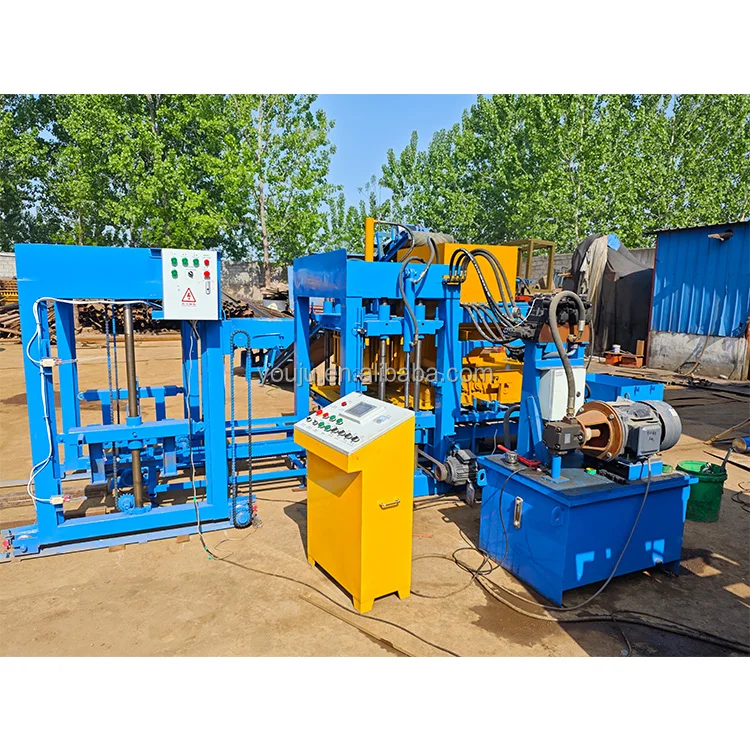
| Control System | Motor-operated / Semi-automatic |
| Mould Compatibility | Hollow, solid, paver, curbstone (mould change required) |
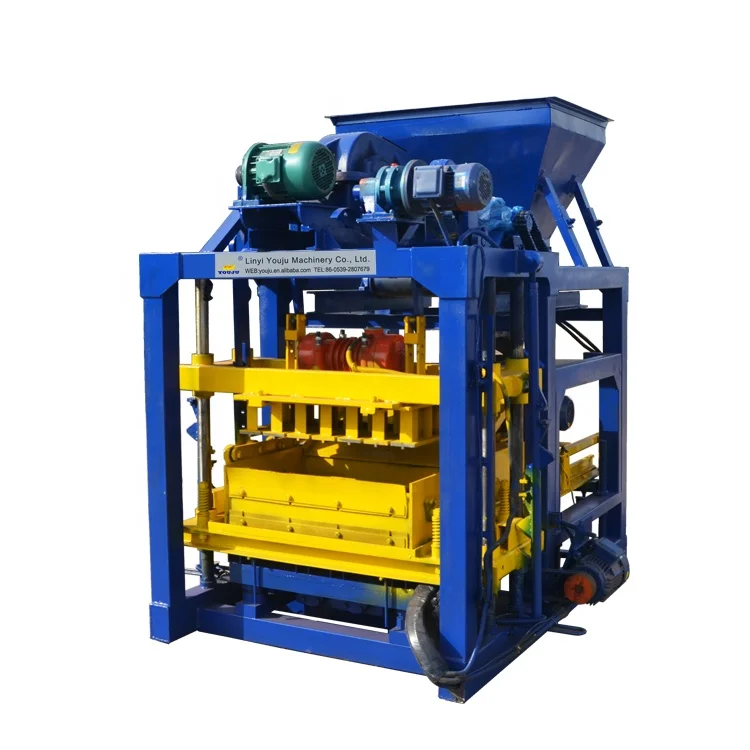
| Standard Configuration | Host machine 1 set, block mould 1 set, JQ350 mixer |
| Assembly State | Shipped assembled or partially dismantled for container loading |
Application Suitability
| Application | Material or Output |
|---|---|
| Small to medium block production plants | Hollow and solid blocks from crushed stone, sand, and cement |
| On-site block production for housing projects | Paving blocks and kerbstones using locally sourced aggregate |
| First-time block plant setup | Semi-automatic line producing hollow blocks with manual pallet handling |
| Format expansion for existing distributors | Solid and interlocking bricks with mould change on the same host machine |
Why "960 Pieces per Hour" Can Mislead Your Project Timeline
The output figure only holds when the block format, mix design, and pallet cycle are all matched to the machine’s vibration and pressure settings.
I once watched a buyer in West Africa receive a block machine rated for a specific hourly output, only to discover that local river sand with high clay content changed the mix behaviour entirely. The blocks cracked during curing, and daily usable output dropped sharply. The machine was not at fault — the configuration was never validated against the actual raw material [NEED_CITE: aggregate testing for concrete block mix design]. When you are working against a construction deadline, a QTJ4-25 block machine in stock means little if the mould and vibration force are not suited to what your site can actually source.
Dispatch Timing That Matches Your Construction Schedule
Project contractors do not have the luxury of waiting ten weeks for production. The QTJ4-25 block machine in stock status is confirmed at inquiry, along with the exact mould set and mixer included in the shipment. Dispatch lead time is quoted based on whether your voltage and frequency requirements match the units currently available or need a short adjustment cycle. This matters when your foundation work is already underway and block supply must begin within a defined window.
Container Loading and Port Arrival Clarity
The QTJ4-25 is partially dismantled for container loading when necessary, and the loading plan is shared before dispatch so you can project your arrival date [NEED_CITE: container loading methods for heavy industrial machinery]. Machine weight at 2500 kg and overall dimensions at 6400 × 1500 × 2700 mm determine whether a 20-foot or 40-foot container is required. Customs documentation support is included so port clearance does not add unplanned days to your schedule.
Vibration Force and Mould Compression Explained for Block Density
The 60 kN exciting force at 2800 r/min works through bed mould vertical vibration combined with upper mould compression vibration. This dual action compacts the concrete mix from both directions, which is what determines whether a hollow block reaches the compressive strength your local building code requires. The 25-second molding cycle is achievable when the mix moisture and aggregate grading fall within the tested range. Pallet size at 850 × 550 × 20 mm must align with your curing rack spacing and the forklift tine width already on site — a mismatch here causes handling bottlenecks that no machine speed can overcome.
The Cost of Skipping Voltage and Control Confirmation
Arriving at your site to find the motor wired for a frequency your grid does not supply is a delay no contractor can absorb. Voltage, frequency, and control display language must be confirmed before the machine leaves the factory [NEED_CITE: voltage and frequency standards by export market]. A semi-automatic QTJ4-25 with motor-operated control is simpler to commission than a full PLC line, but the electrical specification still has to match. Buyers who skip this step during ordering often lose a week or more sourcing step-down transformers locally.
Why Buyers Source This Machine Through Shiyue
Block machinery is the single focus here, so the QTJ4-25 is specified as a matched system — host machine, JQ350 mixer, mould set, and pallets — rather than assembled from unrelated suppliers. Configuration is set against your local aggregate and target block format, not pulled from a catalogue default. Mould design covers the formats your market actually sells, and additional moulds can ship in the same container to avoid a second freight cycle. Stock status and container loading plans are provided upfront because this site exists for buyers working to a deadline. Factory test records on your specified block format are available before dispatch.
Documentation & Verification
- Machine specification sheet listing QTJ4-25 rated power, vibration frequency, and pallet dimensions
- Mould drawing and format list confirming hollow, solid, and paver compatibility
- Voltage and control language confirmation record signed before dispatch
- Factory test record on the specific block format included in your order
- Packing photographs showing dismantling state and container loading arrangement
- Customs documentation support for destination port clearance
Installation, Commissioning & Support
- Foundation pad sized to 6400 × 1500 mm footprint with level tolerance for stable vibration transfer
- Dedicated 17.9 kW power circuit matching confirmed voltage and frequency before connection
- Partial dismantling state documented so reassembly on site follows a defined sequence
- JQ350 mixer commissioned alongside host machine to verify mix consistency at first run
- Mould change procedure demonstrated for switching between hollow and solid block formats
- Wear parts list provided covering vibration components and mould contact surfaces
What to Prepare Before Requesting a Quote
Share the block format your market demands and the daily volume your project requires. Confirm the voltage and frequency at your site, along with the control language your operators read. Let us know whether your curing area and forklift are already in place so pallet size can be verified against your existing equipment.
Frequently Asked Questions
Q: What is the actual dispatch lead time for the QTJ4-25 from stock or production?
A: Stock units configured for common voltage standards can dispatch within days of order confirmation. If your frequency or control language requires adjustment, a short lead time applies. The exact dispatch date is quoted at inquiry based on the configuration you need and current inventory status.
Q: How is the QTJ4-25 packed and dismantled for container loading?
A: The machine is partially dismantled to fit standard shipping containers. A loading plan is provided before dispatch showing which components are separated and how they are secured. The 2500 kg net weight and dimensions determine the container type required for your shipment.
Q: What is the estimated arrival time at my destination port?
A: Arrival depends on the shipping route and carrier schedule from the port of origin. We provide an arrival estimate based on typical transit times to your region once the dispatch date is confirmed. Customs documentation is prepared in advance to support prompt clearance on arrival.
Q: Which voltage and frequency configurations are available for near-term shipment?
A: Common industrial voltage and frequency combinations are typically available in stock or near-completion status. If your site operates on a less common supply standard, a short configuration cycle may apply. Confirming your electrical requirements at inquiry ensures the right unit is allocated or prepared.
Q: Can I order additional moulds and pallets in the same shipment?
A: Yes. Additional mould sets for different block formats and extra pallets can be included in the same container. This avoids a second freight cycle and lets you start producing multiple formats from the first day of operation on site.