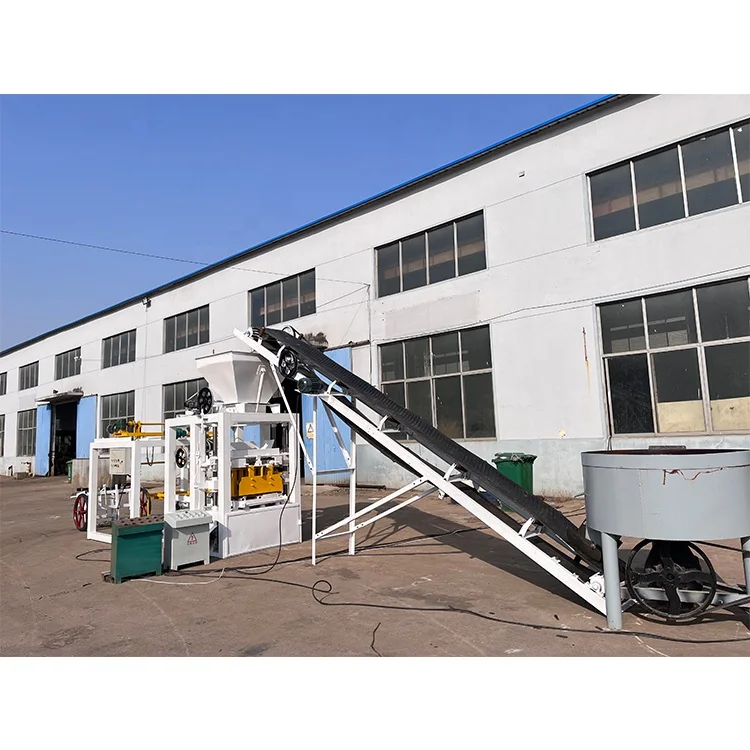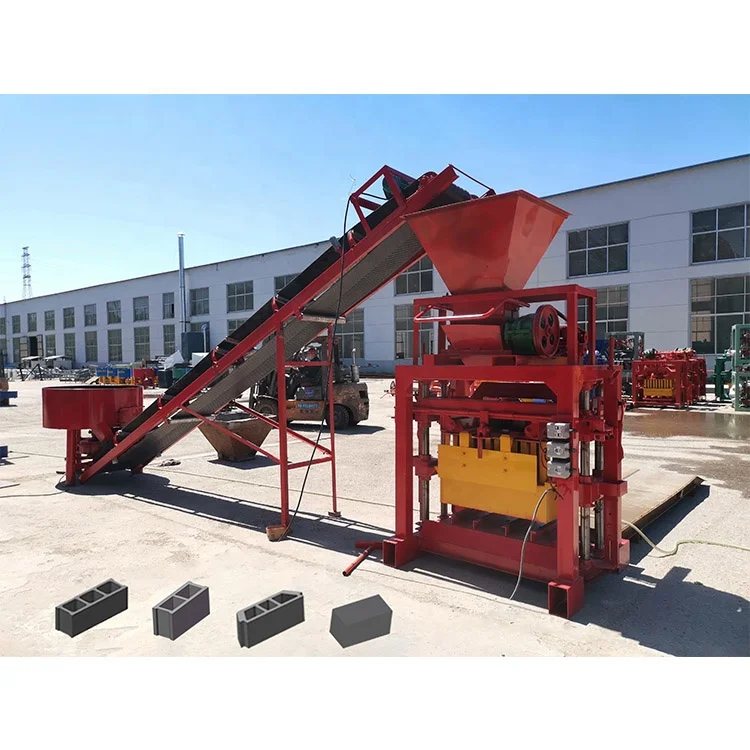
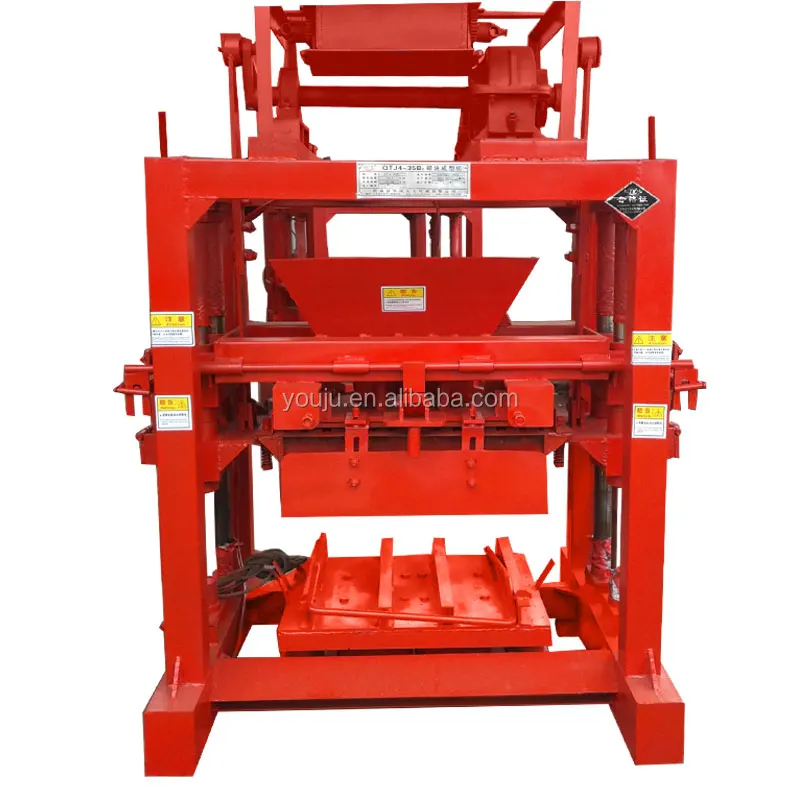
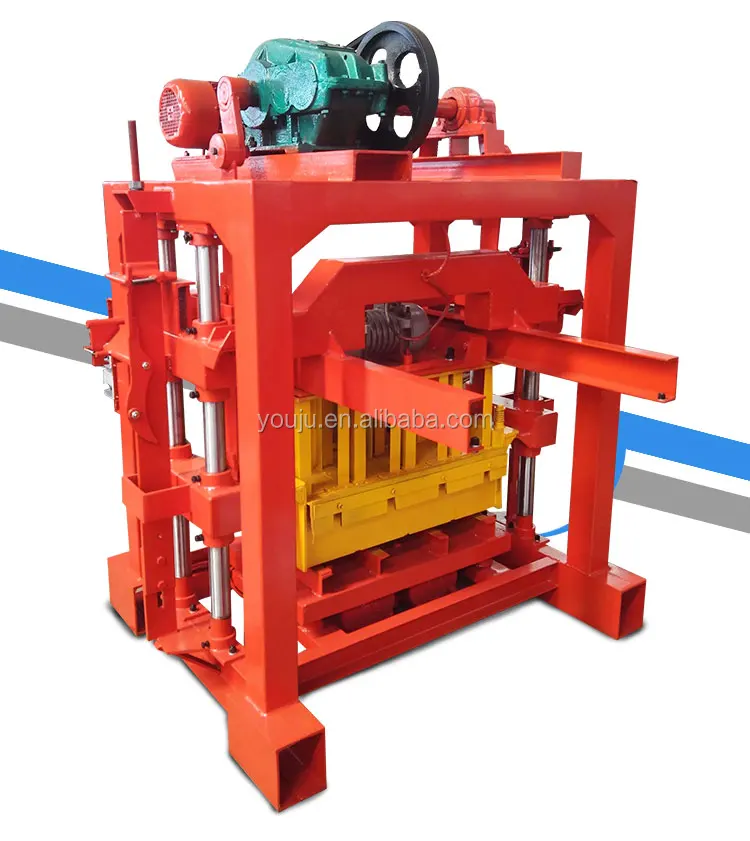
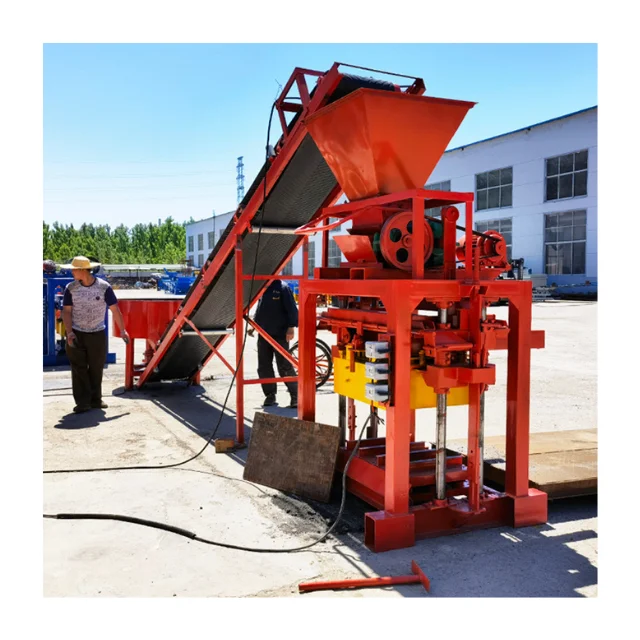
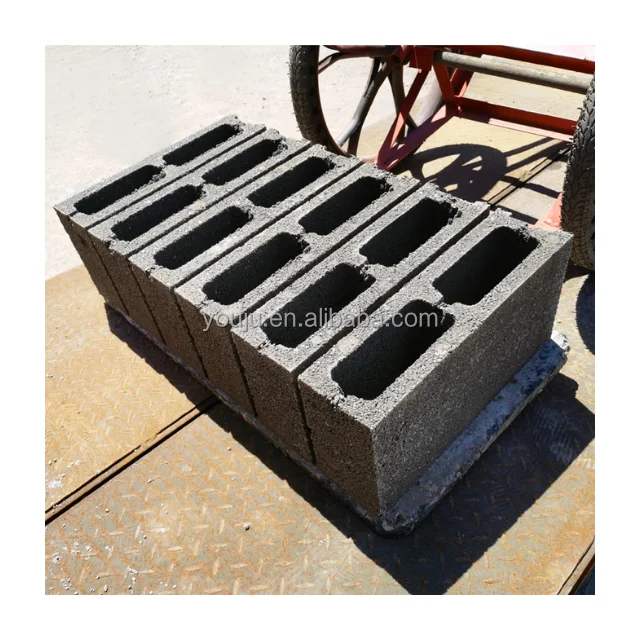
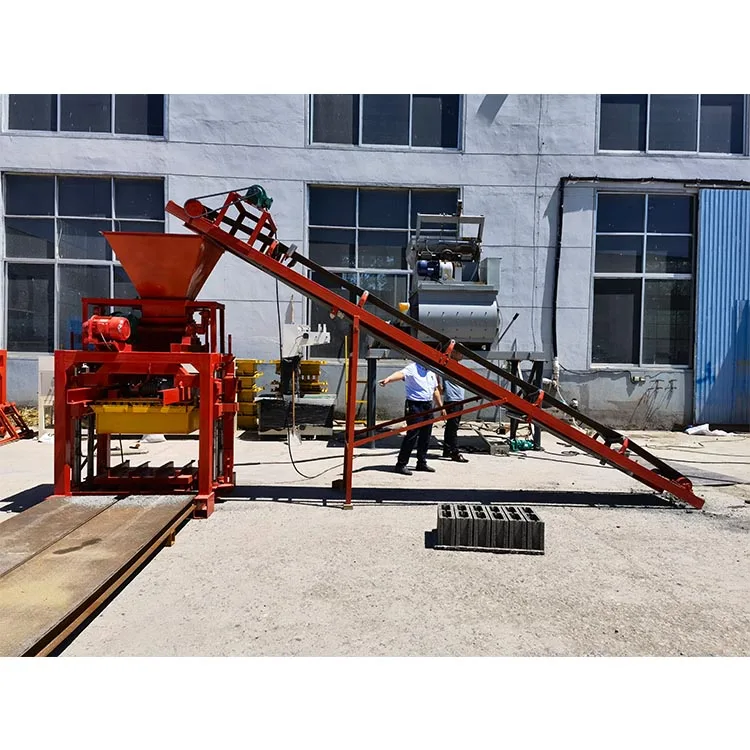
Description
Fast Dispatch From Stock — Every QTJ4-35 unit on our Linyi floor is tested with your actual raw material sample before crating, so arrival on-site means production, not troubleshooting.
Technical Specifications
| Parameter | Value |
|---|---|
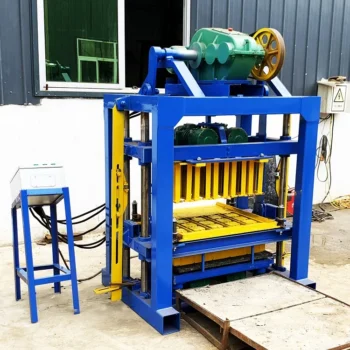
| Product Type | Stationary Manual Block Making Machine |
| Model | QTJ4-35 |
| Overall Dimensions (L×W×H) | 2050 x 1660 x 1900 mm |
| Mould Format Options | 390×190×190 mm (4 pcs/mould), 390×240×190 mm (3 pcs/mould), 390×120×190 mm (6 pcs/mould), 240×115×53 mm (21 pcs/mould) |
| Molding Cycle | 35 s |
| Output Capacity | 3200 pcs/day (basis not stated in source — confirm block format / material / thickness) |
| Pallet Size | 850 x 450 mm |
| Overall Power | 9.7 kW |
| Vibration Form | Platform Vibration |
| Vibration Force | 32 kN |
| Control System | Manual operation (no PLC specified) |
| Automation Level | Manual with optional simple production line (belt conveyor + mixer) |
| Voltage & Frequency | Configurable to buyer’s local grid (basis to be confirmed) |
| Assembly State | Host machine standalone; optionally configured with 6 m belt conveyor (0.75 kW) and small mixer (5.5 kW) |
| Raw Material Compatibility | River sand, mechanism sand, gravel, crushed stone, slag, cinder, fly ash, pumice, perlite, shale, ceramic |
Application Suitability
| Application | Material or Output |
|---|---|
| Small-scale block production plants | Hollow blocks and solid blocks from river sand and cement |
| On-site construction block manufacturing | Standard bricks and paving units from crushed stone and gravel |
| Entrepreneur first-block-plant setups | Mixed format output including porous bricks from fly ash and slag |
| Building material workshops | Kerbstones and interlocking bricks from mechanism sand and pumice |
What the Cycle Time Figure Leaves Out on the QTJ4-35 stationary block machine in stock
A 35-second cycle only counts if the operator can keep the pallets moving and the mixer fed without pause.
When buyers look at the QTJ4-35 stationary block machine in stock, they see the molding cycle and multiply it out to a daily total. That math assumes a steady flow of mixed material, pre-staged pallets, and someone to strip and stack the output on the other side. In a real small workshop, the bottleneck is rarely the press itself. It is the material handling before and after. I have seen units of this class sit idle for half a shift because the belt conveyor was ordered separately and arrived weeks later. We quote the optional 6 m belt conveyor and small mixer as a bundled package so the line actually runs on day one [NEED_CITE: typical small block plant material handling bottlenecks].
Dispatch Timeline and Container Loading Reality
Stock status means the host machine and standard moulds are physically on the factory floor, not in a production queue. For the QTJ4-35 stationary block machine in stock, we confirm the exact serial unit, photograph it on the floor, and agree on a dispatch date before the order is finalised. The machine dismantles into a compact footprint that fits into standard container loading without special flat-rack arrangements. Buyers working to a project deadline need this certainty upfront, not a lead time estimate that shifts as production slots fill.
What Arrives at Your Dock and What Does Not
The crate contains the host machine, the selected mould set, the pallet plate specification matched to the 850 x 450 mm size, and all hydraulic and electrical connections. What it does not contain is automatic stacking, curing rack handling, or any downstream automation. Pallet handling and block stacking on a manual machine like the QTJ4-35 are done by operators on the floor. We state this plainly so your labour plan matches reality when the machine arrives [NEED_CITE: manual block machine labour requirements on site].
Reading the Specs Against Your Actual Block Format
The 32 kN platform vibration force and 9.7 kW overall power define what this machine can consolidate. For hollow blocks at 390×190×190 mm, four pieces per mould, the vibration must penetrate the core voids evenly to achieve consistent wall density. The 35-second cycle is measured on a standard cement-sand mix at a specific moisture content; if your local aggregate is high in clay or your sand grading differs, the cycle may need adjustment and the daily output will shift accordingly. The pallet size of 850 x 450 mm determines what fits your existing curing area and what forklift or hand cart you need on site. Matching the pallet to your curing racks before shipment avoids a mismatch that no amount of on-site adjustment can fix.
The Cost of Skipping the Voltage Confirmation Step
Voltage and frequency are not afterthoughts for a manually operated machine. The 9.7 kW motor and vibration system are wound for a specific supply. If the local grid at destination runs at a different frequency than what was assumed during assembly, the motor speed changes, the vibration force drops, and block density suffers from the first batch onward. We confirm the buyer’s voltage and frequency before crating, not after the machine lands and the electrician discovers the mismatch. This single step prevents commissioning delays that can stretch into weeks while replacement components are sourced internationally [NEED_CITE: voltage and frequency standards by export market].
Why Buyers Source This Model From Our Stock
Block machinery is our single focus, which means the QTJ4-35 is specified as a matched system of machine, mould, and pallet rather than assembled from unrelated suppliers. Configuration is set against the buyer’s actual mix design and local aggregate, not a catalogue default. Mould formats available from stock cover the block types the buyer’s market actually sells, and custom drawings can ship in the same container. Dispatch lead time is quoted upfront with container loading details, and packing photographs are provided before the crate closes. Factory test records run on the buyer’s stated material parameters accompany the shipment.
Documentation & Verification
- Factory test record run on your stated raw material sample before crating
- Machine specification sheet confirming voltage and frequency for your local grid
- Mould drawing and format list matching the block types in your order
- Pallet specification sheet with dimensions and material matched to your curing setup
- Packing photographs documenting the unit before the container door closes
- Customs documentation package prepared for your destination port
Installation, Commissioning & Support
- Foundation pad must be level and cured to support the 2050 x 1660 mm footprint and vibration load
- Dedicated electrical circuit sized for the 9.7 kW host motor plus optional 5.5 kW mixer
- Host machine ships as a standalone unit and is bolted to the foundation on arrival
- First-batch commissioning includes mould alignment check and vibration platform calibration
- Operator training covers manual pallet handling rhythm and mould change procedure
- Wear parts list identifies platform springs and mould liner replacement intervals
Before You Request a Quote
To confirm stock availability and match the QTJ4-35 to your project timeline, we need your target block format and daily volume requirement, your local raw material type and a sample if possible, and your site’s voltage and frequency specification. If you already have pallets or curing racks on site, share the dimensions so we confirm compatibility before the machine leaves the floor.
Frequently Asked Questions
Q: Is the QTJ4-35 currently in stock, and what is the dispatch lead time?
A: The QTJ4-35 stationary block machine in stock is available on our Linyi factory floor with standard mould sets ready for immediate allocation. Dispatch lead time is quoted at the point of order confirmation and depends on container availability and destination port scheduling. We provide the exact serial unit and floor photographs before you commit, so there is no guesswork on timing or machine identity.
Q: Which mould formats are included in the standard stock package, and can additional moulds ship together?
A: The standard stock package includes moulds for 390×190×190 mm hollow blocks and 240×115×53 mm standard bricks as baseline formats. Additional moulds for solid blocks, paving blocks, or other sizes from the format list can be bundled into the same container shipment. Custom mould designs based on buyer drawings are also produced and shipped alongside the host machine to avoid a second freight cycle.
Q: How is the machine dismantled and loaded into the container for shipment?
A: The QTJ4-35 dismantles into components that fit within a standard container without requiring flat-rack or open-top arrangements. The host frame, vibration platform, mould set, and optional conveyor and mixer are secured separately with packing photographs taken at each stage. Container loading plans are shared with the buyer before dispatch so the unloading sequence at destination is clear from the start.
Q: What voltage and frequency options are available from stock, and how is this confirmed before dispatch?
A: The motor and vibration system are configurable to match the buyer’s local electrical grid. Voltage and frequency must be confirmed during the ordering stage, not after shipment. We verify the site supply specification and configure the electrical system accordingly before the machine leaves the factory floor, preventing commissioning delays caused by mismatched power supply at destination.
Q: What is the realistic daily output by block format, and what does the 3,200 pcs/day figure assume?
A: The 3,200 pcs/day output figure is listed with basis not stated in the source, meaning the specific block format, mix design, and shift length behind that number require confirmation. Realistic daily output varies by mould format, raw material consistency, operator rhythm on manual pallet handling, and actual shift hours. We calculate a format-specific daily capacity for your chosen block type and local material during the configuration stage.