

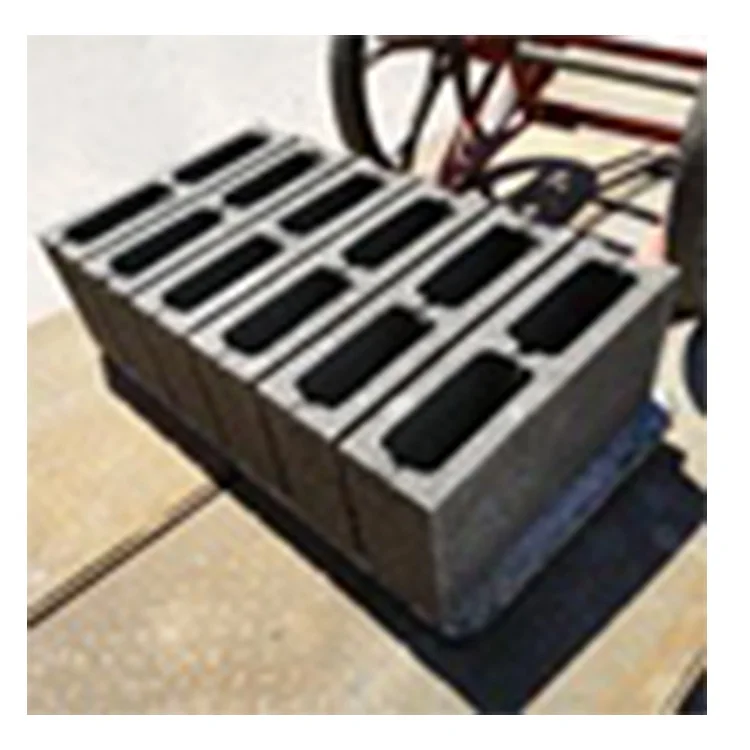
Description
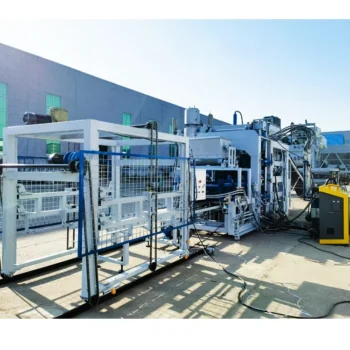
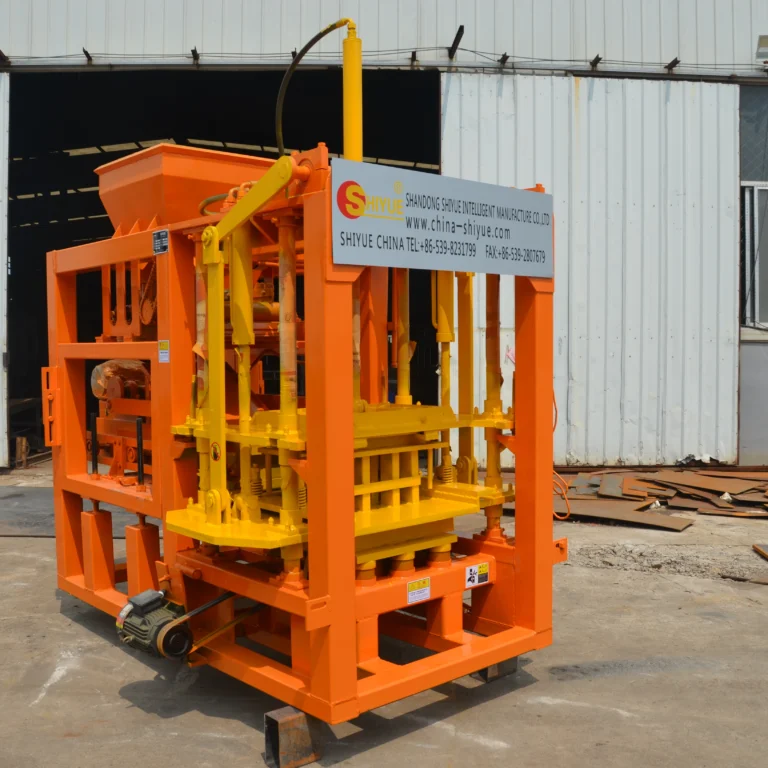
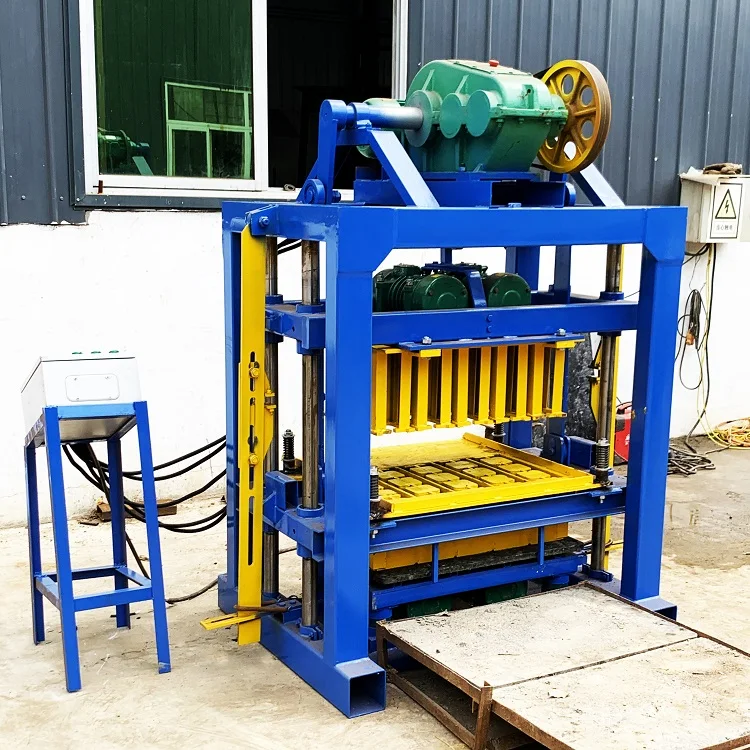
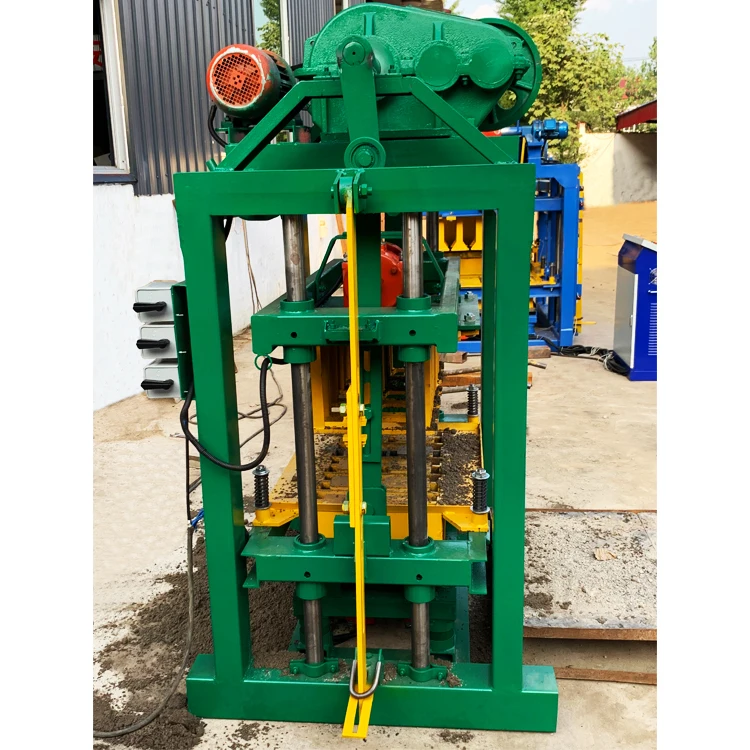
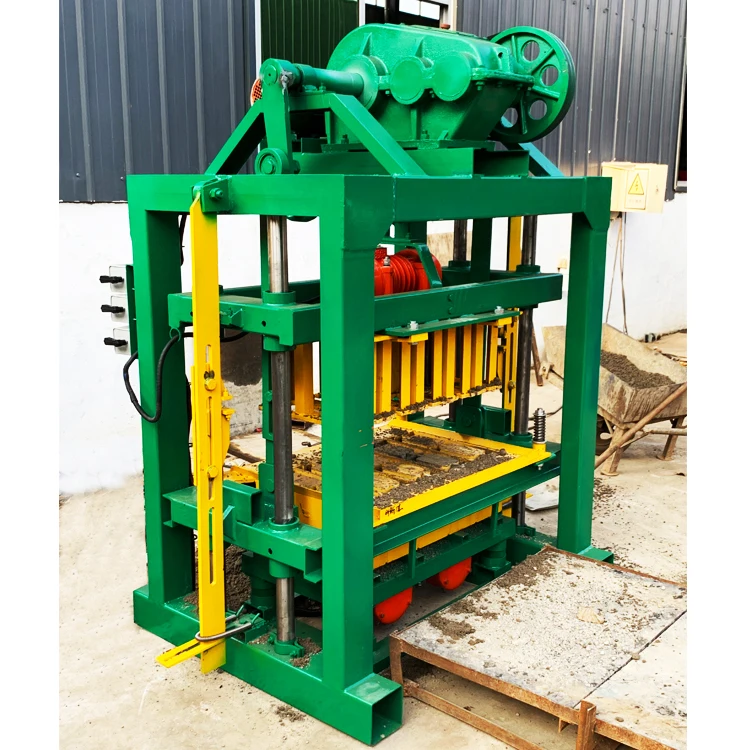
Stocked Configuration Ready — The QTJ4-40 block machine ships from current inventory with standard moulds and matched pallets, eliminating the typical multi-week production wait for buyers on tight project schedules.
Technical Specifications
| Parameter | Value |
|---|---|
| Model | QTJ4-40 |
| Product Type | Manual Concrete Block Making Machine |
| Main Vibration Form | Platform Vibration |
| Vibration Frequency | 2800 r/min |
| Pallet Size | 850 × 450 mm |
| Overall Dimensions | 1350 × 1460 × 1800 mm |
| Machine Weight | 1 T |
| Factory Area Required | 200 m² |
| Worker Requirement | 1–3 people |
| Raw Materials | Concrete, cement, fly ash, crushed stone, sand, dust, gravel, slag |
| Applied Products | Hollow blocks, solid blocks, pavers, interlocking blocks, curbstone |
| Automation Level | Manual / Semi-automatic (top die push and pull, automatic scraper) |
| Production Capacity (400×200×200 mm, 4 pcs/mould) | 360 pcs/h, 2880 pcs/day |
| Production Capacity (400×150×200 mm, 5 pcs/mould) | 500 pcs/h, 4000 pcs/day |
| Production Capacity (225×112.5×60 mm, 9 pcs/mould) | 900 pcs/h, 7200 pcs/day |
| Raw Material Ratio | Cement 8–10%, sand 30–40%, stone 50–60% |
Application Suitability
| Application | Material or Output |
|---|---|
| Small-scale block plant startup | Hollow and solid blocks from crushed stone, sand, and cement |
| On-site construction block manufacturing | Interlocking blocks and pavers using locally available aggregate |
| Building material distributor product line addition | Standard concrete blocks and colored pavers for retail stock |
| Housing project contractor self-production | Curbstone and paving blocks from fly ash and gravel blends |
| First-time entrepreneur block plant | Multiple formats on 850 × 450 mm pallets with minimal labor |
Why "Ready to Ship" Matters More Than the Quoted Price
A block machine sitting in a warehouse today solves a problem that a cheaper machine arriving in eight weeks cannot.
Project deadlines across West Africa and Southeast Asia rarely wait for production lead times. I have watched contractors in Lagos pay daily penalties because their block supply chain collapsed mid-build, and the replacement machine was still on the water. When you are sourcing a QTJ4-40 block machine in stock, the real question is not whether the price is the lowest — it is whether the machine can clear customs and start producing before your masonry crew runs out of material. [NEED_CITE: typical ocean freight transit times and customs clearance delays for industrial machinery imports]
Dispatch Timeline for Stocked QTJ4-40 Units
Standard QTJ4-40 configurations with platform vibration and 850 × 450 mm pallet sizing are held in the warehouse with one or two standard mould sets included. Once payment clears and voltage confirmation is locked in, the machine can be dismantled for container loading within days rather than weeks. The compact footprint of 1350 × 1460 × 1800 mm and 1-tonne weight mean a single unit fits inside a standard 20-foot container with room for spare pallets and a mould crate.
Container Loading and Dismantling for Shipment
The QTJ4-40 is small enough to ship fully assembled to a nearby port if road transport allows, but for overseas buyers the machine is partially dismantled — vibration platform, frame, and top die separated — then reassembled on the bolt holes already drilled at the factory. This is not custom engineering; it is a standard procedure documented in the packing photographs and dispatch checklist. Buyers working to a project deadline should confirm their port of discharge early so that vessel booking aligns with the loading date. [NEED_CITE: standard container loading practices for light block making machinery]
Matching the Stocked Configuration to Your Site Voltage
A QTJ4-40 block machine in stock typically carries a standard voltage configuration common to the manufacturer’s domestic market. Before the container is sealed, the buyer must confirm the local supply voltage and frequency at the installation site. A mismatch discovered after arrival means rewinding motors or sourcing a transformer locally — both of which add days to a timeline that was supposed to be fast. This is a five-minute conversation that prevents a multi-week commissioning delay.
Platform Vibration and What It Means for Dispatch Speed
The 2800 r/min platform vibration system on the QTJ4-40 is a proven, standardised assembly that does not require custom fabrication per order. Unlike mould-specific vibration tables that must be tuned to a particular block format, platform vibration works across hollow blocks, solid blocks, and pavers on the same 850 × 450 mm pallet. This universality is exactly why the machine can sit in stock — it does not need to be built to a buyer’s unique specification before it ships.
Pallet Availability and the Hidden Bottleneck
The 850 × 450 mm pallet size used by the QTJ4-40 is a standard dimension in the small block machine segment. Bamboo, plywood, and PVC pallet options are typically held in inventory alongside the machine itself, so a buyer ordering a fast delivery manual block machine does not then face a separate six-week wait for pallets to arrive from a different supplier. Confirm pallet material and quantity at the time of machine order to keep everything in the same container.
Reading the Capacity Figures Honestly
The listed outputs — 360 pieces per hour on 400 × 200 × 200 mm hollow blocks, 500 pieces per hour on 400 × 150 × 200 mm blocks, and 900 pieces per hour on 225 × 112.5 × 60 mm pavers — are based on specific mould configurations and assume a standard concrete mix with the recommended cement-sand-stone ratio. Actual daily output depends on crew speed for pallet handling, curing space availability, and how quickly the team can feed raw material into the mixer. These are manual and semi-automatic operations, not continuous production lines.
What Happens When You Skip the Voltage Conversation
I have stood in a yard in Accra watching a brand-new block machine sit idle under a tarp because the site ran on 415V three-phase and the machine arrived wired for 380V. The motor burned out on the second test cycle. The buyer lost a week sourcing a step-down transformer, and by then the masonry subcontractor had walked off the job. [NEED_CITE: common motor failure causes related to voltage mismatch in exported machinery]
Why the QTJ4-40 Ships From Inventory Rather Than Built-to-Order
Block machinery as a single focus means the machine, mould, pallet, and handling equipment are specified as a matched system and warehoused together. Configuration is set against a buyer’s actual mix design and local aggregate rather than a catalogue default, but the base machine and standard moulds do not require custom engineering. Moulds for the formats the buyer’s market sells — including custom drawings — can follow in a second shipment if the project needs the base machine producing immediately.
Installation and Commissioning Support
Installation and commissioning support with operator training is available for buyers who want a factory technician on site. For the QTJ4-40, which weighs one tonne and bolts together on pre-drilled holes, many experienced contractors handle reassembly with the provided documentation. The key is having the hydraulic and electrical schematic, the operation manual, and the mould drawing set on hand before the crate is opened.
Documentation & Verification
- Factory test record on your target block format before dispatch
- Machine specification sheet confirming voltage and frequency matched to your site
- Mould drawing and format list for every mould included in the shipment
- Pallet specification with material grade and load rating per 850 × 450 mm size
- Hydraulic and electrical schematic for on-site reassembly and troubleshooting
- Packing photographs and container loading plan before the seal is applied
Installation, Commissioning & Support
- Foundation: level concrete pad within the 200 m² factory area, no deep piling required for a 1-tonne machine
- Power: confirm three-phase voltage and frequency before dispatch to avoid motor rewind delays
- Reassembly: pre-drilled bolt pattern allows frame and vibration platform reconnection without welding
- First run: test with local aggregate sample to verify vibration force matches your mix density requirement
- Training: operator instruction covers top die push-pull cycle, automatic scraper use, and pallet handling rhythm
- Spares: wear parts list and mould inventory provided so first replacements can be ordered proactively
What to Include in Your Inquiry
Tell us the block format your market actually sells, the daily output you need to hit your project milestone, and the voltage and frequency at your installation site. If you have local aggregate samples available, shipping a small quantity to our facility allows us to run a test batch on the QTJ4-40 before the machine leaves the warehouse. Confirming these details upfront is what keeps a fast delivery manual block machine delivery actually fast.
Frequently Asked Questions
Q: Which QTJ4-40 configurations are currently in stock versus built-to-order?
A: Base machines with platform vibration and the standard 850 × 450 mm pallet system are held in inventory along with common hollow block and paver moulds. Custom mould designs drawn to buyer specifications require a separate production run and ship after the stocked machine if the project timeline demands it.
Q: What is the typical dispatch timeline from order confirmation to container loading?
A: Once voltage and frequency are confirmed and payment is received, a stocked QTJ4-40 can be dismantled and loaded within a matter of days. Built-to-order configurations or custom mould sets extend this timeline depending on the complexity of the request.
Q: Can a QTJ4-40 share a container with other equipment or spare pallets?
A: The machine’s compact dimensions and one-tonne weight leave significant space inside a standard 20-foot container. Buyers commonly include additional pallets, a second mould set, and small supporting equipment such as a mixer in the same shipment to maximise freight value.
Q: How long does on-site reassembly take after the machine arrives at the project yard?
A: With the provided hydraulic and electrical schematic and pre-drilled bolt pattern, an experienced crew can reassemble the QTJ4-40 and conduct a first test cycle within a single working day. Allow additional time for foundation curing and electrical connection verification.
Q: Which block formats do the standard stock moulds cover?
A: Stocked mould sets typically include the 400 × 200 × 200 mm hollow block, the 400 × 150 × 200 mm block, and the 225 × 112.5 × 60 mm paver format. Buyers needing interlocking profiles or curbstone shapes should confirm mould availability at the time of order.