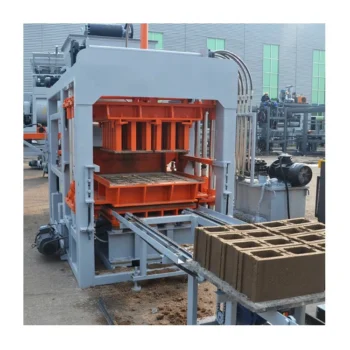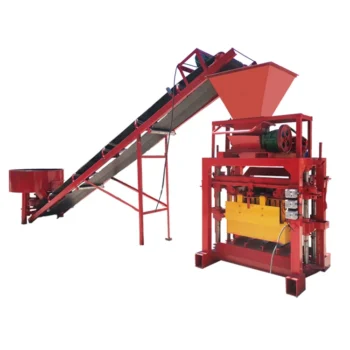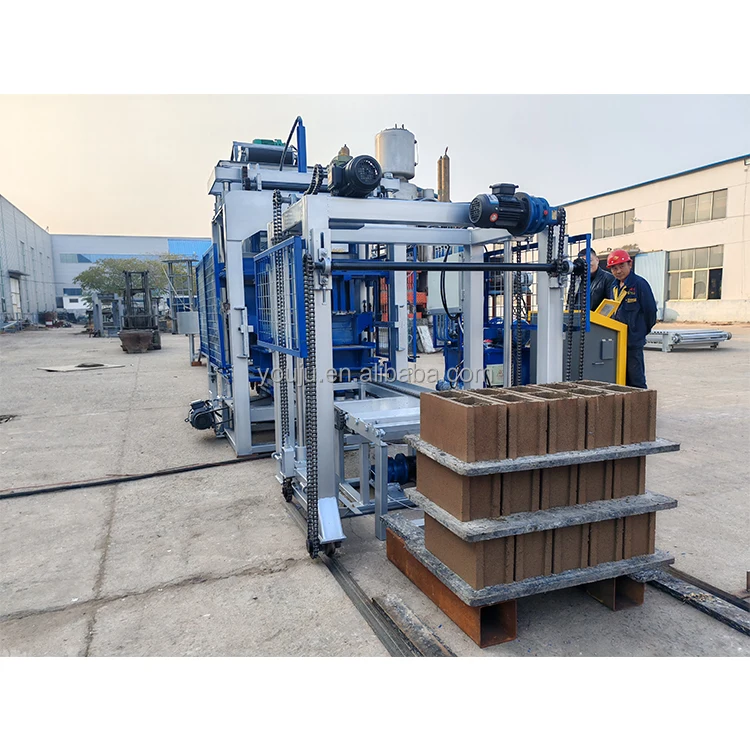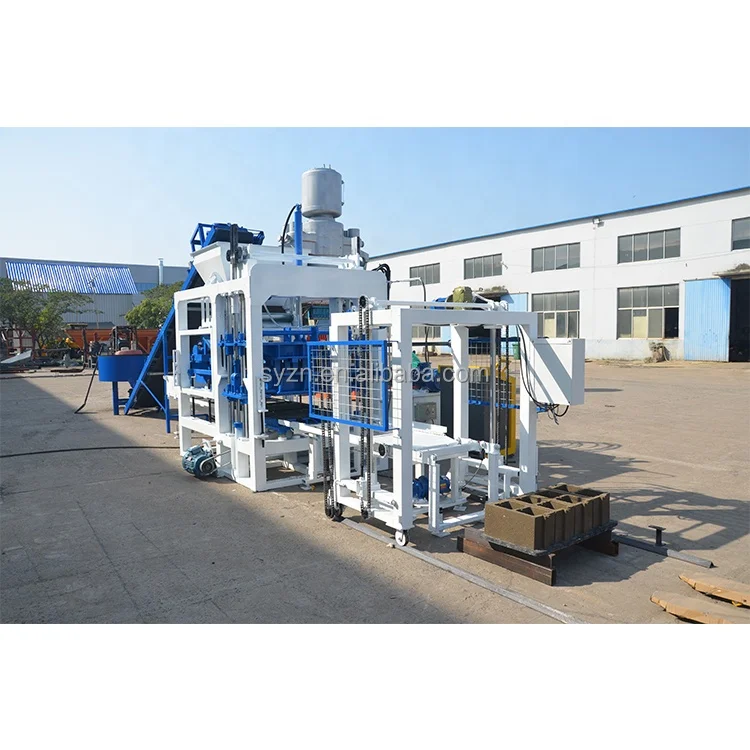

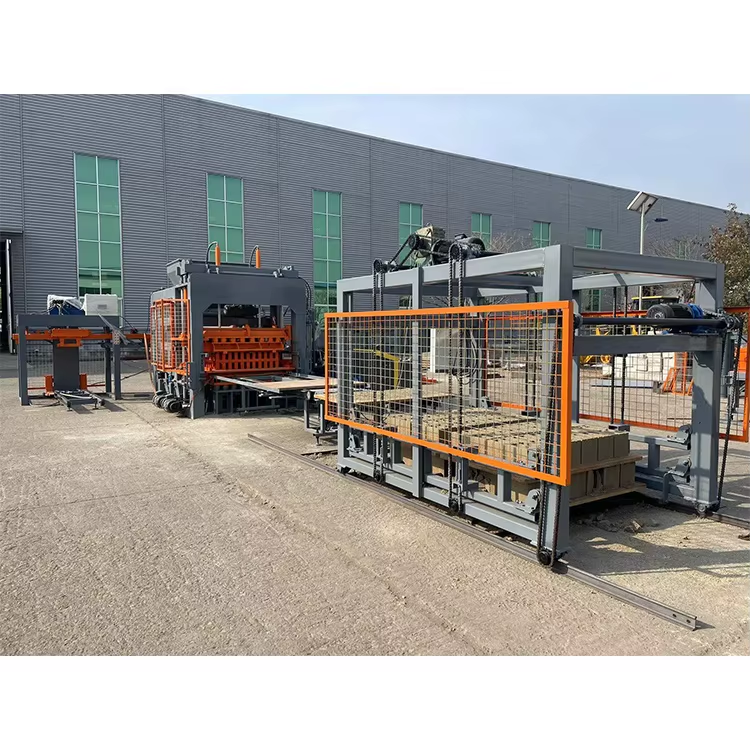
Description
Pre-matched handling integration — stocked units ship with verified pallet and stacking compatibility to prevent on-site bottlenecks and ensure rapid deployment.
Technical Specifications
| Parameter | Value |
|---|---|
| Model | QT10-15 |
| Product Type | Fully Automatic Concrete Block Making Machine |
| Voltage | 380V/220V |
| Overall Dimensions (L×W×H) | 935023202950mm |
| Net Weight | 8000 kg |
| Control System | PLC |
| Core Components | PLC, Engine, Gear, Pump |
| Pallet Size | 1100*900mm |
| Vibration Force | 100KN |
| Pcs/mould | 4pcs/mould |
| Cycle Time | 15-20S (basis to be confirmed) |
| Brick Size Supported | 400100200 mm, 400120200 mm, 400200200 mm |
| Brick Type | Hollow paver, solid, hollow curbstone |
| Automation Level | Fully Automatic |
| Warranty | 1 Year |
Application Suitability
| Application | Material or Output |
|---|---|
| Housing project block supply | Fly ash, cement, sand, and concrete hollow blocks |
| On-site paving stone production | Concrete solid blocks and interlocking pavers |
| Infrastructure curbstone molding | Heavy-duty concrete mix for hollow curbstones |
Why Dispatch Timing Dictates Project Viability
Securing a QT10-15 block making machine in stock eliminates the uncertainty of extended manufacturing queues when site deadlines are rigid.
When a construction schedule is already compressed, waiting months for a custom-built press turns a manageable timeline into a critical delay. I have seen project sites in the Middle East sit idle because the main press arrived late, forcing contractors to pay premium rates for external block suppliers while their own equipment was still in transit. Having the primary forming equipment and standard moulds physically ready for container loading shifts the advantage back to the buyer [NEED_CITE: impact of equipment lead times on construction project schedules].
Container Loading and Dismantling Logistics
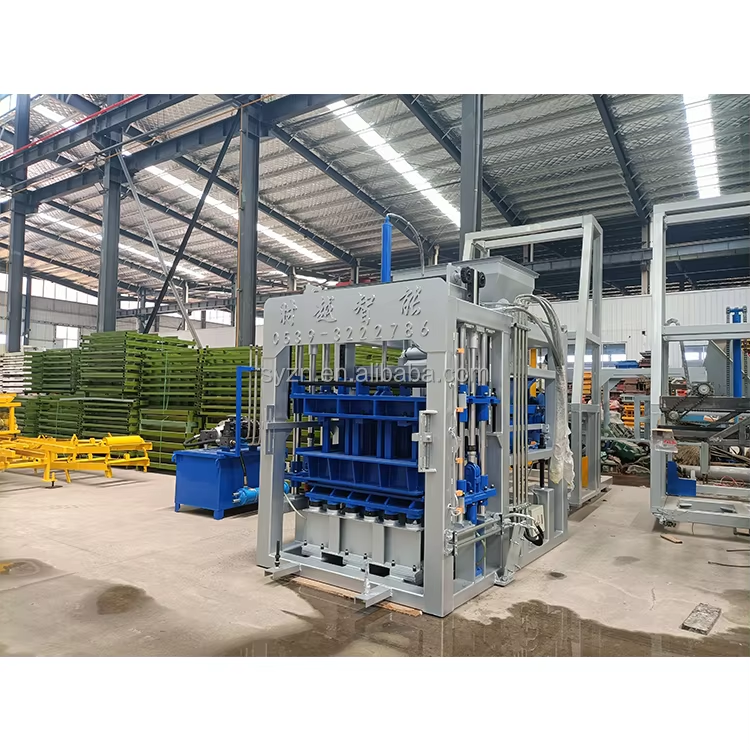
Moving an 8000 kg machine with a 9350mm footprint requires a precise dismantling sequence before it reaches the port. The host frame, hydraulic station, and PLC cabinet are separated to maximize space inside standard shipping containers, ensuring the QT10-15 block making machine in stock fits securely without compromising structural integrity. This pre-planned loading strategy prevents last-minute freight surcharges and keeps the arrival estimate accurate.
Upstream and Downstream Pacing
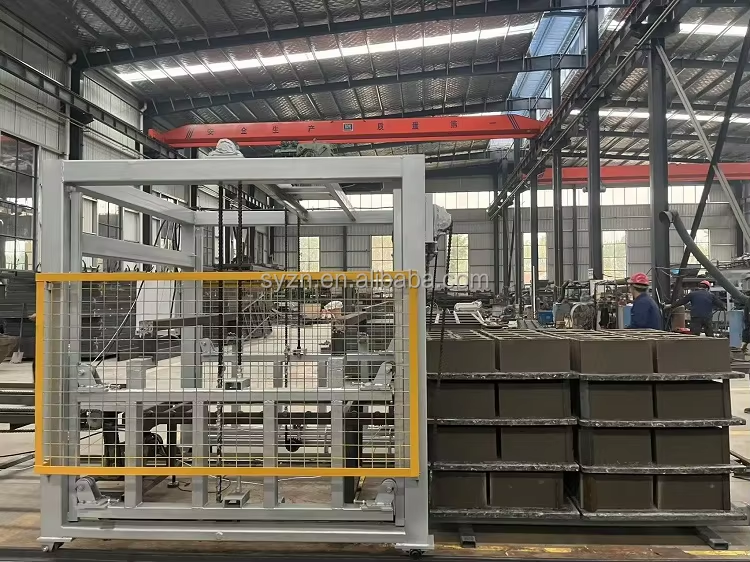
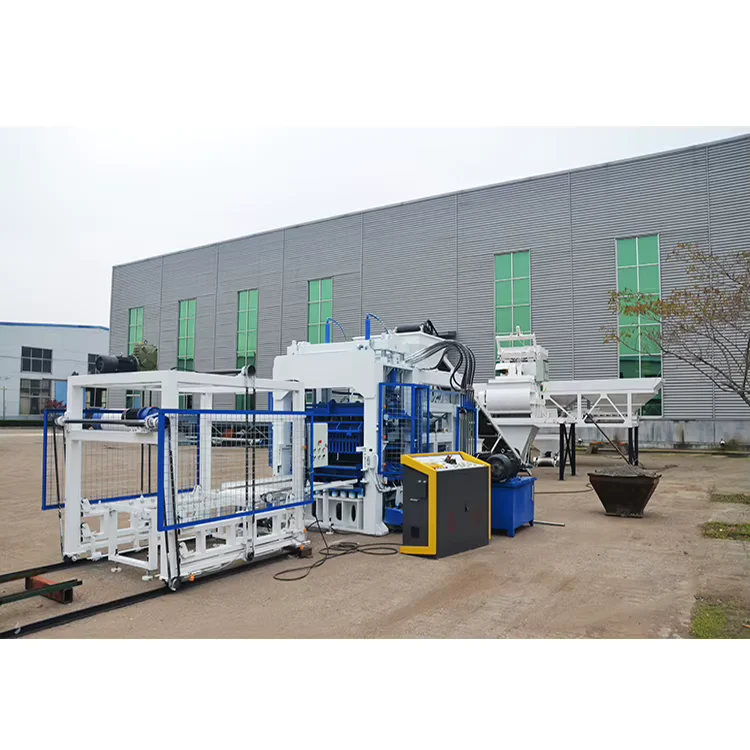
A fast press is useless if the rest of the line cannot keep up. Years ago, I watched a site stall completely because a buyer rushed a host machine without verifying the downstream stacking capacity; the manual handling team simply could not clear the output, and the entire operation choked. Before we dispatch any unit, the pallet feeding and automatic stacking rhythms are verified against the press cycle to guarantee continuous material flow [NEED_CITE: synchronization requirements in automated concrete block production lines].
Interpreting the Physical and Operational Specs
The 1100*900mm pallet size is a critical dimension that must align perfectly with your existing curing racks and site forklifts. If the pallets do not match your handling infrastructure, you will face immediate bottlenecks the moment production starts. The 100KN vibration force works in tandem with the hydraulic pressure to consolidate the fly ash and cement mix, but the actual 15-20S cycle time depends entirely on the specific block format and material thickness being pressed. Furthermore, the dual 380V/220V compatibility means the electrical cabinets can be configured to match local grid standards before the machine leaves the factory, avoiding costly on-site rewiring [NEED_CITE: industrial voltage and frequency standards for exported machinery].
The Hidden Cost of Ignoring Peripheral Equipment
Focusing solely on the main press while neglecting the curing rack handling and cubing systems leads to severe operational drag. When the automated stacker is missing or mismatched, wet blocks are handled manually, resulting in high breakage rates and inconsistent curing. This peripheral neglect forces site managers to hire extra labor just to move pallets, completely negating the efficiency of a fully automatic setup [NEED_CITE: labor and breakage costs in semi-manual block handling].
Why Source This Equipment Here
We treat block machinery as a single focus, meaning the machine, mould, and pallet handling are specified as one matched system rather than assembled from disconnected suppliers. Dispatch lead times are quoted upfront based on actual warehouse inventory, not optimistic production guesses. Every stocked unit is configured against your target block format and local site conditions before crating. We provide complete container loading plans and machine dismantling procedures to ensure safe transit. Finally, our customs documentation support prevents border delays, speeding up the final delivery to your project site.
Documentation & Verification
- Factory test record verifying cycle times on your specific block format before dispatch
- Container loading plan and machine dismantling diagrams for straightforward shipment
- Voltage and control language confirmation sheet matching your local site requirements
- Packing photographs taken post-crating to verify secure transit preparation
- Complete customs documentation package to expedite border clearance procedures
Installation, Commissioning & Support
- Foundation layout mapped to the 935023202950mm footprint for precise site preparation
- Dedicated power circuit planning based on the confirmed 380V/220V system requirements
- Guided reassembly of dismantled host frames and hydraulic stations upon container arrival
- Initial PLC parameter tuning aligned with your local aggregate and cement proportions
- Operator training focused on rapid mould changes and daily hydraulic system checks
- Wear parts inventory list provided to prevent downtime during early production phases
Preparing Your Site and Inquiry Details
To ensure the equipment arrives ready for immediate operation, please provide your target daily output and the specific block formats required for your market. We also need your local voltage and frequency standards, along with the dimensions of your existing curing area and forklift capacities. Finally, clarify whether your site requires specific PLC display languages for your operators.
Frequently Asked Questions
Q: What is the exact dispatch lead time and arrival estimate for the stocked unit?
A: Because the equipment is physically available in our warehouse, the dispatch lead time is limited only by the container booking and customs clearance process. We provide an upfront arrival estimate based on current shipping routes to your destination port, eliminating the guesswork associated with custom manufacturing queues.
Q: How is the machine dismantled and loaded into containers for fast shipment?
A: The 8000 kg host frame, hydraulic station, and control cabinets are systematically separated to optimize space within standard freight containers. We provide a detailed dismantling and loading plan to ensure the equipment is secured properly for ocean transit and can be efficiently reassembled upon arrival at your site.
Q: Are standard moulds for my required block sizes currently available?
A: We maintain an inventory of standard moulds for common formats like 400200200 mm hollow blocks and standard paving stones. When you confirm your target formats, we check immediate availability and include them in the same container dispatch to ensure your production can start without waiting for secondary shipments.
Q: What customs documentation is provided to ensure smooth border clearance?
A: We supply a comprehensive documentation package, including commercial invoices, packing lists, certificates of origin, and machinery test reports. This complete set is prepared in advance to prevent administrative holds at the border, ensuring the equipment moves quickly from the port to your project site.
Q: Can the electrical configuration be confirmed immediately before dispatch?
A: Yes, the system supports both 380V and 220V configurations. Before the machine is crated, we verify your local grid frequency and voltage requirements, and set the PLC display language. This ensures the electrical cabinets are fully compliant and ready for immediate connection when unloaded.