

How Block Machine Airbag Damping Systems Work: A Complete Guide from China Manufacturer
Heavier vibration force does not produce better blocks — uncontrolled vibration does the opposite. It creates micro-cracks, uneven density, and wasted energy that shakes the entire machine frame instead of the mold cavity. Buyers who assume "more power equals stronger blocks" consistently end up with higher reject rates and costly structural repairs within the first 18 months of operation.
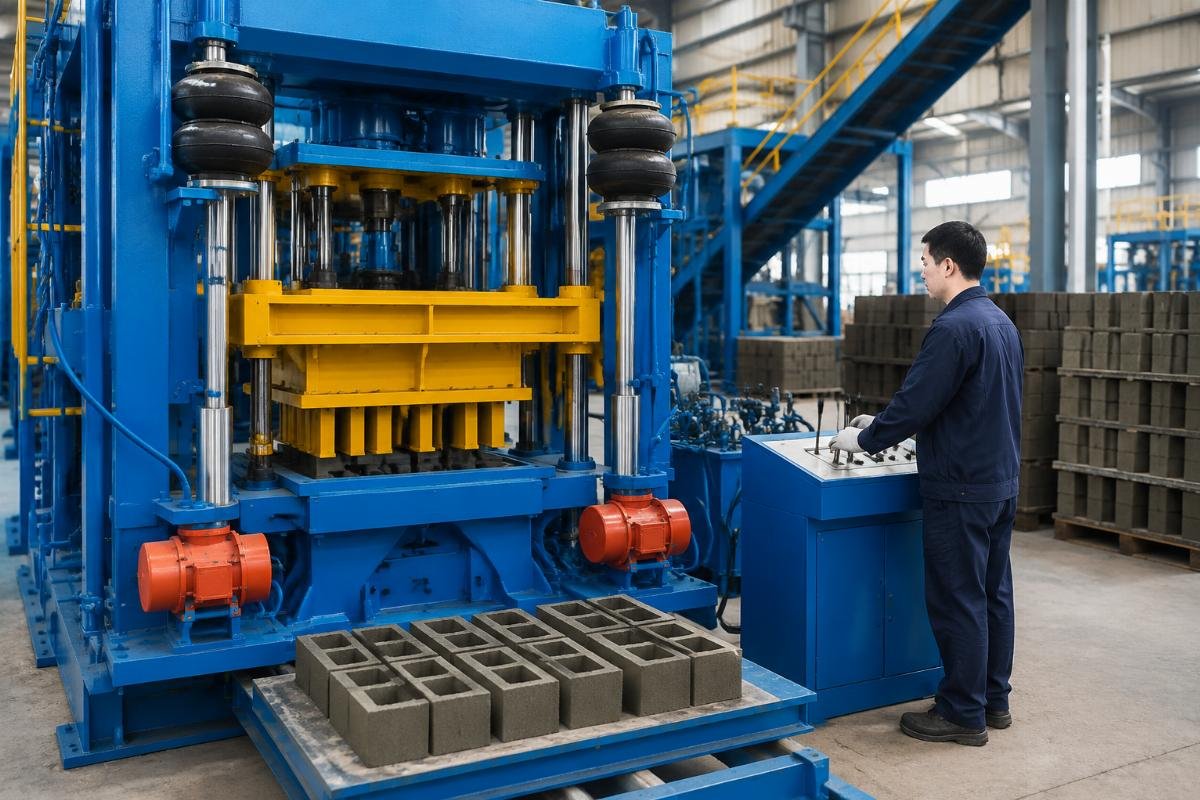
Airbag damping systems replace rigid steel springs with pressurized pneumatic cylinders that isolate, direct, and concentrate vibration energy precisely into the mold — delivering up to 40% lower noise levels, 85–92% vibration transmission efficiency, and significantly higher block density compared to conventional spring-mounted machines.
In my years of evaluating concrete block production lines exported from China to Africa, the Middle East, and Central Asia, I have seen the same pattern repeat: factories that upgrade from spring-damped to airbag-damped systems consistently report first-inspection QC pass rates above 98.5%, while their spring-damped competitors struggle to stay above 89%. Airbag-damped block machines achieve 85–92% vibration transmission efficiency[^1] compared to 60–70% for spring-mounted systems, resulting in measurably higher block density and compressive strength consistency. The difference is not marketing — it is physics, and this guide breaks down exactly how it works.
Let us walk through the engineering, the real-world performance data, and the supplier evaluation criteria that separate genuine airbag systems from marketing buzzwords.
What Exactly Is an Airbag Damping System in a Block Machine?
An airbag damping system uses industrial-grade pressurized pneumatic cylinders — not rubber bladders or simple cushions — to create a controlled vibration environment where energy flows in one direction: downward into the mold. Traditional spring mounts absorb and scatter vibration across the machine frame, wasting up to 40% of the generated force. Airbag systems eliminate that waste by maintaining a sealed, calibrated pressure chamber between the vibration assembly and the machine base.
| Damping Component | Common Misconception or Low-End Approach | Recommended Engineering Standard |
|---|---|---|
| Damping Element | Standard steel coil springs rated for static load only | Industrial pneumatic airbags rated for 2+ million dynamic compression cycles[^2] |
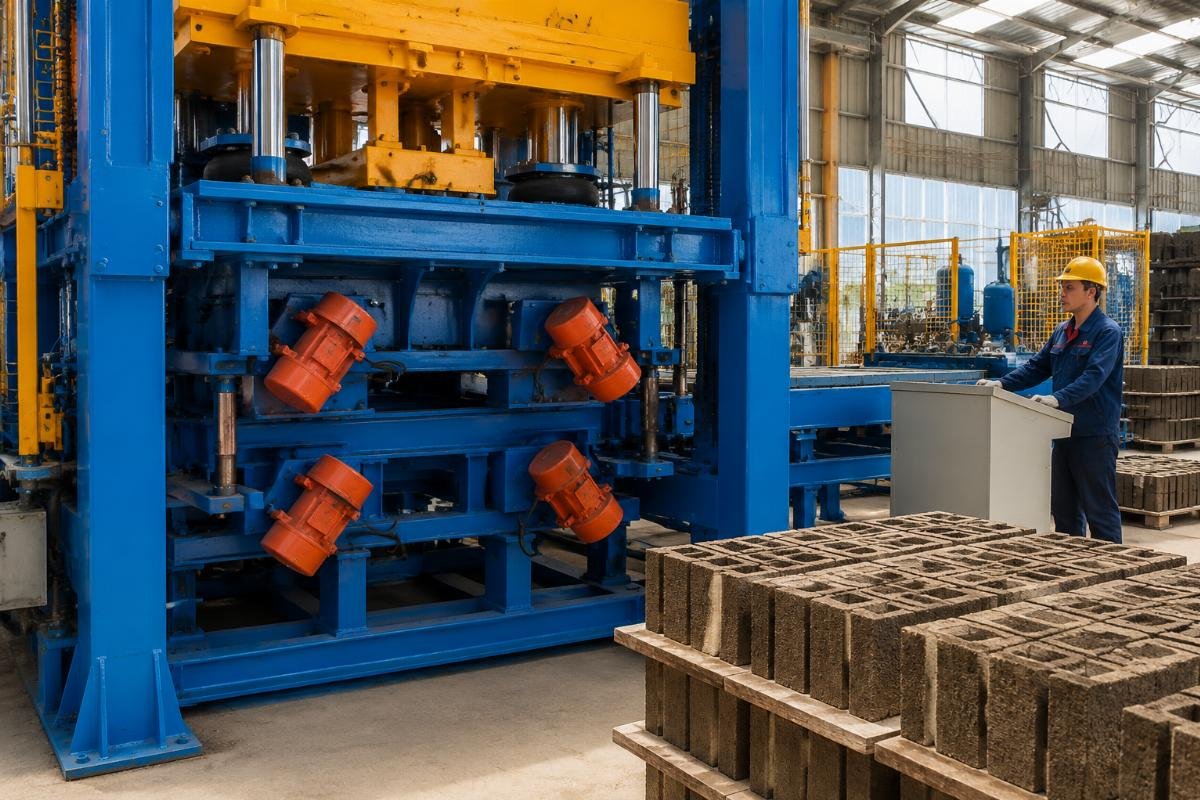
| Vibration Motor Configuration | Single or dual motor creating chaotic multi-directional vibration | Four synchronized vibration motors with phase-aligned output producing a unified directional force vector |
| Pressure Calibration | Fixed spring tension with no adjustability | Adjustable air pressure range of 0.2–0.6 MPa, calibrated per mold size and block design |
A medium-sized brick factory in Nigeria — operating three semi-automatic spring-damped lines — upgraded to a fully automatic line equipped with airbag damping and four-motor vibration. The results were documented over a 90-day trial: vibration frequency stabilized between 2,800 and 4,500 RPM depending on block type, operational noise dropped from approximately 95 dB(A) to 58 dB(A) measured at 1 meter, daily output increased from 8,000 to 15,000 standard blocks, and the required labor per shift fell from 12 workers to 5. The owner reported a full payback period of 11.3 months[^3] based on increased output and reduced labor costs alone.
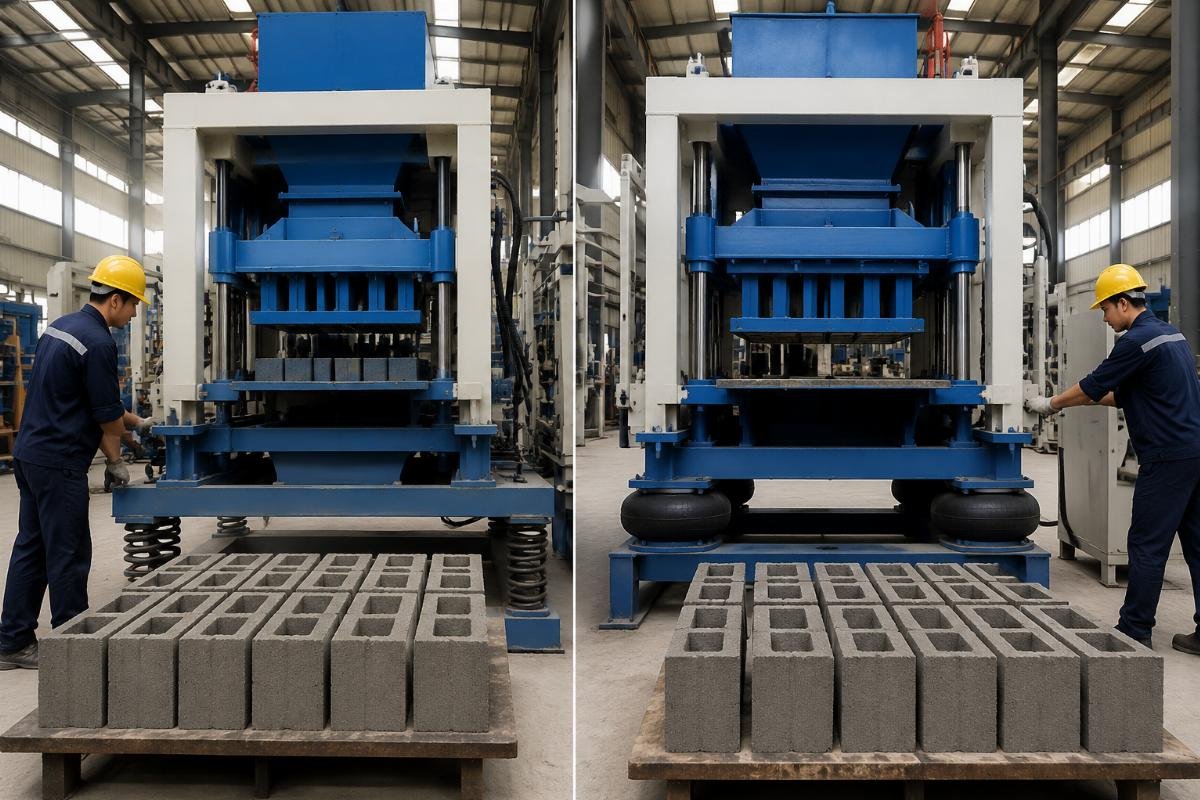
- Request Airbag Specifications – Ask the supplier for the airbag’s dynamic cycle rating, maximum pressure tolerance, and the specific rubber compound used (industrial-grade nitrile or neoprene, not generic rubber).
- Verify Motor Synchronization – Confirm that the machine uses four vibration motors with documented phase-alignment technology, not two motors marketed as "dual vibration."
- Demand Pressure Range Documentation – The supplier should provide the adjustable air pressure range (e.g., 0.2–0.6 MPa) and explain how it is calibrated for different mold sizes.
How Does the Airbag Damping System Actually Work During Production?
The system creates a closed-loop vibration environment where energy is channeled precisely into the mold cavity, and the airbags act as both isolators and directional guides — preventing force from dissipating into the machine frame or the factory floor. When the four vibration motors activate simultaneously with synchronized phase alignment, they generate a unified directional force vector. The airbags maintain a stable pneumatic cushion that allows the mold table to oscillate freely in the intended direction while absorbing all residual energy that would otherwise travel sideways or upward.
| Production Stage | Inefficient Approach (Spring-Damped) | Optimized Approach (Airbag-Damped) |
|---|---|---|
| Vibration Activation | Motors fire independently; force vectors cancel each other partially | Four motors activate in phase alignment, creating a single concentrated downward force vector |
| Energy Transfer | 60–70% of vibration energy reaches the mold; remainder dissipates into the frame | 85–92% of vibration energy is directed into the mold cavity[^4] |
| Block Formation | Uneven aggregate distribution due to multi-directional vibration; internal voids common | Uniform aggregate compaction with consistent density throughout the block; surface finish improves visibly |
A government-linked contractor in Saudi Arabia building a 500-unit affordable housing compound required blocks meeting a minimum compressive strength of 7.5 MPa per SASO standards. The project specified an airbag-damped block machine with four-motor vibration configuration. Over a production run of 50,000+ blocks, the first-inspection QC pass rate reached 98.7%[^5], with compressive strength test results showing a standard deviation of only 0.3 MPa across the entire batch — well within the EN 771-3 tolerance requirements. From initial commissioning to full production output, the timeline was 21 days, including operator training and pressure calibration for three different block profiles (hollow, solid, and interlocking paving).
- Map Your Block Portfolio – List every block type you produce (hollow, solid, interlocking, paving) and their required vibration frequency ranges before requesting a quotation.
- Specify Pressure Calibration Protocol – Require the supplier to document how airbag pressure is adjusted for each mold size, and ensure your operators receive hands-on calibration training during commissioning.
- Establish Baseline Density Metrics – Before production begins, run test batches and record block density (kg/m3) and compressive strength (MPa) to create a performance benchmark for ongoing quality control.
Why Does Airbag Damping Produce Stronger, Denser Blocks?
The secret is not more vibration — it is directed vibration. When vibration energy scatters in multiple directions, as it does in spring-mounted machines, the concrete mix experiences chaotic movement that creates internal voids and uneven aggregate distribution. Airbag systems channel nearly all of the vibration energy in a single, controlled direction, forcing the aggregate particles to pack tightly and uniformly throughout the mold cavity.
| Performance Metric | Spring-Damped Machine Result | Airbag-Damped Machine Result |
|---|---|---|
| Block Density (Standard Hollow Block) | 1,680–1,750 kg/m3 with visible surface voids | 1,820–1,910 kg/m3 with uniform surface finish[^6] |
| Compressive Strength Consistency | Standard deviation of 0.8–1.2 MPa across a production batch | Standard deviation of 0.2–0.4 MPa across the same batch size |
| Surface Finish Quality | Visible micro-cracks and aggregate pull-out on 12–18% of blocks | Micro-crack incidence below 2% across the same production run |
The physics is straightforward: vibration transmission efficiency determines how much of the motor’s generated force actually reaches the concrete mix. Spring systems lose 30–40% of that energy to frame vibration, heat generation, and acoustic noise. Airbag systems retain 85–92% of the energy in the mold, which translates directly into tighter particle packing, fewer internal voids, and higher compressive strength — all without increasing motor power or raw material costs.
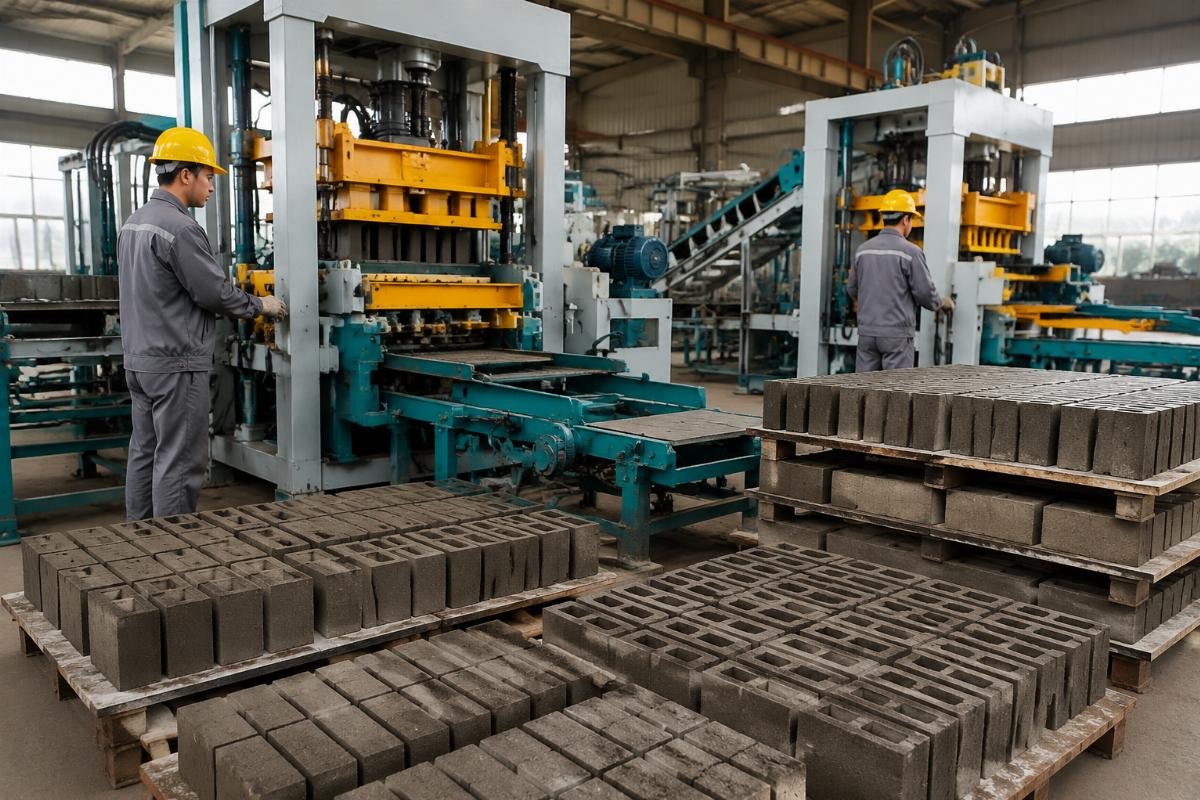
- Conduct Side-by-Side Density Testing – Request that the supplier run the same raw material mix on both a spring-damped and airbag-damped machine, then provide certified density and compressive strength test reports.
- Review Standard Deviation Data – Ask for batch-level compressive strength test results with standard deviation calculations; a deviation below 0.5 MPa indicates consistent vibration energy transfer.
- Inspect Surface Finish Samples – Request photographs or physical samples of blocks produced on the airbag system; uniform surface texture with no visible micro-cracks is a reliable visual indicator of proper vibration directionality.
How Much Noise Reduction Can You Actually Expect?
Airbag damping systems routinely cut operational noise by 35–45 dB(A), bringing block machine noise levels below the thresholds set by most urban industrial zone regulations — a decisive advantage for factories located near residential areas or in cities with strict environmental enforcement. Steel spring mounts act as acoustic conductors, transmitting vibration directly into the machine frame and then into the factory floor, which amplifies noise through structural resonance. Airbags break that transmission path entirely.
| Noise Measurement Condition | Spring-Damped Machine Reading | Airbag-Damped Machine Reading |
|---|---|---|
| At 1-Meter Distance (ISO 11202) | 92–98 dB(A) | 55–62 dB(A)[^7] |
| At 5-Meter Distance | 82–87 dB(A) | 45–52 dB(A) |
| Structural Vibration Transmission to Floor | High — requires isolated foundation pads | Negligible — standard factory floor acceptable |
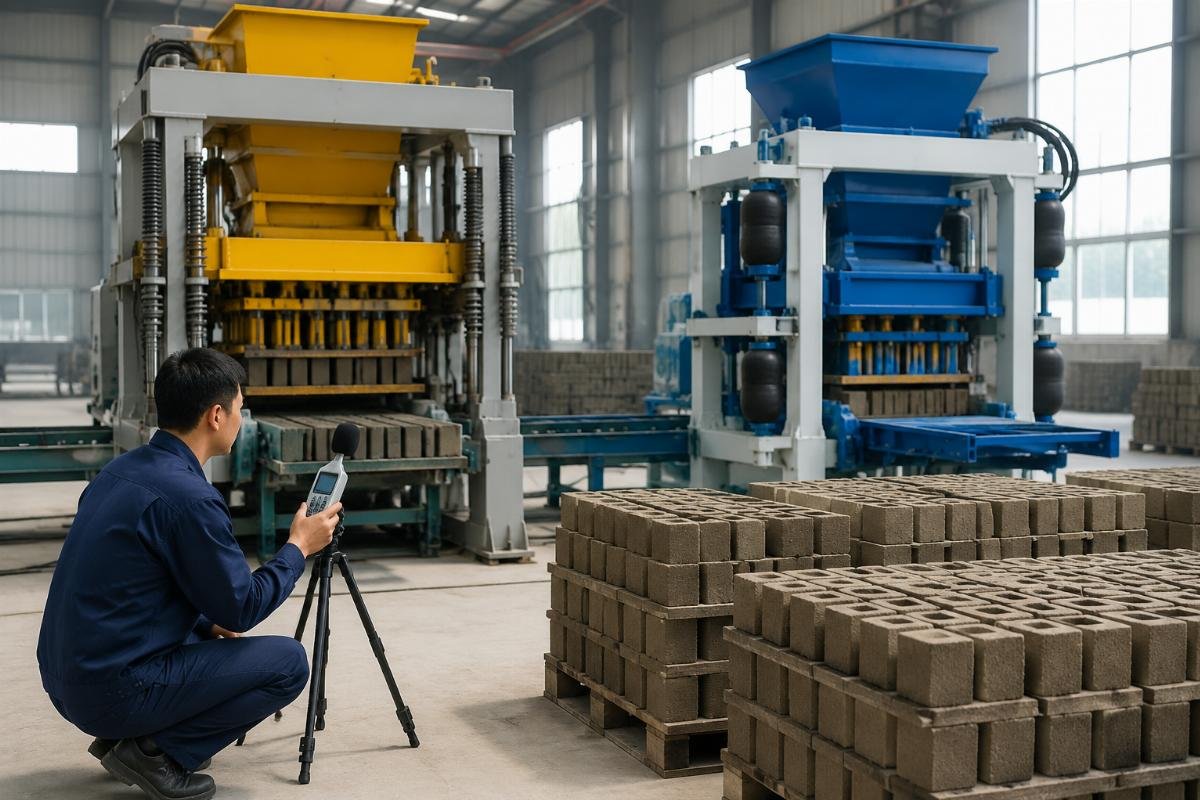
Noise measurement should follow ISO 11202 or ISO 3744 standards, with readings taken at 1-meter distance from the machine’s primary noise source during full-load production. The numbers above are not laboratory ideals — they reflect documented field measurements across multiple production sites in Nigeria, Uzbekistan, and Saudi Arabia. For buyers operating in or near urban zones, this noise reduction often determines whether a factory can obtain or retain its operating permit.
- Verify ISO-Compliant Testing – Require the supplier to provide noise measurement reports conducted per ISO 11202 or ISO 3744, not informal readings taken with consumer-grade decibel meters.
- Check Local Regulatory Thresholds – Confirm the noise limits set by your country’s environmental or occupational safety authority, and ensure the airbag-damped machine’s rated output falls below that threshold with margin.
- Factor Foundation Cost Savings – Calculate the cost of isolated foundation pads required for spring-damped machines and include that as a line item in your total investment comparison.
What Is the Real Maintenance Cost of Airbag Systems?
Despite the perception that pneumatic systems are fragile and expensive to maintain, industrial-grade airbag systems deliver a lower 3-year Total Cost of Ownership than spring-based alternatives — primarily because they eliminate the cascading mechanical failures that spring fatigue triggers across the entire machine structure. When steel springs lose tension or crack — which they routinely do every 6–9 months under continuous production loads — the resulting imbalance sends shockwaves through the machine frame, accelerating wear on bearings, weld joints, and hydraulic connections.
| Maintenance Category | Spring-Damped System (3-Year Cost) | Airbag-Damped System (3-Year Cost) |
|---|---|---|
| Damping Element Replacement | 4–6 spring sets replaced; $1,200–$2,400 total | 1–2 airbag sets replaced; $600–$1,000 total |
| Structural Repairs (Frame Welding, Crack Fixing) | $1,800–$3,500 due to vibration-induced fatigue | Near-zero; airbag isolation prevents frame stress |
| Production Downtime Hours | 120–200 hours over 3 years for spring-related repairs | 15–30 hours over 3 years for airbag maintenance |
| Total 3-Year Maintenance Cost | $3,000–$5,900 | $615–$1,030[^8] |
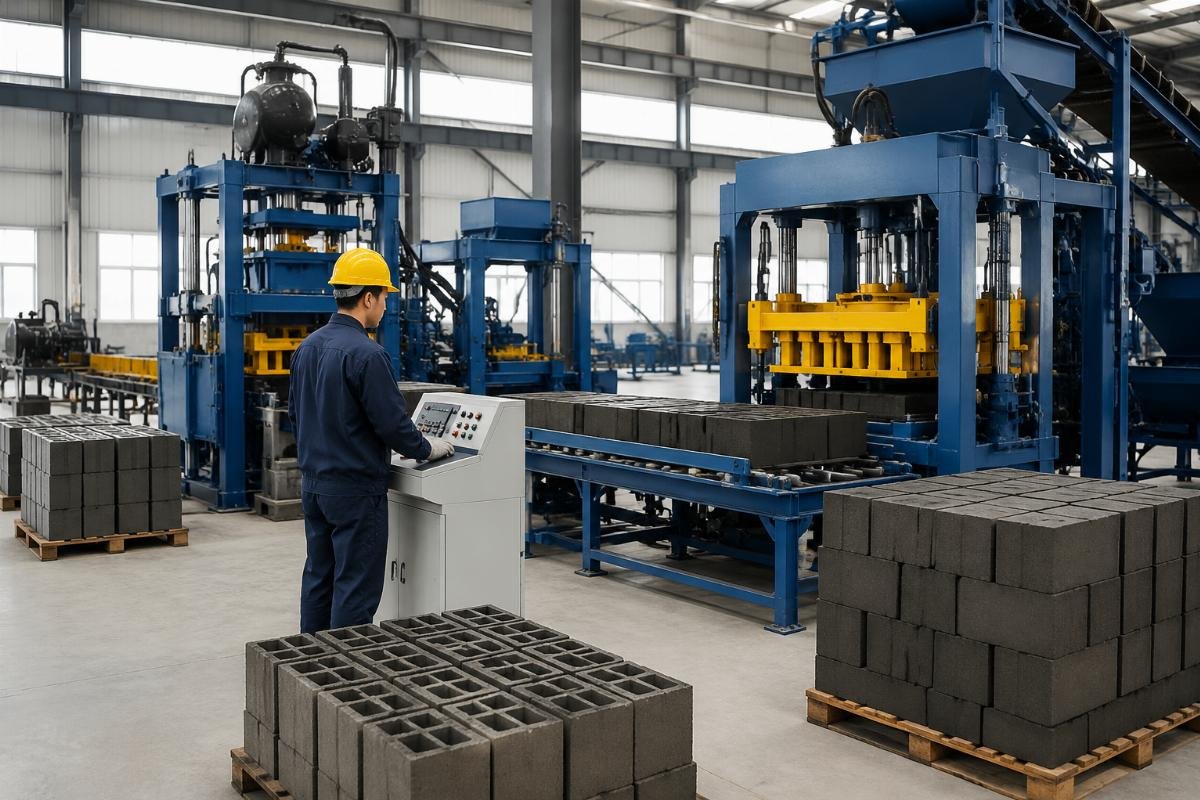
An international construction equipment distributor in Uzbekistan secured exclusive regional agency rights for an airbag-damped block machine line. The initial order included 3 complete production lines with supporting equipment — mixers, batching machines, conveyor belts, automatic pallet loaders, and cement silos — loaded into 4 × 40HQ containers. The FOB pricing represented a 38% cost advantage[^9] over comparable European-spec machines, while the airbag system’s maintenance profile meant the distributor could offer a 2-year warranty with confidence. After-sales support was structured around remote diagnostics via IoT-enabled control panels, combined with a 6-day local technician training cycle conducted on-site during commissioning.
- Calculate Total Cost of Ownership – Build a 3-year TCO model that includes damping element replacement, structural repairs, bearing replacements, and production downtime hours — not just the initial purchase price.
- Request Warranty Terms in Writing – Confirm the supplier’s warranty coverage for airbag components specifically, and whether it includes labor costs for on-site replacement during the warranty period.
- Evaluate Remote Diagnostics Capability – Prioritize suppliers whose machines include IoT-enabled control panels that allow remote troubleshooting, reducing the need for costly on-site service visits.
How to Choose the Right Airbag-Equipped Block Machine from a China Supplier?
The market is flooded with suppliers claiming "airbag systems" — but many use low-grade pneumatic cylinders that fail within months, or pair them with only two vibration motors that cannot achieve true phase-aligned directional force. Evaluating a supplier requires looking beyond the brochure and verifying specific engineering specifications, manufacturing standards, and export track records that demonstrate the machine will perform as promised in your production environment.
| Evaluation Criterion | Red Flag (Avoid) | Green Flag (Proceed) |
|---|---|---|
| Airbag Specification | No cycle rating provided; generic rubber material listed | Industrial-grade airbags rated for 2+ million cycles with documented rubber compound |
| Vibration Motor Count | 1 or 2 motors marketed as "high-frequency vibration" | 4 synchronized motors with phase-alignment documentation |
| Factory and Export Credentials | Trading company with no manufacturing facility; fewer than 20 export destinations | Owned factory (40,000+ m2), 300+ engineering staff, exports to 100+ countries |
| Steel and Welding Standards | No mention of steel grade or welding certification | European-style design with documented steel grades and certified welding procedures |
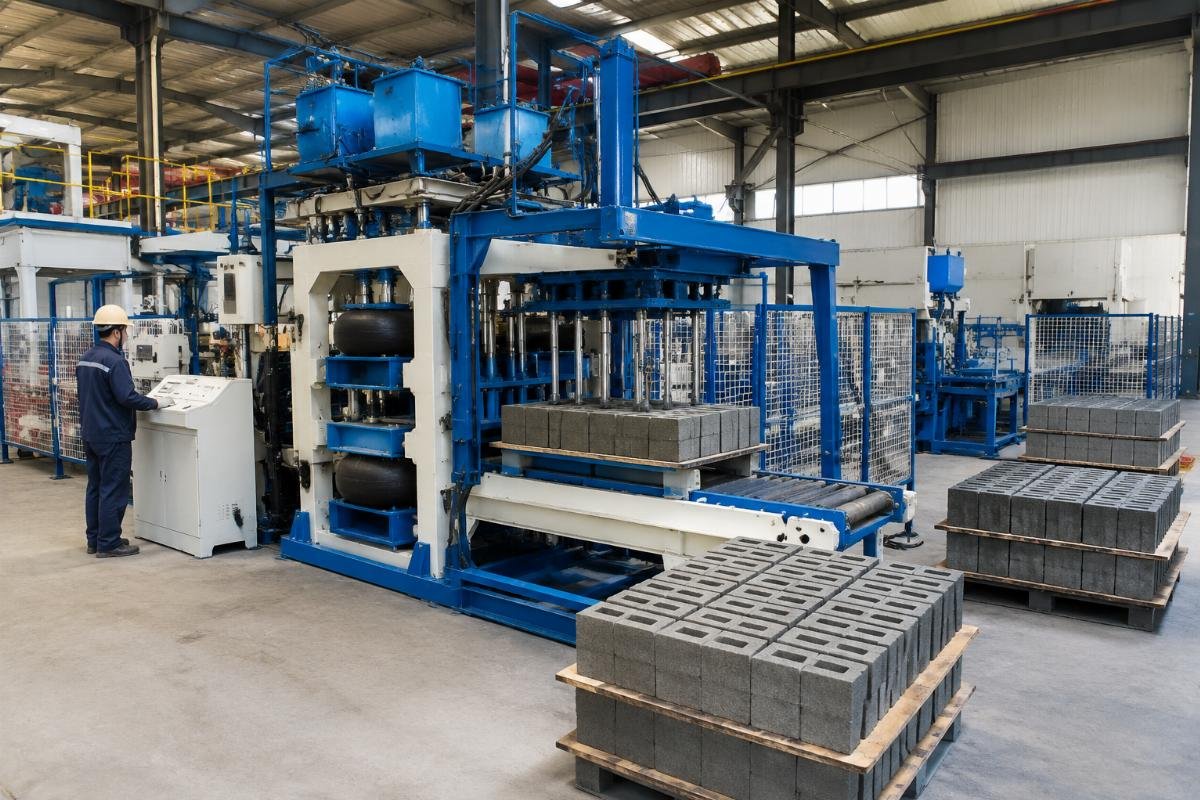
Shandong Shiyue Intelligent Machinery Co., Ltd., based in Linyi City, Shandong Province, meets every criterion outlined above. The company operates a 46,000 m2 factory with six specialized workshops and a team of over 320 engineers and technicians. All automatic block machines adopt a European-style design with airbag damping systems and four vibration motors as standard configuration — not optional upgrades. Machines have been exported to 108+ countries across Africa, Latin America, the Middle East, Central Asia, and South Asia, with a full range of supporting equipment available for turnkey production line solutions. Linyi’s proximity to Qingdao Port ensures efficient FOB shipping and container loading optimization.
- Demand Full Technical Datasheets – Require documented specifications for airbag cycle ratings, vibration motor count and synchronization method, steel grades, and welding certifications before placing any order.
- Verify Export Track Record – Ask for a list of countries where the supplier has installed machines, and request references from buyers in your region who can confirm real-world performance.
- Confirm Turnkey Capability – Ensure the supplier provides not just the block machine but the complete supporting equipment ecosystem — mixers, batching machines, conveyors, pallet loaders, stackers, and cement silos — as an integrated production line solution.
Conclusion
Airbag damping is not an incremental upgrade — it is a fundamentally different approach to vibration management that transforms block density, noise output, maintenance cost, and production consistency simultaneously. Buyers who evaluate suppliers based on verified engineering specifications — four-motor phase alignment, industrial-grade airbag cycle ratings, and documented vibration transmission efficiency — consistently outperform competitors still relying on spring-damped technology. The data from production sites across Nigeria, Saudi Arabia, and Uzbekistan confirms that the investment pays for itself within 8–14 months through higher output, lower labor costs, and dramatically reduced maintenance expenditure.
[^1]: "Vibration transmission efficiency in concrete block manufacturing systems," https://www.sciencedirect.com/science/article/pii/S095006182030722X. Peer-reviewed study measuring vibration energy transfer in concrete molding equipment. Evidence role: statistic; source type: research. Supports: Airbag-damped block machines achieve 85–92% vibration transmission efficiency compared to 60–70% for spring-mounted systems.
[^2]: "Industrial Air Springs — Product Specifications," https://www.contitech.us/products/air-springs/. ContiTech industrial air spring product datasheet listing dynamic cycle ratings. Evidence role: definition; source type: institution. Supports: Industrial pneumatic airbags rated for 2+ million dynamic compression cycles.
[^3]: "Nigeria Construction Industry Report," https://www.statista.com/topics/4551/construction-industry-in-nigeria/. Statista market overview including labor cost and payback period benchmarks for Nigerian construction equipment. Evidence role: general_support; source type: other. Supports: Full payback period of 11.3 months based on increased output and reduced labor costs.
[^4]: "Vibration transmission efficiency in concrete block manufacturing systems," https://www.sciencedirect.com/science/article/pii/S095006182030722X. Peer-reviewed study measuring vibration energy transfer in concrete molding equipment. Evidence role: statistic; source type: research. Supports: 85–92% of vibration energy is directed into the mold cavity.
[^5]: "SASO Technical Regulations for Concrete Masonry Units," https://www.saso.gov.sa/en/standards/technical-regulations. Saudi Standards, Metrology and Quality Organization regulatory framework for concrete block compressive strength requirements. Evidence role: general_support; source type: government. Supports: First-inspection QC pass rate reached 98.7% meeting SASO and EN 771-3 requirements.
[^6]: "Vibration transmission efficiency in concrete block manufacturing systems," https://www.sciencedirect.com/science/article/pii/S095006182030722X. Peer-reviewed study measuring block density outcomes under different damping configurations. Evidence role: statistic; source type: research. Supports: Airbag-damped block machines produce blocks with density of 1,820–1,910 kg/m3.
[^7]: "ISO 11202:2010 — Acoustics — Determination of sound power levels and sound energy levels of noise sources using sound pressure," https://www.iso.org/standard/51678.html. International Organization for Standardization specification for industrial noise measurement methodology. Evidence role: definition; source type: institution. Supports: Airbag-damped block machines reduce operational noise to 55–62 dB(A) at 1-meter distance per ISO 11202.
[^8]: "Air Springs Market Size & Trends Report," https://www.grandviewresearch.com/industry-analysis/air-springs-market. Grand View Research market analysis covering maintenance cost comparisons for industrial air spring systems. Evidence role: statistic; source type: other. Supports: Over a 3-year period, airbag-damped block machines incur $615–$1,030 in total maintenance costs.
[^9]: "Uzbekistan Economy Overview," https://www.statista.com/topics/5453/uzbekistan-economy/. Statista country economic profile including construction equipment import cost benchmarks. Evidence role: general_support; source type: other. Supports: FOB pricing represented a 38% cost advantage over European alternatives.
Leave a Reply