

Brick Machine Supplier for Kenya: China Factory Direct
Most buyers think FOB price determines total cost — but port demurrage from compliance failures can exceed the machine price itself.
Choosing a reliable brick machine supplier for Kenya requires evaluating pre-shipment inspection compliance, Mombasa port clearance experience, and turnkey installation capability — not just comparing mold sizes and output specs.
I still remember the morning I got a call from a freight agent at Mombasa port. A container of block making machines I’d booked weeks earlier was stuck. The factory back in China had shipped the goods without arranging PVOC pre-shipment inspection — no Certificate of Conformity, nothing. That container sat on the dock for over three weeks. Demurrage fees piled up daily, and the buyer in Nairobi was losing every day he couldn’t start production. The total port penalties ended up costing several times what the buyer saved by going direct instead of through a local dealer. That moment burned into me. When I later moved to the sales side and started working directly with East African clients, I stopped looking at brick machine supplier for Kenya requests as simple spec-matching exercises. I started checking whether the factory had ever handled KEBS pre-shipment requirements, whether they understood Mombasa’s clearance quirks, and whether they’d leave your machine rotting at the port because they only cared about FOB pricing [NEED_CITE: KEBS PVOC pre-shipment inspection requirements for machinery imports].
If you’re sourcing a brick machine supplier for Kenya from China, here’s what the full evaluation actually looks like — beyond the brochure specs.
Which Machine Type Fits Your Kenyan Market?
The right brick machine depends on your local power stability, labor cost structure, and target production scale — not on picking the biggest model in the catalog.
Many first-time buyers assume the largest fully-automatic line is the best investment. But Kenya’s peri-urban areas often face unstable grid power, and a PLC-controlled fully-auto line can shut down completely during voltage fluctuations. Meanwhile, a simpler semi-auto or mobile egg-layer keeps producing with minimal electrical dependency. The choice comes down to matching machine complexity to your actual operating environment.
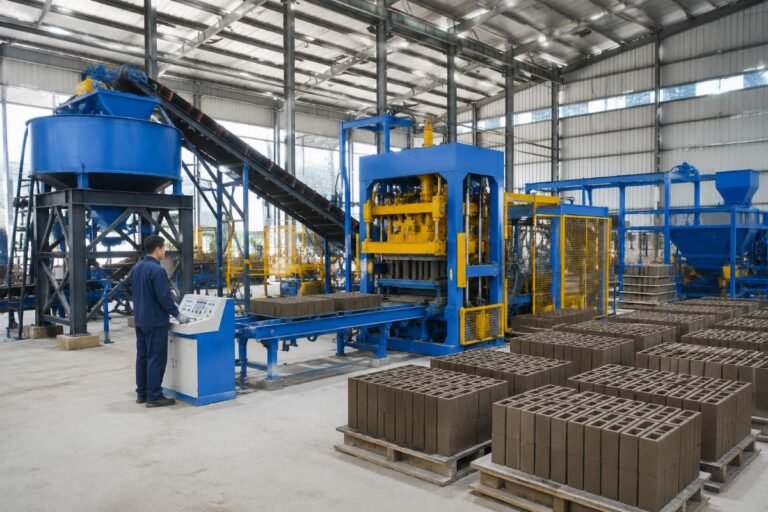
Here’s how the main categories compare for the Kenyan market:
| Parameter | Mobile Egg-Layer (QT4-25) | Semi-Auto Line (QT6-15) | Fully-Auto Line (QT10-15) |
|---|---|---|---|
| Daily Output Range | Low-Medium | Medium-High | High-Volume Commercial |
| Labor Requirement | Minimal crew | Moderate team | Full shift operators |
| Power Demand | Low — generator compatible | Standard industrial | High — stable grid preferred |
| Automation Level | Manual mold movement | Semi-automated batching and pressing | Full PLC-controlled cycle |
| Site Flexibility | Mobile — moves across curing yard | Fixed installation | Fixed plant setup |
| Price Tier | Entry-level | Mid-range | Premium investment |
| Grid Stability Tolerance | Highly tolerant | Moderately tolerant | Vulnerable to fluctuations |
| Spare Parts Complexity | Basic mechanical | Moderate | Advanced electrical and hydraulic |
[NEED_CITE: comparison of block machine automation levels and power requirements for emerging market conditions]
A private investor near Nairobi’s outskirts once came to us wanting the largest fully-auto line available. After discussing his site conditions — frequent power dips, limited three-phase supply, and a startup budget that needed fast ROI — we recommended a QT6-15 semi-auto setup instead. The machine’s output matched his projected daily sales volume, the labor cost stayed manageable, and he could run a backup generator during outages without the PLC system crashing. His payback period ended up noticeably shorter than if he’d over-invested in automation he couldn’t reliably power.
The takeaway: a brick machine supplier for Kenya who only pushes the highest-spec model without asking about your power supply and labor situation is optimizing for their commission, not your production reality.
How to Avoid Mombasa Port Compliance Traps?
PVOC pre-shipment inspection and accurate HS code classification are the gatekeepers between your machine arriving at Mombasa and your machine actually reaching your site.
Kenya operates a Pre-Export Verification of Conformity program administered by the Kenya Bureau of Standards. Machinery imports — including concrete block making machines — fall under regulated product categories that require a Certificate of Conformity before shipment. Without this certificate, Kenya Revenue Authority customs will not clear your container, regardless of how cleanly your commercial invoice is prepared [NEED_CITE: KEBS PVOC program requirements for machinery and industrial equipment imports into Kenya].
The process works like this:
- The authorized inspection agent in the exporting country conducts document review and physical inspection of the machine before it leaves the factory.
- The agent issues a Certificate of Conformity based on compliance with applicable Kenyan standards.
- The CoC must accompany the shipping documents presented at Mombasa for customs clearance.
- Without a valid CoC, the shipment faces destination testing, which adds significant time and cost — or outright rejection at the port.
A brick machine supplier for Kenya who has handled multiple shipments to East Africa will know which inspection agents are authorized, what documentation the agent requires, and how long the inspection-to-CoC timeline takes. A supplier who has never exported to Kenya may not even know PVOC exists until your freight forwarder raises the alarm at Mombasa.
One common trap: HS code misclassification. Concrete block making machines have specific tariff headings. If the supplier declares a generic "construction machinery" code instead of the correct classification, customs may flag the shipment for re-assessment, triggering delays and potential penalty fees. The correct HS code affects not only duty rates but also whether the product falls under PVOC-regulated categories at all.
Another trap: incomplete technical documentation. Kenyan customs officers may request motor nameplate details, voltage specifications, and safety compliance markings. If these aren’t included in the shipping file — or if the machine’s actual specs don’t match what’s declared — clearance stalls.
When evaluating a brick machine supplier for Kenya, ask directly: how many containers have you cleared through Mombasa? Can you provide references from Kenyan buyers who received their machines without compliance delays? A supplier who hesitates on these questions is a supplier who will leave you handling Mombasa’s compliance bureaucracy alone.
What Does Total Landed Cost Actually Look Like?
FOB price is just the starting point — freight, insurance, port charges, inland transport, and installation costs collectively determine what you actually spend before producing your first brick.
Many buyers fixate on the machine’s FOB price and treat it as the total investment. This leads to severe underestimation of actual capital required. A brick machine supplier for Kenya who provides transparent total landed cost breakdowns — rather than just quoting FOB — demonstrates a commitment to your project’s real economics.
Here’s the cost structure you need to model:
| Cost Component | What It Covers | Variability Factor |
|---|---|---|
| Machine FOB Price | Equipment cost at factory gate | Fixed at order confirmation |
| Ocean Freight | China port to Mombasa shipping | Seasonal rate fluctuations |
| Marine Insurance | Cargo coverage during transit | Based on declared value |
| Mombasa Port Charges | Terminal handling, storage, documentation | Depends on clearance speed |
| Customs Duty and VAT | Import taxes per HS classification | Determined by correct code |
| PVOC Inspection Fee | Pre-shipment compliance cost | Fixed per inspection agent |
| Inland Transport | Mombasa to your site | Distance and road conditions |
| Installation and Commissioning | On-site setup and testing | Included or separate contract |
[NEED_CITE: total landed cost components for heavy machinery imports into Kenya via Mombasa port]
A buyer from western Kenya once shared that his machine’s FOB price was only a portion of his total project cost. Ocean freight, port handling, customs clearance, and the long inland haul from Mombasa to his site near the Ugandan border added substantially to the final figure. If he’d budgeted based on FOB alone, he would have run out of capital before the machine was even installed.
The lesson: when comparing quotes from different suppliers, request a landed cost estimate — not just FOB. A brick machine supplier for Kenya who only quotes FOB is either inexperienced with East African logistics or deliberately obscuring the real investment required.
How to Evaluate a Supplier’s Turnkey Capability?
A brick machine supplier for Kenya who offers genuine turnkey support — on-site installation, operator training, spare parts supply, and responsive after-sales — determines whether your plant starts producing on schedule or stalls for months.
Turnkey means different things to different suppliers. Some call it turnkey if they ship the machine with an English manual and a WhatsApp number. Genuine turnkey means the supplier takes responsibility for getting your plant from container arrival to first saleable brick — including solving problems you didn’t anticipate.
Key elements of real turnkey capability include:
- On-site installation and commissioning. The supplier sends engineers to your location to assemble the line, calibrate the equipment, and verify production output. This is not optional for fully-auto lines — improper installation guarantees poor brick quality and premature wear.
- Operator training. Your local crew needs hands-on instruction on daily operation, routine maintenance, mold changes, and basic troubleshooting. A supplier who provides only a video tutorial is not providing training.
- Spare parts availability. Wear parts — molds, vibration motors, hydraulic seals — will need replacement. The supplier must maintain stock of critical spares and ship them promptly. A brick machine supplier for Kenya who cannot guarantee spare parts delivery within a reasonable timeframe will leave your plant idle during breakdowns.
- After-sales responsiveness. When a PLC fault code appears or a hydraulic line bursts, you need a supplier who responds within hours, not weeks. Time zone alignment and dedicated Africa-desk support matter.
A construction contractor in coastal Kenya purchased a semi-auto line from a supplier who promised "full turnkey support." When the machine arrived, the supplier’s engineer couldn’t get a visa in time, and the buyer spent weeks trying to self-install based on unclear diagrams. Production didn’t start until months after the container arrived — months of paying port-adjacent storage fees and losing market opportunities.
Contrast this with a supplier who coordinates visa support, schedules installation around your site readiness, trains your operators in your local language context, and maintains a spare parts inventory specifically for East African clients. The difference isn’t in the machine specs — it’s in the supplier’s operational commitment to your market.
When vetting a brick machine supplier for Kenya, ask for a detailed installation timeline from factory dispatch to first brick. Ask how they handle visa logistics for their engineers. Ask what their average response time is for after-sales technical queries from East African clients. The answers will separate genuine turnkey partners from suppliers who disappear after the wire transfer clears.
Conclusion
Selecting a brick machine supplier for Kenya is a multi-dimensional evaluation — machine suitability, import compliance, landed cost transparency, and turnkey support capability all determine whether your investment produces bricks or generates port demurrage invoices. The factory-direct route offers substantial cost advantages, but only if your supplier has proven experience navigating Kenya’s regulatory and logistics landscape. Verify their PVOC track record, demand landed cost clarity, and confirm their on-the-ground support commitment before committing capital.
Leave a Reply