

Belt Conveyor for Aggregates Bulk Order Terms Wholesale Supplier
CIF does not mean "complete."
For a belt conveyor for aggregates bulk order, the critical terms are not just price and freight, but the explicit inclusion of spare parts in the commercial invoice, the definition of MOQ as either unit-based or container-load based, and a detailed packing list that matches every item physically loaded. Without these specific contractual clauses, buyers face hidden costs from missing components like return idlers and cleaners, leading to significant installation delays.
Every time I finish setting up our booth at the Chicago trade show, a few North American buyers approach with coffee in hand, flipping through our belt conveyor catalogs. Their first question is rarely about the motor power or belt width. It is almost always: "How do you calculate MOQ? And does the spare parts packing list come included in the quote?" This question hits home because I have seen the consequences of ambiguity firsthand. Early in my career, working in quality inspection, we shipped a batch of aggregate belt conveyors to Mexico under CIF terms. We quoted for the "whole machine," but we did not list individual rollers and cleaners separately on the packing list. When the client opened the containers at the port, they found two sets of return idlers missing. They accused us of playing word games. That dispute taught me that vague definitions of "complete set" are the primary source of friction in heavy machinery trade. [NEED_CITE: common disputes in heavy machinery international trade]
To avoid these pitfalls, procurement managers must look beyond the headline price. The following sections break down how to structure your agreement to ensure transparency and operational readiness.
Why Do "Standard" Quotes Often Exclude Critical Spare Parts?
Ambiguity in the definition of a "whole machine" frequently leads to missing essential components such as rollers and belt cleaners.
In the heavy equipment industry, there is a persistent misconception that a quoted unit includes everything needed for immediate operation. However, manufacturers often separate wear parts from the main structural frame to optimize packaging density or reduce the declared value for certain tax jurisdictions. This practice creates a gap between buyer expectation and delivered reality.
The core issue lies in the difference between a Bill of Lading and a Packing List. The Bill of Lading confirms the transfer of ownership and freight responsibility, but it rarely details the contents of each crate. The Packing List, however, is the document that customs officials and site engineers rely on to verify completeness. If a spare part is not explicitly listed on the commercial invoice and packing list, it may be treated as a separate shipment or, worse, overlooked entirely during loading. [NEED_CITE: distinction between Bill of Lading and Packing List responsibilities in Incoterms]
Consider a scenario involving a mid-sized contractor in Latin America. They ordered a standard belt conveyor for aggregates bulk order. The contract stated "CIF Port of Callao." The manufacturer shipped the main frame, head pulley, and drive unit in one container. The return idlers and scrapers, however, were packed in a separate wooden crate that was accidentally left on the dock due to a labeling error. Because the packing list did not itemize these parts with unique serial numbers or crate IDs, the discrepancy was not noticed until installation began weeks later. The result was a costly air freight expedite fee and a stalled project timeline.
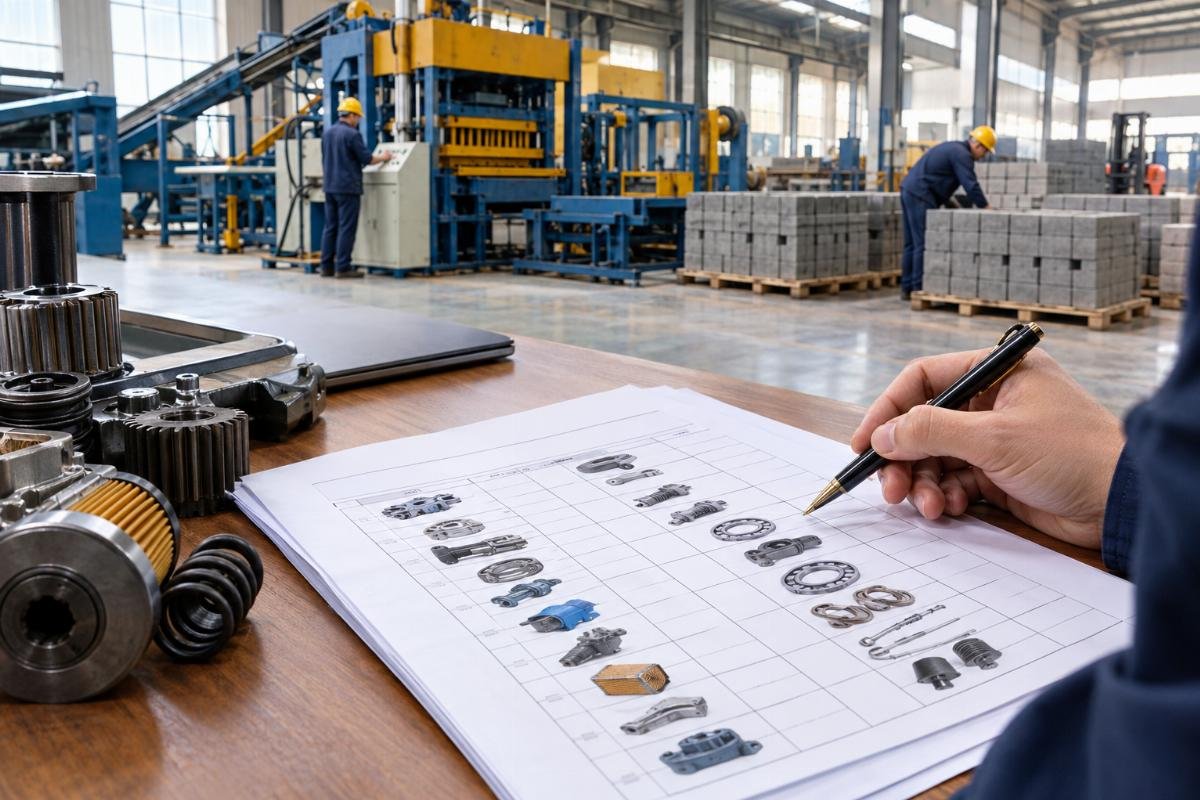
To prevent this, buyers must demand a pre-shipment accessory manifest. This document should list every bolt, roller, and cleaner, cross-referenced with the crate number. At Shiyue, we include this level of detail in our turnkey solutions, ensuring that the packing list for the entire production line matches the physical load before the container doors are sealed.
How to Define MOQ and Packaging for Bulk Aggregate Conveyors?
Specify whether MOQ refers to single units or full container loads, and detail the crating requirements for sensitive components.
Minimum Order Quantity (MOQ) is often misunderstood as a fixed number of units. In reality, for heavy machinery like a belt conveyor for aggregates bulk order, MOQ is frequently tied to logistics efficiency. A single conveyor might not fill a 40-foot high-cube container, leading to inefficient shipping costs. Manufacturers often encourage bundling orders to achieve a full container load, which significantly reduces the per-unit freight cost. [NEED_CITE: logistics cost savings from full container load vs less than container load]
When negotiating MOQ, buyers should clarify if the threshold applies to the machine count or the total volume. For instance, ordering a single QT10-15 block machine might meet the unit MOQ, but adding a belt conveyor and a batching plant to the same order can optimize the container space. This bundling strategy not only lowers shipping expenses but also simplifies customs clearance, as all items arrive under a single import declaration.
Packaging is another critical aspect tied to MOQ. Standard export packaging might suffice for robust frames, but sensitive electronic components and precision rollers require enhanced protection. Buyers should specify if wooden crates need fumigation certificates for their destination country. In some regions, untreated wood is prohibited, causing delays at customs. By defining packaging standards in the initial agreement, buyers ensure that their belt conveyor for aggregates bulk order arrives in install-ready condition.
A practical example involves a distributor in Southeast Asia who negotiated an MOQ based on a mixed container. They combined three small-scale conveyors with a larger screening machine. By coordinating the packaging dimensions, they maximized the container volume, reducing the overall landed cost by a noticeable margin. This approach requires close collaboration with the supplier to plan the loading sequence, ensuring that heavier items do not crush lighter, boxed components.
What Are the Key Clauses to Prevent "Word Game" Disputes?
Explicitly list all accessories in the contract annex to align with the packing list and avoid liability gaps.
Contracts for heavy machinery often contain generic clauses that fail to address the specifics of component inclusion. Phrases like "standard accessories included" are legally weak because "standard" varies by manufacturer and region. To protect your investment, the contract must include a detailed annex that lists every item included in the belt conveyor for aggregates bulk order.
Key clauses should address:
- Spare Parts Inclusion: Specify which wear parts (e.g., bearings, belts, scrapers) are included in the initial shipment and which are optional.
- Liability Boundaries: Define who is responsible for damage discovered after unloading. Under CIF terms, the risk transfers at the port of shipment, but insurance claims require proof of pre-shipment condition.
- Completeness Guarantee: A clause stating that the delivered goods must match the packing list exactly, with penalties for missing items.
[NEED_CITE: International Chamber of Commerce guidelines on Incoterms and risk transfer]
A dispute arose recently when a buyer in Africa received a conveyor system without the specified tensioning devices. The contract had mentioned "full assembly," but the annex did not list the tensioners. The manufacturer argued that tensioners were optional extras. Because the buyer had not insisted on a detailed itemized list in the contract annex, they had little leverage. This situation could have been avoided by treating the packing list as an integral part of the contract, not just a shipping document.
Buyers should also verify the definition of "Complete Set" in the context of their specific project. For a turnkey plant, this might include installation tools and operator manuals. For a standalone conveyor, it might just mean the mechanical structure. Clarity here prevents the "word game" where both parties believe they are correct but operate under different definitions.
How to Verify Completeness Before Shipment?
Implement a pre-shipment inspection checklist focused on the accessory manifest to ensure no components are left behind.
Verification should not wait until the cargo arrives at your site. By then, rectifying missing parts is expensive and time-consuming. The most effective strategy is to conduct a pre-shipment inspection, either personally or through a third-party agency, focusing specifically on the accessory manifest.
The inspection process should involve:
- Cross-Referencing: Match each item on the packing list with the physical goods in the warehouse.
- Visual Check: Inspect the condition of sensitive parts like rollers and electronics.
- Photo Documentation: Take timestamped photos of each crate’s contents before sealing.
This step is crucial for a belt conveyor for aggregates bulk order because small components are easily overlooked in large crates. A simple checklist can save weeks of delay. For example, verifying that all anchor bolts and mounting brackets are present ensures that installation can begin immediately upon arrival.
At Shiyue, we encourage clients to review our pre-shipment photos and packing lists remotely. This transparency builds trust and allows for corrections before the container is sealed. It transforms the shipping process from a black box into a verified, transparent transaction.
Conclusion
Clear contracts prevent costly surprises.
Avoiding hidden costs in a belt conveyor for aggregates bulk order requires moving beyond standard quotes. By defining MOQ clearly, itemizing every spare part in the contract, and verifying the packing list before shipment, buyers can secure a smooth logistical experience. These steps transform a potential dispute into a seamless installation, ensuring your project stays on schedule and within budget.
Leave a Reply