

Fly Ash Block Machine Long-Term Care: QT Series Maintenance for High-Traffic Plants
Most mold wear is not a material failure; it is a lubrication failure.
To maximize the lifespan of your QT series fly ash block machine in high-traffic precast plants, you must implement a strict preventive maintenance schedule that prioritizes daily guide post lubrication, weekly hydraulic oil filtration checks, and monthly vibration motor torque calibration. Neglecting these specific intervals accelerates abrasive wear from fly ash dust, leading to premature component fatigue and unplanned downtime that far exceeds the cost of routine care.
Walking the aisles of bauma Munich or CONEXPO Chicago, I often see plant managers holding photos of cracked molds or seized press heads. They assume the steel quality was subpar. In reality, the culprit is almost always dry friction caused by skipped daily lubrication cycles. Fly ash is highly abrasive. When it mixes with inadequate grease on guide posts, it creates a grinding paste that eats into precision surfaces faster than normal aggregate production. I have seen this pattern repeat across multiple regions, from North African startups to Latin American industrial hubs. The machine does not fail because it is weak; it fails because the maintenance rhythm does not match the production intensity. 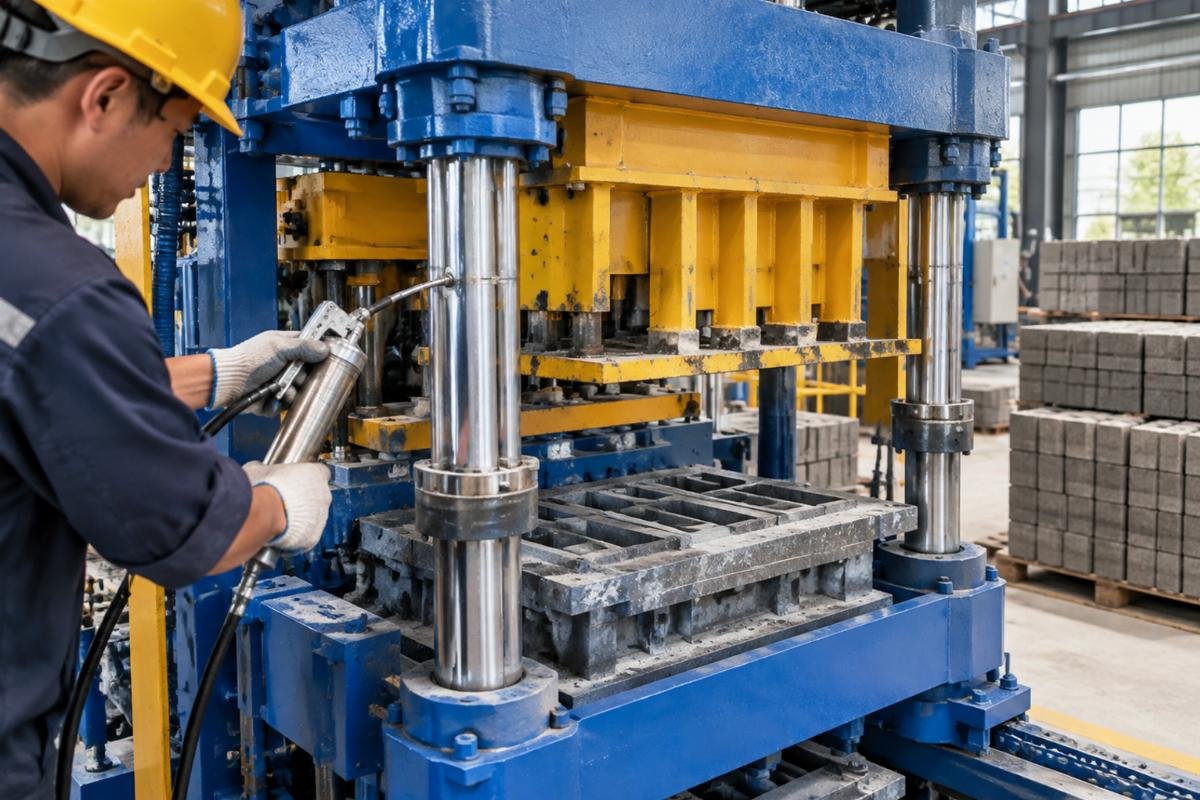
Understanding why fly ash production demands stricter care than standard concrete mixing is the first step toward protecting your return on investment. The following sections detail the actionable steps required to keep your equipment running smoothly under heavy loads.
Why Does Fly Ash Production Accelerate Wear?
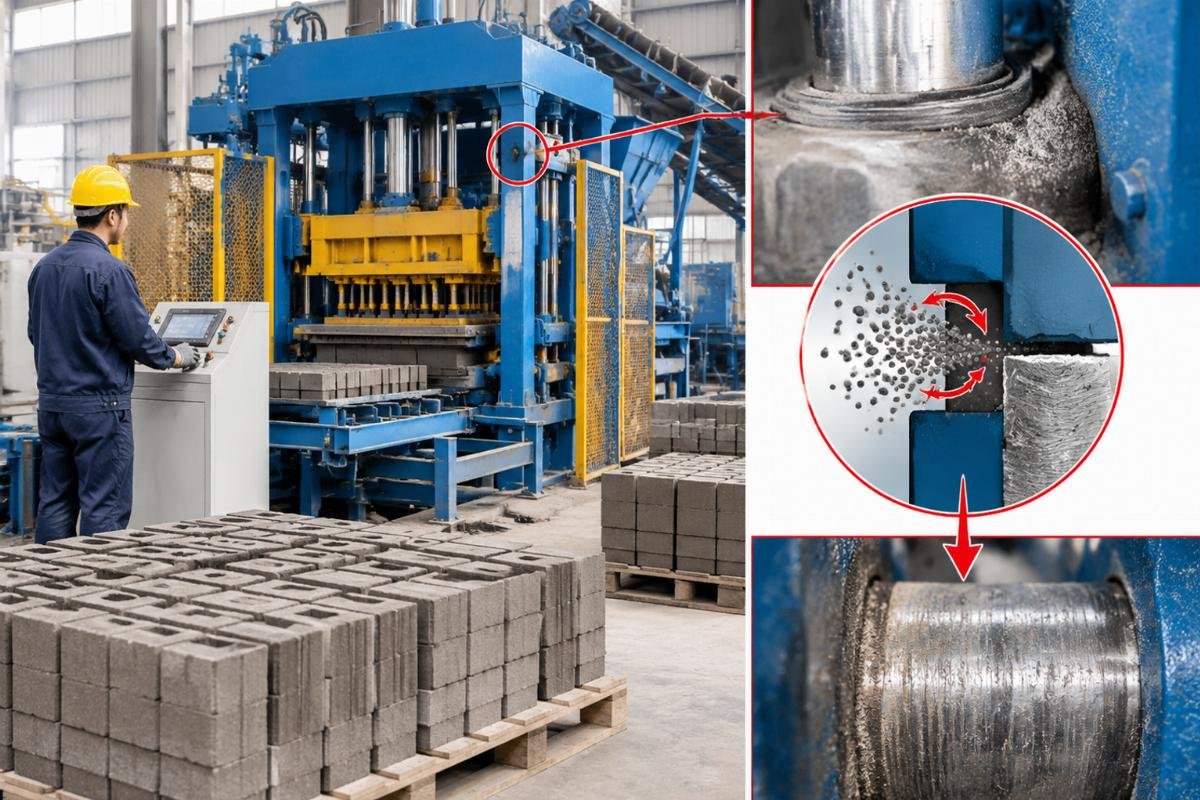
Fly ash particles are finer and more angular than typical sand or gravel aggregates. This physical characteristic increases the surface area contact within the mixing chamber and mold cavity. [NEED_CITE: abrasive properties of fly ash compared to natural aggregates] When these particles escape the sealed areas of the mold, they act as an industrial-grade sandpaper on any exposed metal surface.
In high-traffic plants running two or three shifts daily, this abrasion accumulates rapidly. Standard maintenance intervals designed for ordinary concrete blocks are insufficient for fly ash brick production. The dust penetrates seals more easily, contaminating hydraulic systems and accelerating the degradation of moving parts. If you treat a fly ash line like a standard block line, you will face premature failures. The key difference lies in the frequency of cleaning and the specificity of lubrication points. You cannot rely on visual inspections alone; you must anticipate where the dust settles and intervene before it causes mechanical binding.
What Are the Critical Daily Checks for QT Series?
Daily maintenance is not about major repairs; it is about preventing catastrophic failure through consistent, small actions. The most critical aspect of daily care for a QT series fly ash block machine is the lubrication of guide posts and mold surfaces.
- Visual Inspection of Mold Surfaces: Before starting the shift, inspect the inner walls of the mold for any residual concrete buildup or signs of scoring. Clean any debris immediately to ensure smooth ejection of blocks.
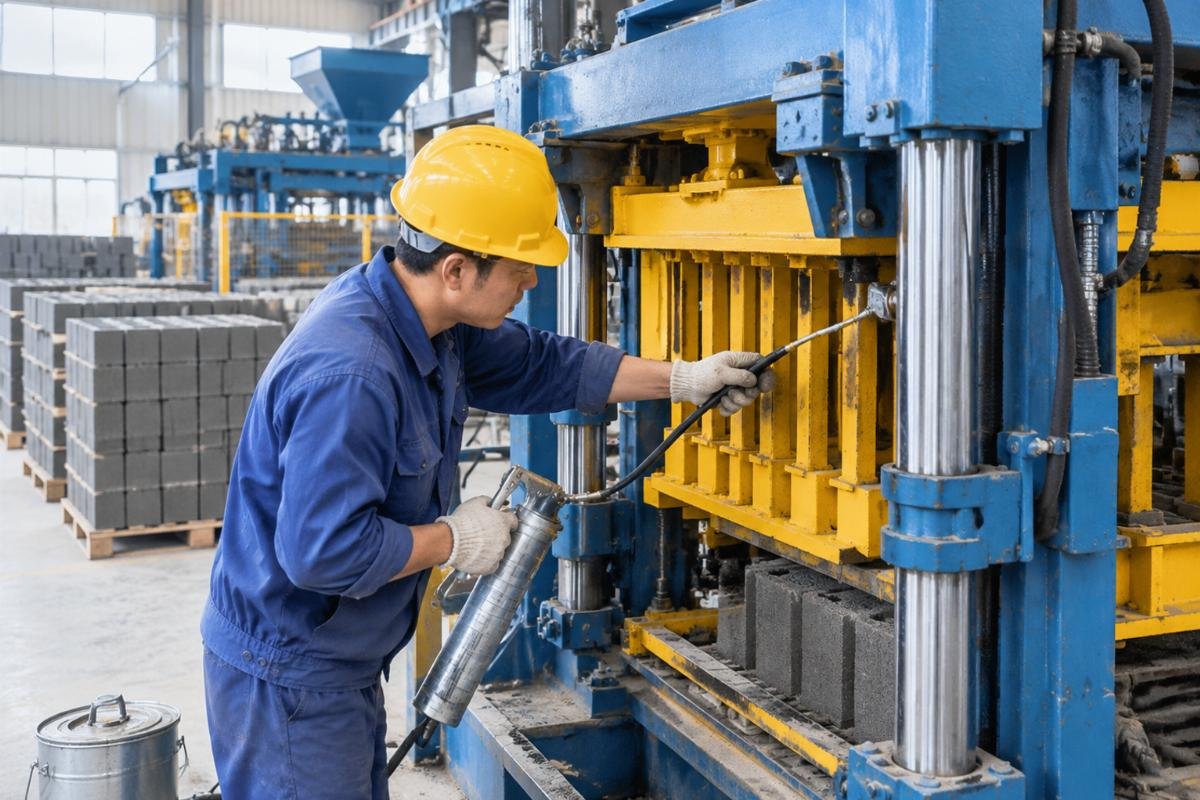
- Lubrication of Guide Posts: Apply high-quality, high-viscosity grease to all vertical guide posts. This step is non-negotiable. In fly ash production, the dust mixes with thin oil to form an abrasive slurry. Using the correct grease creates a barrier that repels dust and reduces friction. [NEED_CITE: recommended lubrication types for heavy-duty concrete machinery]
- Check for Loose Fasteners: Vibrations from the compaction process can loosen bolts over time. A quick manual check of visible anchor bolts and mold clamps can prevent misalignment during production.
A client in North Africa once faced repeated mold failures after only eight months of operation. The expected lifespan was over two years. Upon reviewing their logs, we found that the daily lubrication cycle was being skipped during night shifts to save time. The resulting dry friction caused excessive heat and wear, leading to early replacement costs that dwarfed the savings from skipped maintenance. This case highlights that consistency is more important than intensity. A thorough daily check takes minutes but saves days of downtime.
How to Maintain Hydraulic Stability Under 24/7 Load?
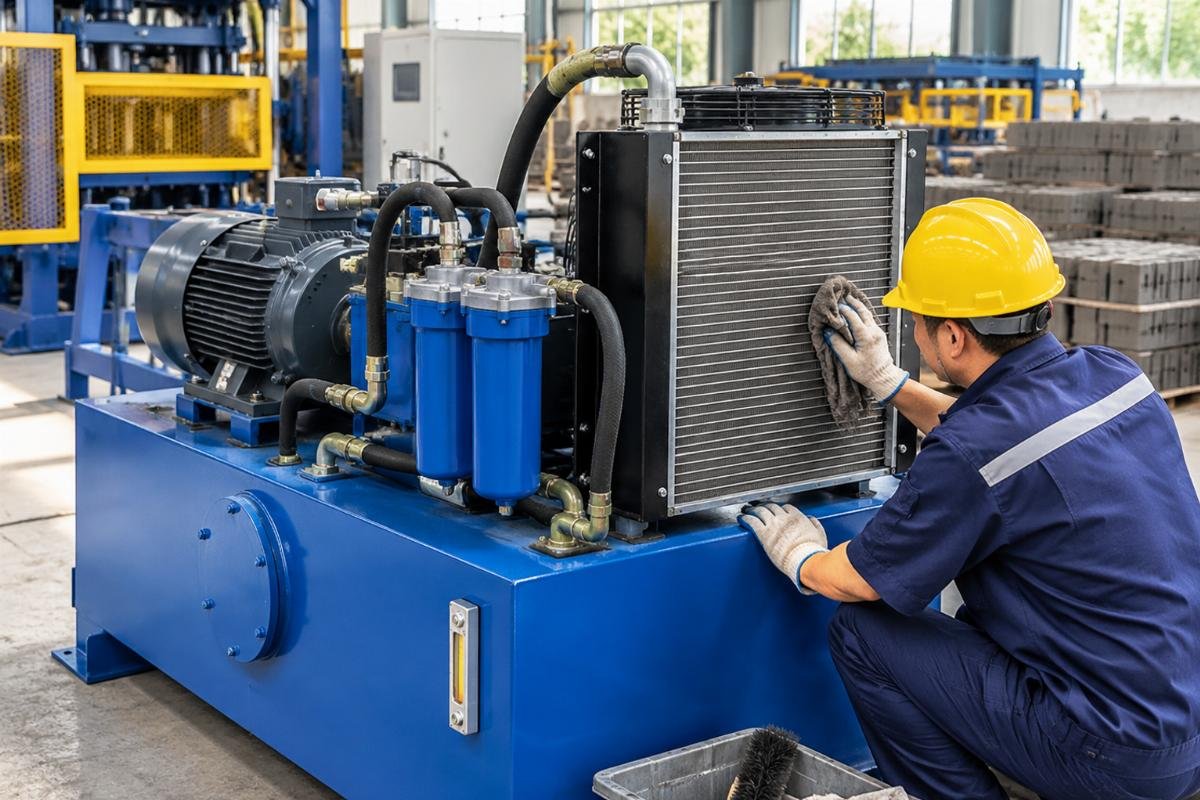
The hydraulic system is the heart of the QT series machine. In high-traffic plants, the oil temperature rises significantly due to continuous cycling. Overheating reduces oil viscosity, leading to poor sealing and increased wear on pumps and valves.
Many operators assume hydraulic oil lasts indefinitely. In high-dust fly ash environments, contamination accelerates degradation significantly. Dust particles can enter the system through breathers or damaged seals, acting as abrasives inside precision valves.
Weekly Maintenance Steps:
- Hydraulic Oil Level and Temperature Check: Monitor the oil level daily and check the temperature gauge during peak production hours. If the temperature exceeds normal operating ranges, inspect the cooling system immediately.
- Filter Inspection: Check the condition of hydraulic filters. Clogged filters restrict flow, causing pressure drops and overheating. Replace filters if they show signs of heavy contamination.
- Cooling System Integrity: Ensure that radiators and fans are free from dust and debris. A blocked radiator cannot dissipate heat effectively, leading to systemic overheating.
A plant in Latin America experienced frequent hydraulic overheating during 24/7 shifts. The issue was traced to clogged oil filters and a neglected cooling system. The dust from the fly ash had coated the radiator fins, reducing heat exchange efficiency. Once the cooling system was cleaned and filters were replaced on a strict weekly schedule, the temperature stabilized, and unplanned stops ceased. This example underscores that hydraulic health is directly linked to environmental cleanliness.
When Should You Replace Worn Components?
Identifying early signs of wear allows you to schedule replacements during planned downtime rather than reacting to breakdowns. Two critical components to monitor are the molds and the vibration motors.
Mold Wear Indicators:
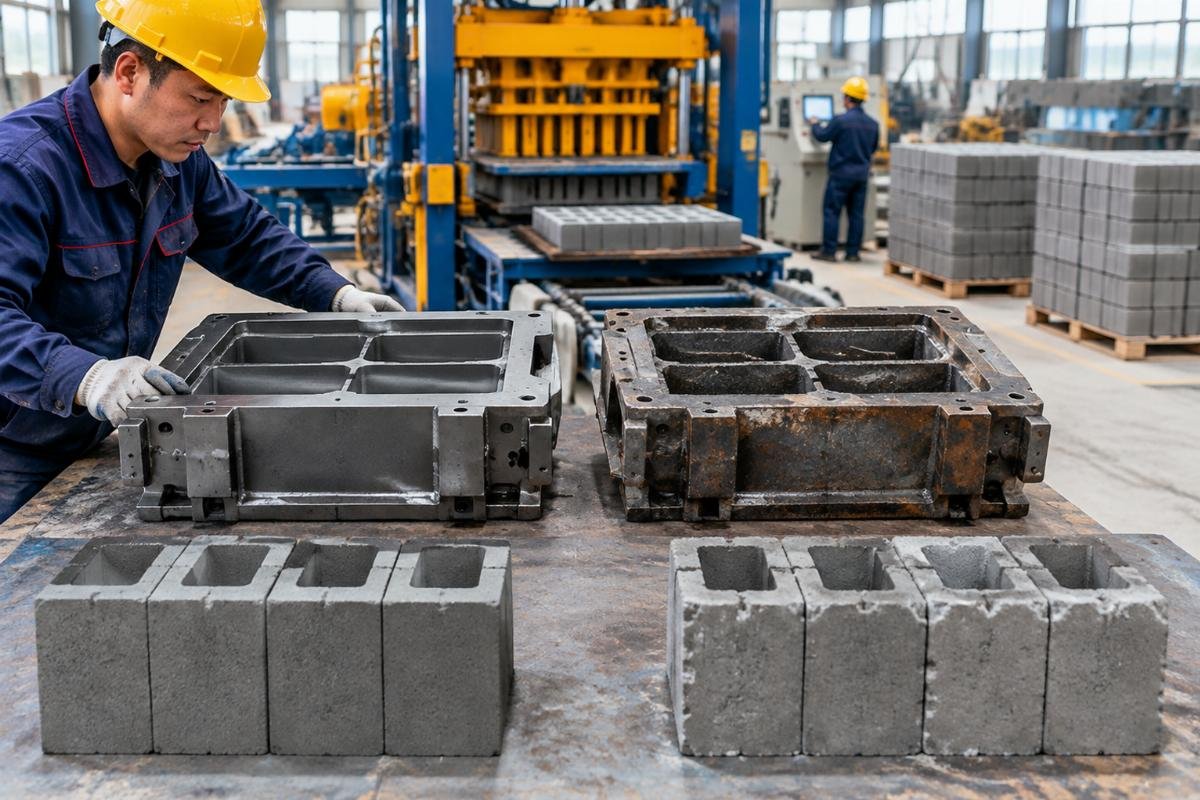
Look for inconsistent block dimensions or rough surface finishes. These signs indicate that the mold walls are wearing down or becoming misaligned. Measure the internal dimensions of the mold periodically against original specifications. If deviations exceed acceptable tolerances, plan for mold refurbishment or replacement. [NEED_CITE: standard tolerance limits for concrete block molds]
Vibration Motor Fatigue:
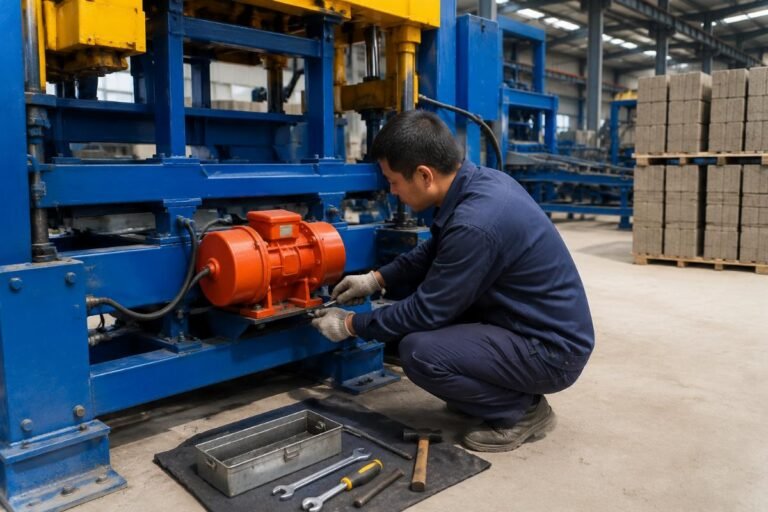
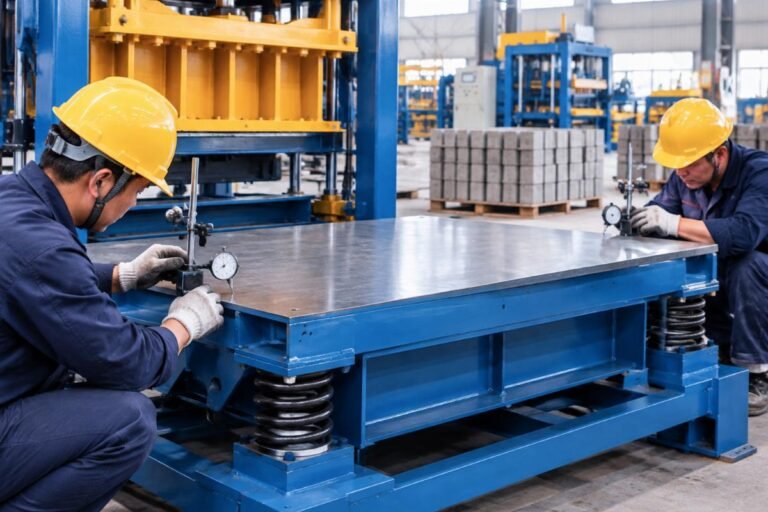
Inconsistent block density often stems from vibration issues. Check the anchor bolt torque of vibration motors monthly. Loose bolts dampen the vibration transfer, resulting in weak blocks. Additionally, listen for unusual noises from the motors, which may indicate bearing wear.
A startup in Southeast Asia struggled with inconsistent block density. After recalibrating the vibration motors and checking anchor bolt torque, the issue was resolved. The root cause was loose mounting bolts that had vibrated loose over weeks of operation. Regular torque checks prevented this from becoming a recurring problem. This experience shows that mechanical integrity is just as important as hydraulic performance.
Implementing a Preventive Maintenance Schedule
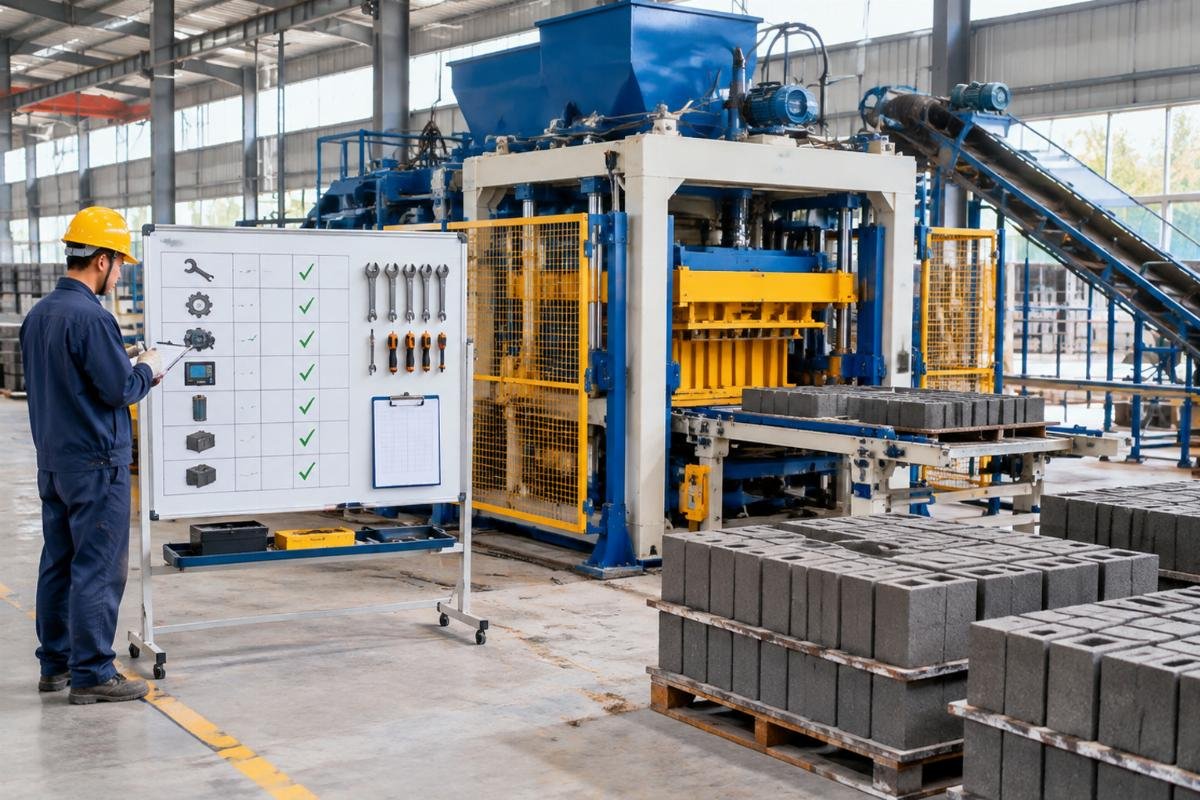
Creating a schedule is easy; sticking to it is hard. Use a digital log or a physical board near the machine to track completed tasks. Assign specific responsibilities to team members to ensure accountability.
| Maintenance Interval | Key Tasks | Focus Area |
|---|---|---|
| Daily | Lubricate guide posts, inspect mold surfaces, check fasteners | Friction reduction, cleanliness |
| Weekly | Check hydraulic oil level/temperature, inspect filters, clean cooling system | Thermal stability, contamination control |
| Monthly | Replace filters, clean electrical cabinet, calibrate sensors, check vibration motor torque | System accuracy, electrical safety |
| Quarterly | Full hydraulic pressure test, structural weld inspection | Structural integrity, long-term reliability |
This table provides a baseline. Adjust frequencies based on your specific production volume and environmental conditions. High-dust environments may require more frequent filter changes and cleaning.
Integrating these practices into your daily routine transforms maintenance from a reactive burden into a proactive strategy. It ensures that your QT series fly ash block machine operates at peak efficiency, minimizing downtime and maximizing output. For teams seeking to implement these schedules effectively, access to detailed technical guidance and remote diagnostic support can bridge the knowledge gap and accelerate adoption.
Conclusion
Preventive maintenance is the most cost-effective insurance for your production line. By adhering to a strict schedule of daily lubrication, weekly hydraulic checks, and monthly mechanical inspections, you protect your investment from the abrasive nature of fly ash. Consistency in care prevents the majority of unplanned downtime, ensuring your plant remains productive and profitable.
Leave a Reply