

Paver Block Machine Container Loading & MOQ Reference
The Minimum Order Quantity is not a factory policy; it is a function of container geometry.
For most standard concrete block production lines, the true MOQ is defined by the volume required to achieve a Full Container Load (FCL). Shipping Less than Container Load (LCL) for heavy machinery components typically increases landed costs significantly due to handling fees and higher per-cubic-meter freight rates. Therefore, the optimal order size is the smallest combination of machine units, molds, and spare parts that fully utilizes a 40ft High Cube container without exceeding weight limits.
I learned this lesson the hard way on a dusty site outside Jeddah. A client had ordered what he thought was a complete QT6-15 interlocking paver line based on a single-machine quote. The invoice looked clean, but the logistics plan was missing. When the shipment arrived, the main host frame fit perfectly into a 40ft container, but the hydraulic power unit, the electrical control cabinet, and two sets of extra molds were left behind because there was no space. We had to ship these critical components via LCL. The freight cost for those few cubic meters was disproportionate, and the demurrage charges at the port while waiting for the second shipment ate into the project’s initial margin. That delay pushed the commissioning date back by weeks. [NEED_CITE: impact of LCL vs FCL on heavy machinery landed costs] Since then, I never discuss price without first discussing the packing list.
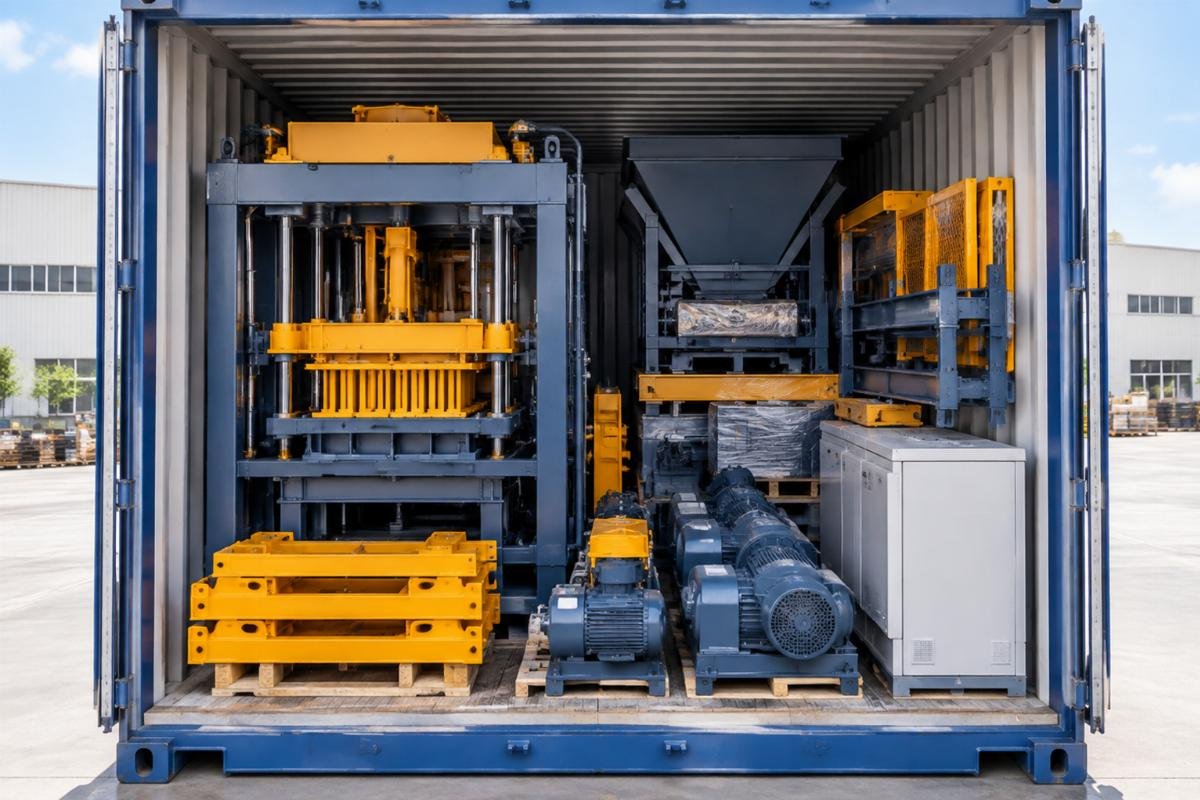
This approach transforms Paver Block Machine Container Loading from a logistical afterthought into a core component of your procurement strategy. By aligning your order quantity with container capacity, you stabilize your budget and avoid the hidden fees that often plague imports into emerging markets.
Why Does Container Loading Matter for Your ROI?
Many buyers focus exclusively on the FOB price of the machine, assuming that freight is a fixed, minor variable. This is a dangerous misconception. In international trade for heavy equipment, freight can account for a substantial portion of the total investment. Improper loading plans do not just waste space; they waste money.
When you fail to optimize the load, you face two primary financial risks. First, you may need to ship a second container for parts that could have fit in the first if disassembled correctly. Second, if you choose LCL to save on a full container, you expose yourself to volatile handling charges and increased risk of damage during transshipment. [NEED_CITE: standard logistics risk factors for heavy industrial equipment]
Consider the difference between a naive loading plan and an optimized one. A naive plan might ship the main frame as a single bulky unit. An optimized plan involves strategic disassembly. The hopper, the conveyor belt system, and the non-structural panels are removed. The hydraulic cylinders are detached and packed separately. This reduces the volumetric footprint of the main unit, allowing you to stack molds and spare parts in the voids.
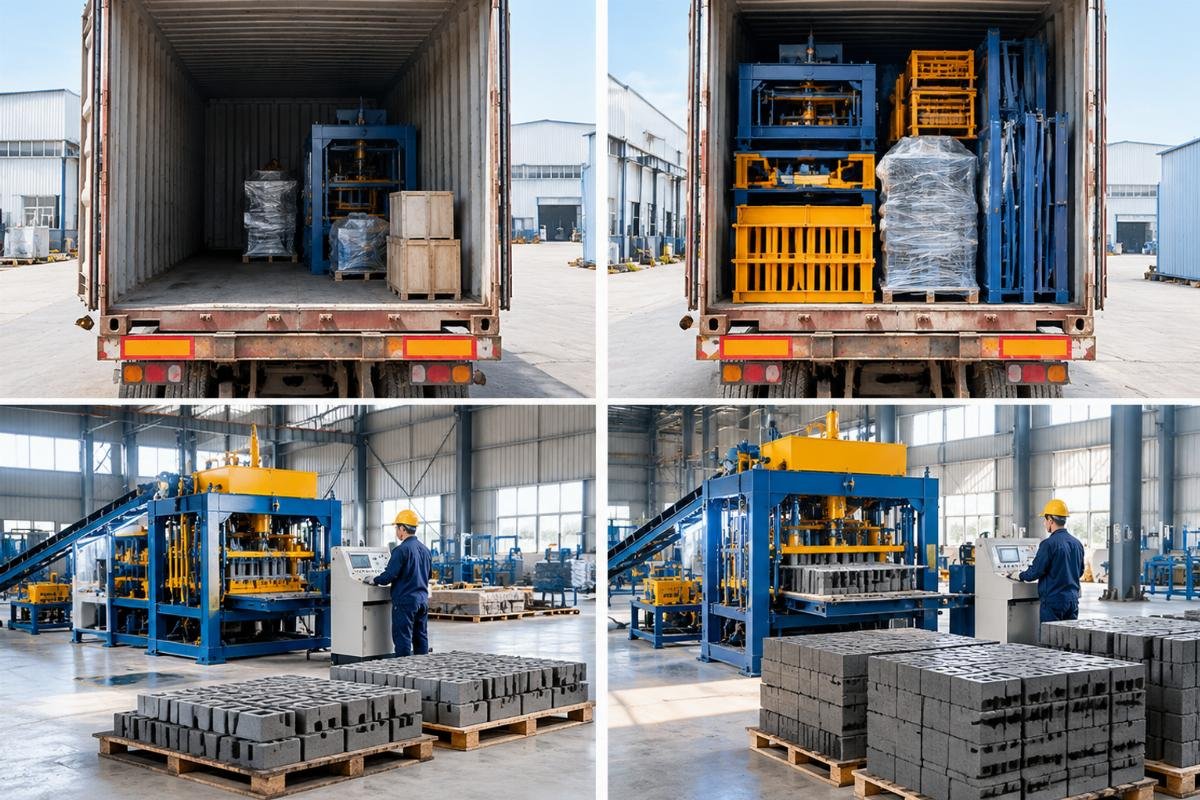
For a buyer in Dubai or Lagos, this efficiency translates directly to ROI. By maximizing the utility of every cubic meter, you lower the per-unit freight cost. If you are ordering multiple machines, this effect compounds. A well-planned Paver Block Machine Container Loading strategy can reduce the effective landed cost per machine noticeably, making your bid more competitive or your startup capital stretch further. It is not about squeezing items in; it is about engineering the shipment to match the constraints of global shipping standards.
What Is the Real MOQ for Paver Block Machines?
The term "MOQ" is often misunderstood as the minimum number of units a factory is willing to sell. In reality, for heavy machinery like the QT series, the MOQ is driven by the most efficient container fill rate. Selling a single machine often results in a half-empty container, which is economically inefficient for both the buyer and the seller.
Most manufacturers prefer to sell in quantities that fill a 20ft or 40ft container. However, the definition of "filling" varies. For a small manual machine, you might fit several units in one container. For a fully automatic QT10-15 or QT12-15 line, a single unit might occupy most of a 40ft High Cube container even after disassembly.
| Machine Type | Typical Container Requirement | Loading Strategy |
|---|---|---|
| Manual/Semi-Auto (e.g., QMY Series) | Multiple units per 20ft/40ft | Stackable design, minimal disassembly |
| Small Automatic (QT4-15/QT5-15) | One unit + molds/spares in 40ft HQ | Partial disassembly, nested packing |
| Large Automatic (QT8-15 and above) | One unit in 40ft HQ, spares in separate LCL or 2nd container | Extensive disassembly, modular shipping |
[NEED_CITE: standard dimensions and weight limits for 20ft and 40ft HC shipping containers]
A common pitfall is ordering a machine without accounting for the molds. Molds are heavy and bulky. If you order a machine and three sets of molds, but only plan for the machine’s volume, you will exceed the container’s capacity. The real MOQ should include the machine, at least one set of molds, and a basic spare parts kit, all calculated to fit within one container.
In a recent project for a distributor in North Africa, we adjusted the order from a single QT6-15 to a QT6-15 plus two additional mold sets and a batch of wear parts. The volume remained within the limits of a 40ft High Cube container because we utilized the space under the main frame and around the hydraulic tank. This turned a potentially inefficient shipment into a high-value, fully loaded container. The client received everything needed to start production immediately, without waiting for secondary shipments.
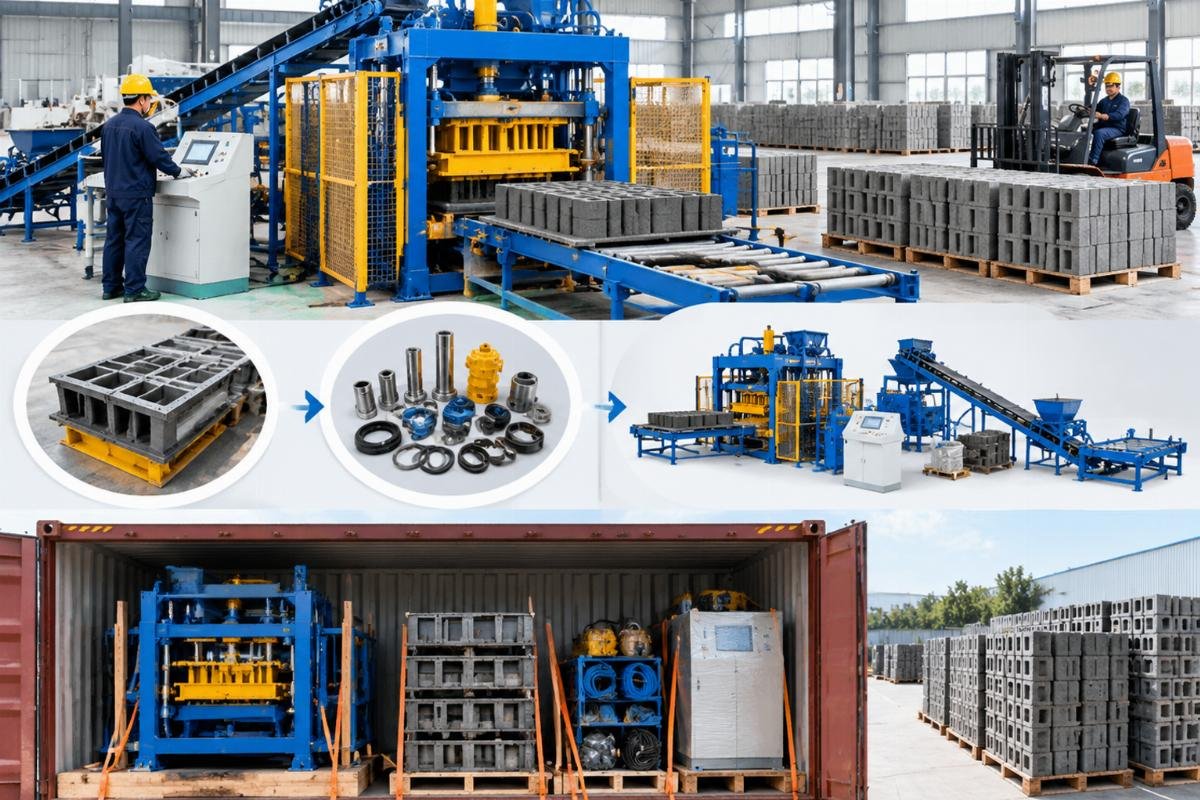
Understanding this dynamic helps you negotiate better. Instead of asking for a lower MOQ, ask for a loading plan that maximizes the container. This shifts the conversation from arbitrary minimums to logistical efficiency. Effective Paver Block Machine Container Loading ensures that every dollar spent on freight delivers maximum value in terms of equipment and readiness.
How Do We Optimize Loading for QT Series Machines?
Optimizing the load for QT series machines requires a methodical approach to disassembly and packing. These machines are robust, but their frames are not designed for shipping in one piece. Strategic disassembly is key to fitting them into standard containers.
The process begins with the main frame. The hopper is usually unbolted and packed flat. The conveyor system is detached. The electrical cabinet, if mounted on the frame, is often removed to prevent damage and save space. Hydraulic hoses are drained, capped, and coiled. The cylinders are detached from the mold box assembly.
- Main Frame Preparation: Remove all protruding parts. Secure the base frame to the container floor using heavy-duty lashing points. [NEED_CITE: best practices for securing heavy machinery in sea freight]
- Hydraulic Unit Packing: The hydraulic power pack is heavy. It is placed on the container floor, often near the doors for easier unloading, or under the main frame if height permits.
- Mold Stacking: Molds are stacked vertically or horizontally depending on their shape. They are wrapped in protective film and secured with wooden braces to prevent shifting.
- Spare Parts Utilization: Small boxes of bearings, seals, and electrical components are placed in the gaps between larger items. This "Tetris-like" approach ensures no space is wasted.
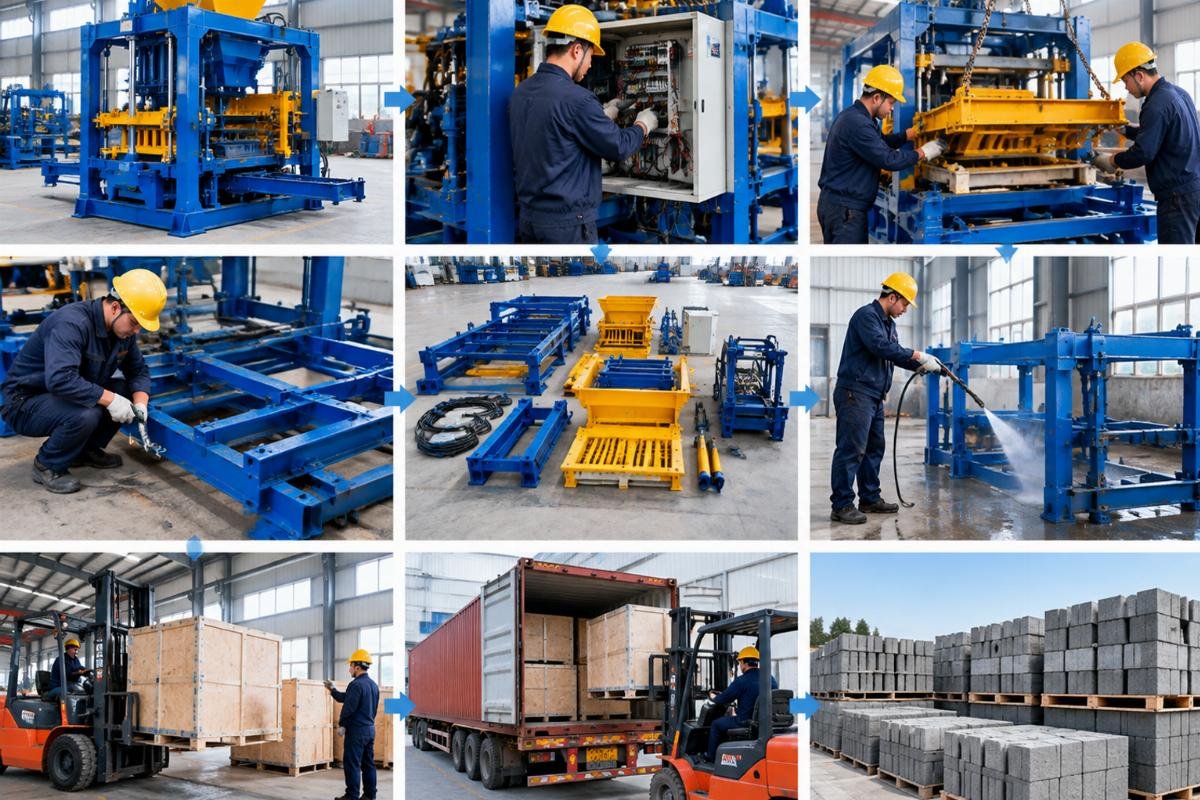
A critical aspect of this process is weight distribution. The container must be balanced to ensure safe handling at ports and on vessels. Heavy items like the hydraulic unit and motor should be placed low and centered. Lighter items like electrical panels and covers can be stacked higher.
In Qatar, during an urgent infrastructure tender, we faced a tight deadline. The client needed a QT8-15 line shipped quickly. By pre-planning the disassembly and using a standardized packing list, we reduced the loading time at the factory. The container was sealed and ready for pickup within days. The precise documentation allowed for smooth customs clearance, avoiding delays that could have disqualified the bid. This experience highlighted that Paver Block Machine Container Loading is not just about space; it is about speed and compliance.
What Are Common Pitfalls in Middle East Shipments?
Shipping to the Middle East and Africa presents unique challenges. Port congestion, strict customs documentation, and harsh environmental conditions can turn a smooth shipment into a nightmare. Avoiding these pitfalls requires attention to detail before the container leaves the factory.
One major issue is incomplete documentation. Customs authorities in countries like Saudi Arabia and Egypt require precise matching between the packing list, commercial invoice, and bill of lading. If the packing list says "one machine," but the container contains disassembled parts listed separately, customs may flag the shipment for inspection. This leads to demurrage charges and delays. [NEED_CITE: common customs documentation errors in MENA region imports]
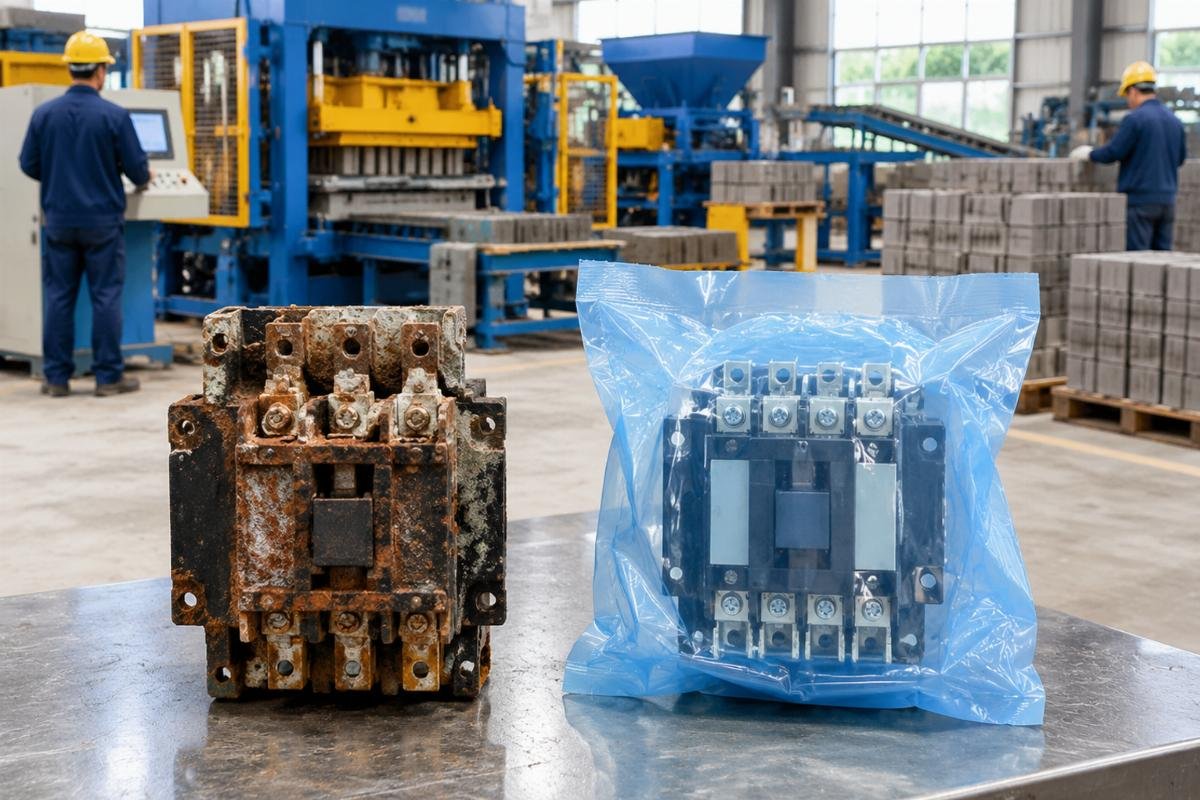
Another pitfall is inadequate protection against humidity and salt air. Sea freight exposes equipment to corrosive environments. Without proper desiccants and vapor-corrosion inhibitor (VCI) packaging, electrical components and bare metal surfaces can rust before they even reach the site. I have seen control panels arrive with corroded terminals because they were not sealed properly.
Additionally, buyers often underestimate the volume of spare parts. A "basic" spare parts kit can fill a significant amount of space. If not planned for, these parts may be left out or shipped LCL. It is better to integrate them into the main container load.
For a project in Dammam, we included a detailed loading diagram in the shipping documents. This helped the local clearing agent understand exactly what was in the container and where each item was located. It sped up the inspection process and ensured that nothing was lost. This level of preparation is part of professional Paver Block Machine Container Loading. It protects your investment and ensures that your machine arrives in production-ready condition.
Conclusion
Smart loading is silent profit.
Mastering Paver Block Machine Container Loading transforms a complex logistical challenge into a competitive advantage. By treating the container as a finite resource to be optimized, you control your landed costs and mitigate risks. Whether you are buying a single QT6-15 or a full plant, the principle remains the same: plan the load before you place the order. This ensures that your investment arrives efficiently, completely, and ready to build.
Leave a Reply