

CE Certified Interlocking Block Machine for Germany Sale
A CE sticker on the frame does not make a machine legal for import into Germany.
Importing an interlocking block machine to Germany requires full compliance with the EU Machinery Directive 2006/42/EC and the Low Voltage Directive, verified through a complete Technical Construction File rather than just a visible label. Customs authorities and local safety inspectors demand proof that every electrical component, hydraulic valve, and safety circuit meets specific European harmonized standards before the equipment can be commissioned.
I remember standing in a humid workshop in Foshan, welding frames for manual brick presses. The work was straightforward: cut steel, weld joints, paint. But when I moved to handle export orders, the complexity shifted from metalwork to paperwork. A few years ago, a shipment of interlocking units destined for Hamburg was held at the port. The buyer had received the machines, but the local safety officer refused to sign off on the installation. The issue was not the mechanical structure, which was solid, but the emergency stop circuits. They did not meet the required performance level for category 3 safety functions as defined by EN ISO 13849-1. The result was a costly delay, with replacement components flown in via air freight to retrofit the control panels on-site. That incident clarified that for the German market, the paper trail is as critical as the steel.
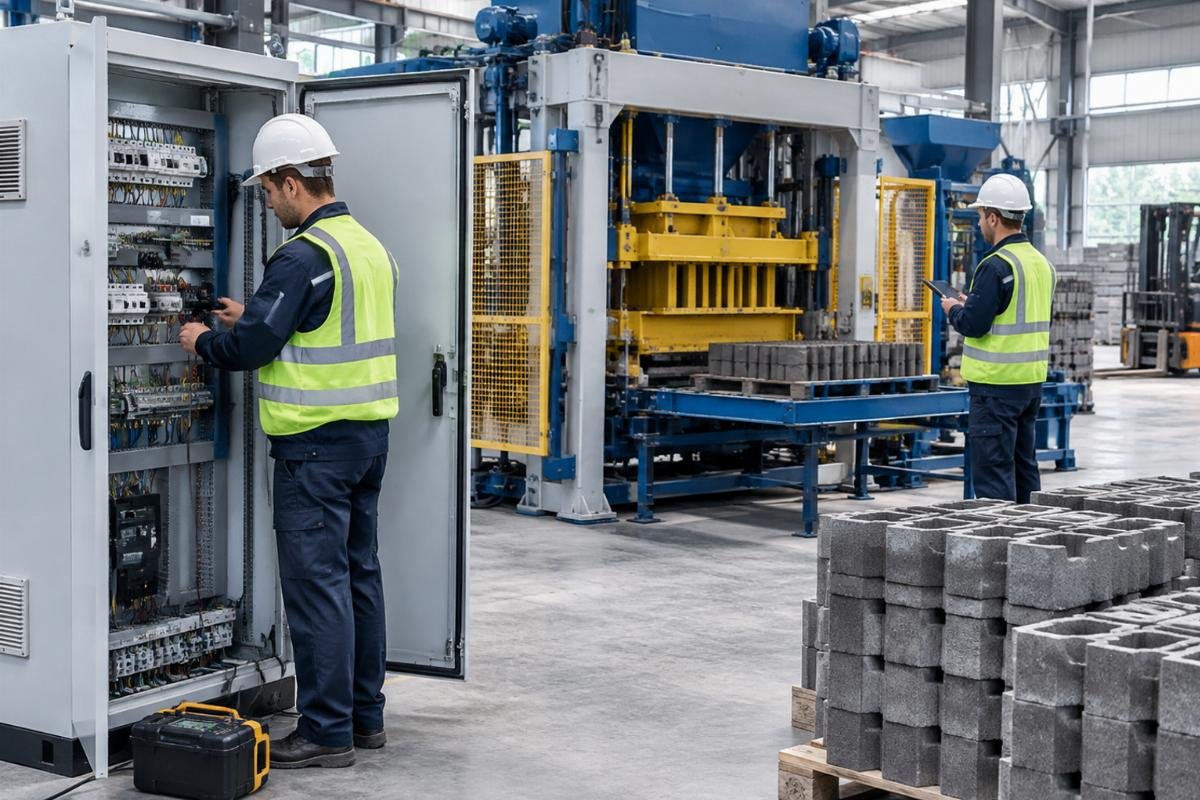
Understanding this distinction is vital for any distributor or contractor looking to source equipment from abroad. The market is flooded with suppliers who claim compliance, but few understand the depth of documentation required by German customs and safety regulators.
Why Is CE Certification Critical for Importing Block Machines to Germany?
Legal market access in Germany is contingent on documented compliance, not just physical presence.
The European Union operates under a framework where manufacturers declare conformity with essential health and safety requirements. For heavy machinery like block making equipment, this falls primarily under the Machinery Directive 2006/42/EC [NEED_CITE: scope of EU Machinery Directive for industrial equipment]. Without this compliance, the machine cannot be legally placed on the market or put into service.
For a buyer in Germany, the risks of non-compliance extend beyond customs detention. If an accident occurs on-site involving a non-compliant machine, the liability falls squarely on the operator or the company that imported it. Insurance providers often require proof of CE compliance before issuing policies for new production lines. Furthermore, German trade unions and works councils are highly vigilant about workplace safety standards. A machine lacking proper certification can lead to immediate work stoppages until a certified safety engineer validates the equipment.
The core of this requirement is the EC Declaration of Conformity. This document is not a generic certificate; it is a legal statement signed by the manufacturer, taking responsibility for the machine’s adherence to all applicable directives. It must reference the specific harmonized standards used, such as EN 60204-1 for electrical equipment of machines [NEED_CITE: EN 60204-1 standard application in industrial machinery]. When sourcing a CE Certified Interlocking Block Machine for Germany Sale, buyers must ensure this declaration is specific to the model being purchased and includes the serial number range.
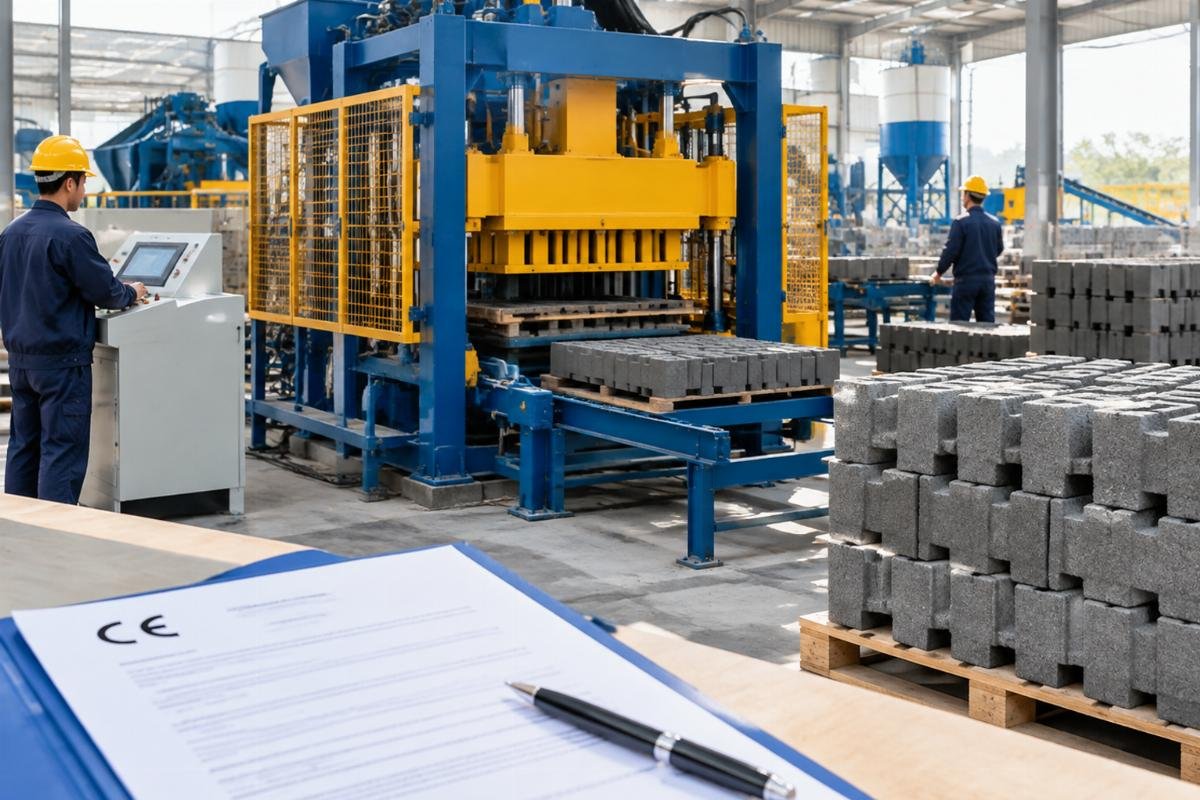
Many suppliers provide a generic CE certificate that covers a broad range of products. This is insufficient for German customs. The declaration must match the exact technical configuration of the unit shipped, including the specific PLC model, motor ratings, and hydraulic pump specifications.
What Are the Common CE Compliance Pitfalls for Interlocking Brick Machines?
Most compliance failures occur in the integration of subsystems, not in the main structural components.
A common misconception is that if individual components like motors and sensors have CE marks, the entire machine is compliant. This is incorrect. The Machinery Directive requires that the manufacturer assess the risks of the integrated system. A CE-certified motor installed in a way that creates a pinch point or lacks proper guarding violates the directive.
One frequent pitfall involves hydraulic systems. High-pressure hoses and fittings must carry appropriate certifications, but the entire hydraulic circuit must be designed to prevent burst hazards and ensure safe pressure relief. In many cases, suppliers use standard industrial hoses that lack the necessary traceability documentation required for EU markets. Another area of failure is noise emission. German regulations are strict regarding workplace noise levels. Machines that exceed certain decibel thresholds without adequate soundproofing or warning labels fail to meet the essential health and safety requirements.
| Compliance Area | Common Pitfall | Required Standard/Documentation |
|---|---|---|
| Electrical Safety | Missing residual current devices or improper grounding | EN 60204-1 Verification Report |
| Hydraulic Systems | Uncertified hoses or lack of pressure relief validation | Component Certificates & Circuit Diagrams |
| Safety Guards | Removable guards without interlock switches | EN ISO 14120 Compliance Check |
| Noise Emission | No measured noise data or warning labels | Noise Test Report per EN ISO 3744 |
| Documentation | Generic EC Declaration not matching specific unit | Model-Specific EC Declaration of Conformity |
These pitfalls often go unnoticed during initial factory inspections because the machine functions mechanically. However, during a formal audit or customs check, the absence of specific test reports or mismatched component certificates can halt the entire process. Buyers should request a preview of the technical file before payment to identify these gaps early. When evaluating a CE Certified Interlocking Block Machine for Germany Sale, scrutinize the details of the hydraulic and electrical subsystems.
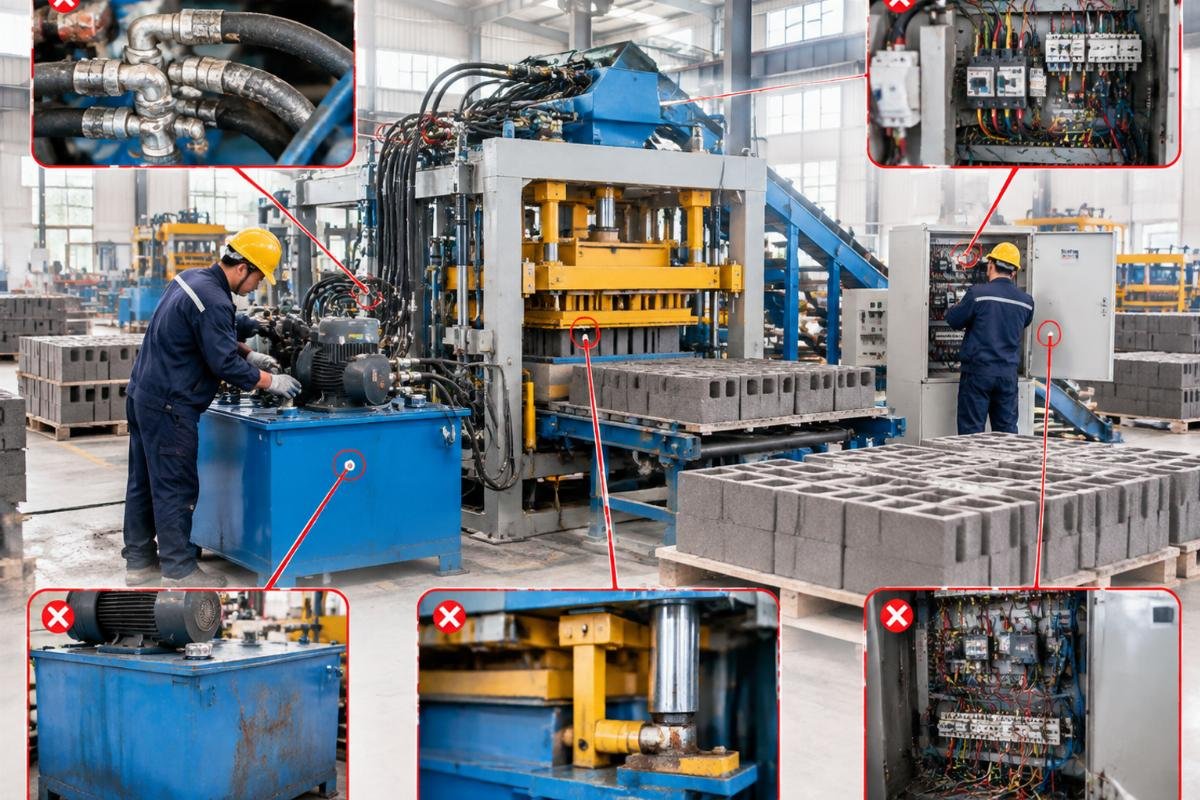
The integration of these systems is where the true engineering challenge lies. It is not enough to buy certified parts; they must be assembled and tested as a coherent, safe unit.
How to Verify a Supplier’s CE Claim Before Payment?
The Technical Construction File is the only definitive proof of compliance, not the sticker on the machine.
Verifying a supplier’s claim requires a shift from trusting marketing materials to auditing technical documentation. The Technical Construction File (TCF) is a comprehensive dossier that demonstrates how the machine meets the essential requirements of the relevant directives. It includes design drawings, risk assessments, calculation notes, and test reports.
Start by requesting the EC Declaration of Conformity. Check if it lists the correct directives: Machinery Directive 2006/42/EC, Low Voltage Directive 2014/35/EU, and EMC Directive 2014/30/EU [NEED_CITE: list of applicable EU directives for industrial machinery]. Ensure the manufacturer’s name and address are clearly stated, along with the person authorized to compile the technical file.
Next, ask for the risk assessment report. This document should identify potential hazards associated with the machine, such as crushing points, electrical shocks, or hydraulic leaks, and describe the measures taken to mitigate them. For a CE Certified Interlocking Block Machine for Germany Sale, this report should specifically address the safety features relevant to European operational environments.
Review the test reports. These should include electrical safety tests, such as insulation resistance and earth continuity checks, performed according to EN 60204-1. Noise emission tests should also be included, conducted per EN ISO 3744. If the supplier cannot provide these specific reports, their CE claim is likely superficial.
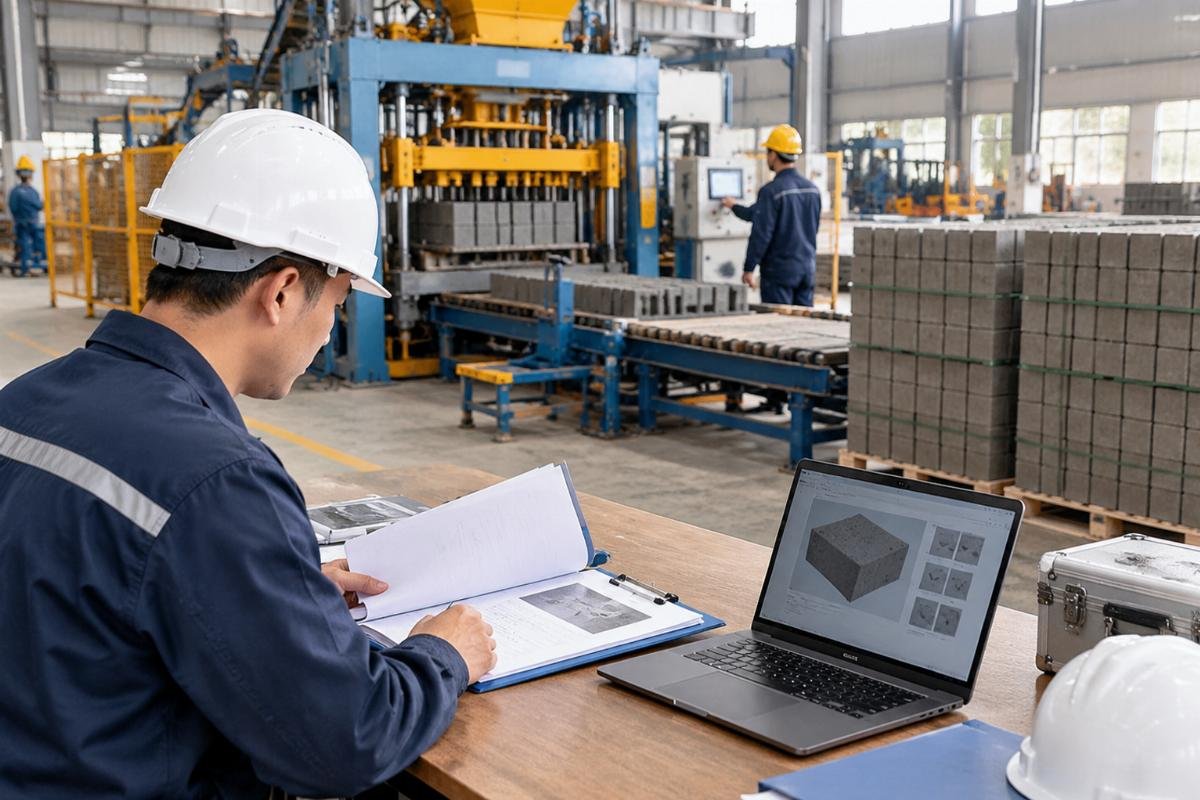
Do not rely on third-party certificates from unknown bodies. While Notified Bodies are involved for certain high-risk machinery, most block machines fall under self-declaration. However, voluntary third-party testing from reputable organizations like TÜV or Bureau Veritas adds credibility. Ask if such testing was performed and request the corresponding reports. This due diligence prevents costly surprises upon arrival in Germany.
Which Technical Specifications Matter Most for German Buyers?
German buyers prioritize safety integration, energy efficiency, and detailed operational documentation over raw output speed.
While production capacity is important, German contractors and distributors focus heavily on the machine’s adherence to safety and environmental standards. The design of safety guards is critical. Guards must be fixed or interlocked such that the machine cannot operate when the guard is open. Simple bolt-on covers are often rejected. Instead, look for designs with magnetic or mechanical interlocks connected to the safety relay system.
Energy efficiency is another key specification. With rising energy costs in Europe, machines with variable frequency drives (VFDs) for motors and efficient hydraulic pumps are preferred. These features reduce power consumption and align with broader sustainability goals. Documentation in German or clear English is also essential. Operating manuals, maintenance guides, and wiring diagrams must be comprehensible to local technicians. Poorly translated or missing manuals can lead to improper operation and safety violations.
| Specification | Basic Level | Preferred for Germany |
|---|---|---|
| Safety Guards | Fixed bolts | Interlocked with safety relays |
| Control System | Standard PLC | Safety-rated PLC with diagnostic logs |
| Energy Efficiency | Fixed speed motors | VFD-controlled motors and efficient hydraulics |
| Documentation | English only | English/German with detailed schematics |
| Noise Control | Basic enclosure | Acoustic damping and measured low emissions |
When selecting a CE Certified Interlocking Block Machine for Germany Sale, prioritize suppliers who demonstrate an understanding of these nuances. The machine should not only produce blocks but also integrate seamlessly into a regulated European work environment.
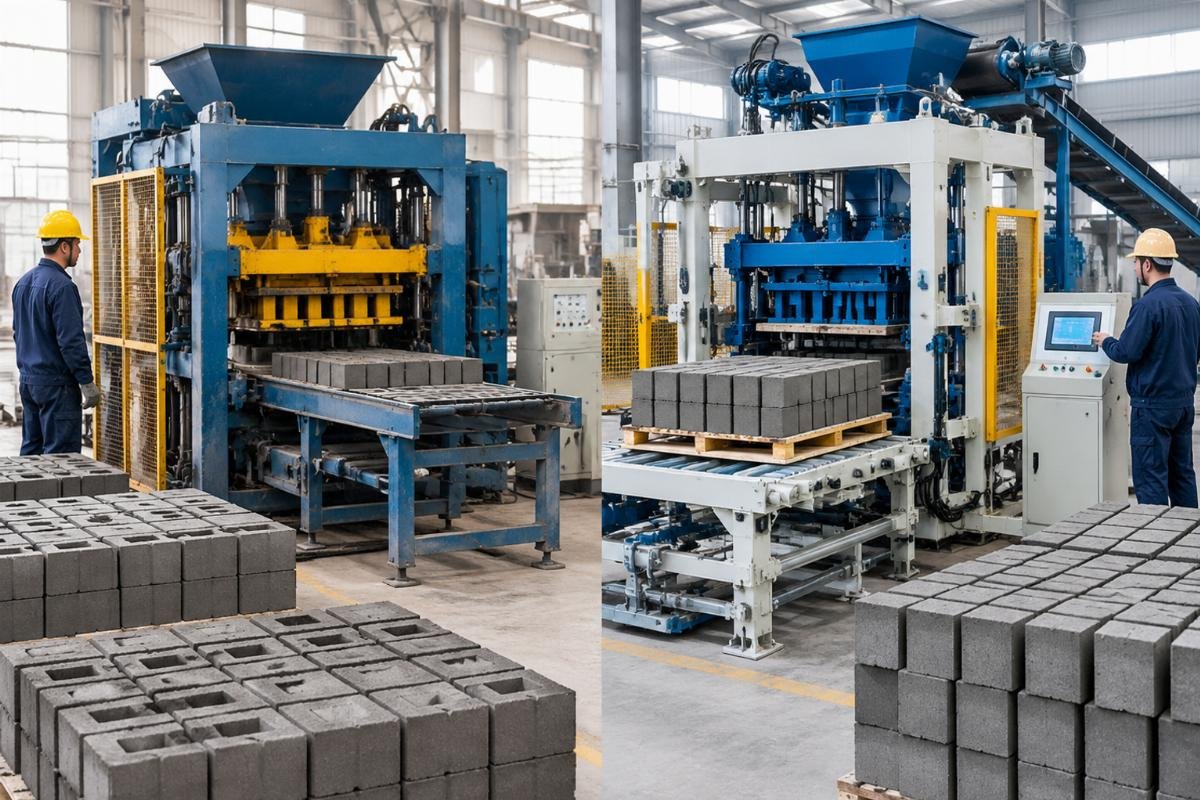
The attention to these details reflects the supplier’s commitment to quality and compliance. It signals that they have experience dealing with stringent European requirements and are prepared to support the buyer beyond the initial sale.
How Does Shiyue Ensure Full CE Compliance for Export?
Rigorous in-house testing and third-party verification form the backbone of reliable compliance.
Shiyue approaches CE compliance as an integral part of the manufacturing process, not an afterthought. Each QT series interlocking machine undergoes a series of predefined tests before leaving the factory. These tests cover electrical safety, hydraulic pressure stability, and safety circuit functionality. The results are recorded and included in the Technical Construction File provided to the buyer.
The company’s experience with European standards allows for proactive design adjustments. For instance, emergency stop circuits are designed to meet Category 3 performance levels, ensuring redundancy and reliability. Hydraulic components are sourced from suppliers who provide full traceability and certification, eliminating the risk of undocumented parts.
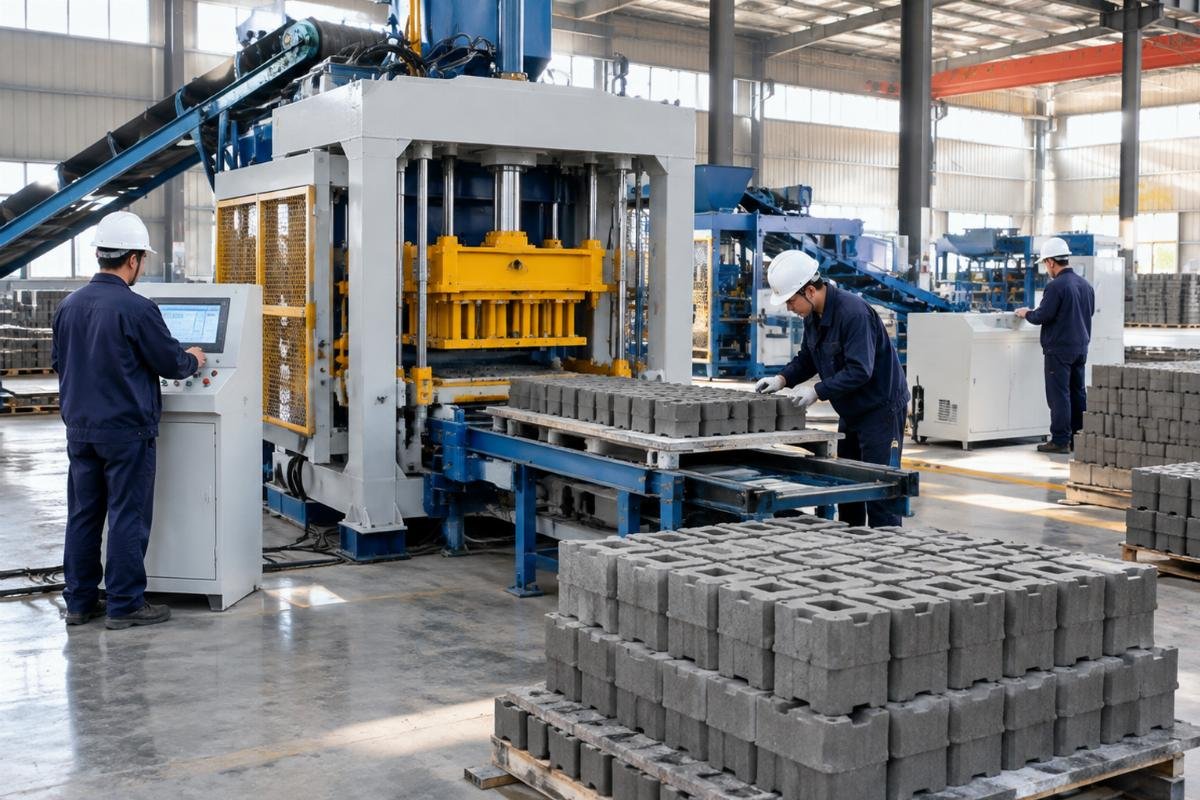
Documentation is prepared with precision. The EC Declaration of Conformity is model-specific, and the technical file includes all necessary test reports, risk assessments, and component certificates. This thorough approach minimizes the risk of customs delays and ensures a smooth commissioning process for the buyer. By prioritizing verified compliance, Shiyue reduces the administrative and operational burden on European distributors and contractors.
Conclusion
Compliance is a detailed engineering discipline, not a marketing label.
Successfully importing a CE Certified Interlocking Block Machine for Germany Sale demands rigorous verification of technical documentation and adherence to EU directives. Buyers must look beyond the sticker to the Technical Construction File, ensuring every component and circuit meets harmonized standards. This diligence protects against customs delays, liability issues, and operational disruptions, ensuring a secure and efficient investment in production infrastructure.
Leave a Reply