

Cement Silo for Refugee Housing Projects | Factory Direct Supplier
The steel tank is rarely the point of failure.
Successful installation of a cement silo in rapid-deployment humanitarian projects depends almost entirely on sub-grade preparation and environmental sealing, not the manufacturing quality of the vessel itself. Most structural failures in temporary housing infrastructure stem from inadequate soil compaction and ignored thermal expansion protocols during the foundation curing phase.
I still remember the sound of twisting metal echoing across a camp in northern Jordan. It was not a dramatic collapse, but a slow, sickening lean that started after the first heavy rains of the season. We had erected a forty-meter silo, proud of how quickly the crew had bolted the sections together. The client, an international NGO, was focused on speed to meet housing deadlines. I was focused on the ground beneath us. The local contractors had skipped the proper soil stabilization steps, assuming the hard-packed desert surface was sufficient. It was not. When the moisture content changed, the bearing capacity dropped, and the entire structure tilted. That incident shifted my perspective entirely. Now, when I review a cement silo installation guide, I spend more time analyzing the geotechnical report than the crane lift plan. [NEED_CITE: common causes of silo structural failure in temporary installations]
This approach is critical for government contractors and NGOs operating in Africa, the Middle East, and Latin America. The pressure to deliver affordable housing quickly often leads to shortcuts in the invisible parts of the project. But cutting corners on the foundation guarantees higher costs later. Here is what actually matters when you are setting up a concrete batching plant or storage system in challenging environments.
Why Do Silos Fail in Rapid-Deployment Projects?
Foundation instability is the primary culprit, not manufacturing defects.
In humanitarian infrastructure, the timeline is always compressed. The assumption is that because the silo is a standardized, factory-built unit, the installation should be equally simple. This is a dangerous misconception. The silo is a static load, but the ground it sits on is dynamic. In regions with high temperature deltas or seasonal rainfall, the soil behaves unpredictably if not properly treated.
Consider the physics involved. A full cement silo exerts immense downward pressure. If the sub-grade is not uniformly compacted, differential settlement occurs. One side sinks slightly faster than the other. Over weeks, this creates a moment arm that the anchor bolts were never designed to withstand. The steel bends, the seals break, and the structure becomes unsafe. [NEED_CITE: geotechnical engineering principles for heavy industrial loads on temporary sites]
I have seen this pattern repeat across multiple regions. In West Africa, a coastal project suffered from corrosion issues, but the root cause was not just the salt air. The foundation had cracked due to poor drainage, allowing saline water to pool around the base. This accelerated the degradation of the anchor points. The solution was not a more expensive silo, but a better-designed apron and drainage system.
When evaluating a cement silo installation guide, look for emphasis on soil testing. Many generic manuals skip this, assuming a standard concrete slab is enough. For refugee housing projects, where sites are often remote and unprepared, this assumption is fatal. You need to verify the soil bearing capacity before any steel arrives on site. If the ground cannot support the load, no amount of high-quality welding will save the structure.
What Are the Critical Pre-Installation Checks?
Verify soil compaction and drainage before any steel arrives on site.
Before the first truck delivers the silo sections, the site must be ready. This phase is often rushed because it lacks the visual progress of erecting steel. However, this is where the majority of risks are mitigated. The process involves more than just pouring concrete; it requires understanding the local environment.
First, conduct a soil bearing capacity test. This is non-negotiable for any permanent or semi-permanent structure. In sandy or loose soils, compaction must be achieved in layers. Simply grading the surface is insufficient. The goal is to create a uniform base that will not shift under load. [NEED_CITE: standard protocols for soil bearing capacity testing in construction]
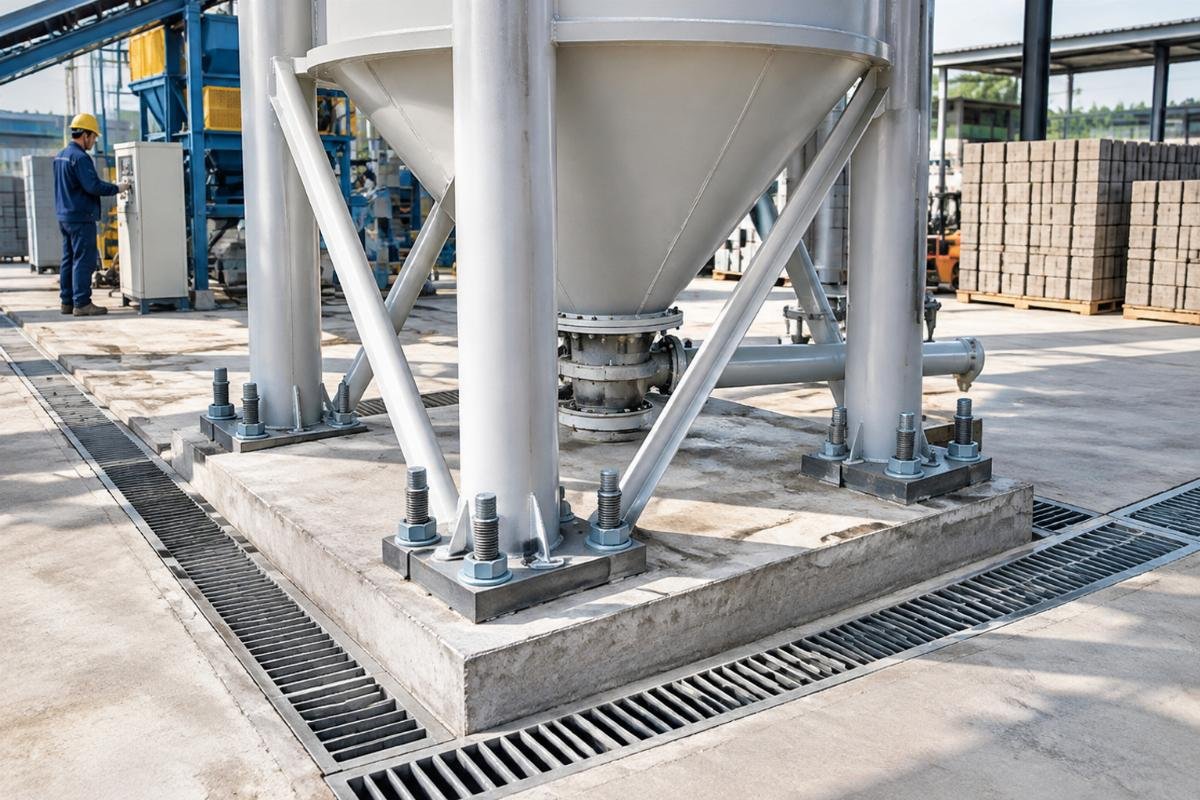
Second, plan for drainage. Water is the enemy of stability. In many MENA region sites, flash floods can occur even in arid climates. The foundation must be elevated slightly above the surrounding grade, with channels directed away from the base. If water pools around the anchor bolts, it leads to two problems: soil softening and corrosion. Both compromise the integrity of the installation.
Third, check the anchor bolt specifications. In high-temperature environments, thermal expansion is a significant factor. The bolts must allow for slight movement without losing tension. Using standard bolts without considering the thermal cycle of the region can lead to loosening over time. I recommend using torque-resistant fasteners and checking their tightness after the first few thermal cycles.
| Check Item | Standard Approach | Recommended for Challenging Environments |
|---|---|---|
| Soil Preparation | Surface grading only | Layered compaction with bearing capacity verification |
| Drainage | Basic slope away from base | Elevated foundation with dedicated drainage channels |
| Anchor Bolts | Standard grade | Heat-treated, torque-resistant with regular monitoring |
| Concrete Curing | Standard time frame | Extended curing with moisture retention in high heat |
This table highlights the difference between a basic setup and one designed for longevity. For a cement silo installation guide to be effective, it must address these specific environmental challenges. Skipping any of these steps invites future failure.
How to Handle Sealing in Dusty, High-Temp Environments?
Use heat-resistant gaskets and positive pressure systems to prevent clogging.
Once the silo is standing, the next challenge is keeping the cement dry and flowing. In dusty environments like those found in many African and Middle Eastern projects, dust infiltration is a major issue. It does not just make a mess; it clogs the pneumatic conveying systems and compromises the quality of the stored material.
Standard rubber gaskets often fail in high temperatures. They become brittle and crack, allowing dust and moisture to enter. The solution is to use silicone or fluorocarbon-based gaskets that can withstand extreme heat without losing elasticity. These materials maintain their seal even when the silo expands and contracts during the day-night temperature cycle. [NEED_CITE: material properties of gaskets in high-temperature industrial applications]
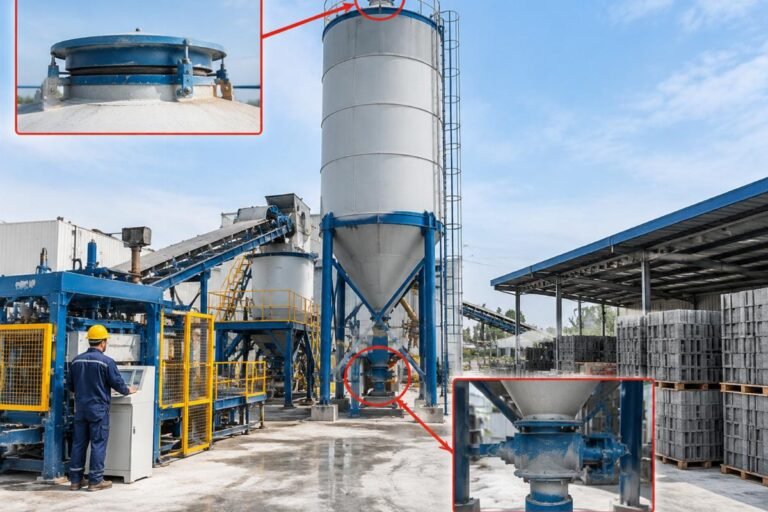
Another critical aspect is the pressure relief system. Cement silos are pressurized during filling. If the pressure relief valve is clogged with dust, it can fail, leading to dangerous pressure buildup or inefficient filling. Regular cleaning and maintenance of these valves are essential. In some cases, installing a secondary filter system can help protect the primary valves from fine dust particles.
I recall a project in a desert region where the team ignored the sealing requirements. Within months, the pneumatic lines were blocked with hardened cement dust. The cost to clear the lines and replace the seals was substantial. It would have been far cheaper to install the correct gaskets and filters from the start.
When following a cement silo installation guide, pay attention to the details of the sealing system. Do not assume that standard components are suitable for harsh environments. Upgrading to heat-resistant and dust-proof components is a small investment that pays off in reduced maintenance and operational reliability.
What Post-Installation Monitoring Is Required?
Implement a 30-day settlement and torque check schedule.
Installation does not end when the last bolt is tightened. The first month of operation is critical for identifying any early signs of failure. During this period, the foundation settles, and the structure adjusts to its load. Monitoring this process allows for corrective actions before minor issues become major problems.
Start with settlement monitoring. Mark reference points on the silo and the surrounding ground. Measure the height of these points regularly. Any significant change indicates uneven settling. If detected early, adjustments can be made to the anchor bolts or the foundation to correct the alignment. [NEED_CITE: best practices for post-installation structural monitoring]
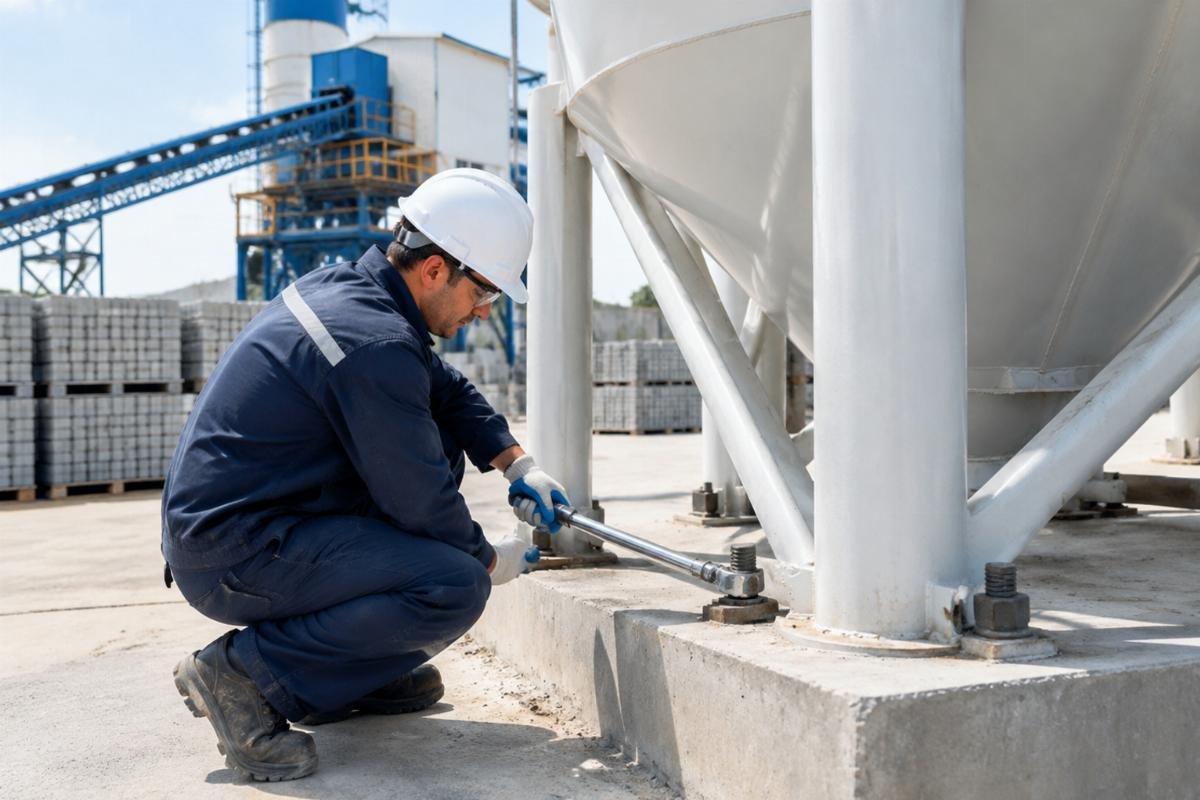
Next, check the torque on all anchor bolts. Thermal cycling and vibration from filling and emptying can cause bolts to loosen. Use a calibrated torque wrench to verify that each bolt is within the specified range. Retighten any that have lost tension. This simple step can prevent catastrophic failure.
Finally, inspect the seals and joints. Look for signs of dust infiltration or moisture damage. Address any leaks immediately to prevent further degradation. Regular inspections should continue beyond the first month, but the initial period is the most vulnerable.
For organizations managing multiple sites, such as those involved in large-scale refugee housing, having a standardized monitoring protocol is essential. It ensures that every installation meets the same safety standards. This is where a comprehensive cement silo installation guide proves its value, providing a checklist for ongoing maintenance.
Conclusion
Rigorous foundation preparation prevents costly structural failures.
Installing a cement silo for refugee housing or infrastructure projects requires more than just assembling steel parts. It demands a deep understanding of soil mechanics, environmental sealing, and ongoing monitoring. By focusing on these critical areas, contractors and NGOs can ensure the longevity and safety of their installations.
Avoid the temptation to rush the invisible work. The time spent on soil compaction, drainage, and proper sealing is an investment in reliability. When you follow a detailed cement silo installation guide that prioritizes these elements, you reduce the risk of failure and ensure that your project serves its purpose effectively. At Shiyue, we integrate these principles into our turnkey solutions, ensuring that every component, from the foundation to the final seal, is optimized for the specific challenges of your site.
Leave a Reply