

Interlocking Block Machine Preventive Maintenance Schedule Manufacturer
Running smoothly is the most dangerous state for your production line.
A structured preventive maintenance schedule is not merely a cleaning routine; it is the primary defense against unplanned downtime in high-volume block production. This guide translates technical quality control standards into actionable daily, weekly, and monthly checks for operators and plant managers, ensuring operational continuity and audit compliance.
Standing on the exhibition floor at bauma in Hanover, I watched a potential buyer from Northern Europe flip through a glossy brochure for a QT series machine. He did not ask about the hydraulic pressure rating or the PLC brand first. Instead, he asked for the preventive maintenance schedule. When the sales representative hesitated, pointing only to the user manual’s generic safety warnings, the buyer closed the folder. He later explained that his procurement protocol required documented proof of long-term maintainability before even discussing price. That moment shifted my perspective from pure technical inspection to understanding how maintenance documentation dictates market access. In the years since, moving from the factory quality control desk to engaging with international buyers, I have seen that the absence of a clear Preventive Maintenance Schedule for Interlocking Block Machine is often the silent killer of profitable operations. [NEED_CITE: impact of documentation on industrial equipment procurement decisions]
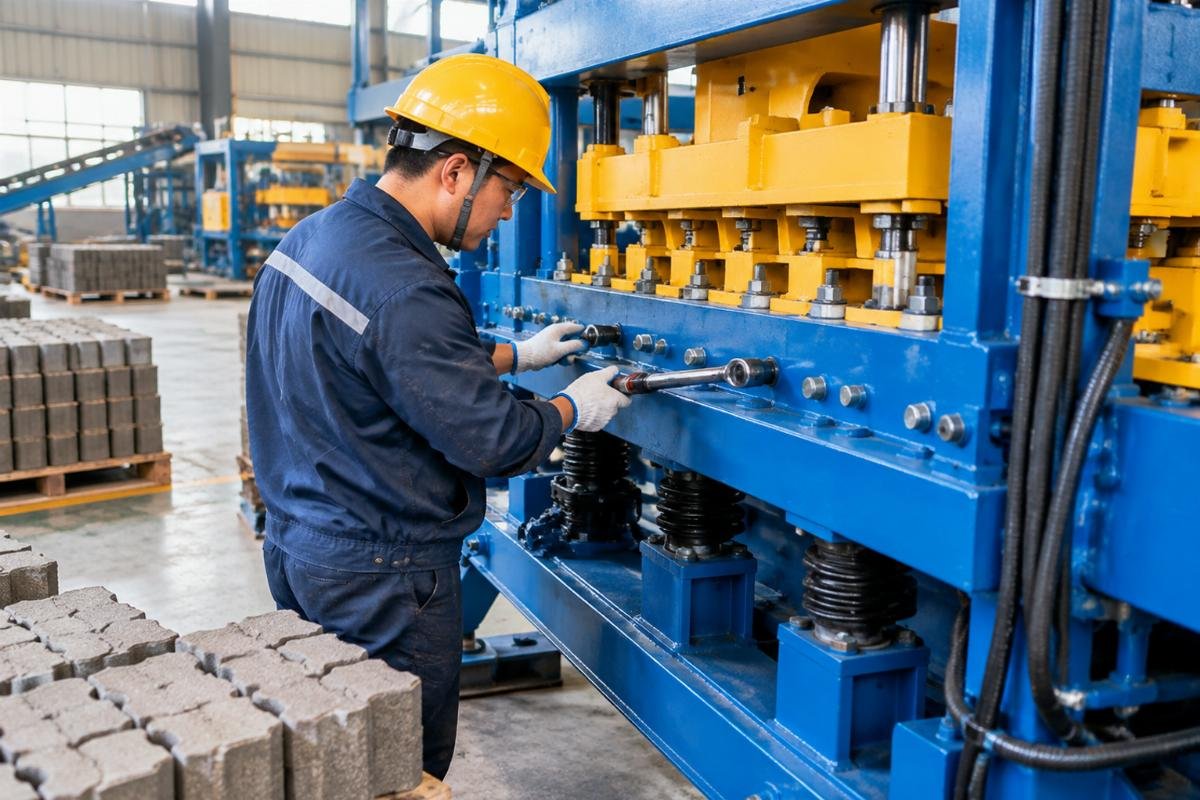
The gap between a machine that works and a machine that lasts lies in the details ignored during the rush to meet production quotas. Most failures are not sudden catastrophes but the cumulative result of microscopic fatigue and contamination. By implementing a rigorous schedule, you transform reactive repairs into predictable management.
Why Do Most Block Plants Ignore Preventive Maintenance Until It’s Too Late?
Unplanned downtime costs significantly more than scheduled maintenance hours, yet the psychological bias toward immediate output often overrides long-term asset protection.
In high-volume production environments, the pressure to keep the hopper full and the pallets moving is intense. Operators are trained to spot obvious jams, not subtle signs of wear. The misconception is that if the machine is producing blocks, it is healthy. However, the true cause of failure is often hidden within the vibration motors or hydraulic valves, ignored during daily visual checks. [NEED_CITE: root cause analysis of hydraulic system failures in heavy machinery]
Consider a case involving a precast concrete producer in Southern Europe. During a routine audit by their main client, the production facility failed to produce signed maintenance logbooks for the previous quarter. The auditor did not care that the machines were running perfectly at that moment. The lack of documentation suggested a lack of process control. This oversight led to a delay in final payment acceptance that lasted several weeks, costing the producer far more than the time it would have taken to fill out simple checklists. The lesson was clear: maintenance is not just mechanical; it is administrative proof of due diligence.
Without a formalized approach, minor issues escalate. A small hydraulic leak, unnoticed for days, can lead to pump cavitation. A loose bolt on the vibration box, vibrating unchecked, can crack the mold frame. These are not random events; they are predictable outcomes of neglecting the Preventive Maintenance Schedule for Interlocking Block Machine. The cost of replacing a main hydraulic pump is not just the part price but the lost production days while waiting for shipping and installation. In contrast, the cost of checking oil levels and filter conditions is negligible.

The resistance to maintenance often stems from a lack of structured guidance. Operators do not ignore maintenance because they are negligent; they ignore it because they are not given a clear, prioritized list of what matters. A vague instruction to "check the machine" is ineffective. A specific instruction to "inspect hydraulic hoses for abrasion near the clamp points" is actionable. Bridging this gap requires a schedule that is integrated into the daily workflow, not treated as an extra burden.
What Are the Critical Daily Checks for Interlocking Block Machines?
Focus on hydraulic integrity and mold alignment to prevent early wear and ensure dimensional consistency of the final product.
Daily checks are the first line of defense. They should be quick, visual, and performed before the machine reaches full operating temperature. The goal is to catch anomalies before they become defects. [NEED_CITE: standard operating procedures for concrete block machine daily inspection]
- Hydraulic System Visual Inspection: Walk around the machine and look for any signs of oil leakage. Pay special attention to the connections on the cylinder rods and the valve bank. Even a small drip indicates a failing seal. Check the hydraulic oil level in the tank. Low oil levels can cause air ingestion, leading to spongy operation and potential pump damage.
- Mold Clearance and Alignment: Inspect the gap between the mold box and the side frames. Uneven wear or misalignment can cause the mold to stick or produce blocks with inconsistent dimensions. Use a feeler gauge if necessary to verify uniformity. Ensure that the mold release agent spray nozzles are not clogged and are covering the entire surface area evenly.
- Lubrication Points: Verify that all automatic lubrication systems are functioning. If manual lubrication is required, check the grease nipples on the guide columns and vibration motor bearings. Dry guide columns increase friction, leading to premature wear of the bushings and higher energy consumption.
- Sensor and Safety Check: Clean the lenses of proximity sensors and photoelectric switches. Dust and concrete slurry can obscure these sensors, causing false readings and unexpected machine stops. Test the emergency stop buttons to ensure they cut power immediately.
A common mistake observed in many plants is skipping the sensor cleaning. In dusty environments, a layer of concrete dust can accumulate on sensor lenses within hours. This leads to intermittent faults that are difficult to diagnose, often resulting in unnecessary part replacements. Including sensor cleaning in the daily checklist eliminates this variable. Another frequent oversight is ignoring the sound of the vibration motors. A change in pitch or an increase in noise level can indicate bearing wear or loose mounting bolts, which should be investigated immediately rather than waiting for a complete failure.
How Often Should You Replace Hydraulic Oil and Filters?
Adjust intervals based on operating environment and duty cycle intensity, rather than relying solely on fixed hourly recommendations.
The standard recommendation for hydraulic oil changes is often based on moderate operating conditions. However, real-world environments vary drastically. In tropical climates, such as those found in parts of Africa and the Middle East, ambient temperatures can exceed 40°C. High temperatures accelerate oil oxidation and reduce viscosity, compromising lubrication and cooling efficiency. [NEED_CITE: effect of ambient temperature on hydraulic oil degradation rates]
In one instance, a plant operator in a hot climate followed the standard 500-hour oil change interval. The machine began experiencing overheating alarms and sluggish response times. Upon analysis, the oil had degraded significantly faster than expected due to the high ambient heat. The solution was to reduce the oil change interval to 300 hours and install a larger capacity oil cooler. This adjustment restored stable operation and prevented costly pump failures.
Filters are equally critical. Many operators believe that OEM parts are optional for filters, opting for cheaper alternatives. However, non-standard filtration ratings can allow micro-contaminants to pass through, causing abrasive wear in precision components like servo valves and piston pumps. The cost savings on a filter are insignificant compared to the cost of rebuilding a hydraulic pump.
| Maintenance Component | Standard Condition Interval | High Temperature/Dusty Environment Interval | Action Required |
|---|---|---|---|
| Hydraulic Oil | Standard Duty Cycle | Intensive Duty Cycle | Replace and flush system |
| Suction Filter | Regular Inspection | Frequent Clogging Risk | Clean or replace element |
| Pressure Filter | Standard Replacement | High Contamination Risk | Replace cartridge |
| Breather Cap | Visual Check | Dusty Environment | Clean or replace desiccant |

Regular oil analysis can provide deeper insights into machine health. Testing for particle count, water content, and viscosity can predict failures before they occur. While this may seem advanced for smaller operations, even simple visual checks for discoloration or milky appearance (indicating water contamination) can save significant repair costs. Integrating these checks into the Preventive Maintenance Schedule for Interlocking Block Machine ensures that the hydraulic system remains the reliable heart of the production line.
Which Components Fail First Without Proper Lubrication?
Vibration motors and guide columns are the most vulnerable points, subjecting them to extreme stress and friction during every cycle.
The vibration unit is the core of the block forming process. It generates the force needed to compact the concrete mix. This constant, high-frequency vibration places immense stress on the motor bearings and mounting bolts. Without proper lubrication and torque checks, these components fail rapidly. [NEED_CITE: failure modes of vibration motors in concrete machinery]
Guide columns ensure the precise vertical movement of the mold box. Friction between the columns and bushings generates heat and wear. If lubrication is insufficient, the bushings can seize, causing the mold to bind. This not only stops production but can also damage the mold structure itself. In a case involving a QT series machine, regular torque checks on the vibration box bolts reduced mold replacement costs noticeably. The bolts, loosened by vibration, allowed excessive movement that accelerated wear on the mold edges. Tightening them to specification restored alignment and extended mold life.
Lubrication is not just about applying grease; it is about applying the right type of grease in the right amount. Over-greasing can attract dust and create a abrasive paste, while under-greasing leads to metal-on-metal contact. Automated lubrication systems help maintain consistency, but they must be monitored to ensure they are actually delivering grease to the points.
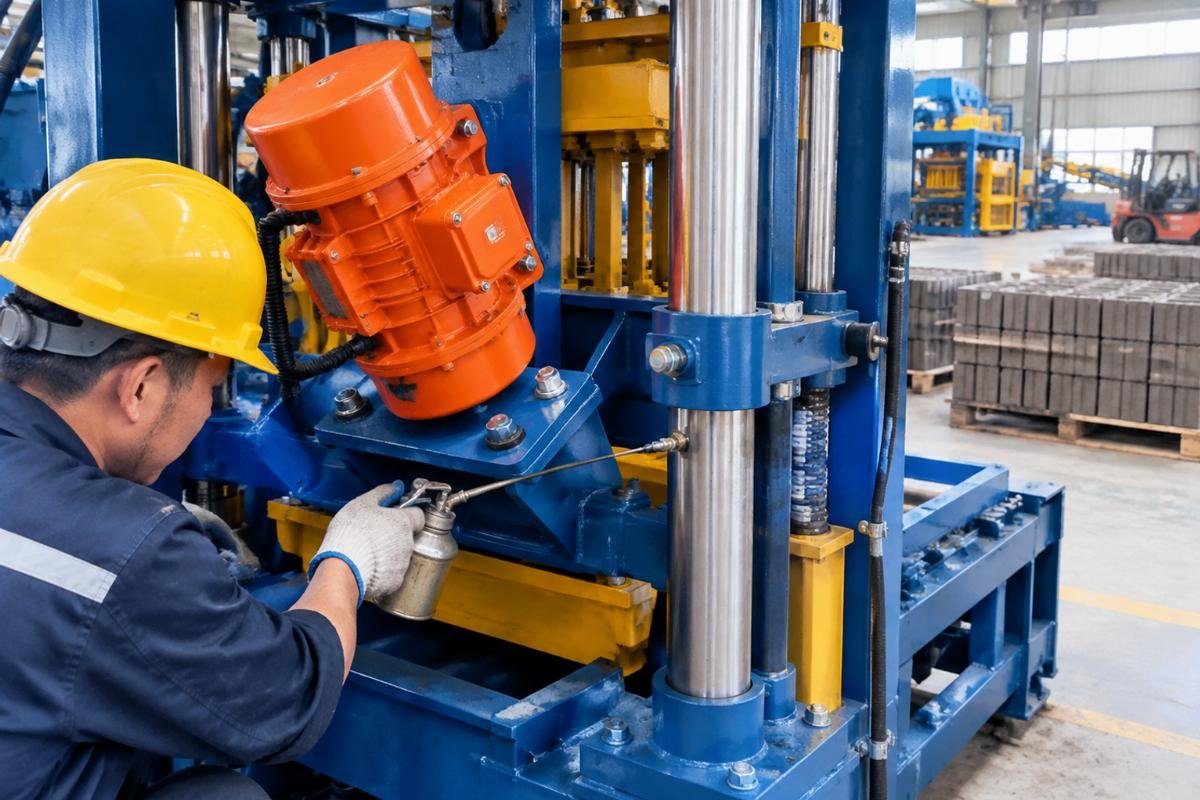
Operators should be trained to listen to the machine. A well-lubricated machine has a consistent hum. A dry or worn component will produce a grinding or squealing noise. Early detection of these sounds can prevent catastrophic failures. Including specific lubrication tasks in the daily and weekly checks ensures that these critical components receive the attention they need. The Preventive Maintenance Schedule for Interlocking Block Machine must highlight these high-wear areas explicitly, guiding operators to focus their efforts where they matter most.
How to Document Maintenance for Buyer Audits and Warranty Claims?
Standardized logs prove due diligence and protect asset value, serving as essential evidence for warranty validation and international audits.
Documentation is often viewed as bureaucratic paperwork, but in the context of international trade and industrial operations, it is a legal and financial safeguard. Buyers, especially those in regulated markets or working on government projects, require proof that equipment has been maintained according to manufacturer specifications. Without this proof, warranty claims can be denied, and audits can fail.
A standardized maintenance log should include dates, technician names, specific tasks performed, and any observations or parts replaced. Digital logs are increasingly preferred for their ease of storage and retrieval, but paper logs signed by responsible personnel remain widely accepted. The key is consistency and completeness. [NEED_CITE: importance of maintenance records for industrial equipment warranty validation]
Shiyue supports this need by providing standardized, multi-language maintenance log templates with every QT series turnkey solution. These templates are designed to meet international audit standards, ensuring that clients can easily document their maintenance activities. Remote diagnostic support further enhances this capability, allowing technical experts to review maintenance data and provide guidance without being physically present. This integration of documentation and support helps clients maintain compliance and maximize the lifespan of their equipment.

The act of documenting maintenance also reinforces discipline. When operators know that their work is being recorded and reviewed, they are more likely to perform checks thoroughly. This cultural shift from reactive fixing to proactive care is essential for long-term success. The Preventive Maintenance Schedule for Interlocking Block Machine is not just a technical document; it is a management tool that drives operational excellence.
Conclusion
Preventive maintenance is the cornerstone of sustainable block production.
By adhering to a structured schedule, you protect your investment, ensure product quality, and meet the rigorous demands of modern buyers. The steps outlined here provide a foundation for building a culture of reliability and efficiency in your plant.
Leave a Reply