

Concrete Block Machine Load Rating Standards: QT Series Manufacturer
Higher tonnage does not guarantee structural survival; it often accelerates failure when mismatched with local aggregate density.
Load ratings for concrete block machines are not static maximum weight limits but dynamic thresholds determined by the interplay of aggregate specific gravity, moisture content, and vibration frequency. Selecting a machine based solely on nominal output capacity ignores the critical variable of raw material characteristics, leading to premature mold deformation and frame fatigue in high-density environments.
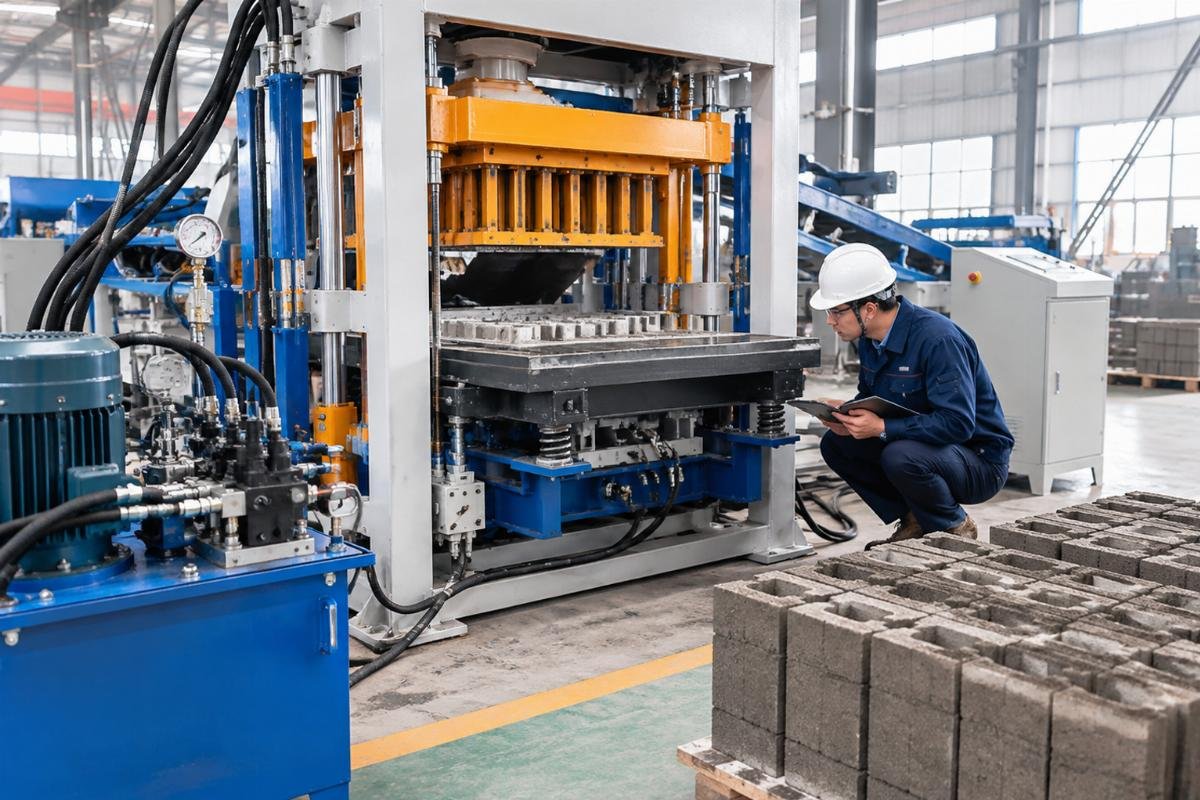
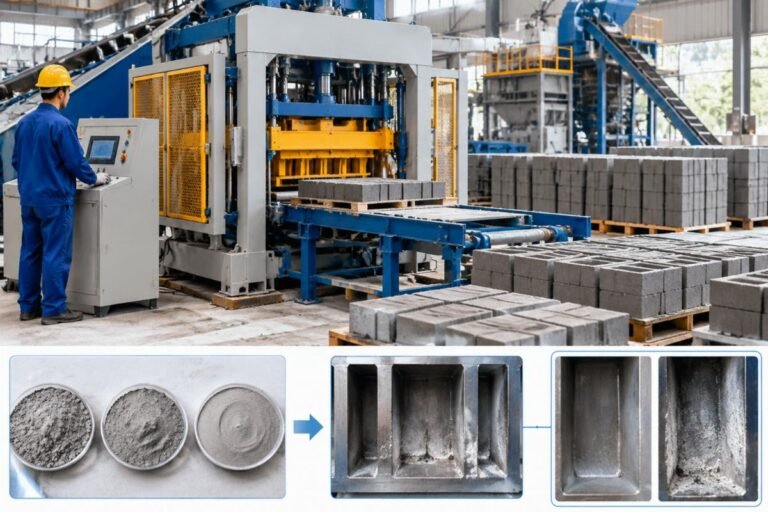
Understanding these dynamic limits is essential for preventing costly downtime. In my early days coordinating equipment deployment, I witnessed a standard QT6-15 unit fail within weeks in Nigeria. The client used wet river sand, which has a significantly higher density than the dry mix assumed in factory specifications. The vibration table overload caused immediate structural stress, warping the molds and halting production for an extended period. This incident shifted my focus from marketing brochures to field-tested engineering parameters. It became clear that concrete block machine load rating standards must account for local geological realities rather than just theoretical mechanical limits. [NEED_CITE: impact of aggregate density on vibration equipment lifespan]
Why Nominal Tonnage Misleads Buyers in Emerging Markets?
Static load ratings provided in general catalogs often create a false sense of security for buyers in emerging markets. These figures typically assume ideal conditions: dry, uniform aggregates and stable power supplies. However, operational environments in Africa, MENA, and Latin America frequently present high-moisture raw materials and fluctuating electrical grids.
The core issue lies in the difference between static weight and dynamic force. A machine rated for a certain tonnage may handle dry sand comfortably, but the same volume of wet river sand can increase the effective load substantially. This surge in mass requires greater compaction force, pushing the hydraulic and mechanical systems beyond their designed safety margins. [NEED_CITE: relationship between moisture content and bulk density in concrete mixes]
Consider the case of a project in West Africa where a buyer selected a machine based on its high nominal output. The local aggregate was dense, water-saturated river sand. Within days, the vibration motor began to overheat, and the frame showed signs of stress cracking. The machine was not defective; it was simply mismatched with the raw material’s physical properties. The nominal tonnage did not reflect the dynamic shock loads generated by compacting heavy, wet mixes at high frequencies.
This discrepancy highlights why concrete block machine load rating standards cannot be applied universally without adjustment. Buyers must look beyond the headline tonnage and inquire about the machine’s structural rigidity and damping capabilities. A robust frame design can absorb irregular shocks better than a lighter one, even if both share similar nominal ratings. Ignoring this distinction leads to equipment that performs well in the factory test but fails under real-world conditions.
How Do Raw Materials Dictate True Load Limits?
Raw materials are the primary driver of actual operational load. The specific gravity of aggregates varies significantly by region, directly influencing the force required for compaction. To determine the true load limit, one must calculate the dynamic load based on local material characteristics.
The process involves assessing three key factors: aggregate density, moisture factor, and vibration frequency. High-density aggregates like crushed stone or wet river sand require more energy to compact than lightweight materials like fly ash or dry sand. This increased energy demand translates into higher mechanical stress on the vibration table and mold assembly. [NEED_CITE: calculation methods for dynamic load in vibrating machinery]
| Material Characteristic | Impact on Load | Structural Requirement |
|---|---|---|
| High Specific Gravity Aggregates | Substantially increases dynamic force | Reinforced frame and heavy-duty vibration motors |
| High Moisture Content | Increases bulk density noticeably | Enhanced sealing and corrosion-resistant components |
| Irregular Particle Shape | Causes uneven load distribution | Robust mold guidance systems and damping |
In a recent consultation for a client in East Africa, we analyzed their local sand samples. The specific gravity was higher than the standard reference value used in initial machine sizing. By adjusting the vibration parameters and reinforcing the mold support structure, we prevented potential overload issues. This proactive approach ensured that the concrete block machine load rating standards were met in practice, not just on paper.
Another critical aspect is the viscosity of the mix. High-viscosity mixes, often used for interlocking pavers, resist compaction more than standard block mixes. This resistance creates lateral stress on the mold walls. If the mold design does not account for this lateral pressure, thin-walled decorative molds can fracture or deform. Therefore, matching the machine’s structural integrity to the specific product type is crucial.
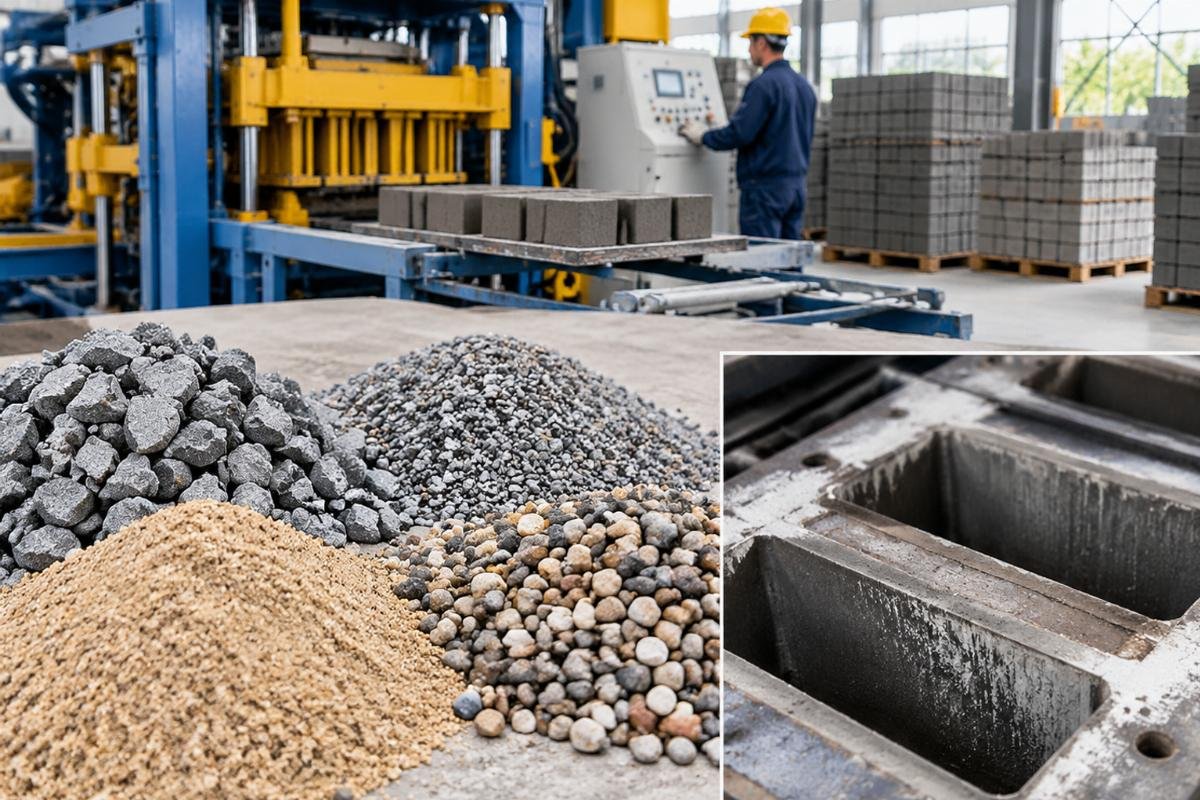
Buyers should request a material analysis from their local suppliers before finalizing machine specifications. This data allows manufacturers to tailor the equipment to handle the specific dynamic loads expected in the plant. Without this step, the risk of premature failure remains high, regardless of the machine’s nominal capacity.
What Structural Features Resist Overload Failure?
Structural resilience is not just about using more steel; it is about intelligent design that distributes stress effectively. Key features that enhance load capacity include frame reinforcement, vibration table damping systems, and mold guidance mechanisms.
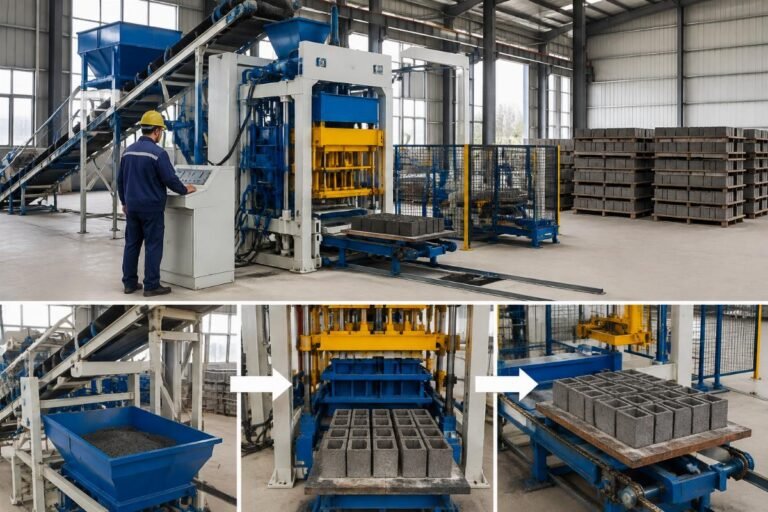
Frame reinforcement involves using thicker steel plates and strategic ribbing to prevent bending under eccentric loads. During single-mold production, the load is not always evenly distributed. A well-designed frame absorbs these uneven forces without transferring excessive stress to the welds or joints. [NEED_CITE: structural engineering principles for heavy machinery frames]
Vibration table damping systems play a vital role in protecting the machine from shock loads. High-quality dampers isolate the vibration source from the main frame, reducing the transmission of harmful frequencies. This isolation extends the lifespan of bearings and other moving parts. In contrast, inadequate damping can lead to resonance, causing rapid fatigue failure.
Mold guidance systems ensure that the mold moves vertically without lateral deviation. This precision prevents uneven wear and reduces the risk of mold jamming. For high-tonnage machines, robust guidance pins and bushings are essential to maintain alignment under heavy compaction forces.
| Structural Feature | Function | Benefit |
|---|---|---|
| Reinforced Frame | Distributes eccentric loads | Prevents frame cracking and deformation |
| Advanced Damping System | Isolates vibration shocks | Extends bearing and component life |
| Precision Mold Guidance | Maintains vertical alignment | Reduces mold wear and jamming risks |
In my experience, machines with these features perform consistently better in challenging environments. For instance, a client in South America reported significantly lower maintenance costs after upgrading to a model with enhanced damping and frame reinforcement. The initial investment was higher, but the long-term reliability justified the expense.
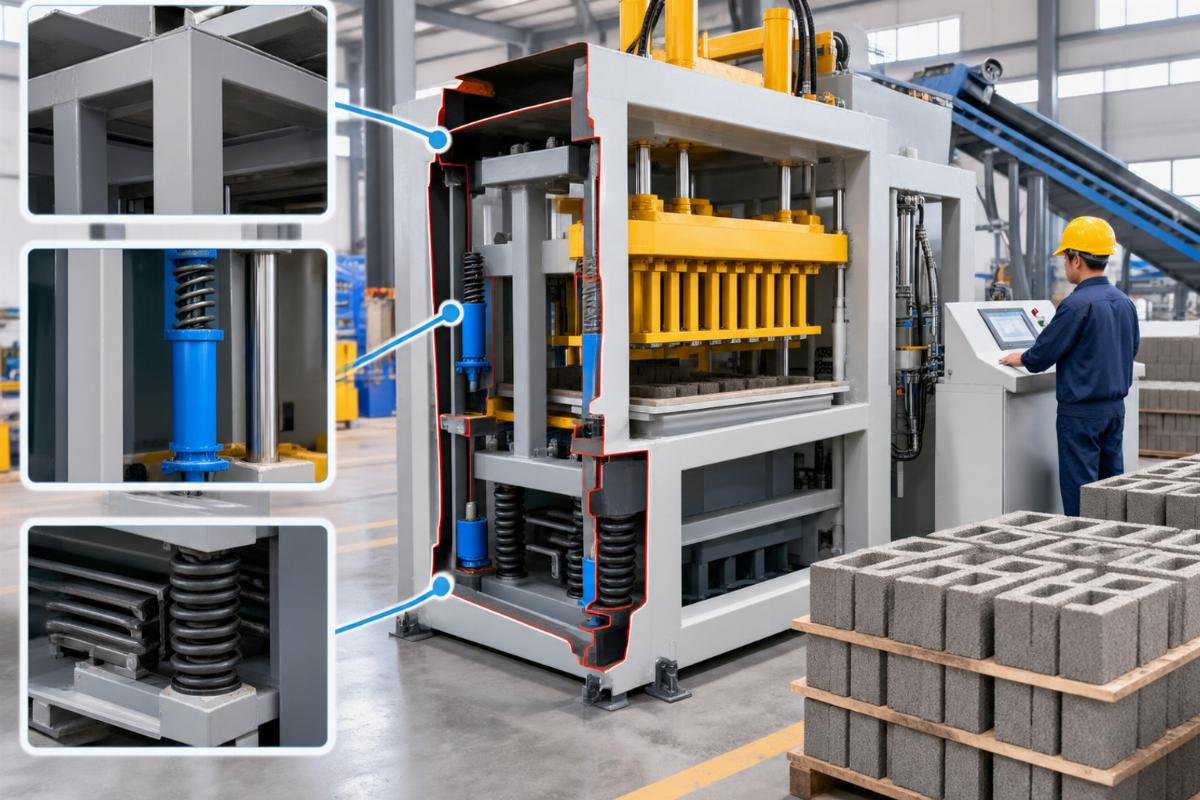
When evaluating concrete block machine load rating standards, buyers should inspect these structural elements closely. Request detailed drawings or photos of the frame construction and damping setup. This scrutiny helps identify machines built for durability rather than just cost efficiency.
How to Verify Load Capacity Before Shipping?
Verification is the final safeguard against equipment mismatch. Before shipping, buyers should request factory test reports and simulation data that reflect their specific operating conditions. This step ensures that the machine meets the required concrete block machine load rating standards for their unique context.
First, ask for a load test report using aggregates similar to your local materials. If the factory uses standard dry sand for testing, the results may not reflect real-world performance. Some manufacturers offer custom testing services where they simulate high-density or high-moisture conditions. This service provides valuable insights into the machine’s behavior under stress.
Second, review the hydraulic system specifications. Ensure that the hydraulic pumps and valves have sufficient pressure reserve to handle high-viscosity mixes. A system operating at its maximum limit continuously will fail prematurely. Look for evidence of pressure margin in the technical documentation. [NEED_CITE: hydraulic system design margins for industrial machinery]
Third, check the electrical components for compatibility with local power conditions. Voltage fluctuations can reduce hydraulic pressure consistency, leading to incomplete compaction and uneven load distribution. Machines equipped with voltage stabilizers or robust electrical protection are better suited for areas with unstable grids.
| Verification Step | Action Required | Expected Outcome |
|---|---|---|
| Custom Load Testing | Simulate local aggregate conditions | Confirmed performance under realistic loads |
| Hydraulic Margin Check | Review pressure reserve specifications | Assurance of consistent compaction force |
| Electrical Compatibility | Verify voltage stabilization features | Protection against grid fluctuations |
A practical example involves a buyer in Southeast Asia who requested a pre-shipment test using their specific clay mix. The test revealed that the original hydraulic settings were insufficient for the high viscosity of the clay. Adjustments were made before shipping, preventing potential production issues upon arrival. This proactive verification saved time and money, demonstrating the value of thorough due diligence.

By following these verification steps, buyers can ensure that their investment aligns with actual operational needs. It transforms the purchase from a gamble into a calculated decision based on verified data.
Conclusion
True load capacity is defined by material dynamics, not just nominal tonnage.
Selecting the right concrete block machine requires a deep understanding of how local aggregates, moisture, and power stability interact with mechanical structures. By focusing on structural rigidity, damping systems, and verified test data, buyers can avoid common pitfalls and ensure long-term operational success. Adhering to rigorous concrete block machine load rating standards ensures that equipment performs reliably in diverse global markets.
Leave a Reply