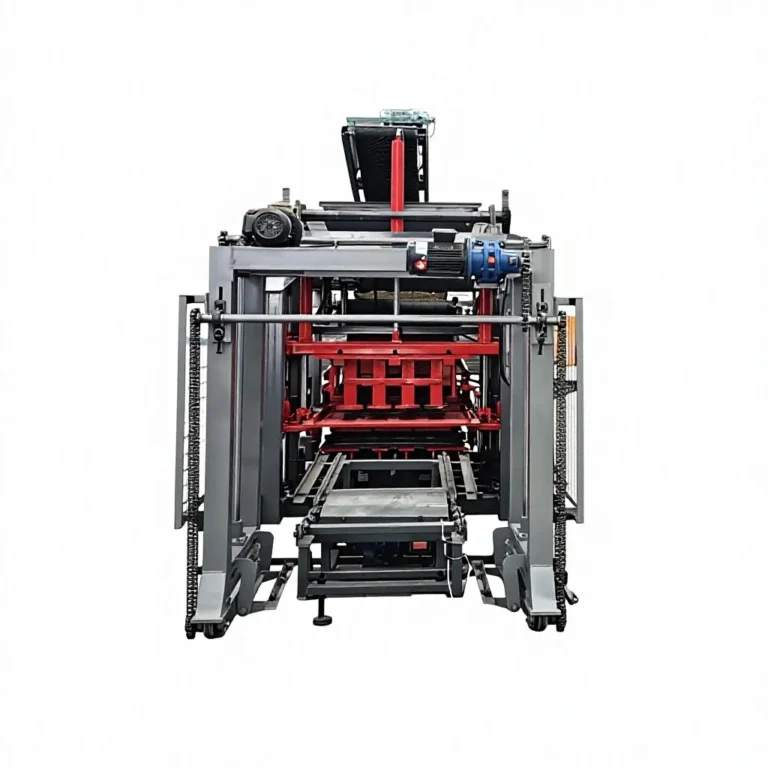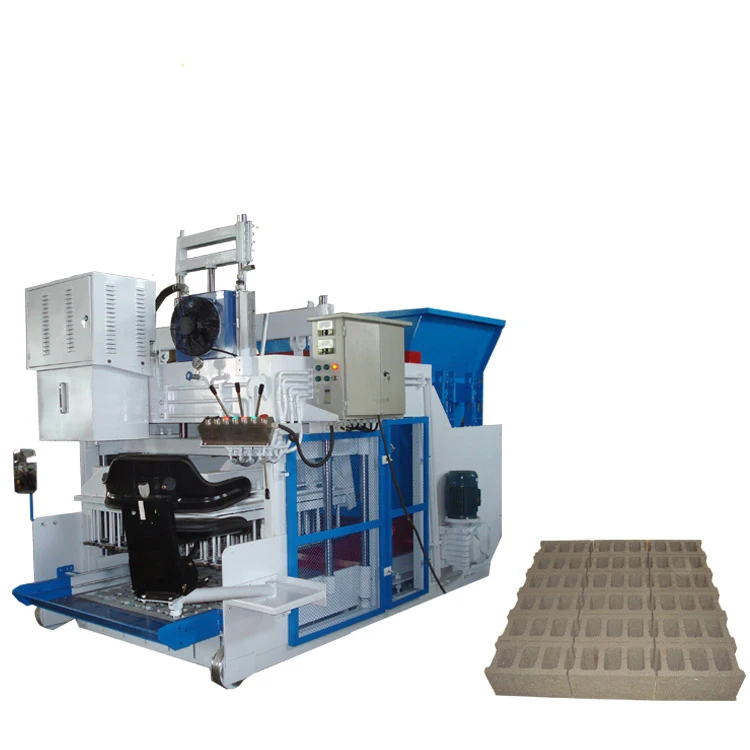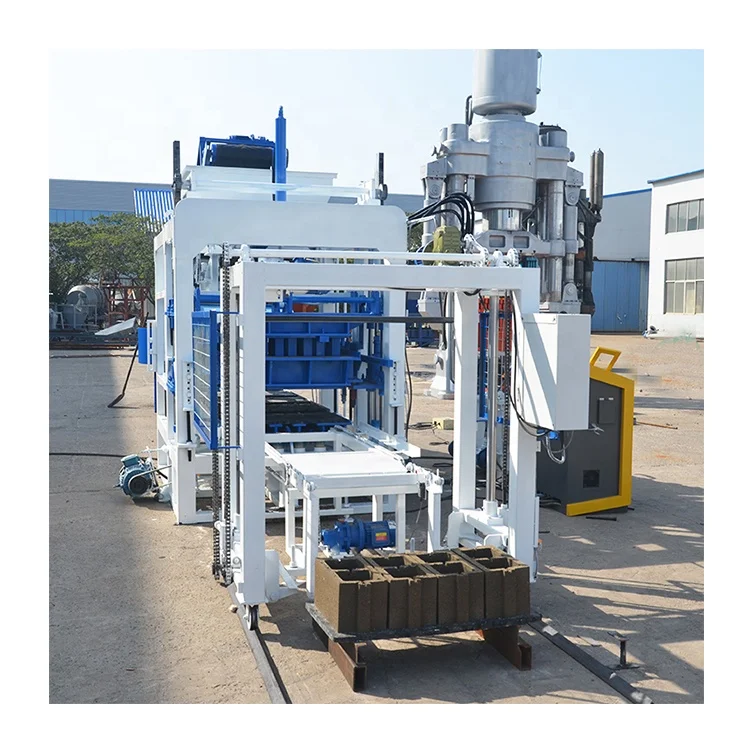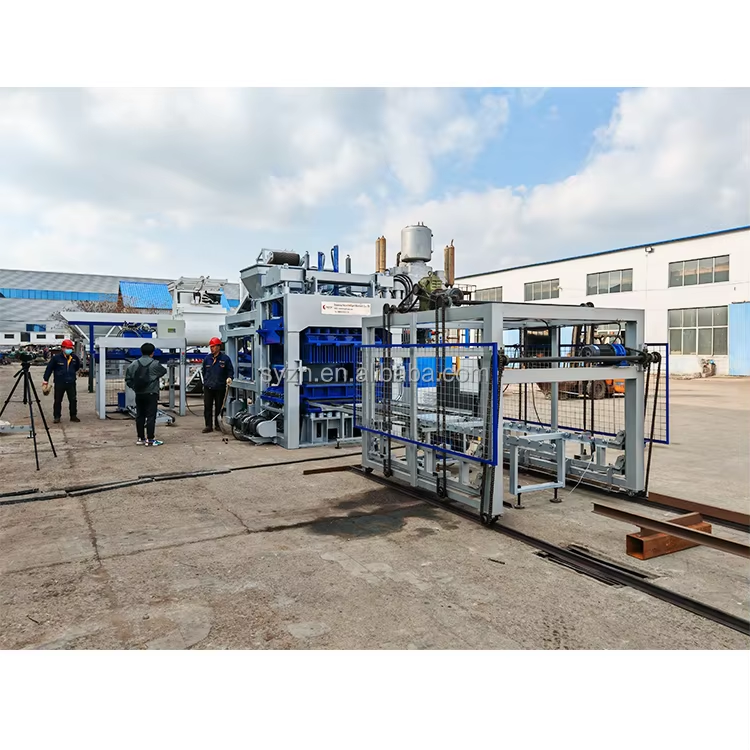
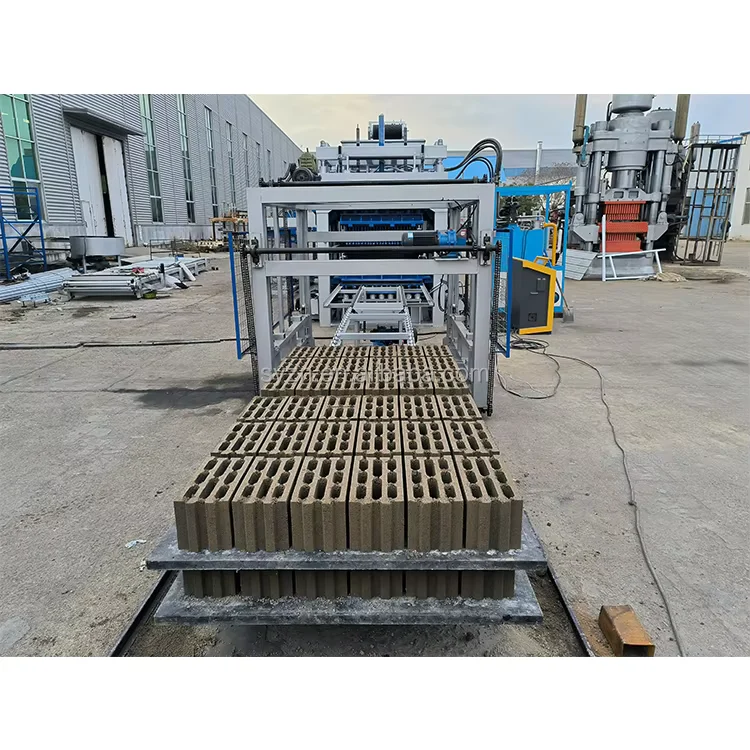
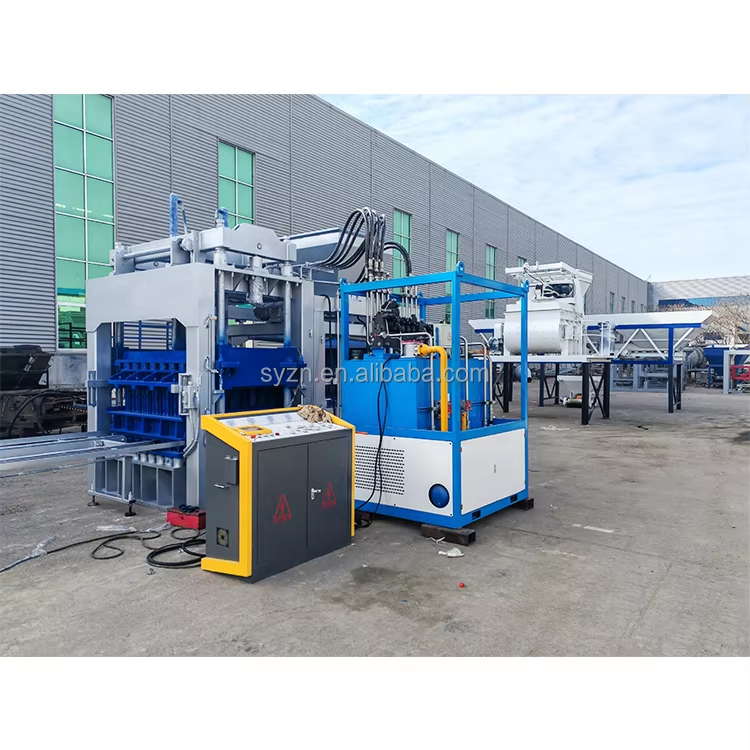
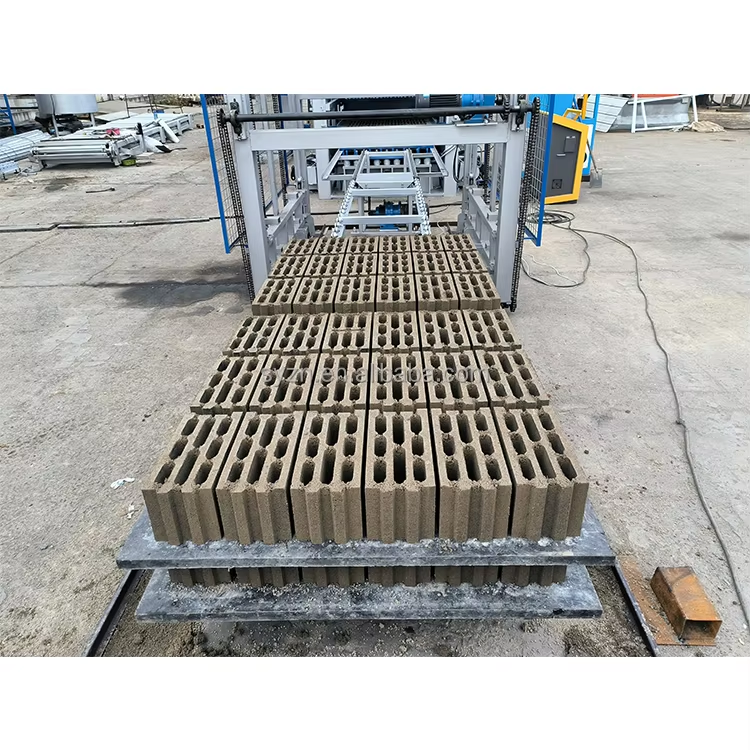
Description
Dispatch Readiness — Standard moulds and mainframe units are pre-staged for immediate container loading, eliminating typical multi-week manufacturing delays for urgent project schedules.
Technical Specifications
| Parameter | Value |
|---|---|
| Model | QT18-15 |
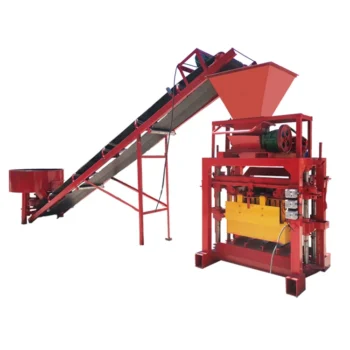
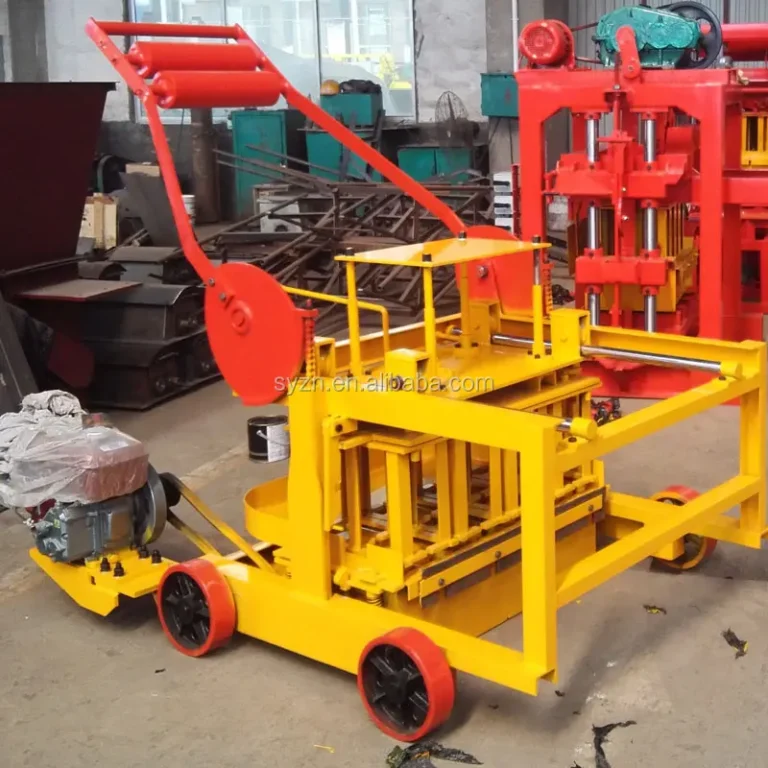
| Product Type | Fully Automatic Block Production Line |
| Method | Hydraulic Pressure |
| Voltage Options | 220 V, 380 V, 415 V, 440 V |
| Overall Dimensions (L×W×H) | 8100x1600x2610 mm |
| Total Mass | 10 T |
| Rated Pressure | 100 MPa |
| Pallet Size | 1350×1350 mm |
| Mould Format Options | 400x100x200 mm, 400x120x200 mm, 200x100x60 mm, 300x150x100 mm, 400x150x200 mm, 240x115x90 mm, 200x200x60 mm, 150x150x100 mm, 400x200x200 mm, 230x220x115 mm |
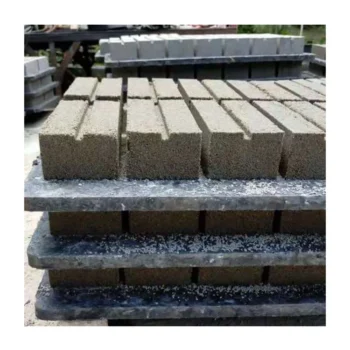
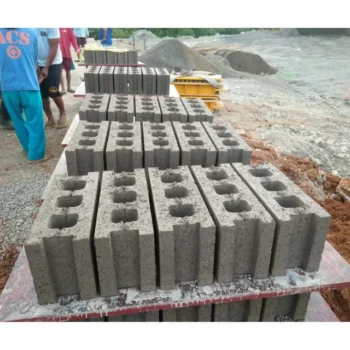
| Block Type | Hollow block, solid brick, paver |
| Raw Material | Concrete, cement, flyash |
| Cycle Time | 15S (basis not stated in source — confirm block format / material / thickness) |
| Worker Requirement | 3-5 |
| Core Components | PLC, Pressure Vessel, Engine, Gear, Motor, Pump, Bearing, Gearbox |
Application Suitability
| Application | Material or Output |
|---|---|
| High-volume hollow block production | Concrete and cement mixes for structural walls |
| Paving and kerbstone manufacturing | Dense concrete and flyash blends for exterior surfaces |
| Solid brick runs for masonry | Standard cementitious materials for load-bearing partitions |
Why the Voltage Question Must Precede the Dispatch Date
Confirming local grid frequency and voltage before loading prevents weeks of idle machinery at the destination port.
When a fully automatic line arrives with mismatched electrical specifications, the entire project schedule halts while sourcing local transformers. I have seen installation crews wait nearly a month on a Latin American site simply because the motor voltage did not match the local grid. Securing a QT18-15 block making machine in stock is only the first step; verifying that the 220 V, 380 V, 415 V, or 440 V configuration aligns with your site’s power supply ensures the equipment runs the moment it is assembled. [NEED_CITE: voltage and frequency standards by export market]
Pre-Staged Inventory for Immediate Dispatch
Maintaining a ready inventory of standard mainframes and commonly requested mould formats allows us to bypass the standard manufacturing queue. When a project deadline is imminent, buyers need a fast delivery block production line that can be dismantled, packed, and loaded into containers within days rather than months. The 8100x1600x2610 mm footprint and 10 T total mass of this equipment are calculated in advance for precise container loading plans, meaning the logistics chain starts moving the moment the order is confirmed.
Container Loading and Dismantling Protocols
Shipping heavy hydraulic machinery requires precise dismantling to maximize container space and protect sensitive components. The mainframe, hydraulic station, and control cabinets are separated and secured to prevent transit damage. Because the total mass is exactly 10 T, we can provide accurate weight declarations for customs and freight forwarders upfront. This structured dismantling process ensures that when the QT18-15 block making machine in stock arrives at your facility, the reassembly sequence is straightforward and logical. [NEED_CITE: standard container loading procedures for heavy industrial machinery]
Interpreting the Physical and Electrical Footprint
The 100 MPa rated pressure and hydraulic method dictate the heavy-duty structural requirements of the mainframe, which directly influences the 10 T total mass and the 8100 mm length. This physical footprint requires a level, reinforced concrete foundation to absorb the vibration during operation. Electrically, the availability of 220 V, 380 V, 415 V, and 440 V options means the core motor and pump configurations can be matched to regional industrial grids. The 1350×1350 mm pallet size determines the curing rack dimensions and the forklift capacity needed on your site to move the finished product efficiently.
The Hidden Costs of Rushed Electrical Verification
Skipping the final verification of PLC display languages and voltage settings before the container doors close leads to severe on-site consequences. If the control interface is locked in an unsupported language, operators cannot troubleshoot basic faults, turning a minor sensor issue into a multi-day shutdown. Similarly, running a 380 V motor on a 440 V supply without a step-down transformer will burn out the windings during the first test run. These are entirely avoidable delays that negate the advantage of securing a fast delivery block production line in the first place. [NEED_CITE: common causes of industrial machinery failure during commissioning]
Why Source Your Equipment Through This Channel
- Block machinery is our single focus, meaning the mainframe, pallets, and handling equipment are specified as one matched system ready for immediate dispatch.
- Configuration is verified against your actual voltage and control language requirements before the machine leaves the factory floor.
- Standard moulds for the formats your market demands are kept in stock alongside the mainframe to ship in the same container.
- Installation and commissioning support is scheduled in advance based on the confirmed departure date, so technicians are ready when the equipment arrives.
Documentation & Verification
- Factory test record confirming hydraulic pressure and motor rotation direction before dispatch.
- Container loading plan detailing the dismantling sequence and securing points for the 10 T mass.
- Voltage and PLC control language confirmation sheet signed off prior to crating.
- Machinery test report and video outgoing-inspection provided for your specific unit.
- Customs documentation support including accurate weight and dimensional declarations.
Installation, Commissioning & Support
- Foundation must accommodate the 8100×1600 mm footprint and absorb 100 MPa hydraulic vibration.
- Dedicated electrical circuit required matching the confirmed 220 V, 380 V, 415 V, or 440 V supply.
- Mainframe and hydraulic station are dismantled for transit and reassembled on-site.
- Initial power-on verifies motor rotation and PLC language settings before hydraulic pressure testing.
- Operator training covers mould change procedures for the included standard block formats.
- Wear parts list provided to ensure hydraulic seals and bearings are available locally.
Required Information for Rapid Order Processing
To expedite the dispatch of a QT18-15 block making machine in stock, please provide your local industrial voltage and frequency, along with the required PLC display language. We also need to know which specific mould formats from our standard inventory match your immediate project requirements. Finally, confirm your site’s unloading capabilities for a 10 T equipment package so we can finalize the container loading and arrival estimates.
Frequently Asked Questions
Q: What is the actual dispatch lead time for standard models and moulds?
A: Standard mainframes and commonly requested mould formats are pre-staged in our inventory. Once your voltage, frequency, and PLC language requirements are verified and the order is confirmed, the equipment can be dismantled and loaded into containers within a matter of days, bypassing the standard manufacturing queue entirely.
Q: How is the machinery dismantled and secured for ocean freight?
A: The 10 T mainframe, hydraulic station, and control cabinets are systematically separated to optimize container space. Each component is secured with heavy-duty bracing to prevent transit damage. We provide a detailed container loading plan so your receiving team understands the exact reassembly sequence upon arrival.
Q: How do you calculate the arrival estimate for international shipments?
A: The arrival estimate is calculated by combining our rapid dispatch lead time with the standard ocean transit duration to your specific destination port. Because the total mass and dimensions are fixed, we can provide accurate weight declarations to your freight forwarder immediately, preventing customs delays.
Q: What happens if the local voltage does not match the standard options?
A: We offer configurations for 220 V, 380 V, 415 V, and 440 V systems. If your site requires a highly specific or non-standard voltage, we will identify this during the initial inquiry. Any necessary electrical adjustments or transformer recommendations are addressed before the fast delivery block production line is loaded, preventing idle time on your site.
Q: Are spare parts and standard moulds shipped in the same container?
A: Yes, we coordinate the packing to ensure that your selected standard moulds, initial wear parts, and the main machinery are loaded into the same container or consecutive shipments. This guarantees that you have everything required to begin production the moment the equipment is assembled and commissioned.