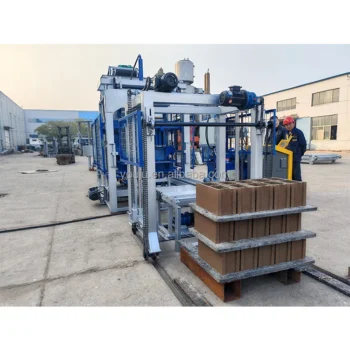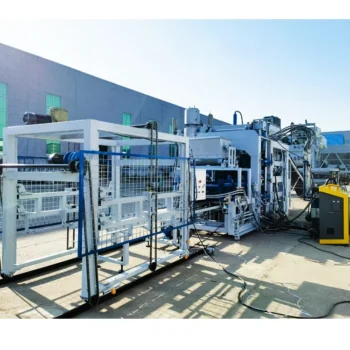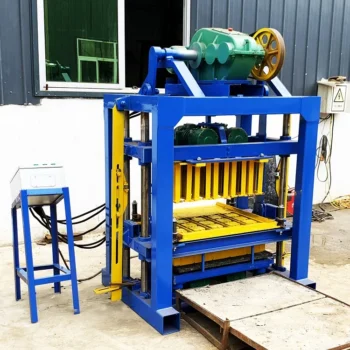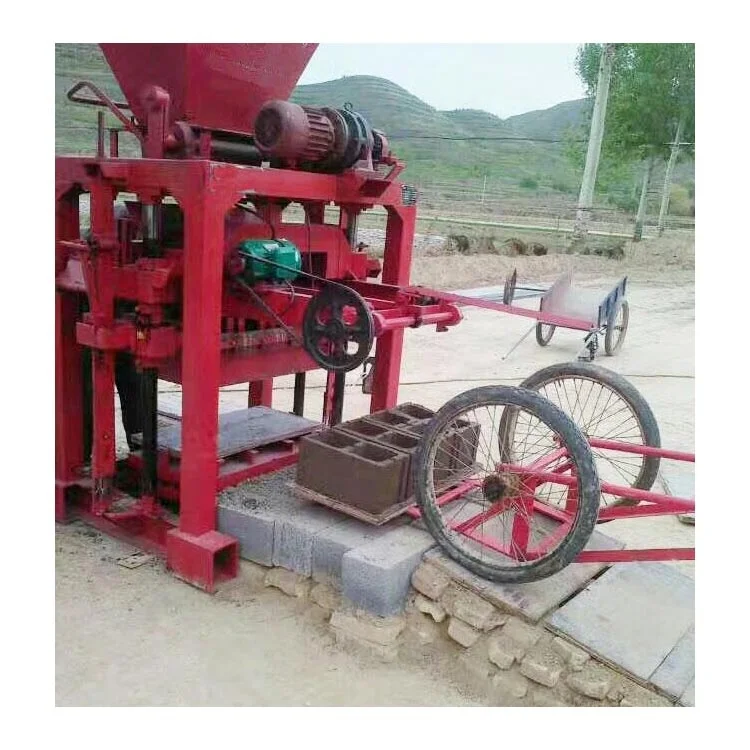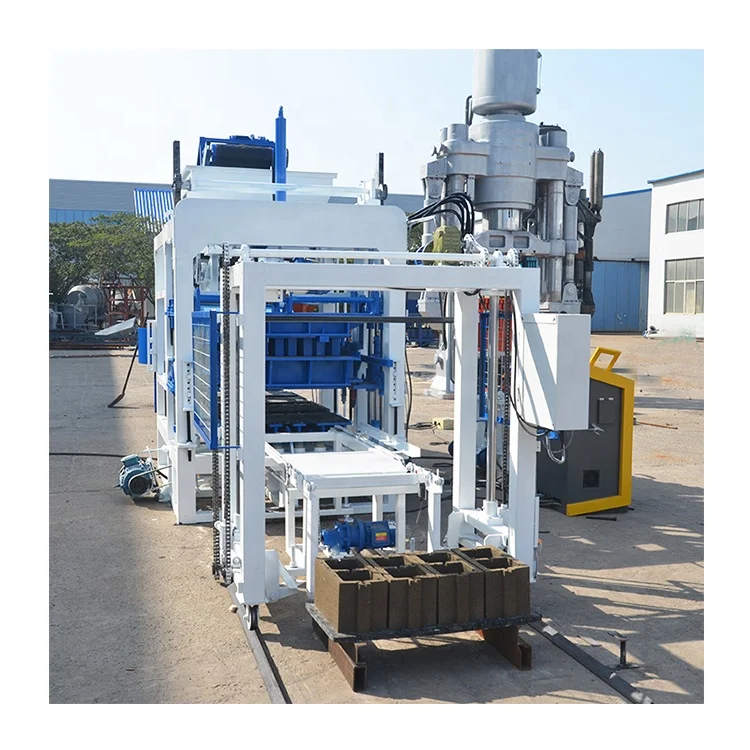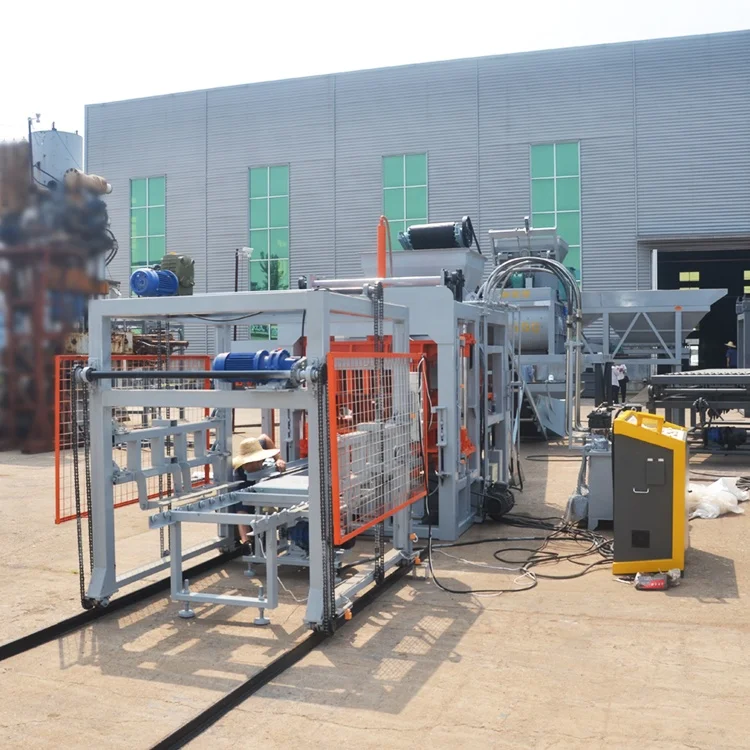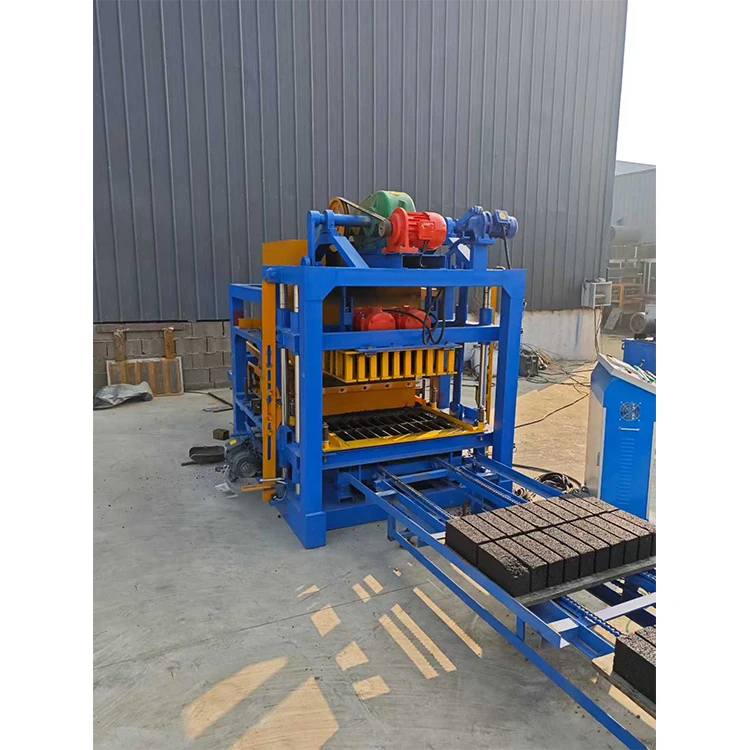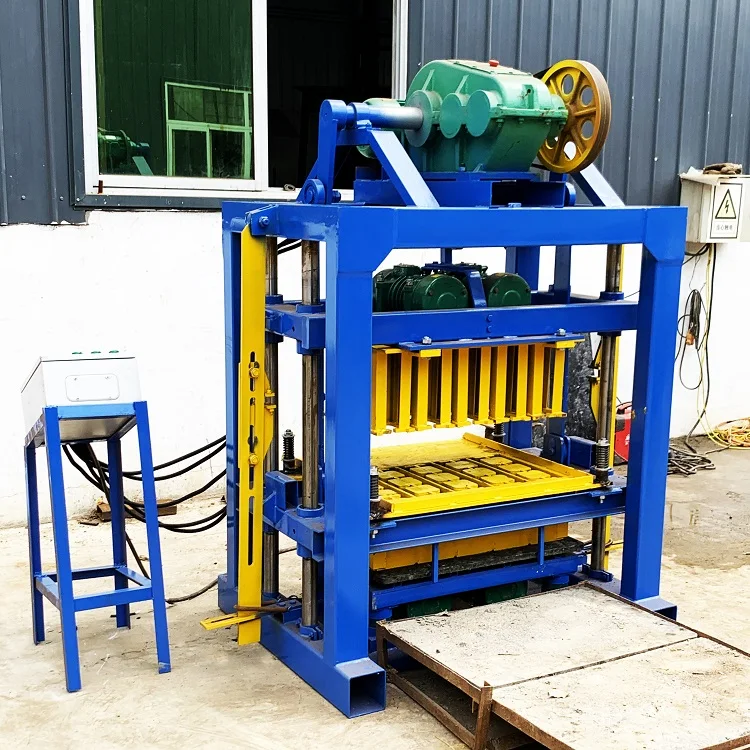


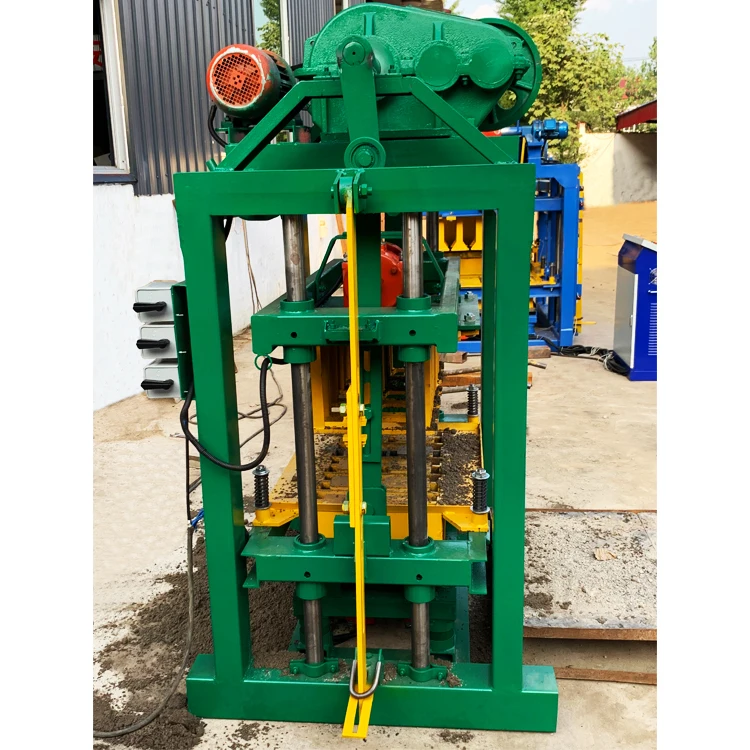
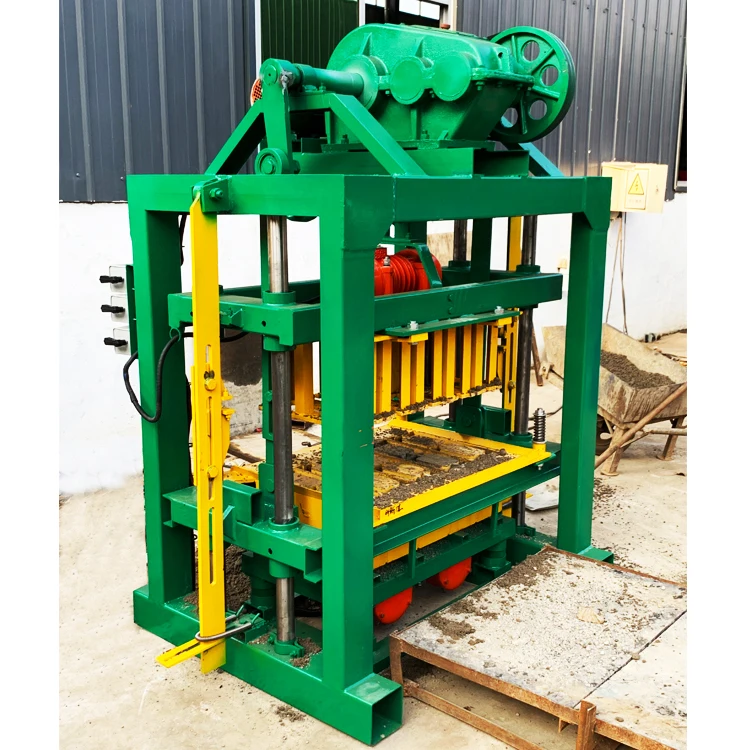
Description
Stocked Dispatch Model — The QTJ4-40 ships as a ready-to-load unit rather than a custom build, cutting the gap between order placement and container departure for project-driven buyers.
Technical Specifications
| Parameter | Value |
|---|---|
| Model | QTJ4-40 |
| Product Type | Manual Concrete Block Making Machine |
| Vibration Form | Platform vibration |
| Vibration Frequency | 2800 r/min |
| Pallet Size | 850×450 mm |
| Capacity (Hollow Block) | 2880 pcs/day based on 400×200×200 mm, 4 pcs/mould |
| Capacity (Solid Block) | 4000 pcs/day based on 400×150×200 mm, 5 pcs/mould |
| Capacity (Interlocking Brick) | 7200 pcs/day based on 225×112.5×60 mm, 9 pcs/mould |
| Raw Material Ratio | Cement 8–10%, sand 30–40%, stone 50–60% (approx. 1:4:5) |
| Machine Weight | 1 T (source value — verify against manufacturer catalog) |
| Overall Dimensions (L×W×H) | 1350×1460×1800 mm |
| Factory Area Requirement | 200 m² |
| Worker Requirement | 1–3 people |
| Automation Level | Manual (top die push/pull with automatic scraper) |
| Stacking Method | Manual |
| Applicable Raw Materials | Concrete, cement, fly ash, crushed stone, sand, dust, gravel, slag |
| Certification | CE declaration |
Application Suitability
| Application | Material or Output |
|---|---|
| Small-scale hollow block plant | Concrete and cement mixes on 850×450 mm pallets |
| On-site construction block supply | Crushed stone and sand blends for solid block formats |
| Interlocking paving production | Fly ash, dust, and gravel combinations for 225×112.5×60 mm bricks |
| First-time entrepreneur block yard | Locally sourced aggregate with 8–10% cement binder |
| Curbstone and colored paver runs | Pigmented concrete mixes with platform vibration compaction |
What "Daily Output" Actually Means When Stock Leaves the Yard
Capacity figures only hold when your raw material matches the test conditions — verify compatibility before booking container space.
Buyers working against a project deadline often focus on arrival dates and overlook whether the machine will perform once it reaches the site. The QTJ4-40 block machine fast delivery advantage becomes meaningless if the local aggregate causes crumbling blocks on day one. A machine sitting in stock can be dispatched within days, but if the vibration frequency and mix ratio are not validated against your sand and stone, the first production run turns into a troubleshooting exercise instead of a revenue stream [NEED_CITE: aggregate testing before block machine dispatch]. That is why confirming raw material compatibility at inquiry stage matters more than confirming vessel booking.
Stock Status and Dispatch Timeline
The QTJ4-40 is maintained as a stocked model, meaning production lead time does not apply to this unit. Once voltage and frequency are confirmed to match your site’s electrical supply, the machine moves to packing and container loading. This eliminates the multi-week build cycle that custom-ordered presses require, making the QTJ4-40 block machine fast delivery option viable for contractors who cannot afford to wait for a manufacturing slot.
Container Loading and Shipment Integrity
With overall dimensions of 1350×1460×1800 mm and a machine weight listed at 1 T, the QTJ4-40 fits standard container loading arrangements. The compact footprint allows the press, pallets, and mould sets to ship in a single container rather than split across multiple bookings [NEED_CITE: container loading plans for compact block machines]. Packing photographs and a loading plan are available before departure so you can verify dismantling arrangement and bracing against transit movement.
Vibration, Pallet Size, and Mould Configuration
Platform vibration at 2800 r/min provides consistent compaction across the three standard mould configurations. The 850×450 mm pallet size determines how many blocks cure per cycle and must align with your existing curing racks and forklift capacity — a mismatch here means buying new handling equipment after arrival. The manual top die push/pull with automatic scraper keeps the operator count at one to three people, which suits first-time plants where labour allocation is still being established. Capacity varies by format: hollow blocks at 2880 pcs/day, solid blocks at 4000 pcs/day, and interlocking bricks at 7200 pcs/day, each based on specific mould cavity counts and dimensions.
When Fast Dispatch Masks a Configuration Gap
Ordering a stocked machine without confirming voltage, frequency, and control display language can delay commissioning by weeks after arrival. The QTJ4-40 block machine fast delivery promise only delivers value if the electrical configuration matches your country’s grid standard from day one [NEED_CITE: voltage and frequency standards by export market]. Equally, selecting a pallet size without checking your curing area dimensions leads to manual restacking that negates the labour savings the machine was supposed to provide. These oversights do not show up in the quotation but surface during the first week of operation.
Why Source This Model Through Our Stock Channel
Block machinery is our single focus, so the QTJ4-40 ships as part of a matched system — press, moulds, and pallets specified together rather than assembled from separate suppliers. Configuration decisions reference your local aggregate and target block format, not a catalogue default. Mould supply covers the formats your market actually sells, including custom drawings when standard cavities do not match demand. Installation and commissioning support includes operator training so your crew can run production independently after handover. Documentation packages arrive with the machine rather than weeks after, covering factory test records, hydraulic and electrical schematics, and wear parts lists.
Documentation & Verification
- Factory test record run on your specified block format before dispatch
- Machine specification sheet confirming pallet size and mould cavity count
- Voltage and control language confirmation documented prior to shipment
- Packing photographs showing dismantling arrangement inside container
- Wear parts and mould list for first replacement planning
Installation, Commissioning & Support
- Foundation preparation based on 1350×1460 mm footprint and 200 m² area requirement
- Electrical connection matched to confirmed voltage and frequency before machine leaves the yard
- Assembly from dismantled shipment state with platform vibration calibration on site
- Mould change practice across all supplied cavity configurations during commissioning
- Operator training covering raw material ratio adjustment for local aggregate variations
- Wear parts inventory list provided for scheduling first reorder cycle
What to Confirm Before Booking Your Unit
Share your target block format, local sand and stone type, and site electrical specifications so the stocked unit can be verified against your conditions. Specify your curing area dimensions and forklift capacity to confirm pallet compatibility. State your port of discharge for arrival timing estimation against current vessel schedules.
Frequently Asked Questions
Q: What is the dispatch lead time and how is arrival estimated to my port?
A: The QTJ4-40 is held as a stocked model, so dispatch follows voltage confirmation and packing rather than a production cycle. Arrival estimation depends on your port of discharge and current vessel schedules, quoted at inquiry stage once destination is confirmed.
Q: Which block format does the stated daily capacity assume?
A: Each capacity figure ties to a specific mould: 2880 pcs/day for 400×200×200 mm hollow blocks at 4 cavities, 4000 pcs/day for 400×150×200 mm blocks at 5 cavities, and 7200 pcs/day for 225×112.5×60 mm interlocking bricks at 9 cavities.
Q: Is the QTJ4-40 in stock, or does it require a production run?
A: This model is maintained as a stocked unit. No production run is required — the machine moves to packing and container loading once electrical specifications and mould selection are confirmed.
Q: What voltage and frequency is the machine wired for?
A: Voltage and frequency must be confirmed at inquiry stage to match your site’s electrical supply. This confirmation happens before dispatch to avoid commissioning delays after arrival.
Q: How is the machine dismantled and loaded for container shipment?
A: The QTJ4-40 is dismantled for container loading based on its 1350×1460×1800 mm dimensions. Packing photographs and a loading plan are shared before departure so you can verify bracing and arrangement.