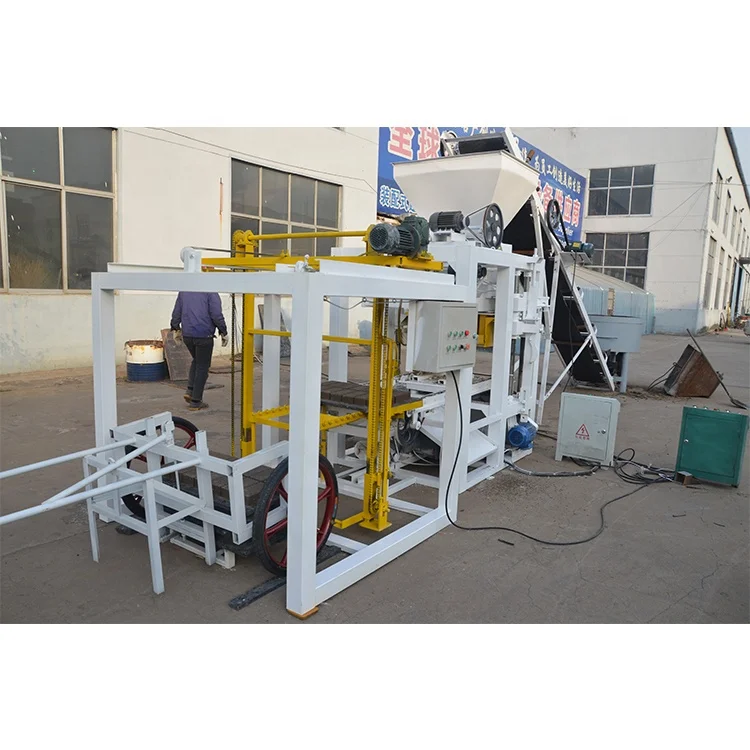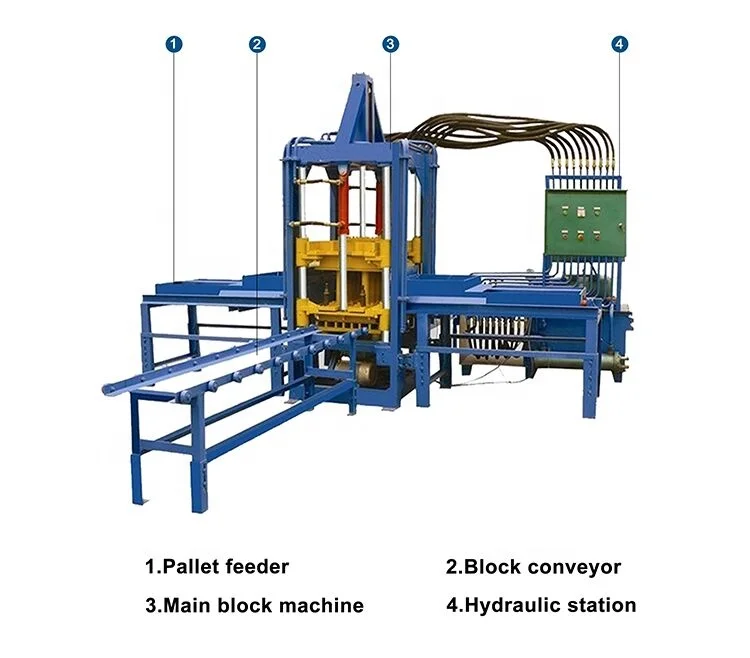
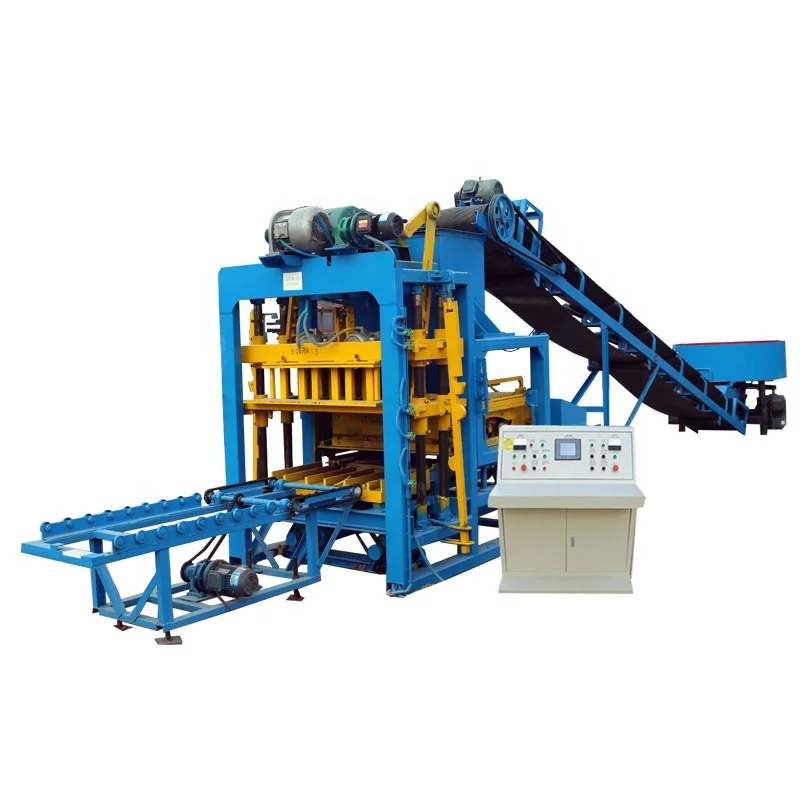
Description
Fast Delivery Brick Block Making Machine – Qt4 25 Vibration Motor
Stocked & Ready — QTJ4-25 block machine in stock for dispatch within days, with pallet size and voltage confirmed before loading.
Technical Specifications
| Parameter | Value |
|---|---|
| Model | QTJ4-25 |
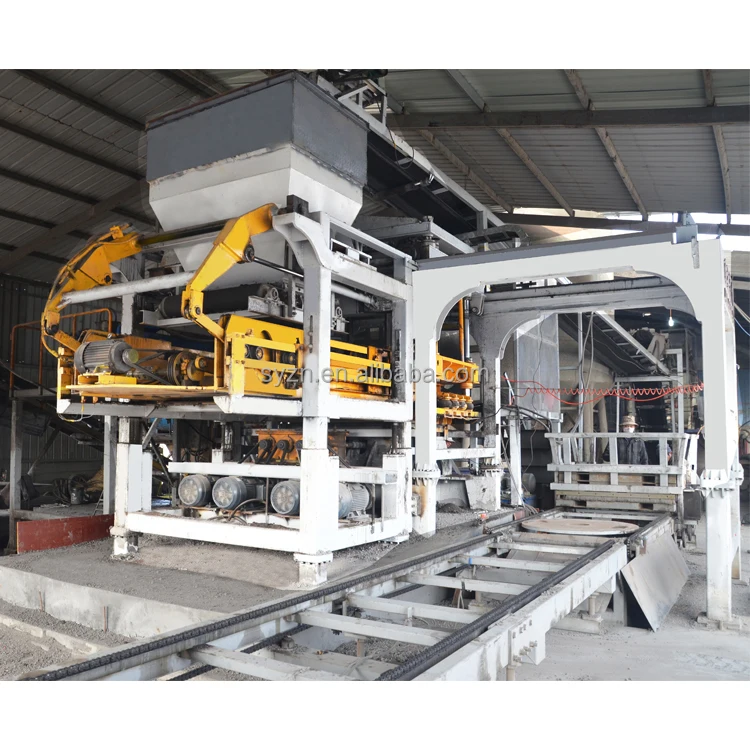
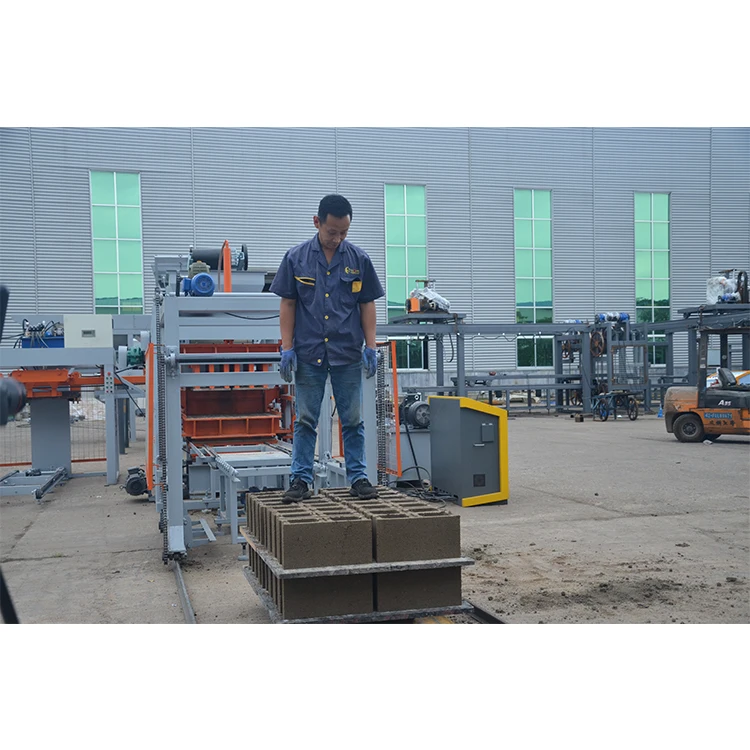
| Product Type | Automatic Concrete Block Making Machine |
| Overall Dimensions (L×W×H) | 6400×1500×2700 mm |
| Total Mass | 3500 kg |
| Cycle Time | 25 s per mould cycle |
| Pallet Size | 850×480 mm |
| Rated Power | 17 kW |
| Rated Pressure | 21 MPa |
| Mould System | Exchangeable moulds for hollow, solid, paver, interlocking, and curbstone formats |
| Voltage & Frequency | 380V, 3-phase, 50Hz (configurable to local grid) |
| Operating Staff | 1-2 operators |
| Control System | Electro-mechanical integration |
| Warranty | 1 year (excluding wearing parts) |
| Productivity (per block format) | Pieces per mould | Output per hour | Output per 8h day |
|---|---|---|---|
| 400×250×200 mm hollow block | 3 | 360 | 2880 |
| 400×200×200 mm hollow block | 4 | 450 | 3600 |
| 400×150×200 mm hollow block | 5 | 600 | 4800 |
| 400×100×200 mm hollow block | 7 | 840 | 6720 |
| 225×112.5×60 mm paver | 12 | 960 | 7680 |
Application Suitability
| Application | Material or Output |
|---|---|
| Hollow block production for housing projects | Crushed stone, sand, cement, fly ash, gravel |
| Solid block manufacturing for wall construction | Cement, dust, slag, sand blends |
| Paving block output for roads and walkways | Colored concrete mixes with fine aggregate |
| Interlocking brick production for perimeter walls | Cement-stabilized crushed stone |
| Curbstone fabrication for infrastructure | High-density concrete with coarse gravel |
Why "Pieces per Day" Means Nothing Without the Block Format
Capacity only matters when tied to the exact block your market buys.
I once watched a buyer in West Africa receive a machine rated for a high daily output — but that figure assumed a small paver format his customers never ordered. His actual product was a 400×250×200 mm hollow block, and the real output was less than half the brochure number. The project deadline slipped, penalty clauses triggered, and the machine sat idle while he renegotiated contracts [NEED_CITE: capacity claims in block machine quotations without format basis]. The QTJ4-25 block machine in stock avoids that trap by publishing output per format, so you match the number to what you actually produce.
Dispatch Timing That Matches Your Project Calendar
Buyers working to a construction deadline cannot absorb a multi-month production wait. The QTJ4-25 block machine in stock is held in readiness for order confirmation, meaning the lead time discussion starts from days rather than weeks. Container loading plans are shared before payment so the buyer sees exactly which machine, which moulds, and which pallets go into which container. This removes the ambiguity that typically stretches arrival dates well past the original promise.
What "In Stock" Actually Covers [NEED_CITE: standard inventory practices for block machine exporters]
Stock availability extends beyond the press itself. The exchangeable mould set, pallets cut to the confirmed 850×480 mm dimension, and the electro-mechanical control cabinet are all held together so the line ships as a matched system. Partial shipments — where the press arrives but the moulds follow weeks later — defeat the purpose of buying a stocked unit. Every dispatch from this QTJ4-25 block machine in stock inventory includes the full configuration the buyer confirmed during the inquiry stage.
Reading the Specs That Actually Matter on Site
The 21 MPa rated pressure and 25-second cycle time together determine how densely the concrete is compacted before the mould lifts. Higher pressure at a given cycle time yields a heavier, stronger block — but only if the vibration force and the buyer’s mix design are aligned with that pressure setting. The 850×480 mm pallet size must match the curing racks and forklifts already on site; a mismatch here means buying new handling equipment or re-racking the entire curing yard. The 17 kW rated power determines the electrical supply requirement, and the configurable voltage ensures the motor and control cabinet match the local grid before the machine leaves the factory rather than requiring a transformer retrofit after arrival [NEED_CITE: voltage and frequency standards by export market].
The Cost of Skipping the Voltage Conversation
A machine wired for 380V/50Hz landing in a country running 440V/60Hz will not commission — it will trip breakers or burn windings on the first start. I have seen buyers lose an entire week sourcing step-down transformers locally while the installation crew sat on per-diem costs. Confirming voltage, frequency, and control panel language before the QTJ4-25 leaves the factory is a five-minute conversation that prevents a five-figure delay.
Why Buyers Source This Model Here
Block machinery is the single focus of this operation, so the press, moulds, pallets, and handling equipment are specified as one system rather than assembled from unrelated suppliers. Configuration is set against the buyer’s actual mix design and local aggregate — not a catalogue default that assumes materials unavailable at the job site. Mould design covers the formats the buyer’s market actually sells, with custom drawings accepted for non-standard shapes. The automation level is selectable, allowing a buyer to start with the QTJ4-25 block machine in stock as a semi-automatic unit and add automatic pallet feeding or stacking later. Installation support includes on-site commissioning with operator training so the crew is producing saleable blocks before the technician leaves.
Documentation & Verification
- Factory test record run on your specified block format before dispatch
- Mould drawing and format list confirming every shape in your order
- Voltage, frequency, and control language confirmation sheet signed pre-shipment
- Packing photographs showing machine, moulds, and pallets loaded in container
- Customs documentation support with HS codes and origin certificates
Installation, Commissioning & Support
- Foundation pad sized to the 6400×1500 mm footprint with anchor bolt template
- Dedicated 17 kW circuit at confirmed voltage with isolator switch within reach
- Machine arrives dismantled for container loading; reassembly supervised on site
- First-run parameter setting matched to your local aggregate and cement ratio
- Operator training covering mould change, pallet feed, and daily maintenance checks
- Wear parts list with reorder codes for vibration pads, hydraulic seals, and mould liners
Before You Request a Quote
Send the block format your market buys most, the daily volume you need to hit, and your local raw material source so the configuration matches reality on arrival. Confirm your site voltage and frequency — a photo of your existing electrical panel helps. If you already have curing racks or forklifts, share the pallet dimension they accept so the 850×480 mm pallet is verified or adjusted before the order is finalized.
Frequently Asked Questions
Q: Which QTJ4-25 configurations are currently in stock and ready to ship?
A: The QTJ4-25 block machine in stock is available with standard hollow block and paver mould sets, 850×480 mm pallets, and the electro-mechanical control cabinet. Custom mould formats and voltage configurations outside the standard 380V/50Hz require a short lead time for preparation. Confirm your exact format list and electrical requirements to receive a precise dispatch date.
Q: What is the dispatch lead time from order confirmation to container loading?
A: Stocked QTJ4-25 units typically move from payment confirmation to container loading within a matter of days, depending on mould configuration and pallet quantity. The loading schedule and container booking reference are shared with the buyer before the machine leaves the yard so arrival timing can be tracked from day one.
Q: Can the voltage and frequency be adjusted before the machine ships?
A: Yes. The QTJ4-25 motor and control cabinet can be configured to match your local grid specification before dispatch. This must be confirmed during the order stage — once the electrical components are assembled and tested at the factory voltage, a post-production change adds cost and delay.
Q: How is the machine prepared for container shipment?
A: The QTJ4-25 is dismantled into main assemblies — press frame, mould box, control cabinet, and pallet stack — to fit standard container dimensions. Each component is secured with bracing and packing photographs are sent to the buyer before the container is sealed. Customs documentation including HS codes is prepared in parallel.
Q: What arrival estimate should I plan for once the machine is dispatched?
A: Ocean transit time depends on the destination port and shipping line schedule. Once the container is booked, the estimated arrival date is provided along with the bill of lading reference. Buyers are advised to arrange customs clearance and site preparation well before the vessel docks to avoid storage charges at the port.