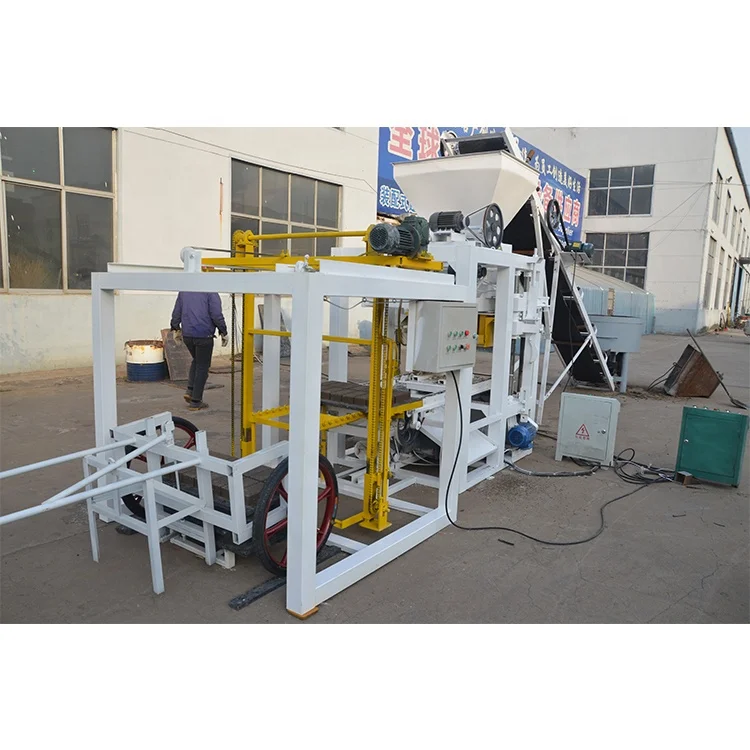
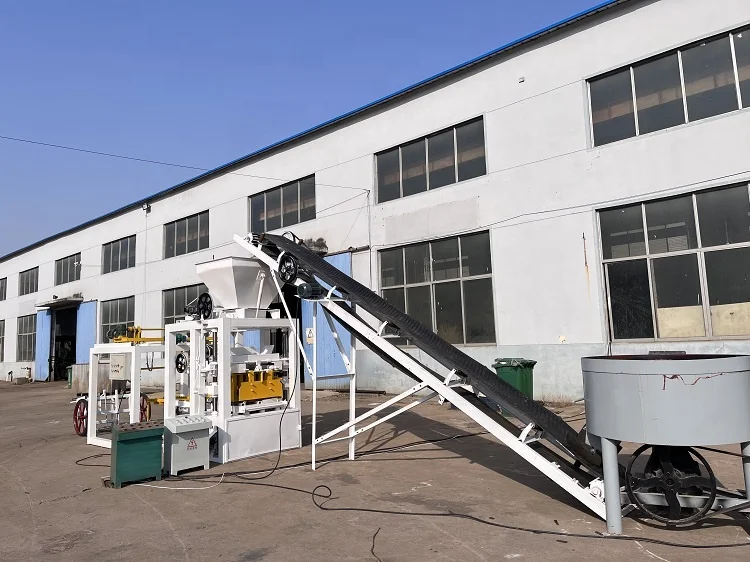
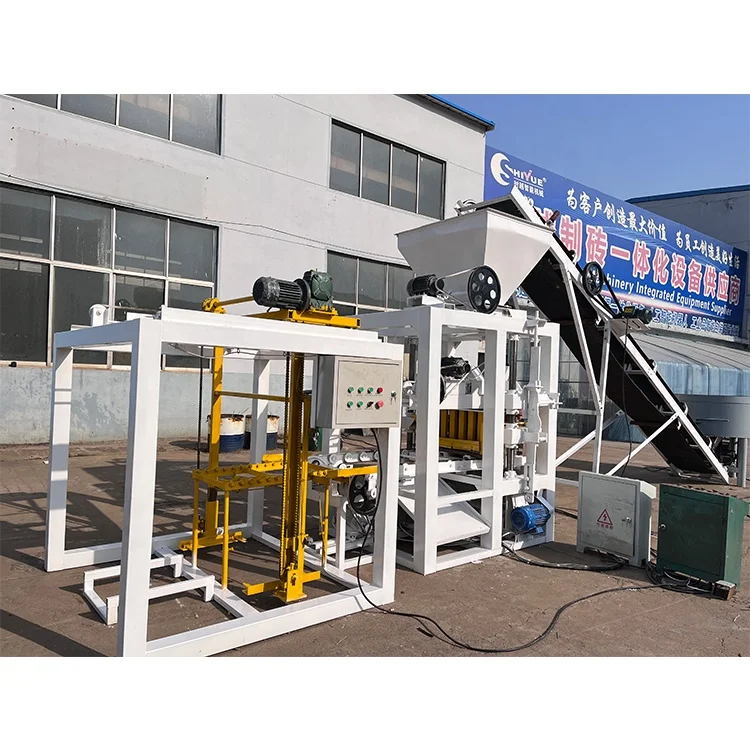
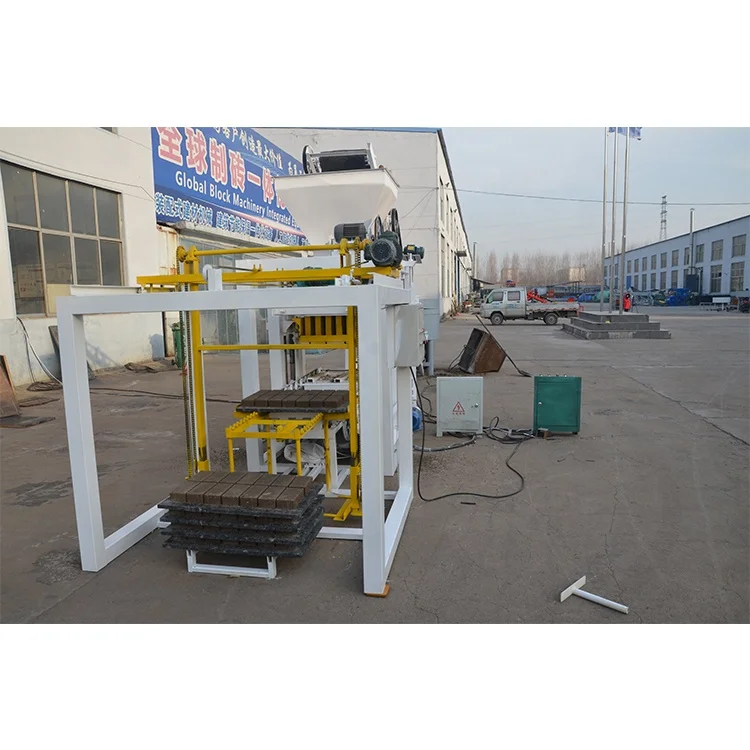

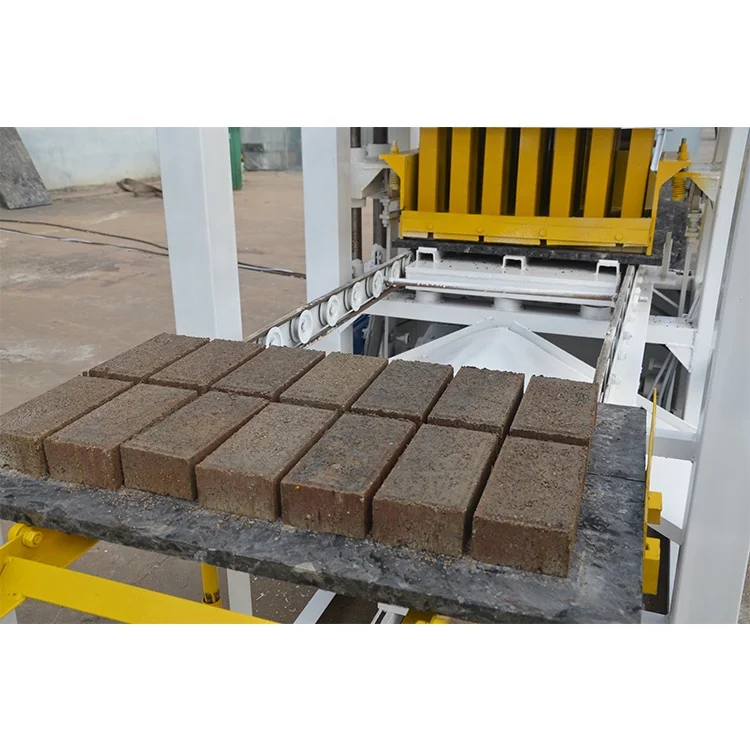
Description
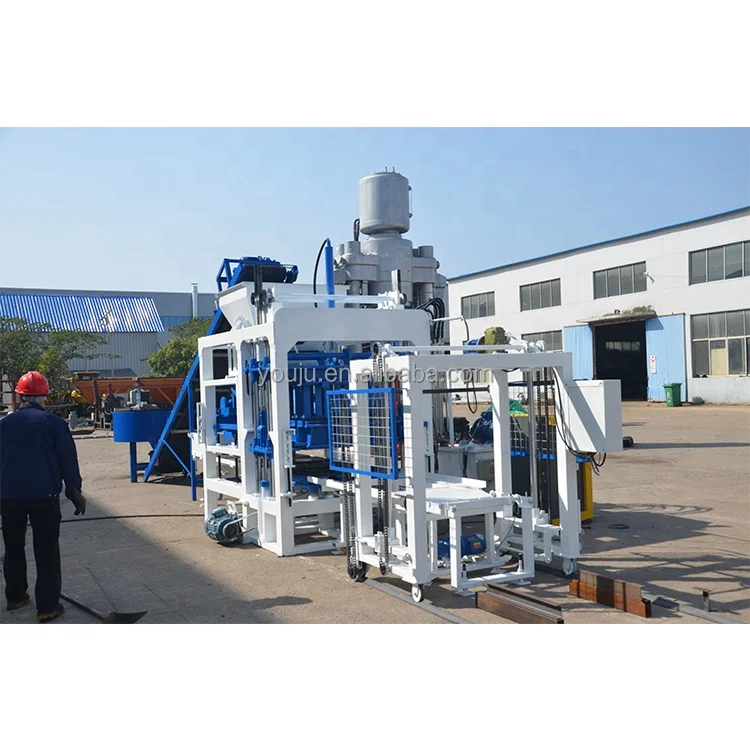
Stocked and Dispatch-Ready — QTJ4-24 units assembled, tested, and staged for container loading so your site does not wait on a production slot.
Technical Specifications
| Parameter | Value |
|---|---|
| Model | QTJ4-24 |
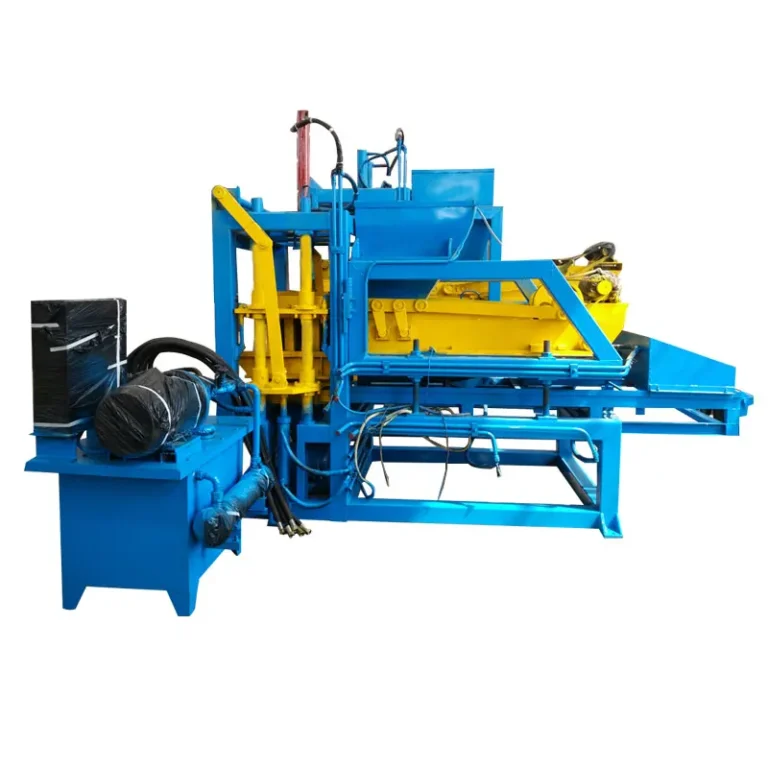
| Product Type | Stationary Concrete Block Making Machine |
| Overall Dimensions (L×W×H) | 3600×1700×2560 mm |
| Pallet Size | 850×450 mm |
| Molding Cycle | 24–26 s (basis to be confirmed per block format) |
| Total Power | 11.95 kW |
| Vibration Force | 45 kN |
| Vibration Configuration | 2×3 kW lower vibrators + 2×1.5 kW upper vibrators |
| Molding Method | Mechanical |
| Material Feeding | Full-automatic spiral material distribution |
| Reducer for Mold Lifting | 350-type |
| Raw Materials | Cement, sand, stone |
| Net Weight | 2 T |
| Automation Level | Semi-automatic |
| Warranty | 1 year for whole machine (excluding spare parts) |
Application Suitability
| Application | Material or Output |
|---|---|
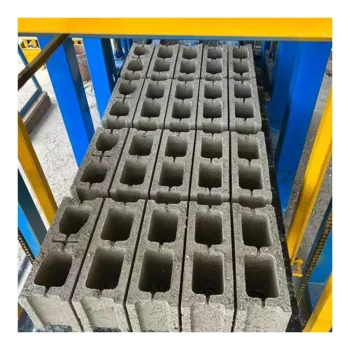
| Hollow block production for building walls | Cement, sand, crushed stone aggregate |
| Solid block manufacturing for load-bearing structures | Cement, sand, stone mix |
| Interlocking brick production for paving and landscaping | Cement, fine sand, stone dust |
| Paving brick production for walkways and yards | Cement, sand, coarse aggregate |
| On-site block production for construction contractors | Locally sourced cement and aggregate |
Why "Cycle Time" Alone Won’t Tell You When It Arrives
A buyer working against a project deadline needs a stationary block machine in stock fast delivery — not a cycle-time figure disconnected from shipping reality.
The real question is not how many seconds per mould, but how many days from order to your port.
I have watched contractors lose weeks because the machine they ordered was "in production" when they assumed it was on the floor. A 24–26 second moulding cycle means nothing if the unit ships six weeks late and your crew sits idle. When you are coordinating a construction timeline, dispatch readiness matters as much as the press itself [NEED_CITE: typical lead time variability in block machine exports]. The QTJ4-24 units we stage are assembled, run through a factory test with your specified aggregate sample, and positioned for immediate container loading. That is the difference between a catalogue promise and a machine arriving when your masons are ready.
What Stocked and Ready Actually Means on the Floor
A stationary block machine in stock fast delivery is only useful if it arrives complete. We stage the QTJ4-24 with its standard mould, pallets, and spiral feeder assembled as a matched set. The 11.95 kW total power draw means the unit can run on a standard site generator without requiring a dedicated high-capacity supply, which matters when your construction site does not yet have permanent electrical infrastructure. Before dispatch, each unit is tested with the buyer’s aggregate sample to confirm vibration response and mould fill consistency under real material conditions.
Loading, Shipping, and the Arrival Window You Can Plan Around
The QTJ4-24 at 3600×1700×2560 mm and 2 tonnes is dismantled into a configuration that fits standard container dimensions. Pallets and moulds are packed alongside the press frame so nothing arrives on a second shipment weeks later. For buyers coordinating a stationary block machine in stock fast delivery against a construction start date, we provide a container loading plan and an arrival estimate at the time of order — not after production begins [NEED_CITE: container loading practices for medium-size block machines]. This lets your site foreman schedule the foundation pad and electrical hookup to match the actual delivery week.
How the Numbers on the Spec Sheet Translate to Block Quality
The 45 kN vibration force is delivered through a dual-level configuration — two 3 kW lower vibrators and two 1.5 kW upper vibrators. In mechanical block pressing, lower vibration compacts the mix in the mould cavity while upper vibration settles the surface. Without this dual action, blocks can emerge with a dense base but a crumbly top face, especially when the mix contains coarser stone aggregate. The 850×450 mm pallet size determines your curing rack layout and forklift spacing; if your existing curing area was built for a different pallet dimension, you will need to adjust rack spacing before the machine arrives. The full-automatic spiral material distribution feeds mix into the mould box consistently across each cycle, reducing the variation that comes from manual shovelling and keeping block weight uniform across a production run.
What Happens When Dispatch Details Get Skipped
I once sent a unit out without confirming the buyer’s local voltage. The machine sat in a container at the destination port for ten days while an electrician sourced a step-down transformer — days the contractor could not afford [NEED_CITE: commissioning delays from voltage mismatch in exported machinery]. The QTJ4-24 does not list voltage and frequency in the base specification, which means these must be confirmed before the unit is wired and tested. Skipping that step turns a fast dispatch into a slow commissioning. The same applies to pallet compatibility: ordering without checking your forklift fork width against the 850×450 mm pallet means blocks get moved by hand until the right equipment shows up.
Why Buyers Source This Machine Through Our Dispatch Process
Block machinery is our single focus, so the QTJ4-24 ships with its mould, pallets, and feeder verified as one system — not pulled from separate suppliers and crated independently. We test each unit against the buyer’s actual mix design and local aggregate before it leaves the factory, because a machine tuned to standard sand may underperform on volcanic ash or crushed coral. Our stock includes standard moulds for the hollow, solid, interlocking, and paving formats this machine supports, so you are not waiting for a custom mould to be machined after you place your order. Voltage, frequency, and control language are confirmed at the order stage so commissioning happens on arrival, not weeks later.
Documentation & Verification
- Factory test record run on your aggregate sample before dispatch
- Voltage and frequency confirmation sheet signed before wiring
- Container loading plan with pallet and mould packing positions
- Operation and maintenance manual matched to your control language
- Wear parts list with part numbers for your first reorder
Installation, Commissioning & Support
- Foundation pad sized to the 3600×1700 mm footprint with level tolerance noted
- Dedicated 11.95 kW circuit with breaker rating specified per your local voltage
- Machine reassembled from container-ready dismantled state on your prepared pad
- First run parameters set using your local cement and aggregate mix
- Operator training covers mould change procedure and spiral feeder adjustment
- Wear parts inventory recommended based on your daily production hours
What We Need to Confirm Your Shipment
To lock in your dispatch window, share your target block format and the daily volume your site requires. Provide your local voltage, frequency, and preferred control panel language so we wire the unit correctly before it ships. If you have existing curing racks or forklifts, send the dimensions so we verify pallet compatibility against the 850×450 mm standard.
Frequently Asked Questions
Q: What is the dispatch lead time for the QTJ4-24 and standard moulds?
A: Stocked QTJ4-24 units with standard moulds are staged for container loading once voltage, frequency, and aggregate test results are confirmed. We quote the dispatch date at the time of order rather than after a production run. This approach is designed for buyers working to a construction start date who cannot absorb production-side delays.
Q: How is the machine dismantled and loaded for container shipment?
A: The QTJ4-24 is broken down into frame, vibration assembly, and feeder sections that fit within standard container dimensions. Pallets, moulds, and hardware are packed in the same container so nothing arrives on a separate shipment. We provide a loading plan so your receiving team knows the unloading sequence.
Q: Which block formats are covered by the stocked moulds?
A: Standard stocked moulds cover hollow blocks, solid blocks, interlocking bricks, and paving bricks compatible with the QTJ4-24 platform. If your market requires a format outside this range, custom mould design is available but will affect dispatch timing. Confirm your required formats at inquiry stage so we match stock availability to your product plan.
Q: Can the arrival estimate be confirmed at the time of order?
A: Yes. Once your unit is allocated from stock and the container booking is placed, we provide an estimated arrival date based on the shipping route to your port. This estimate is given upfront so your construction schedule and site preparation can be coordinated around a known delivery window rather than an open-ended promise.