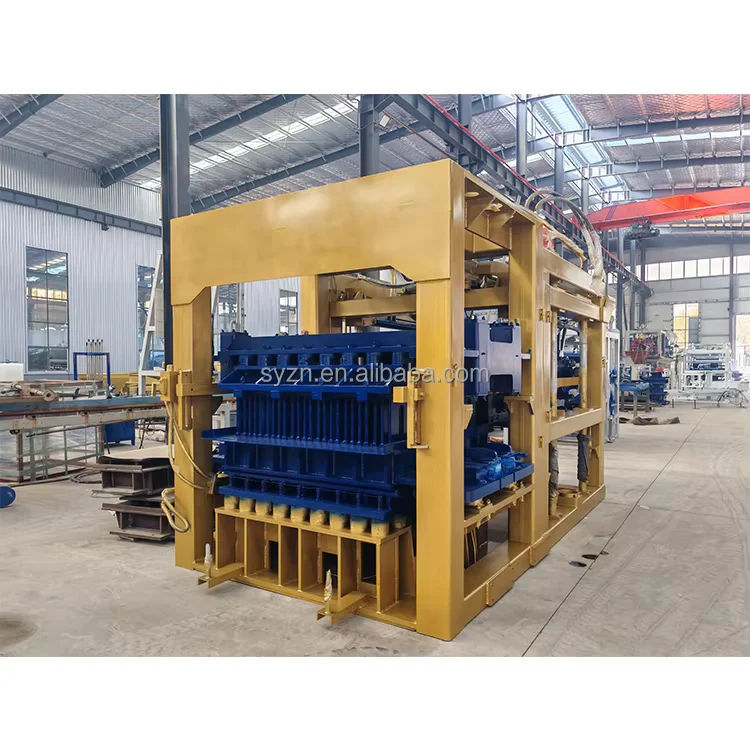
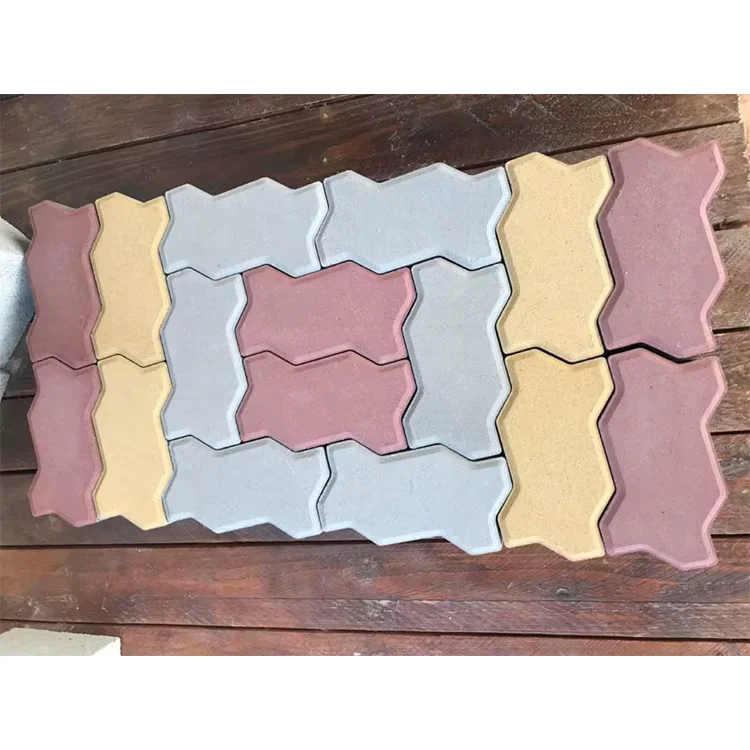
Description
Pre-configured upgrade readiness — Standardized fully-automatic builds are kept in inventory for immediate dispatch, ensuring your project deadline is met without waiting for custom engineering.
Technical Specifications
| Parameter | Value |
|---|---|
| Model | QT12-15 |
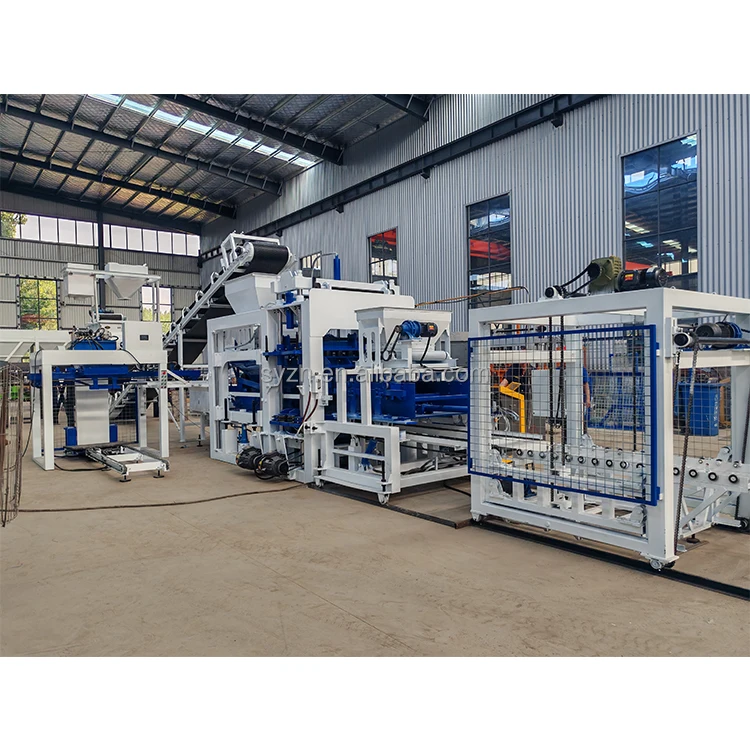
| Product Type | Fully Automatic Concrete Block Making Machine |
| Overall Dimensions (L×W×H) | 940030602980mm |
| Net Weight | 12000 kg |
| Vibration Force | 100KN |
| Pallet Size | 1300*900mm |
| Molding Cycle | 15-20S |
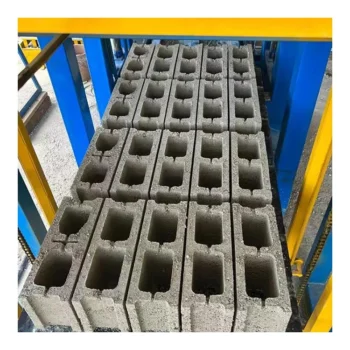
| Output Capacity | 12 pcs per cycle (based on 400×200×200mm block format) |
| Voltage | 380V/220V (frequency to be confirmed) |
| Core Components | PLC, Engine, Gear, Pump |
Application Suitability
| Application | Material or Output |
|---|---|
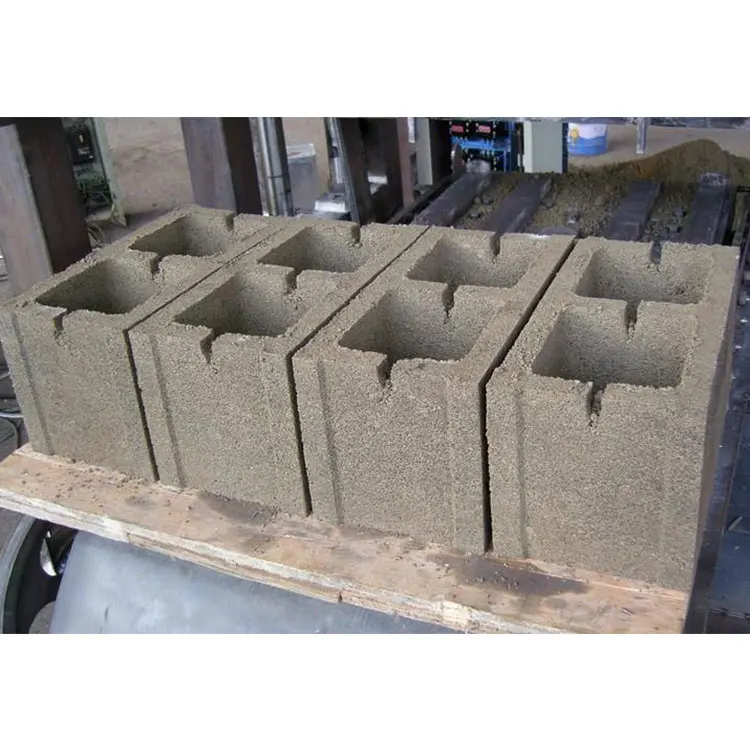
| High-volume housing developments | Hollow blocks from fly ash and cement |
| On-site contractor production | Solid blocks and pavers from local sand |
| Rapid capacity expansion plants | Curbstones and interlocking bricks |
Why "Fast Delivery" Means Nothing If It Doesn’t Fit Your Doors
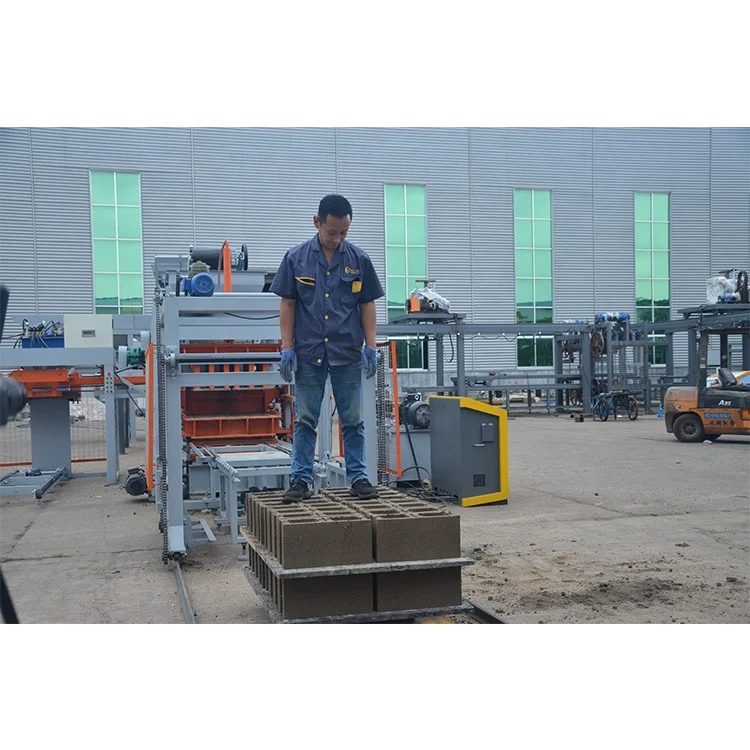
When a project deadline is looming, securing a QT12-15 block machine in stock is only the first hurdle. The machine must physically fit through your facility doors and under your roof trusses upon arrival. I once supervised a Middle East site where an urgent fully-automatic line arrived ahead of schedule, but the facility ceiling was too low for the main press and stacker. The crew spent weeks dismantling the roof to get the equipment inside, entirely erasing the time saved by fast shipping. [NEED_CITE: common site preparation oversights in heavy machinery installation]. Verifying the 940030602980mm envelope against your actual building drawings prevents a fast delivery from turning into a costly site modification project.
Container Loading and Dismantling Logistics
Moving a 12000 kg mainframe requires precise dismantling planning before it ever reaches the port. We break down the QT12-15 block machine in stock into modular sub-assemblies that align with standard shipping container dimensions. This prevents awkward overhangs and ensures the hydraulic pump station and PLC cabinets are secured against transit vibration.
Dispatch Lead Times and Port Coordination
Holding standardized inventory means the waiting period shifts from manufacturing to logistics coordination. Once the equipment is stripped and loaded, the focus turns to vessel booking and customs clearance documentation. Having the machinery ready on the dock eliminates the typical multi-week production delays, allowing freight forwarders to secure the earliest available departure. [NEED_CITE: standard maritime freight booking lead times for heavy equipment].
Decoding the Physical and Operational Specs
The 100KN vibration force combined with the hydraulic pressure system dictates the density of the final product, but it also determines the mass of the machine base required to absorb that shock. The 1300*900mm pallet size is not arbitrary; it is calculated to maximize the number of blocks per cycle while remaining manageable for standard forklifts in the curing yard. Furthermore, the 380V/220V electrical configuration must be cross-referenced with your local grid frequency before the crates are sealed, as mismatched motors will halt commissioning the moment power is applied.
The Hidden Costs of Skipping Site Verification
Rushing a purchase without confirming the physical footprint leads to severe operational bottlenecks. If the 9400mm length leaves insufficient clearance for the raw material feeding conveyors, operators are forced to manually shuttle materials, negating the purpose of a fully-automatic line. Similarly, ignoring the curing area requirements for the 1300*900mm pallets results in a congested yard where forklifts cannot maneuver, stalling the entire production cycle. [NEED_CITE: material handling bottlenecks in block production facilities].
Why Procure Your Equipment Here
Our inventory strategy focuses exclusively on block making machinery, meaning the main press, pallets, and handling equipment are staged together as a matched system rather than sourced from disparate vendors. We configure the dispatch based on your actual site constraints, ensuring the voltage and control language are verified before the machine leaves our floor. Every standard mould format is kept alongside the主机, so you are not waiting for secondary shipments to start producing. Our documentation and packing processes are tailored for immediate container loading, providing clear arrival estimates for your project managers.
Documentation & Verification
- Factory test record confirming 15-20S cycle on your specific block format.
- Dismantling layout showing exact container loading sequence for the 12000 kg frame.
- Voltage and PLC display language confirmation sheet signed before crating.
- Video outgoing-inspection of the hydraulic system under full 100KN load.
Installation, Commissioning & Support
- Foundation blueprints detailing load-bearing pads for the 940030602980mm footprint.
- Electrical schematics mapping the 380V/220V main drops to your site transformer.
- Reassembly sequence guiding the crane lift for the heavy vibration table.
- Parameter setting for the PLC to match your local sand and cement ratios.
- Wear parts list covering the initial run-in period for the mould and hydraulic seals.
Preparing Your Site for Immediate Arrival
To ensure the equipment transitions smoothly from the port to your production floor, we need your facility’s exact internal clearance heights and door widths. Please provide your local voltage and frequency standards, along with the specific block formats you intend to run on day one. Sharing your existing forklift specifications and curing yard layout allows us to finalize the pallet handling configuration before the container doors are sealed.
Frequently Asked Questions
Q: How is the dispatch schedule coordinated for in-stock models?
A: Since the manufacturing phase is bypassed, the schedule depends entirely on dismantling, crating, and vessel availability. We provide a precise timeline from the moment the order is confirmed, detailing the days required for container loading and the estimated port departure, giving your site team a reliable window to prepare the foundation.
Q: Will the dismantled components fit into standard shipping containers?
A: Yes, the 940030602980mm mainframe and supporting conveyors are engineered to break down into modular sections. We map out the exact loading sequence to maximize space within standard maritime containers, ensuring no critical hydraulic or electrical components are left behind or shipped via delayed breakbulk freight.
Q: What site preparations are needed before the machinery arrives?
A: Your facility must have cured concrete foundations matching the 12000 kg load distribution and the 9400mm length requirement. Additionally, the electrical drop must be ready to accept the confirmed 380V/220V supply, and the roof clearance must exceed the reassembled height to allow the crane to position the main press safely.
Q: How do you ensure the electrical systems match our local grid?
A: We require your exact voltage and frequency specifications before the final crating. The PLC and motor configurations are verified against these parameters, and a confirmation sheet is provided. This prevents the common delay of rewiring or replacing motors after the equipment has already been installed on your floor.