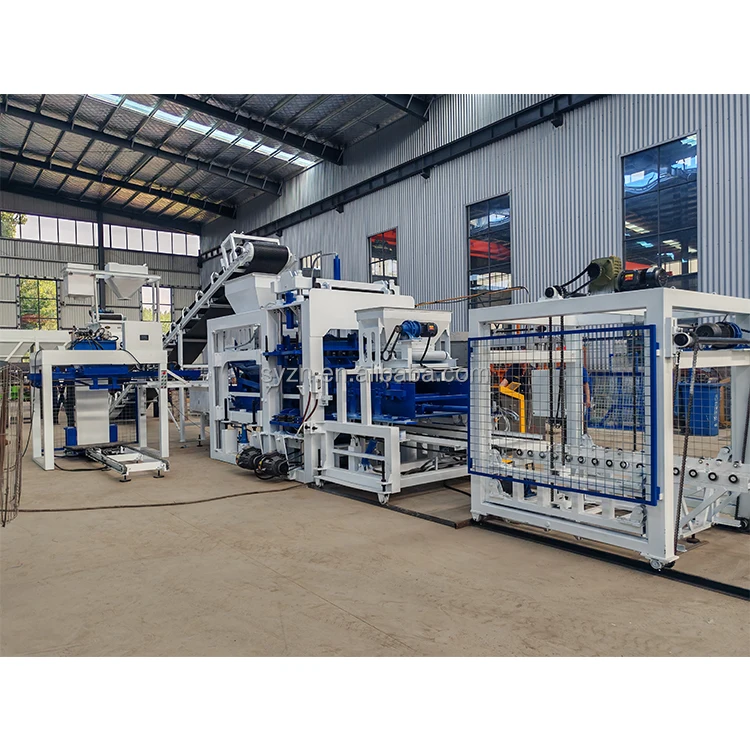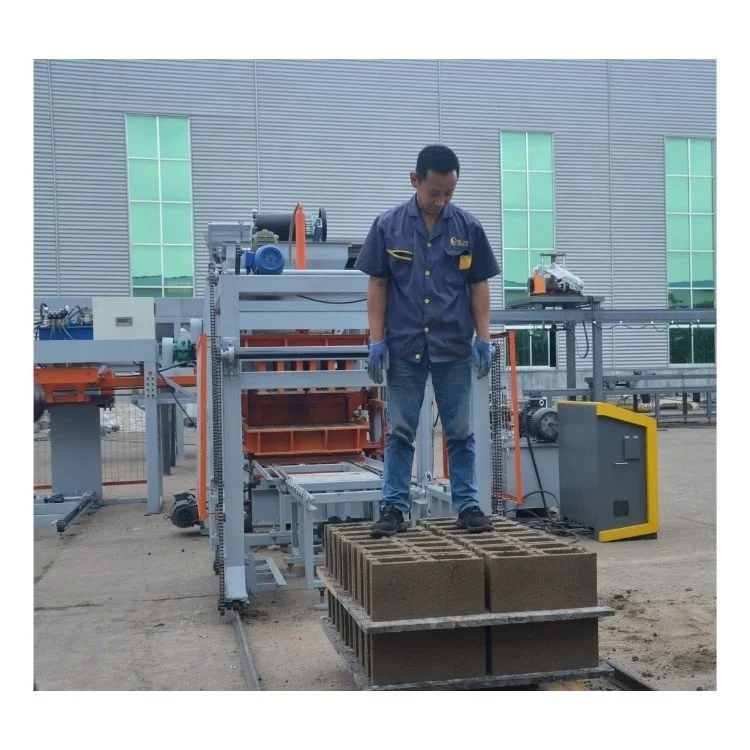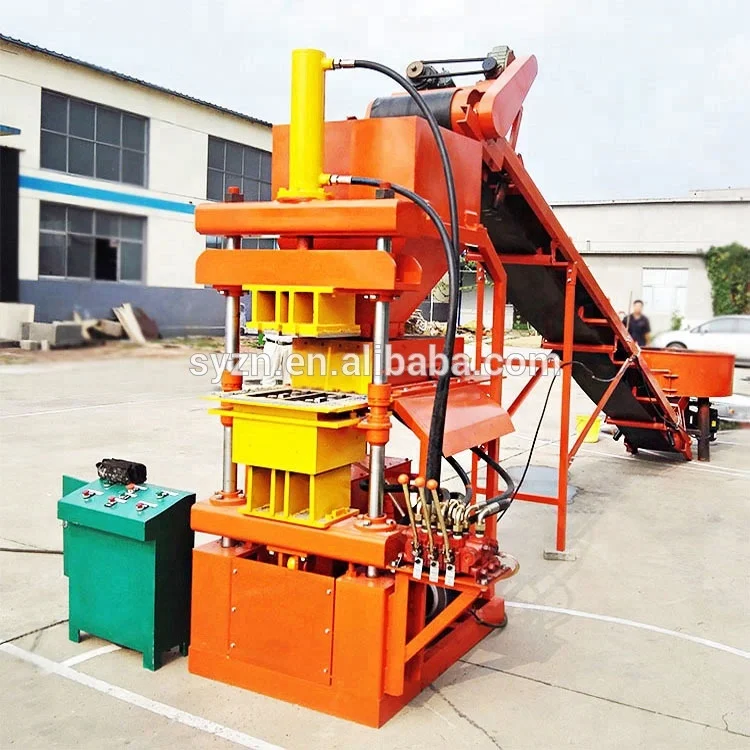
Description
Dispatch-Ready Stock — Every QMJ4-45 unit leaves our yard with a factory test record tied to your block format, so the machine you receive is the one we verified, not a catalogue guess.
Technical Specifications
| Parameter | Value |
|---|---|
| Model | QMJ4-45 |
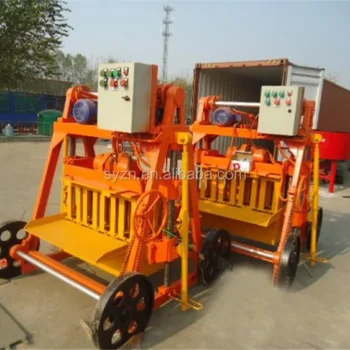
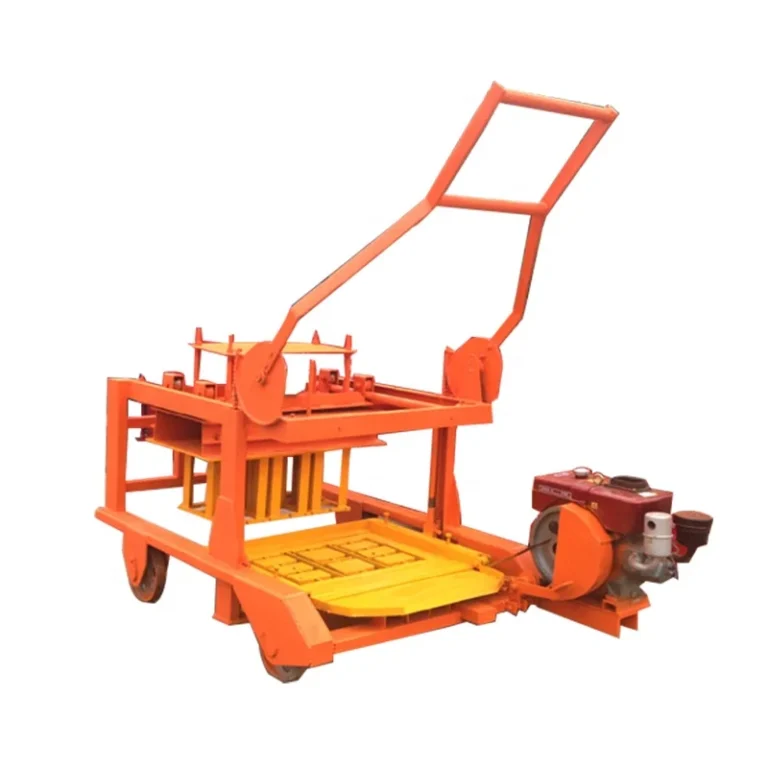
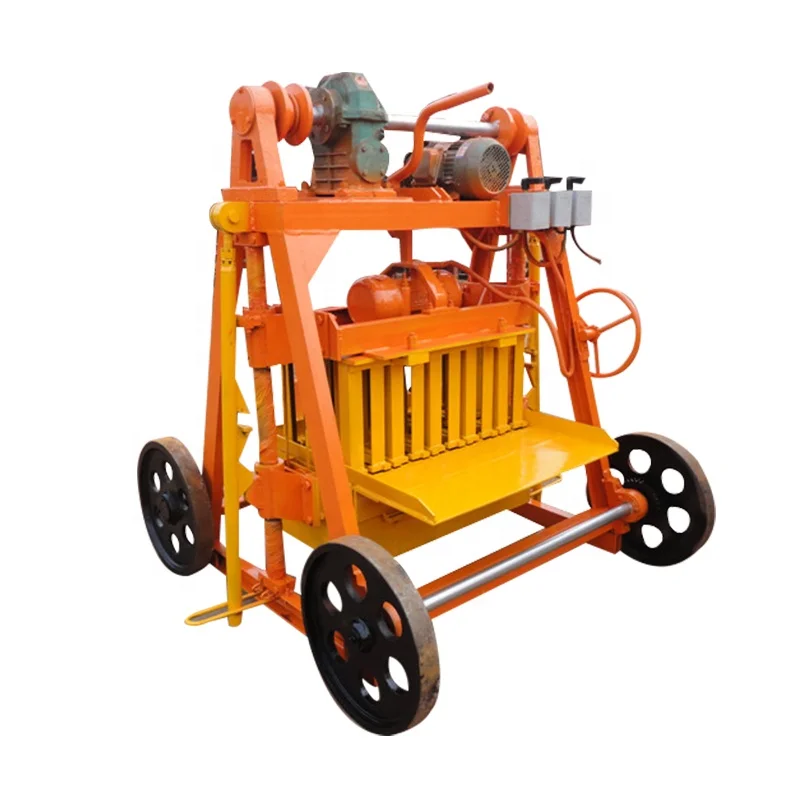
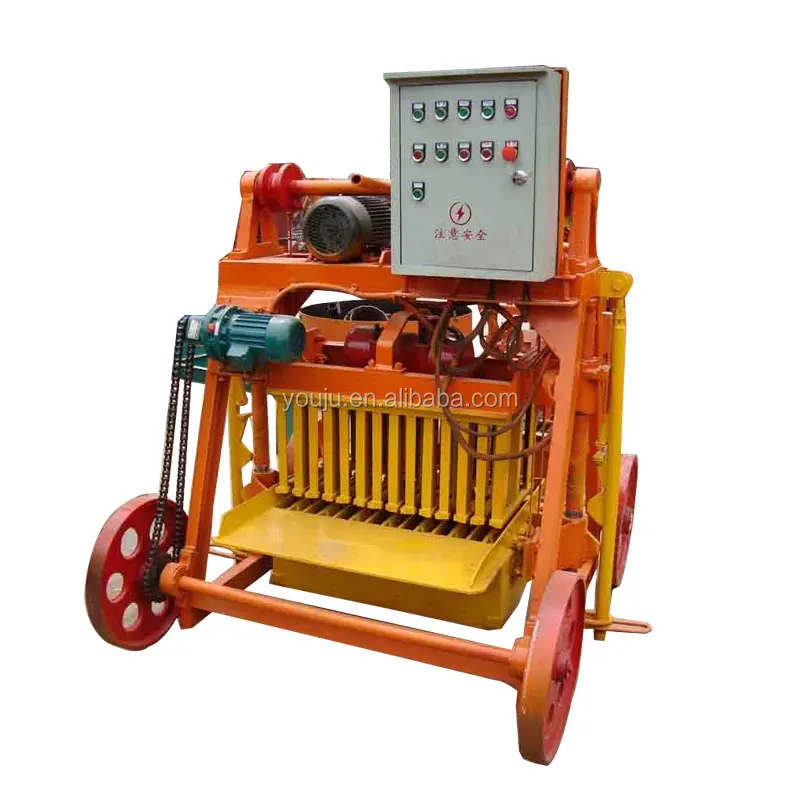
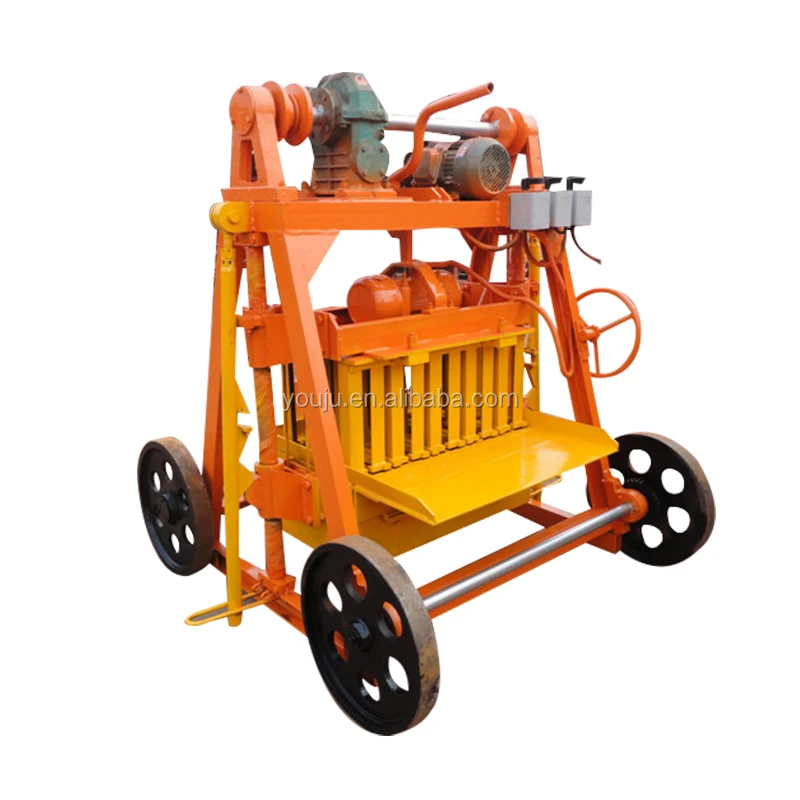
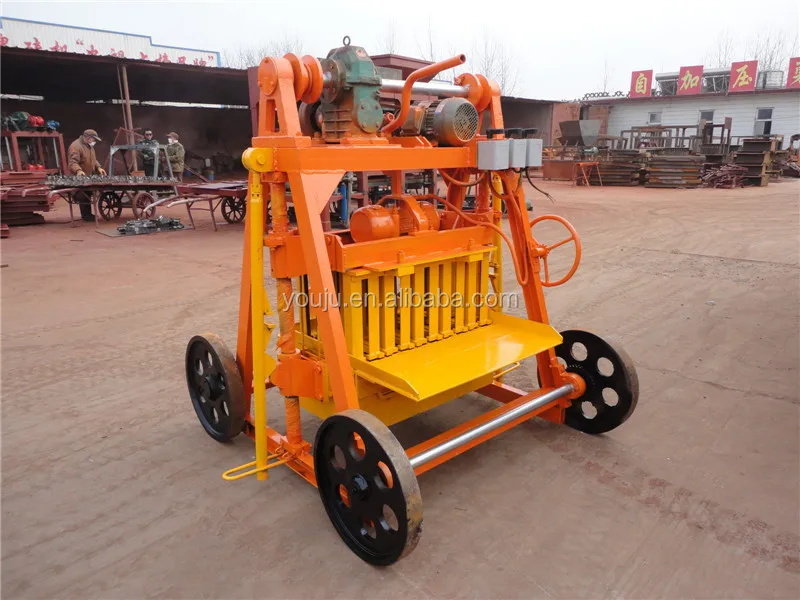
| Product Type | Mobile Egg Laying Block Making Machine |
| Molding Capacity | 4 pcs/mould |
| Vibration Frequency | 2400 r/min |
| Daily Productivity | 2600–4000 pcs/day (basis not stated in source — confirm block format and material) |
| Vibration Method | Mold vibration |
| Demold Method | Manual |
| Turning Method | Manual |
| Total Power | 6 kW |
| Power Source | Diesel / Petrol engine |
| Molding Cycle | 45 s (basis not stated in source — confirm block format) |
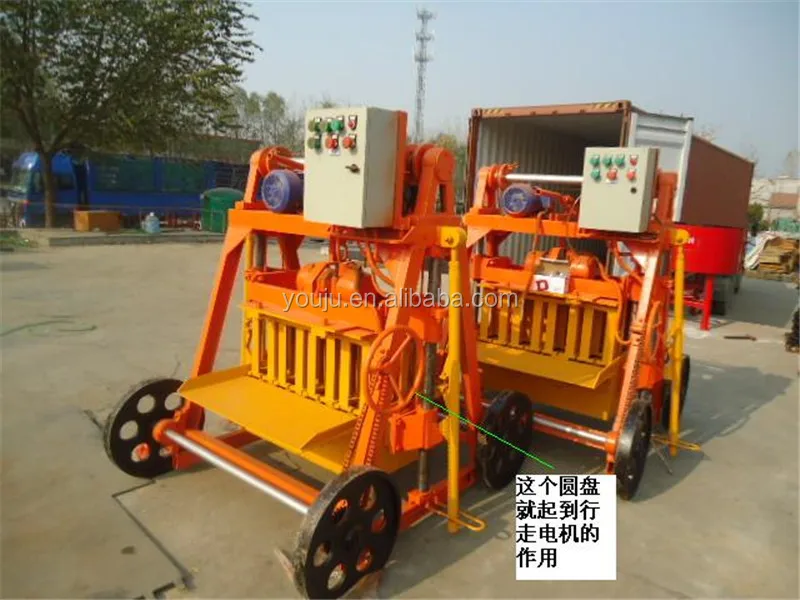
| Automation Level | Manual egg laying, no fixed plant required |
| Pallet Requirement | None — blocks laid directly on ground |
| Certification | CE |
Application Suitability
| Application | Material or Output |
|---|---|
| On-site hollow block production for housing contractors | Cement, crushed stone, sand, and locally available aggregates |
| Remote or rural construction without grid access | Diesel-powered block making at off-grid building sites |
| Small-scale cement block startups | Hollow blocks produced directly on ground without pallet investment |
| DIY block production for self-build projects | Standard concrete mixes using regionally sourced sand and gravel |
Why the Power Source Question Matters More Than You Think
A mobile block machine in stock is only useful if it actually runs when it arrives. I have watched a contractor lose weeks of a build schedule because the machine on site needed a 380 V three-phase supply that the village grid simply could not provide. The QMJ4-45 sidesteps this entire problem by offering a diesel or petrol engine as its power source, meaning the machine generates its own electricity and never has to handshake with a local grid [NEED_CITE: voltage and frequency standards by export market].
Buyers in regions with unstable power or no grid connection at all often discover the electrical mismatch only after the container has been unloaded. By that point, the rainy season is advancing and the crew is standing idle. Specifying a diesel-driven unit before the order is placed removes that variable entirely.
Engine-Driven Independence for Off-Grid Sites
The diesel or petrol engine option means this mobile block machine in stock operates as a self-contained production unit. There is no electrical cabinet to wire, no phase sequence to check, and no transformer to source locally. A contractor arriving at a greenfield housing site can unload the machine, fill the fuel tank, and begin producing hollow blocks the same afternoon.
What Manual Egg Laying Actually Means on Site
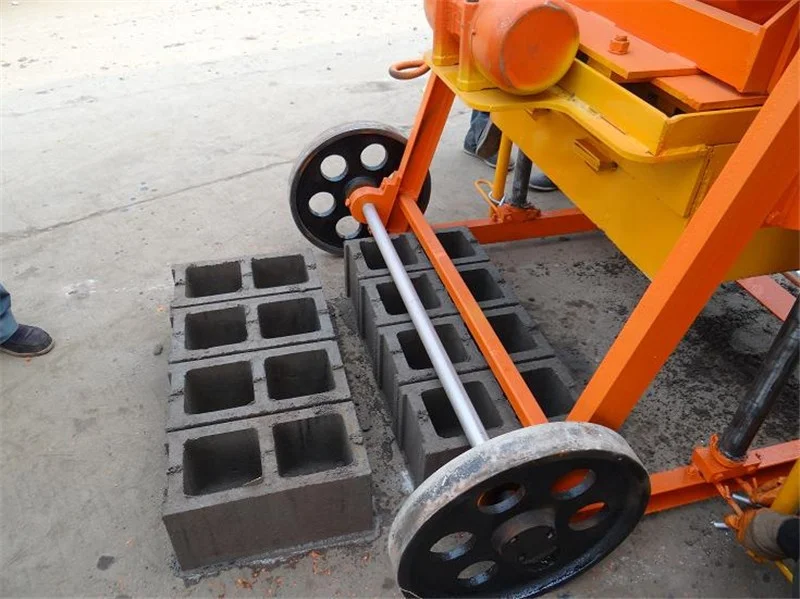
Egg laying refers to the way the machine deposits freshly formed blocks directly onto the ground as it moves forward. No pallets are needed, which removes an entire layer of procurement, handling, and storage that a fixed plant would require. For a first-time block producer or a contractor working a single project, this keeps the capital outlay and the site footprint small.
Twice-Vibration Improvement Over Earlier Models
The mold vibration system on the QMJ4-45 uses a twice-vibration modification that applies two distinct vibration phases during each 45-second molding cycle. The first phase settles the concrete mix into the mold cavity, and the second compresses it further. In practice this yields a denser block with more consistent wall thickness compared to single-vibration predecessors [NEED_CITE: block density and vibration phase correlation in mobile machines].
Reading the Spec Sheet Honestly
The vibration frequency of 2400 r/min and the total power of 6 kW are fixed values, but daily productivity depends entirely on the block format you run. A 400×200×200 mm hollow block takes one mold configuration, while a 400×150×200 mm block changes the pieces-per-mold count and may alter the cycle time. Before committing to a schedule, ask for a capacity calculation that names the exact block dimensions and the assumed curing time between moves. The 2600–4000 pcs/day range is a starting point, not a guarantee.
The Cost of Skipping the Voltage Check
When a buyer assumes the machine will match their local power supply without confirming it, the consequences are rarely small. A three-phase motor wired for the wrong frequency runs hotter and draws more current, shortening bearing life and burning out windings. On a remote site, sourcing a replacement motor can mean a multi-week wait. Specifying a diesel-powered unit from the start, or at minimum confirming the exact voltage and frequency before production begins, prevents this class of failure entirely [NEED_CITE: motor failure rates due to voltage mismatch in exported machinery].
Why Buyers Choose This Source
Block machinery is the only thing this workshop builds, which means the machine, mold, and handling method are specified as a matched set rather than assembled from unrelated suppliers. The QMJ4-45 ships with molds already fitted for the hollow block format you confirm at inquiry, not a default mold chosen from a catalogue. Stock models are available for fast dispatch, and the container loading plan is shared before shipment so you know exactly how the machine will be dismantled and braced for transit. Factory test records document actual cycle times on your specified block format, giving you a baseline to measure against once the machine is running on your site.
Documentation & Verification
- Factory test record showing actual cycle time on your confirmed hollow block format before dispatch
- Machine specification sheet listing engine type, vibration frequency, and total power as built
- Mold drawing and format list matching the hollow block sizes included in your order
- Packing photographs documenting dismantling method and container bracing prior to loading
- CE declaration with supporting technical file available for customs clearance
Installation, Commissioning & Support
- No fixed foundation needed — the QMJ4-45 operates on level compacted ground at your project site
- Diesel engine arrives pre-fitted; fill fuel and hydraulic fluid before first start-up
- Manual demold and turning require no electrical wiring or PLC configuration on arrival
- Operator training covers mix consistency, mold filling technique, and machine travel pace
- Wear parts list included with recommended replacement intervals for vibration components and mold liners
What to Share When You Inquire
To match the right QMJ4-45 configuration to your project, provide the hollow block dimensions you need to produce, the aggregate and cement types available locally, and whether your site has any grid power at all or requires a fully diesel-driven unit. Include your target daily output and the timeline you are working toward so we can confirm stock availability and a realistic dispatch date.
Frequently Asked Questions
Q: What is the realistic daily output for my specific hollow block size?
A: Daily output depends on the exact block dimensions, your concrete mix, and the crew’s pace. The quoted range of 2600–4000 pcs/day is not tied to a single format. We provide a capacity calculation based on your confirmed hollow block size and a factory test record before shipment so you know what to expect on site.
Q: Can the machine run on diesel if my site has no reliable grid power?
A: Yes. The QMJ4-45 is available with a diesel or petrol engine, making it independent of local electrical infrastructure. This eliminates commissioning delays caused by voltage or frequency mismatches and is the standard choice for remote construction sites without grid access.
Q: How quickly can the machine be shipped, and what is the container loading method?
A: Stock units are available for prompt dispatch. The machine is partially dismantled for container loading, and a loading plan with packing photographs is shared before the container is sealed. Arrival estimates are quoted at the order stage to align with your project schedule.
Q: What mould formats are in stock, and can I order additional moulds?
A: Standard hollow block molds in common sizes are held in stock. Custom mold formats can be produced to your drawings. When you confirm the block dimensions your market requires, we verify which molds ship with the machine and quote any additional tooling alongside the unit.
Q: Is operator training included, and how is commissioning handled?
A: Training covers mix ratios, mold filling, machine travel speed, and basic maintenance. Because the QMJ4-45 is fully manual with no PLC, commissioning is straightforward — level the ground, fit the mold, connect the engine, and run a test batch. Remote guidance is available if questions arise during your first production days.