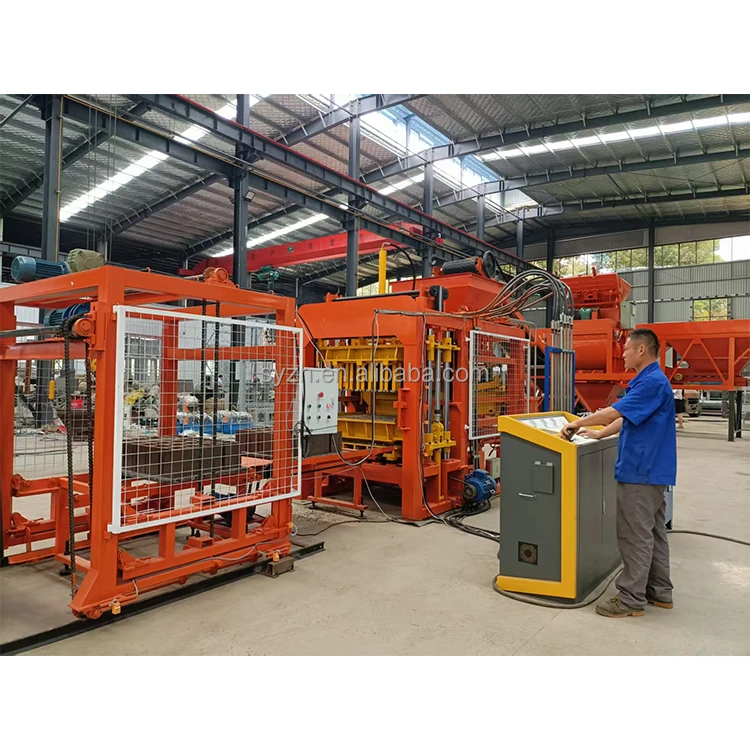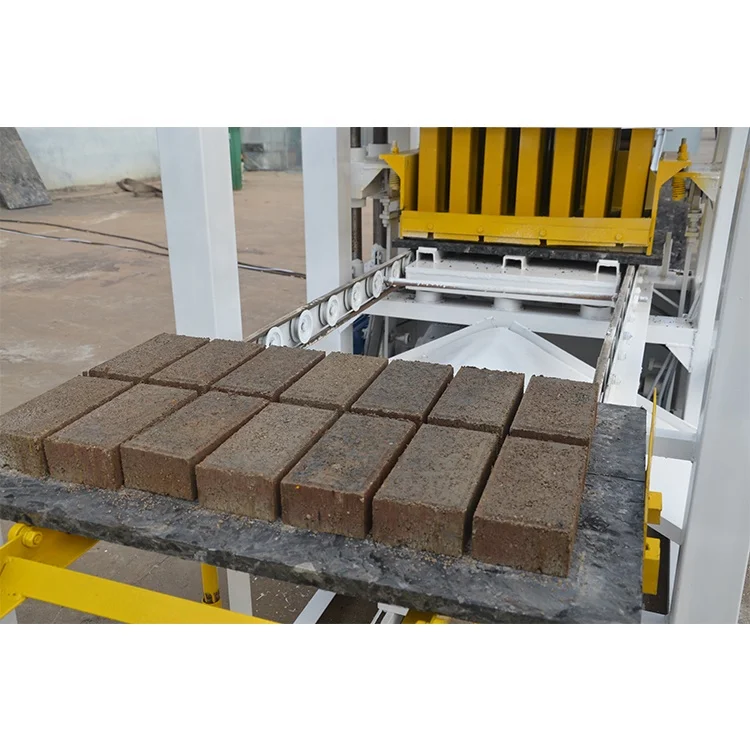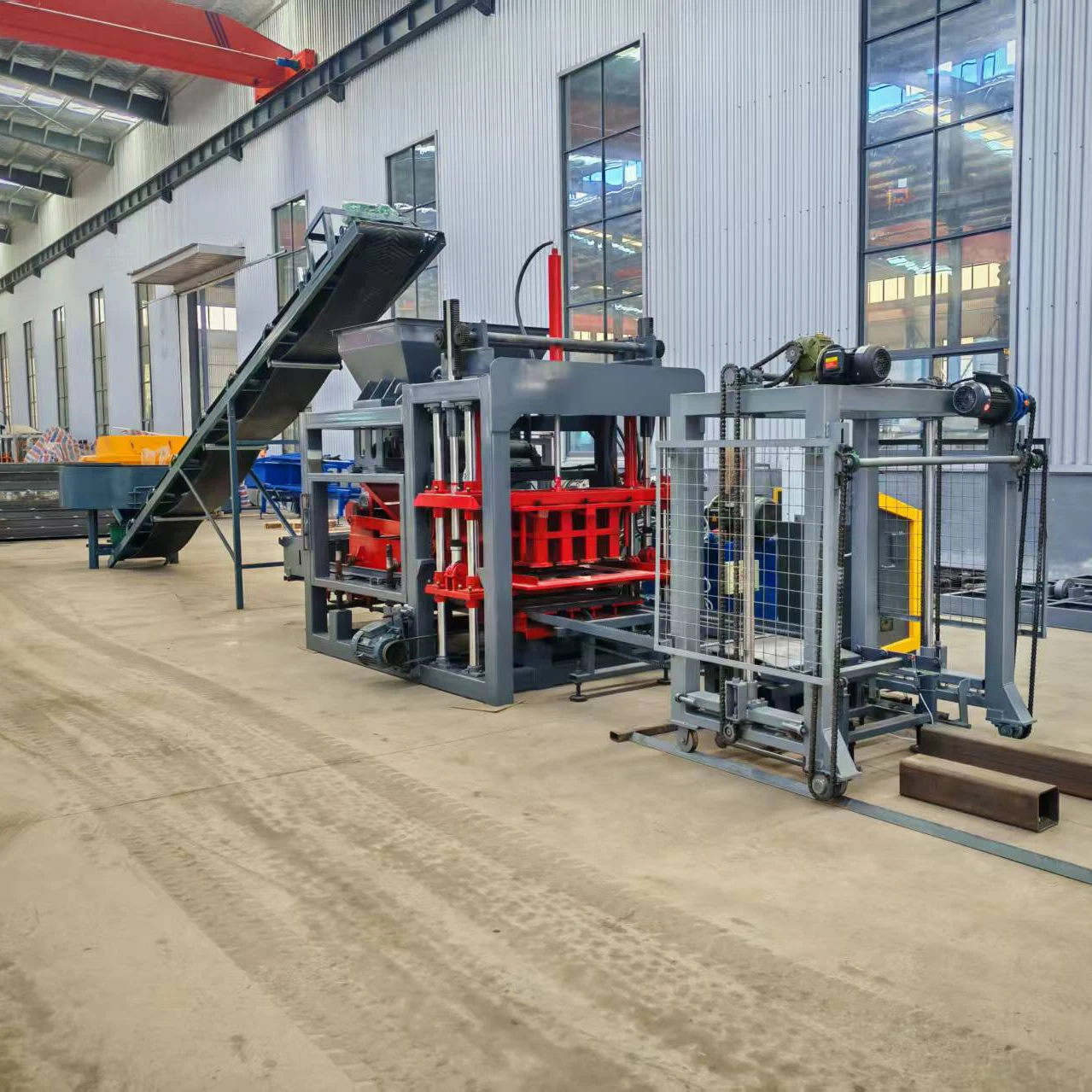
Description
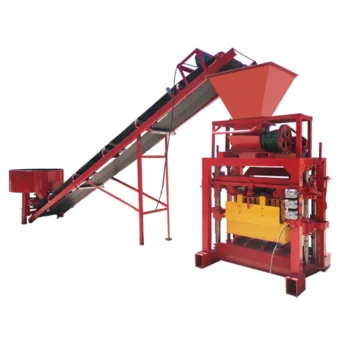
Stocked for Dispatch — the QT4-15A block machine and standard moulds sit in our warehouse ready to load, so your project timeline is not held hostage by a production backlog.
Technical Specifications
| Parameter | Value |
|---|---|
| Model | QT4-15A |
| Product Type | Fully Automatic Concrete Block Making Machine |
| Overall Dimensions (L×W×H) | 4100 × 1600 × 2600 mm |
| Total Mass | 4 T |
| Rated Pressure | 16–21 MPa |
| Main Vibration Form | Platform Vibration |
| Vibration Frequency | 4200 r/min |
| Vibration Force | 55 kN |
| Pallet Size | 880 × 550 mm |
| Molding Cycle | 25–30 s (basis not stated in source — confirm block format / material / thickness) |
| Overall Power | 18.45 kW |
| Demolding Method | Hydraulic |
| Recommended Factory Area | 300 m² |
| Automation Level | Fully Automatic |
| Control System | To be confirmed (PLC brand / language) |
| Voltage & Frequency | To be confirmed before order |
| Container Loading | 1 × 40 HQ (basic equipment) |
| Warranty | 1 year (whole machine, excluding spare parts) |
| Payment Term | 30% T/T deposit, 70% balance before delivery |
| Quotation Validity | 30 days from receipt |
Application Suitability
| Application | Material or Output |
|---|---|
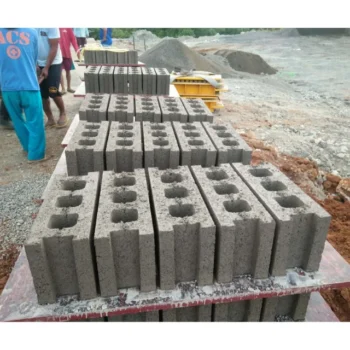
| Hollow block production for residential and commercial masonry | Crushed stone, sand, cement, fly ash |
| Solid block manufacturing for load-bearing walls | Gravel, slag, cement blends |
| Interlocking paver and colored paver runs | Fine aggregate with pigment additives |
| Kerbstone and curb production for infrastructure | Coarse aggregate and cement mixes |
| On-site block making for housing development projects | Locally sourced sand, dust, and cement |
Why Lead Time Promises Collapse at the Port
When a QT4-15A block machine in stock is advertised, buyers still arrive at the port weeks behind schedule because the electrical package was never confirmed before loading. Dispatch speed only matters if the machine that arrives can actually run on your site’s power grid. I have watched containers sit in customs yards while importers scrambled to source step-down transformers or rewire control panels, burning through the very project deadline they paid to protect [NEED_CITE: voltage and frequency standards by export market]. A machine that ships fast but arrives incompatible is not a solution — it is a delay with a shipping cost attached.
What "In Stock" Actually Covers
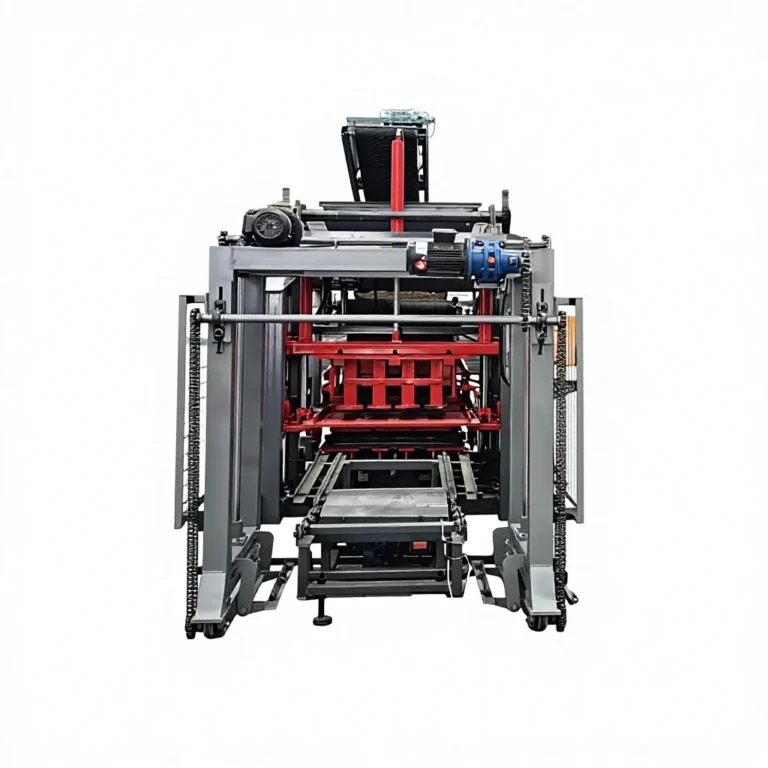
A stocked QT4-15A block machine in stock means the main press frame, hydraulic station, vibration platform, and electrical cabinet are assembled, factory-tested, and sitting on the warehouse floor — not that every accessory is pre-boxed. Standard moulds for common formats such as hollow blocks and solid blocks are typically held alongside the machine, but custom moulds drawn to your specific dimensions require their own production window. Clarifying which moulds ship with the press and which follow in a second crate prevents the frustration of having a machine on-site with nothing to produce.
Container Loading and Arrival Planning
The QT4-15A dismantles into a configuration that fits a single 40-foot high-cube container for the basic equipment set. This matters because partial container loads invite delays — your pallet feeder or mixer waits for the next sailing while the press sits idle at the destination. Confirming the full packing list against the container manifest before the doors close ensures one shipment, one bill of lading, and one estimated arrival date you can build a project schedule around [NEED_CITE: container shipping lead times and port congestion factors].
Reading the Vibration and Pressure Numbers
The 55 kN vibration force working in tandem with 16–21 MPa hydraulic pressure determines how densely the concrete mix compacts inside the mould cavity. Higher vibration frequency at 4200 r/min fluidizes the mix, while hydraulic pressure squeezes out air voids — together they set the block’s compressive strength and surface finish. If your local aggregate is angular and poorly graded, the vibration energy may not distribute evenly, producing blocks with weak corners. The pallet size of 880 × 550 mm defines how many blocks form per cycle, and that footprint must match the curing racks and forklift dimensions already in your yard to avoid bottlenecks downstream.
The Cost of Skipping Electrical Confirmation
Ordering a QT4-15A without locking in voltage, frequency, and PLC display language before shipment leads to one of the most expensive delays in block plant commissioning. The machine arrives, the electrician opens the cabinet, and the supply does not match the local grid — rewiring a 4 T machine on a job site is neither fast nor cheap. Control panels displaying in a language your operators cannot read adds a layer of risk that no amount of on-site training fully resolves [NEED_CITE: CE machinery directive requirements for industrial equipment]. These are not edge cases; they are the most common reasons a fast-shipped machine still takes weeks to produce its first saleable block.
Procurement Advantages From a Single-Source Supplier
The QT4-15A block machine, its moulds, pallets, and handling equipment are specified as one matched system rather than assembled from separate vendors who blame each other when cycle times slip. Machine configuration is set against your actual mix design and local aggregate, not a catalogue default that assumes materials you cannot source. Standard mould inventory covers the formats most markets sell, and custom mould drawings are accommodated when your product range demands a non-standard format. Every unit ships with a factory test record, packing photographs, and customs documentation support so the paperwork at your port matches the hardware in the container.
Documentation & Verification
- Factory test record showing cycle times on your specified block format before dispatch
- Machine specification sheet with confirmed voltage, frequency, and PLC language
- Mould drawing and format list matching your order against pallet dimensions
- Hydraulic and electrical schematic for your site electrician before arrival
- Packing photographs documenting machine condition at container loading
- Customs documentation support aligned to your destination port requirements
Installation, Commissioning & Support
- Foundation plan sized to the 4100 × 1600 mm footprint and 4 T operating mass
- Dedicated power circuit matched to 18.45 kW total draw and confirmed voltage
- Dismantled state and reassembly sequence documented for site crew reference
- First-run parameter setting on 880 × 550 mm pallets with your local mix
- Operator training covering mould change procedures and hydraulic system checks
- Wear parts list and replacement schedule for vibration components and hydraulic seals
Next Steps for Your Inquiry
To confirm availability and a firm dispatch date, share your target block format, daily output expectation, and the raw materials available at your project site. Specify your local voltage and frequency so the electrical package is configured before the machine leaves the factory. If you have existing curing racks or forklifts, provide their dimensions so the 880 × 550 mm pallet specification is validated against your yard layout.
Frequently Asked Questions
Q: How is the dispatch lead time calculated for a stocked QT4-15A?
A: Lead time starts from deposit receipt and covers final inspection, dismantling for container loading, and customs documentation preparation. A stocked machine skips the production queue, so the timeline depends mainly on confirming your electrical parameters and mould selection before the container doors close. Typical dispatch windows are quoted in weeks, not months.
Q: What does the basic equipment set include in one 40HQ container?
A: The basic set covers the main press, hydraulic station, vibration platform, electrical cabinet, and standard moulds. Pallet feeder, mixer, stacker, and curing rack handling equipment are additional line items. Each component is listed on the packing manifest so you know exactly what arrives in the single container versus what ships separately.
Q: Can the voltage and PLC language be confirmed before the machine ships?
A: Yes, and this confirmation should happen before production finalization, not after. Your local grid voltage, frequency, and preferred control panel language are written into the order specification so the electrical cabinet is built to match. Changing these parameters on-site after arrival introduces delays and rewiring costs that are entirely avoidable.
Q: Is on-site installation and commissioning included in the dispatch timeline?
A: Dispatch covers getting the machine to your port. On-site installation and commissioning are scheduled separately once the container clears customs and reaches your site. Engineer availability is confirmed during the order process so the support visit aligns with your expected arrival date rather than adding another waiting period.
Q: Do spare wear parts and additional moulds ship with the main machine?
A: A first-set wear parts package typically ships in the same container as the main machine. Additional moulds for other block formats may follow in a separate crate if they are custom-designed to your drawings. Confirming the spare parts and mould list before loading ensures nothing critical is left behind at the factory.