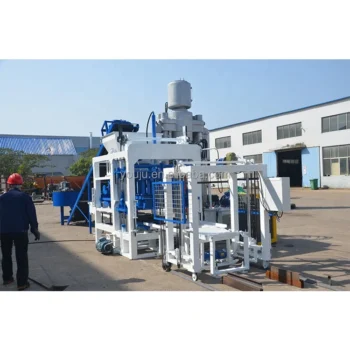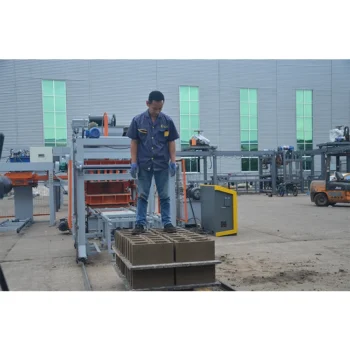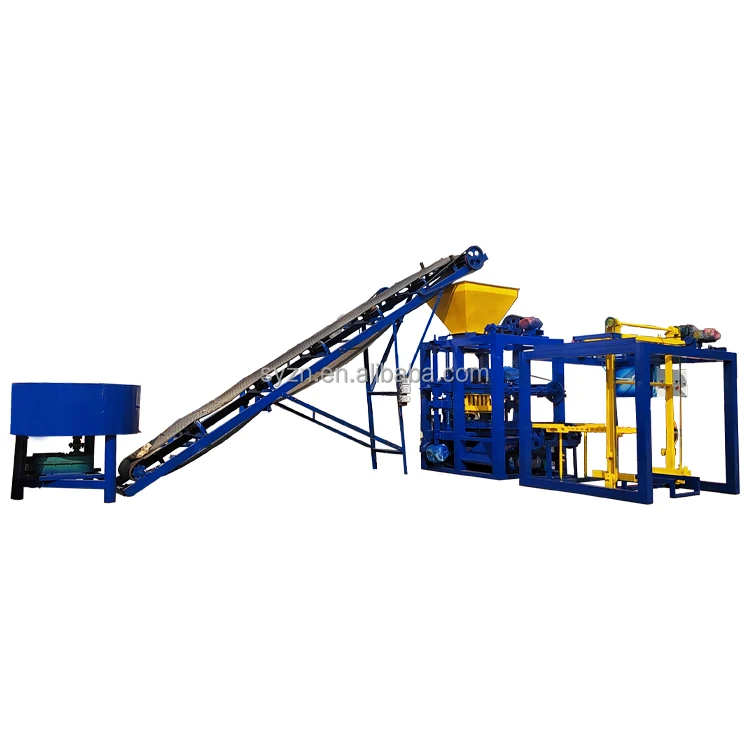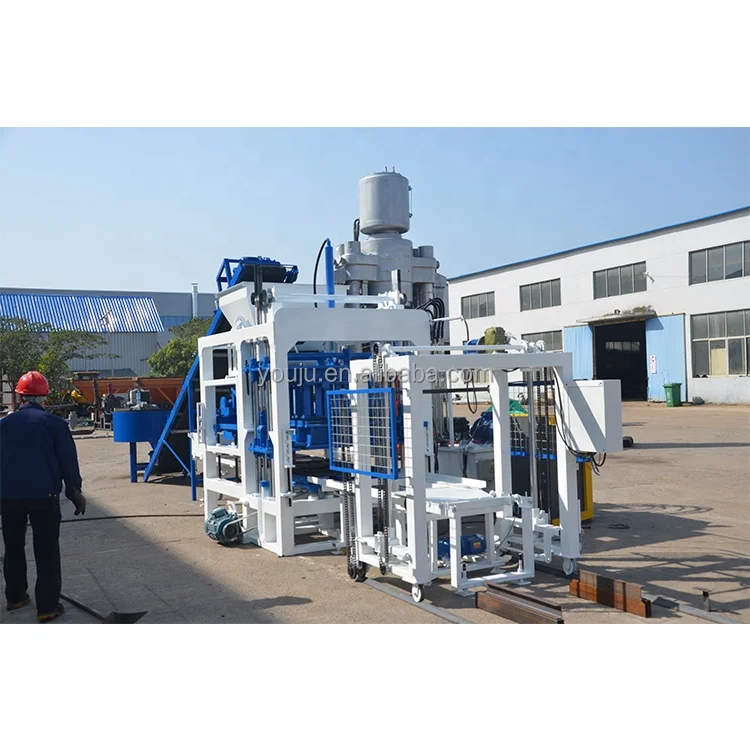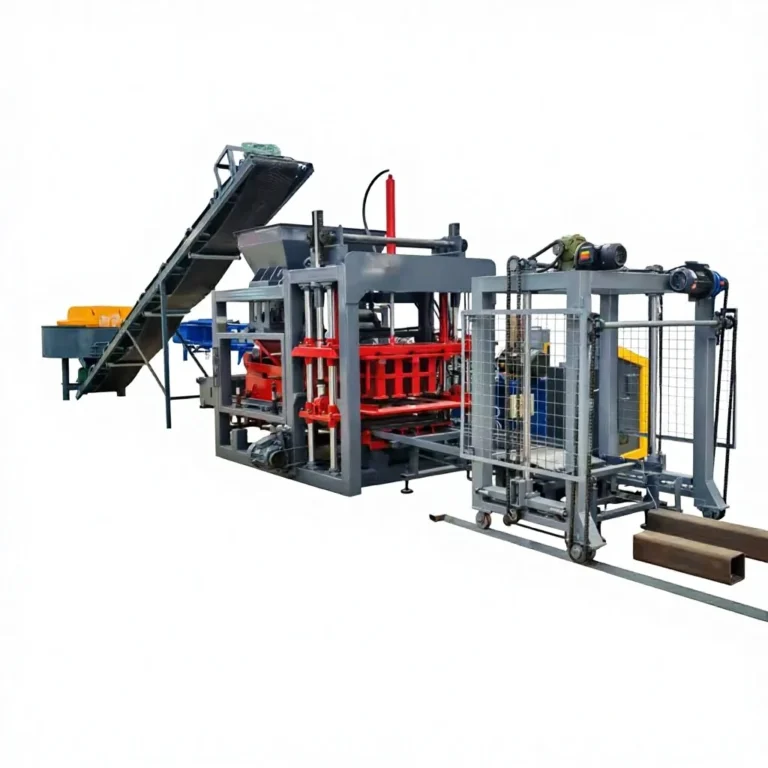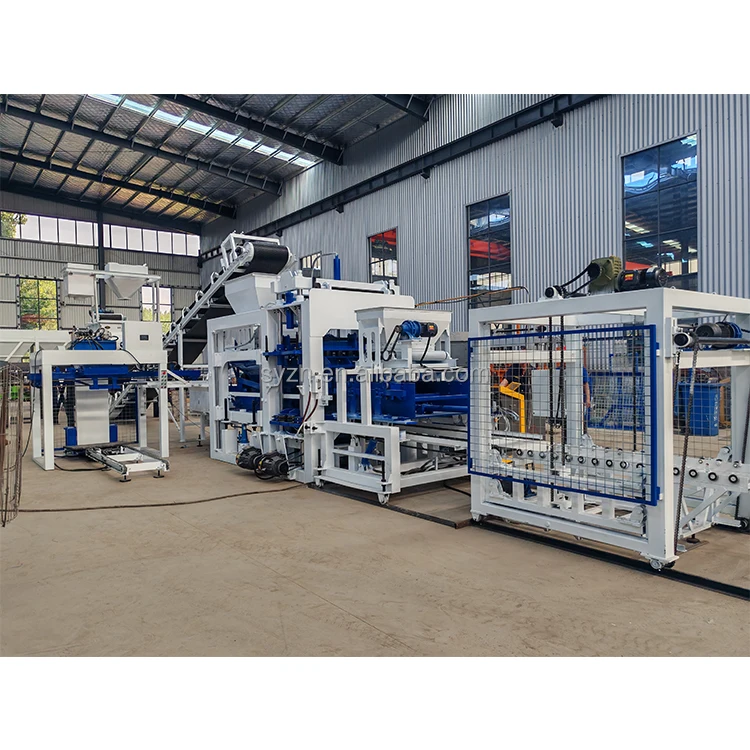
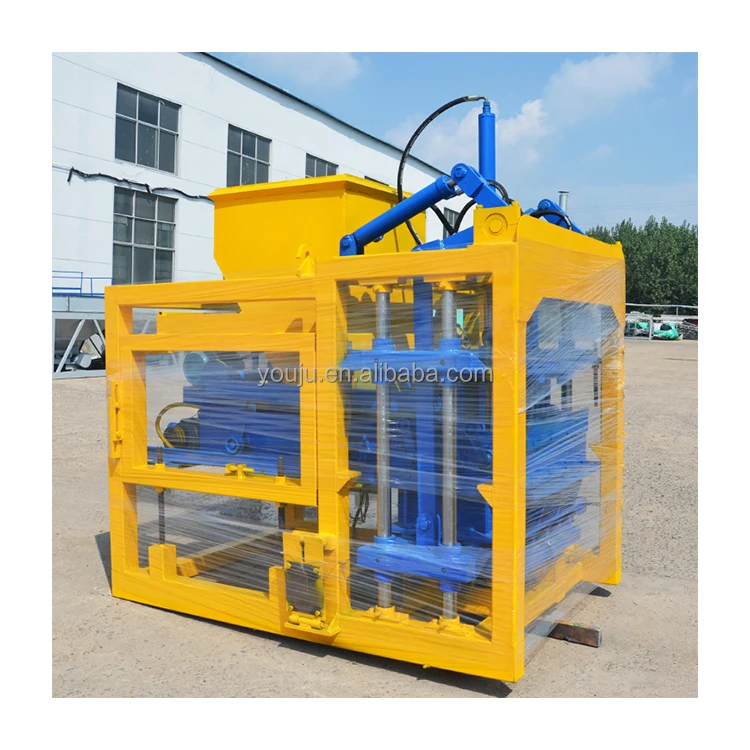
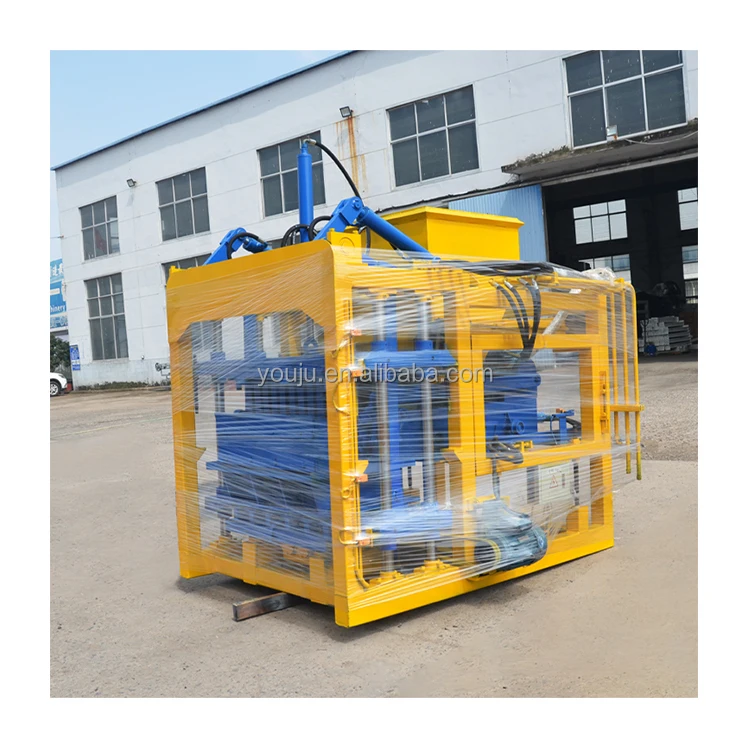
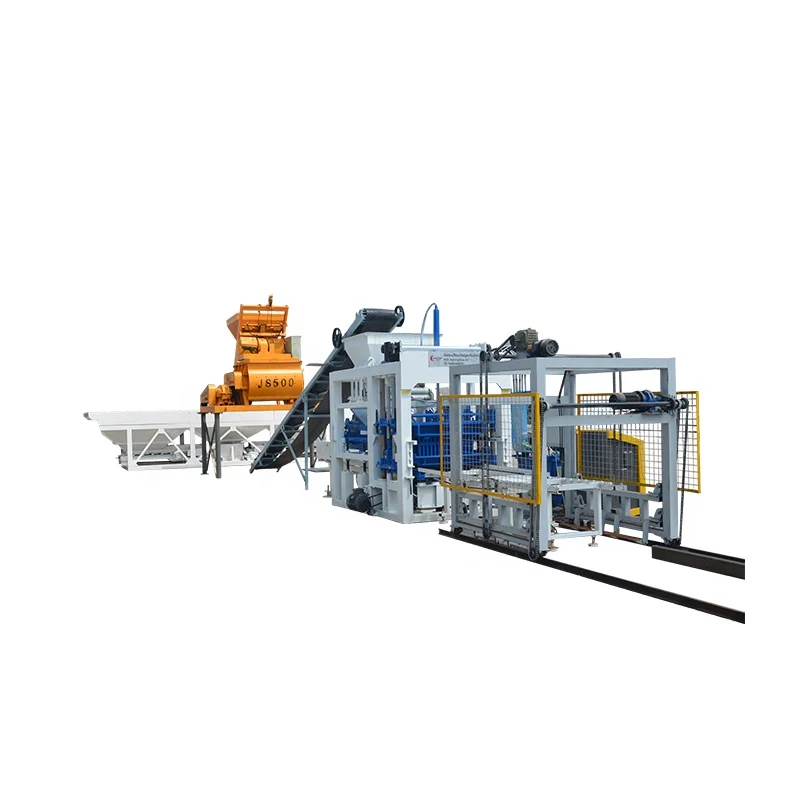
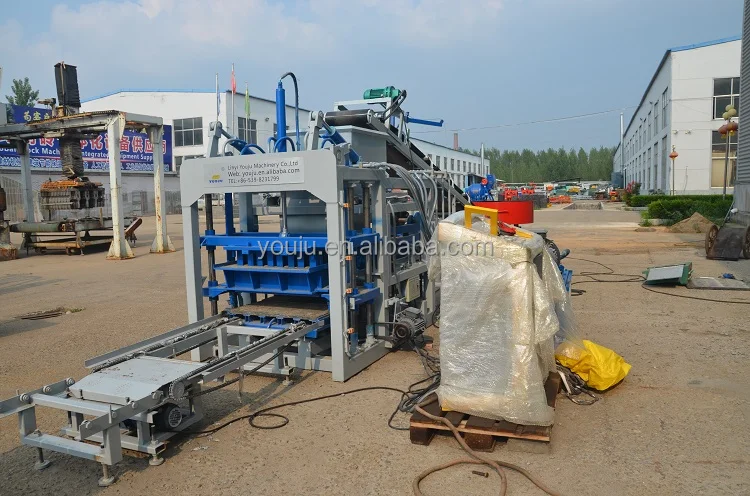
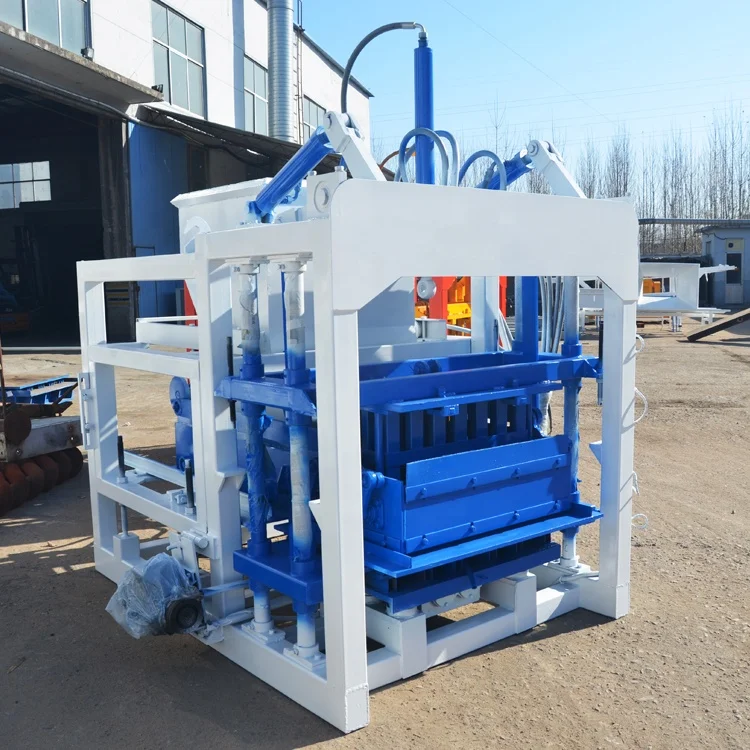
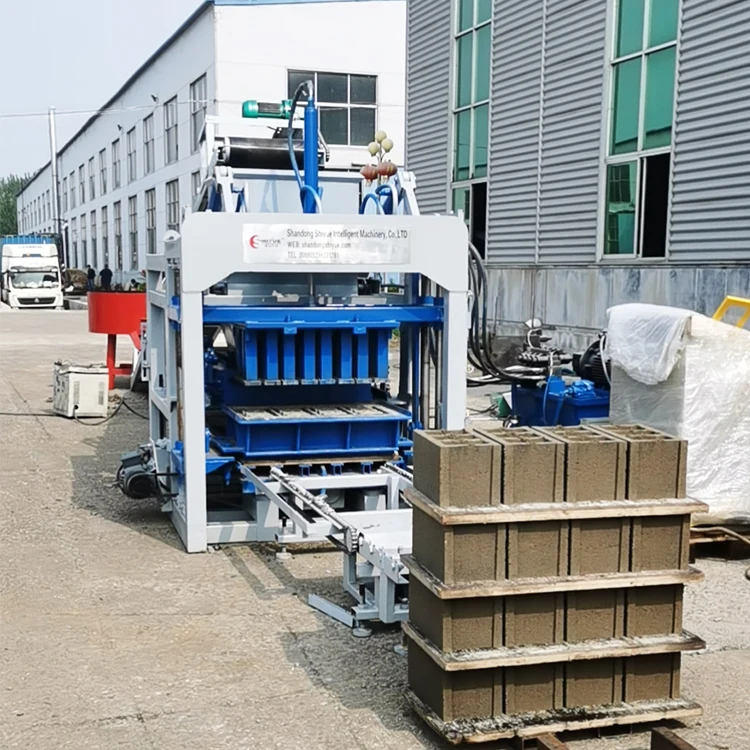
Description
Fast Dispatch Readiness — the QT4-15A is held in standard production runs so container loading and voltage confirmation can proceed without waiting for a custom build slot.
Technical Specifications
| Parameter | Value |
|---|---|
| Model | QT4-15A |
| Product Type | Automatic Concrete Block Making Machine |
| Overall Dimension | 7100 x 1600 x 2610 mm |
| Rated Pressure | 16 MPa |
| Vibration Form | Platform Vibration |
| Pallet Size | 1020 x 570 mm |
| Molding Cycle | 15–25 s (basis not stated in source — confirm block format / material / thickness) |
| Overall Power | 27.5 kW |
| Control System | PLC electronic console |
| Hydraulic Station | Included |
| Material Feeder System | Hopper, feeding box, feeding platform, conveyor system |
| Block Receiver | Frame, convey system, idler wheels, motor and reducer with triangle belt |
| Mixer (Support Equipment) | JQ500 concrete pan mixer |
| Belt Conveyor (Support Equipment) | 8 m (6 m optional) |
| Stacker (Support Equipment) | Layer-by-layer block stacking |
| Block Clamper (Support Equipment) | For dry block removal from pallets or loading to truck |
| Moulds | One free hollow mould included; extra moulds customizable |
| Trolley | Included |
| Cement Silo | Optional (not required if cement is bagged) |
| Batching Plant | Optional, multi-hopper for different raw materials |
| Voltage & Frequency | Configurable before dispatch — confirm target market standard |
| PLC Display Language | Configurable before dispatch |
Application Suitability
| Application | Material or Output |
|---|---|
| Hollow block production for load-bearing and partition walls | Crushed stone, cement, fly ash, sand |
| Solid block production for foundation and structural work | Dense aggregate mix with cement binder |
| Paving block production for walkways and light-traffic areas | Fine aggregate blend with cement |
| On-site block production for housing projects | Locally sourced aggregate and bagged cement |
| Small to mid-scale block plant operations | Standard concrete mix with pan-mixed consistency |
Why the Voltage Question Must Be Settled Before the Container Is Booked
A QT4-15A block machine in stock ships faster only if the electrical spec is locked before crating.
I have watched a fully crated machine sit in a bonded warehouse for three weeks because the buyer’s site ran 415 V / 50 Hz while the unit left the factory wired for 380 V / 50 Hz. The PLC console would not power up, the hydraulic solenoid valves chattered, and the vibration motor drew excessive current until a local transformer was sourced and installed [NEED_CITE: voltage and frequency standards by export market]. Every day of idle curing yard meant lost block output against a project deadline that did not move.
Dispatch Timeline Starts With Electrical Confirmation
The QT4-15A block machine in stock can leave the factory within a short window once the buyer confirms voltage, frequency, and PLC display language. These three items determine the motor winding specification, the transformer tap setting inside the control cabinet, and the HMI firmware loaded onto the console. Changing any one of them after crating means reopening the electrical panel, rewinding or replacing motors, and re-flashing the PLC — work that adds days to a schedule the buyer counted on being short.
Container Loading Plan and What It Means for Your Yard
A standard QT4-15A set — main press, hydraulic station, JQ500 pan mixer, 8 m belt conveyor, stacker, clamper, pallets, and one hollow mould — typically fills a 40-foot high-cube container when the frame is dismantled at bolted joints. The pallet size of 1020 x 570 mm dictates how many curing pallets ride along; ordering extra pallets after shipment means a separate LCL consignment that arrives weeks later. Confirming the pallet count against the buyer’s curing area dimensions before loading prevents a second freight bill and a gap in production [NEED_CITE: container loading practice for block machinery].
Reading the Numbers That Actually Matter on Site
The 16 MPa rated hydraulic pressure works together with platform vibration to compact the concrete mix inside the mould cavity. Higher pressure alone does not guarantee block density if the vibration amplitude and frequency are not matched to the aggregate gradation. The 27.5 kW overall power draw tells the site electrician what dedicated circuit breaker rating to install; undersizing that breaker causes nuisance trips during the vibration peak of each molding cycle. The 15–25 s molding cycle figure must be read against a specific block format and wall thickness before it translates into a daily output number [NEED_CITE: block machine cycle time versus format].
What Happens When the Specification Conversation Is Skipped
Buyers who focus only on lead time and skip the voltage and pallet conversation often find that the machine arrives and cannot run. A mismatched motor winding burns out within the first shift. Pallets that do not match the forklift tine spacing already in the yard sit unused while the crew handles blocks by hand. The PLC display in a language the operator cannot read means every alarm code requires a phone call across time zones, turning a minor sensor fault into a full-day stoppage.
Why Buyers Working to a Deadline Choose This Dispatch Route
Block machinery as a single focus means the press, mould, pallet, and handling equipment leave the factory as one matched set, not assembled from separate vendors after arrival. The QT4-15A block machine in stock ships with a factory test record run on a standard hollow block format, so the buyer sees actual cycle footage before the container is sealed. Voltage and control language confirmation is a mandatory checkpoint in the dispatch process, not an afterthought. Packing photographs and a full packing list accompany every shipment so the buyer can verify contents against the bill of lading before the container leaves the port. Installation support with operator training is scheduled against the vessel arrival date so the crew is on site when the container door opens.
Documentation & Verification
- Factory test record showing the QT4-15A running a hollow block cycle before crating
- Voltage and PLC language confirmation sheet signed off prior to dispatch
- Packing list with item-level weights and dimensions for customs clearance
- Hydraulic and electrical schematic matching the as-shipped configuration
- Operation and maintenance manual in the confirmed PLC display language
- Container loading photographs documenting bracing and securing of the main press
Installation, Commissioning & Support
- Foundation pad sized to the 7100 x 1600 mm footprint with anchor bolt template provided
- Dedicated 27.5 kW circuit with breaker rating confirmed to the site voltage before energizing
- Main press frame reassembled at bolted joints; hydraulic lines pressure-tested on site
- PLC console powered up and alarm codes verified in the confirmed display language
- Operator training on mould change procedure using the included hollow mould
- Wear parts list with reorder part numbers handed over at commissioning close-out
What to Include in Your First Dispatch Inquiry
Provide the target block format, daily output expectation, and the voltage and frequency standard at your site. Confirm the curing area dimensions so the pallet count and stacker configuration can be matched before the QT4-15A block machine in stock is loaded. State the preferred PLC display language and whether bagged cement or a silo feed will be used, so the batching configuration ships complete.
Frequently Asked Questions
Q: Is the QT4-15A currently available from stock and what is the standard dispatch lead time?
A: The QT4-15A is built in standard production runs and held for dispatch. Once voltage, frequency, and PLC language are confirmed, the machine and its support equipment can be crated and loaded within a short window. Buyers working to a project deadline should submit electrical details early to avoid a hold at the factory gate.
Q: How many containers does a full QT4-15A line require and are special container types needed?
A: A standard set — press, mixer, conveyor, stacker, clamper, pallets, and one mould — fits into a 40-foot high-cube container with the frame dismantled at bolted joints. No open-top or flat-rack container is normally required. The loading plan is confirmed before dispatch so the buyer can book freight with the correct container count.
Q: Can the voltage and PLC display language be configured for my market before the machine ships?
A: Yes. Motor winding, control cabinet transformer tap, and PLC firmware are all set to the buyer’s confirmed voltage, frequency, and language before crating. This checkpoint is mandatory in the dispatch process so the machine can be energized on site without waiting for local electrical modification.
Q: What moulds are included and can additional moulds ship in the same container?
A: One hollow block mould is included with the QT4-15A at no extra charge. Additional moulds for solid blocks, pavers, or other formats can be added to the same container before sealing. Providing the target block drawings early ensures the extra moulds are finished and tested before the dispatch date.
Q: Are customs and origin documents provided for import clearance?
A: A full packing list, commercial invoice, bill of lading, and certificate of origin are included with every shipment. Hydraulic and electrical schematics accompany the documentation set so local inspectors can verify the machine against the declared specifications during clearance.