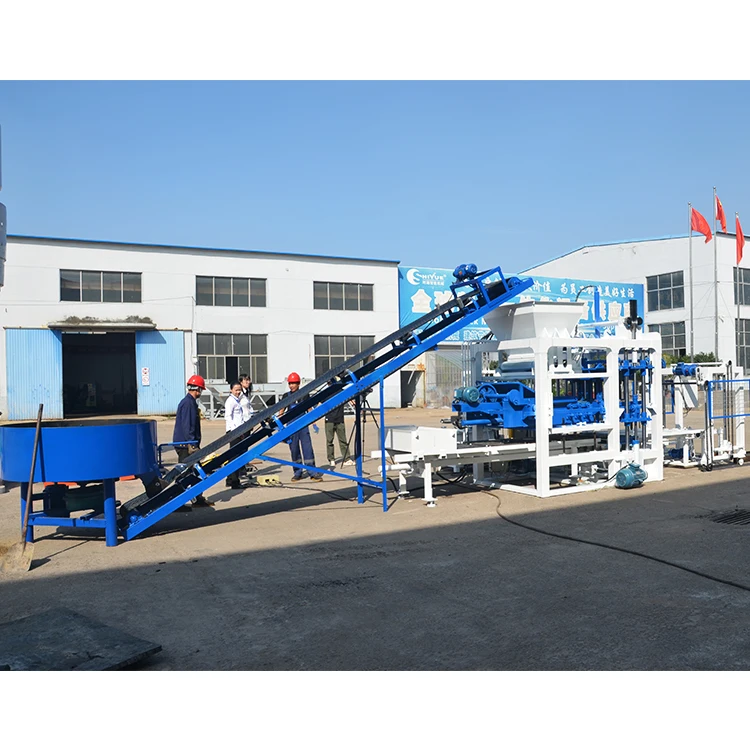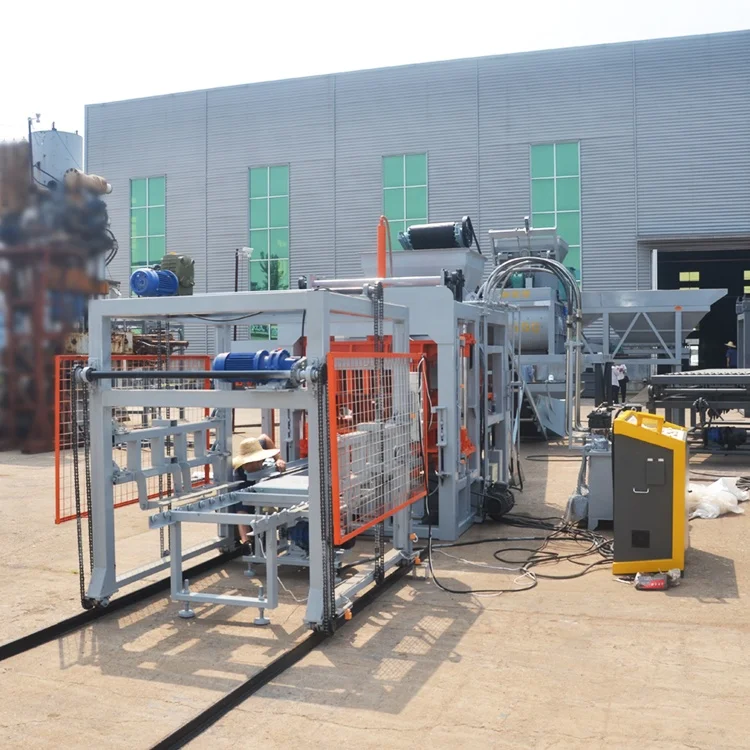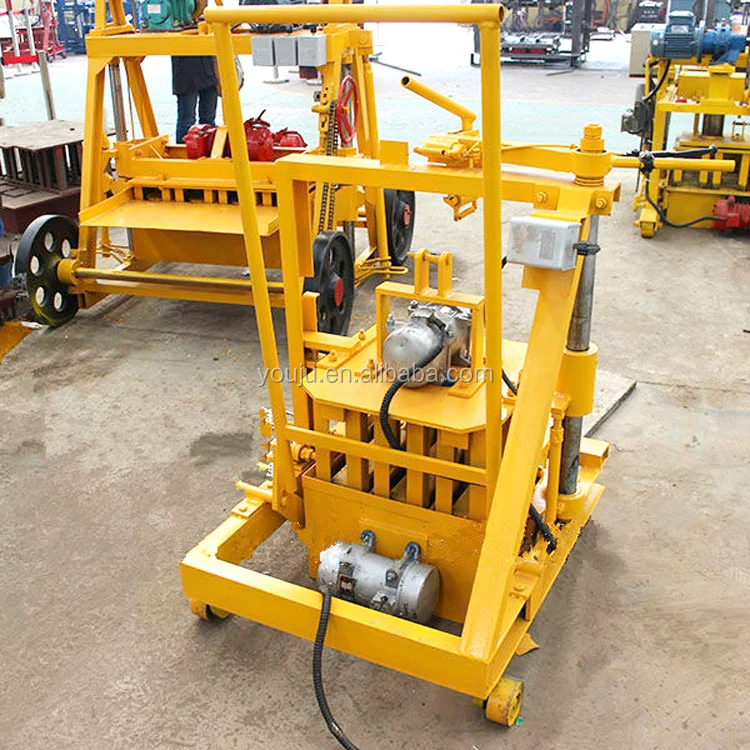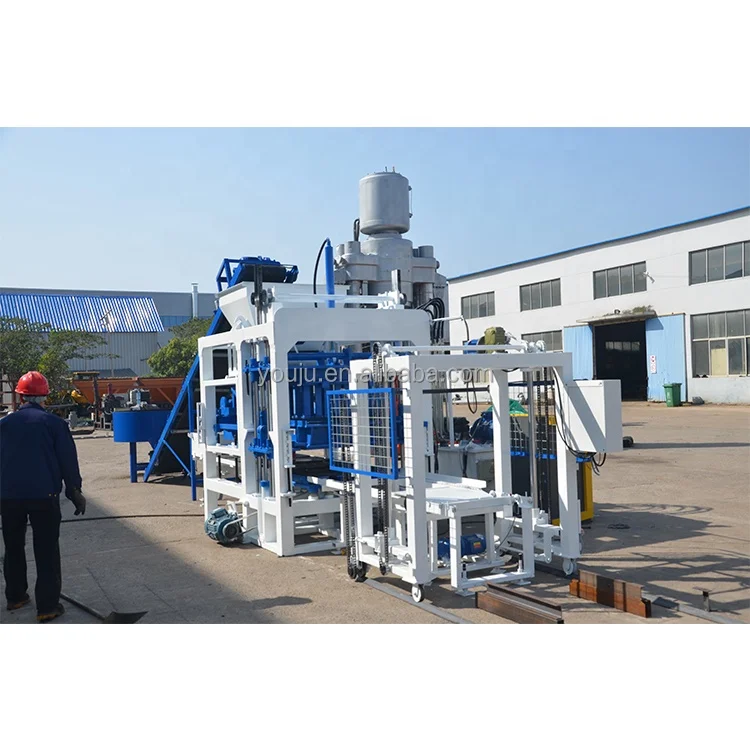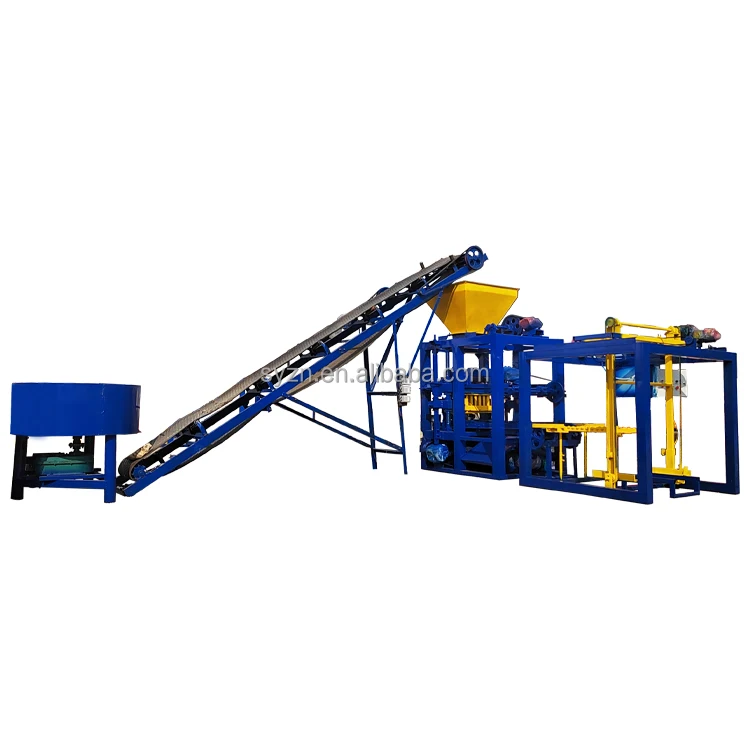


Description
Dispatch-Ready Inventory — QTJ4-24 block machine units held in stock with standard moulds, enabling container loading within days rather than a typical multi-week production wait.
Technical Specifications
| Parameter | Value |
|---|---|
| Product Type | Automatic Small Cement Brick Making Machine |
| Model | QTJ4-24 |
| Overall Dimensions (L×W×H) | 3600×1700×2560 mm |
| Pallet Size | 850×450 mm |
| Molding Cycle | 24–26 s |
| Rated Power | 11.95 kW |
| Vibration Force | 45 kN |
| Vibration Configuration | 2×3 kW lower vibrators + 2×1.5 kW upper vibrators |
| Net Weight | 2 T |
| Molding Method | Mechanical |
| Material Distribution | Full-automatic spiral material distribution |
| Reducer for Mold Lifting | 350-type |
| Raw Materials | Cement, sand, stone |
| Voltage & Frequency | Configurable to site (basis to be confirmed) |
| Control System | Options available (basis to be confirmed) |
| Output Capacity | Varies by block format (basis to be confirmed) |
| Automation Level | Semi-automatic |
| Warranty | 1 year for whole machine (excluding spare parts) |
Application Suitability
| Application | Material or Output |
|---|---|
| Hollow block production | Cement, crushed stone, sand mix for structural and partition walls |
| Solid block production | Dense cement-aggregate mix for load-bearing masonry |
| Paving brick production | Fine aggregate and cement blend for walkways and yard surfaces |
| Interlocking brick production | Graded stone and cement for dry-stack retaining and boundary walls |
Why the Voltage Question Must Come Before the Container
A machine wired for the wrong frequency does not just underperform — it burns out before the first week ends.
I once watched a QTJ4-24 block machine in stock sit idle on a Philippine job site for fourteen days because the motors arrived configured for 380V/50Hz while the local supply ran 220V/60Hz. Every motor had to be swapped locally, and the contractor lost the dry-season window he had committed to. Since then, I treat the nameplate verification as a non-negotiable gate before any unit leaves the warehouse. Voltage, frequency, and control language together determine whether your QTJ4-24 block machine in stock starts producing blocks or starts generating warranty claims [NEED_CITE: voltage and frequency standards by export market].
Container Loading and Dispatch Sequence
A stocked QTJ4-24 block machine in stock is dismantled into its main frame, vibration table, mould assembly, and electrical panel. Each sub-assembly is bolted and braced inside a standard 20-foot container so that forklift unloading at destination is straightforward. The goal is to let your crew move the machine from port to site without needing a crane.
Pallet Size and Curing Area Alignment
The 850×450 mm pallet size governs how many blocks you can cure per square meter and which forklift tine spacing works. If your existing curing racks were built for a different pallet dimension, you will either waste rack space or need to re-weld the supports before the first production run. Confirming pallet compatibility early prevents a bottleneck that has nothing to do with the press itself [NEED_CITE: pallet handling standards in small block plants].
Vibration Force and Block Density
The 45 kN total vibration force, split between upper and lower vibrator sets, compacts the cement-aggregate mix inside the mould cavity. Insufficient force leaves voids and reduces compressive strength; excessive force can segregate the mix and push fines to the surface. The 24–26 s molding cycle gives the vibration enough duration to settle the material without overworking it, which matters when you are running a local aggregate with high fines content.
Reducer Durability and Maintenance Intervals
The 350-type reducer on the mould lifting mechanism is sized to handle repeated vertical strokes throughout a shift. A smaller reducer would overheat under continuous cycling, forcing unplanned stops. This component choice directly affects how many operating hours you can log between scheduled grease and inspection intervals, keeping the press available for the output your project timeline demands.
What Happens When Dispatch Details Are Overlooked
When a machine ships without confirmed voltage or control language, the on-site electrician faces a choice between rewiring the panel from scratch or waiting weeks for replacement components. Either path stalls production and erodes the contractor’s schedule margin. In my experience supervising shipments across Southeast Asia, the machines that arrive with every electrical detail pre-verified are the ones that produce blocks on day one, while the others sit under tarpaulins waiting for parts [NEED_CITE: common causes of commissioning delays in imported block machinery].
Why Source This Machine Through Our Dispatch Channel
Block machinery is our single focus, so the QTJ4-24 leaves our warehouse as a matched system — press, mould, pallet, and handling accessories specified together rather than assembled from separate suppliers. Configuration is checked against your actual mix design and target block format, not a catalogue default. Moulds for the formats your market sells, including custom drawings, are included in the scope. Automation level is selectable, allowing a buyer to start semi-automatic and add automatic pallet feeding later. Dispatch lead time and container loading plans are quoted before payment, so you know the arrival date before you commit funds.
Documentation & Verification
- Factory test record on your specified block format before dispatch
- Voltage and frequency confirmation sheet signed by electrician before crating
- Machine specification and mould drawing set matched to your order
- Packing photographs showing container loading and bracing detail
- Operation and maintenance manual in your selected language
- Wear parts and mould list with part numbers for reordering
Installation, Commissioning & Support
- Foundation pad must be level and cured to handle 2 T net weight and 45 kN vibration without resonance
- Dedicated electrical circuit rated for 11.95 kW with correct voltage and frequency verified at panel
- Main frame, vibration table, and mould assembly reassembled on-site with bolted connections — no welding required
- First-run parameter setting includes molding cycle adjustment between 24–26 s to match your aggregate gradation
- Operator training covers spiral material distribution operation and 350-type reducer maintenance intervals
- Spare mould wear plates and vibrator motor brushes included for initial production weeks
Before You Request a Quote
To match the right stocked unit to your site, share your target block format and daily output requirement, the local voltage and frequency at your plant, and the curing area dimensions you already have or plan to build. If you have a specific aggregate source, a sample sieve analysis helps us confirm the vibration setting before the machine ships.
Frequently Asked Questions
Q: Which QTJ4-24 configurations and moulds are currently in stock?
A: Standard QTJ4-24 units with hollow block and solid block moulds are typically held in the warehouse. Paving and interlocking moulds may require a short preparation period. Confirm the exact mould format you need so we can check availability against your order before quoting dispatch.
Q: What is the dispatch lead time and estimated arrival at my port?
A: Stocked units can be dismantled and container-loaded within days of order confirmation. Sea transit time depends on your destination port and current shipping schedules. We provide an arrival estimate based on the sailing date before you release payment.
Q: How is the machine dismantled and loaded into the container?
A: The main frame, vibration table, mould assembly, and electrical panel are separated and braced inside a 20-foot container. Bolted connections allow your crew to reassemble on-site using standard tools. Packing photographs are shared before the container is sealed.
Q: Will voltage, frequency, and control language match my site before it ships?
A: We confirm your site voltage, frequency, and preferred control language during the order process. The nameplate and electrical panel are checked by our electrician before crating. This step prevents motor replacements and rewiring delays after arrival.
Q: What spare parts and moulds ship with the machine so I can run from day one?
A: Each shipment includes a wear parts kit covering high-contact items such as vibrator motor brushes and mould liner plates. The exact mould set matches your confirmed block format. A full wear parts list with part numbers is provided so you can plan reorders before stock runs low.