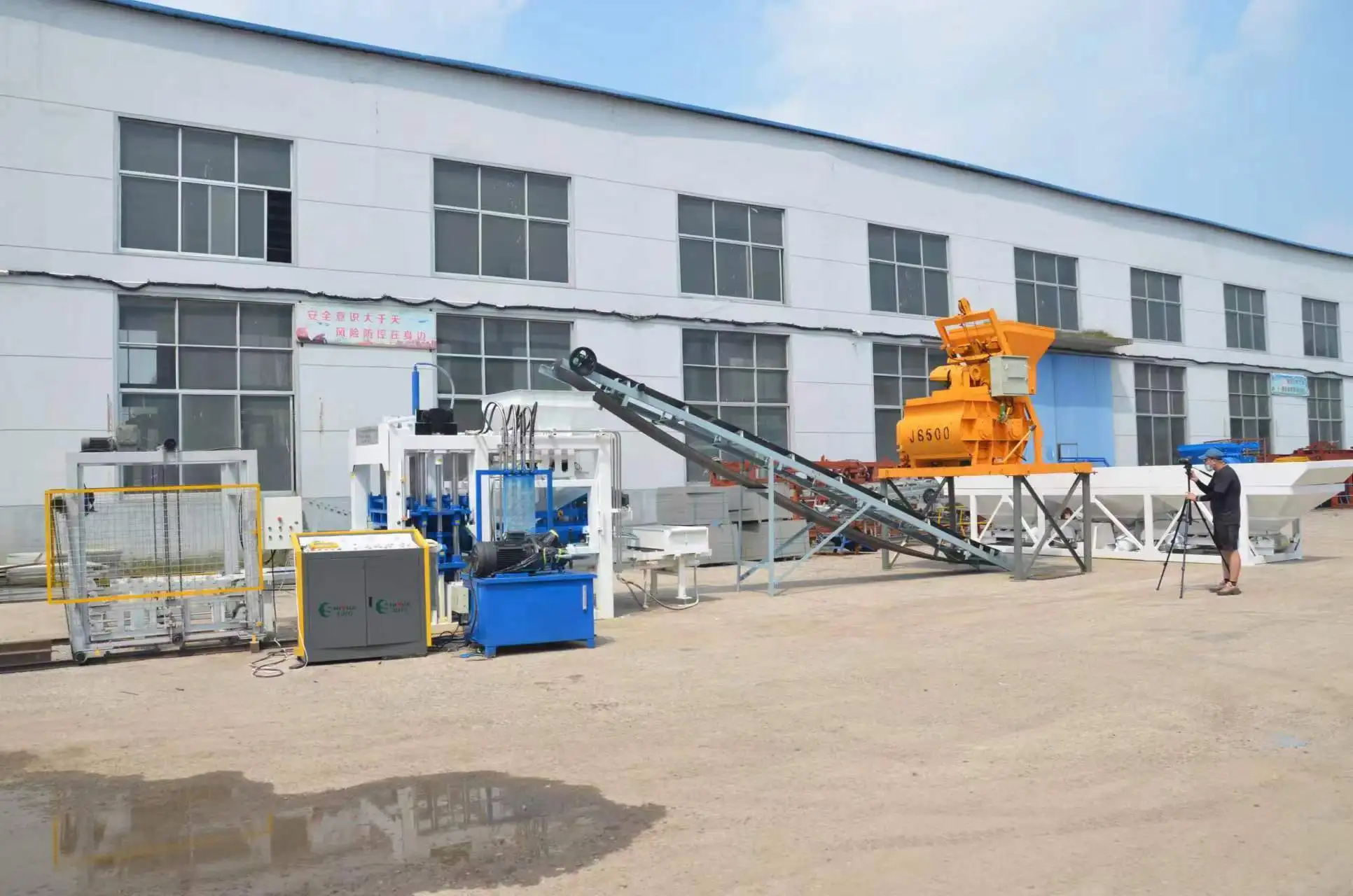
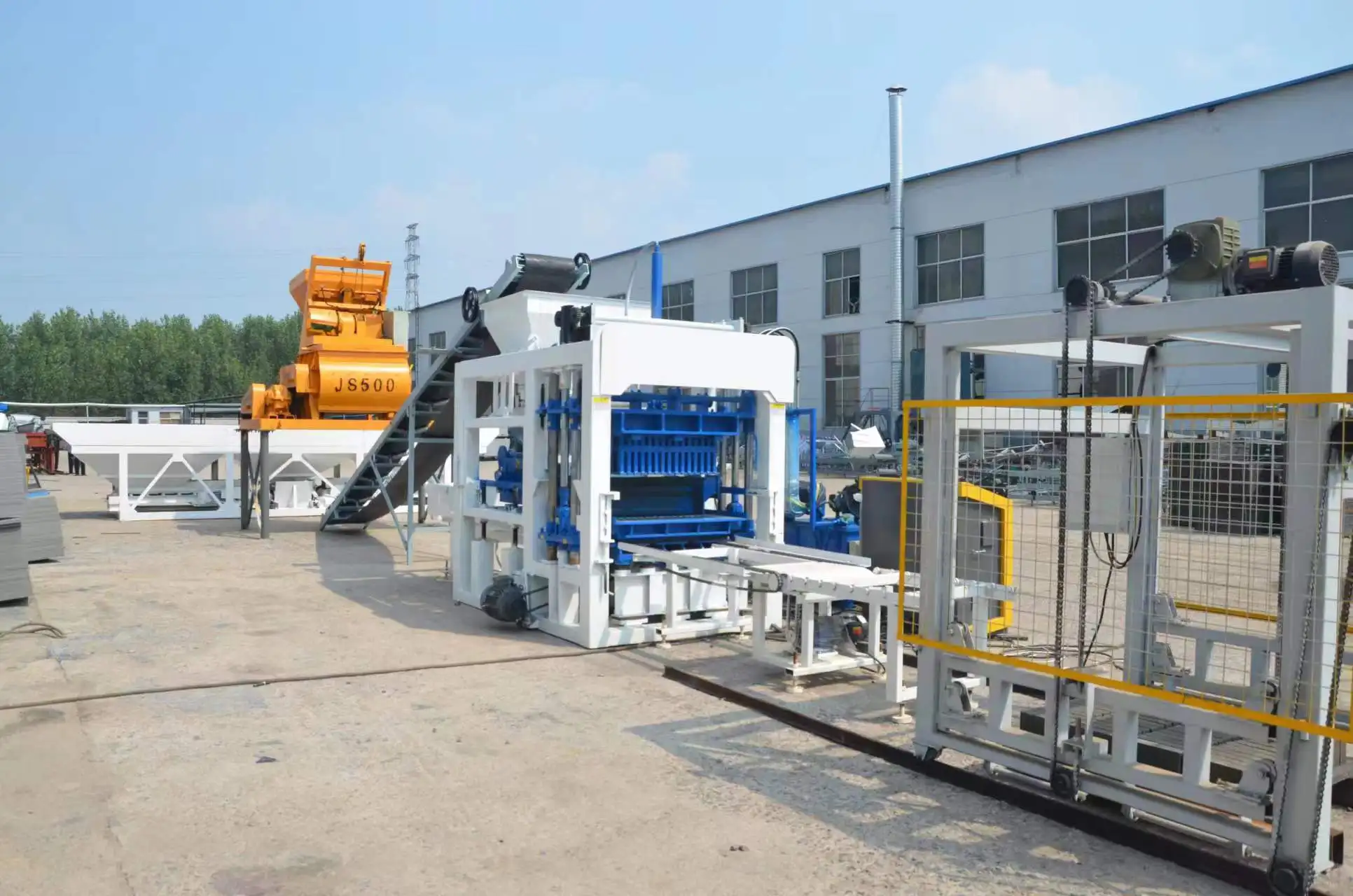
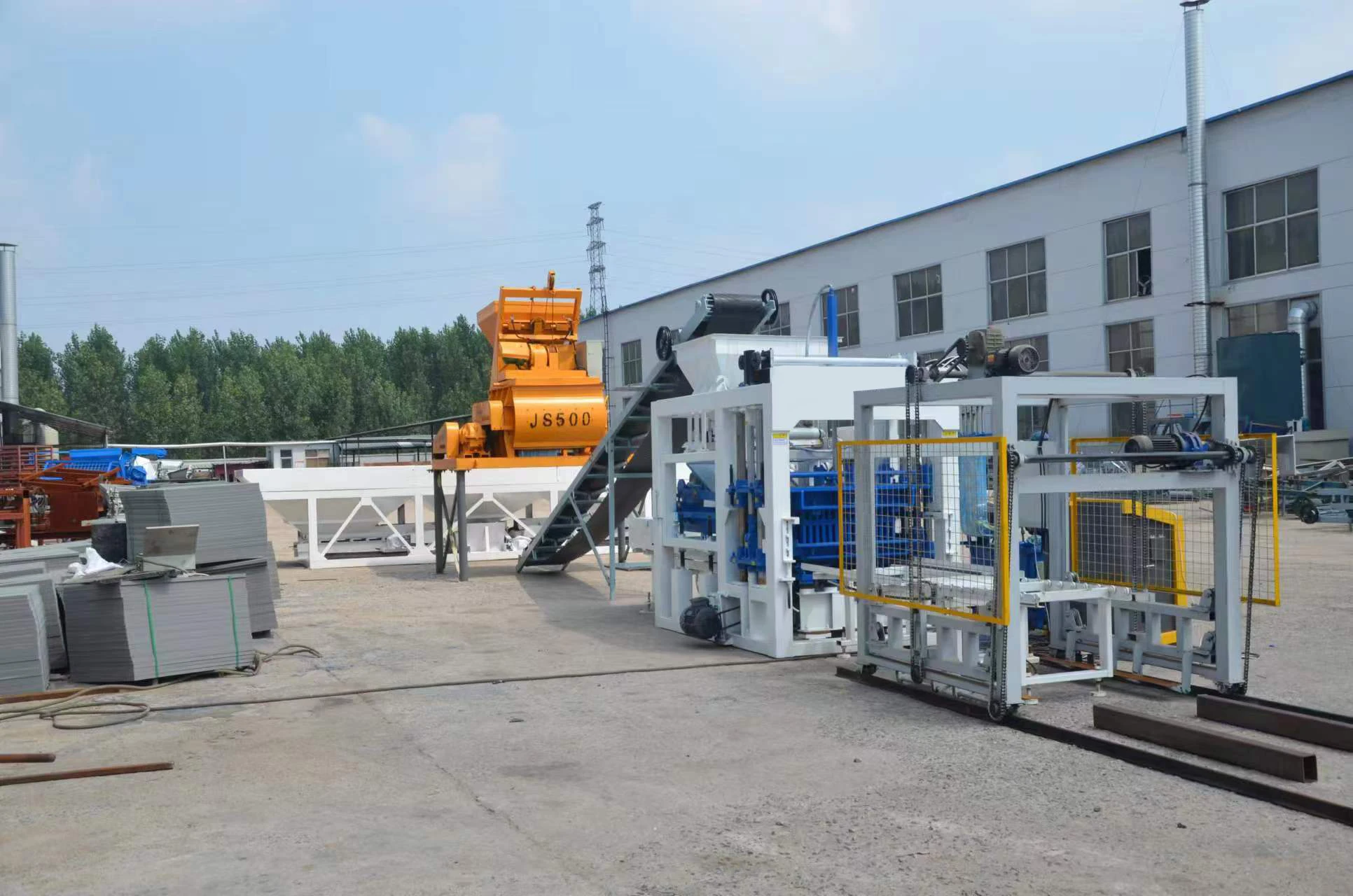
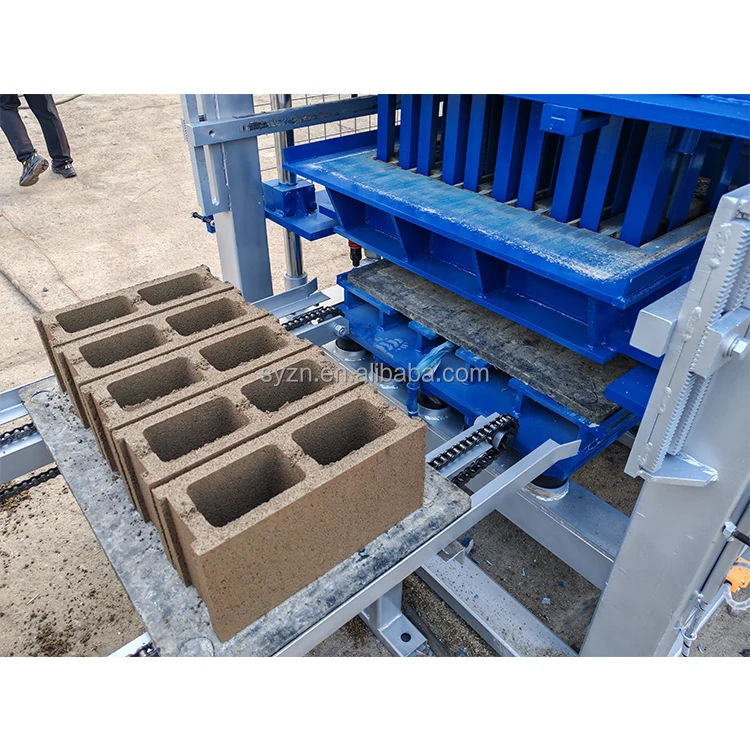
Description
Stock and Dispatch Certainty — QT6-15 block machine units are held in inventory and dispatched with confirmed container loading plans, so your project timeline is not left waiting on production schedules.
Technical Specifications
| Parameter | Value |
|---|---|
| Model | QT6-15 |
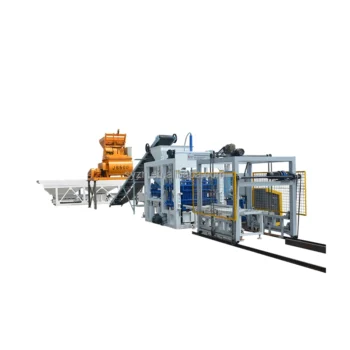
| Product Type | Automatic Concrete Block Making Machine |
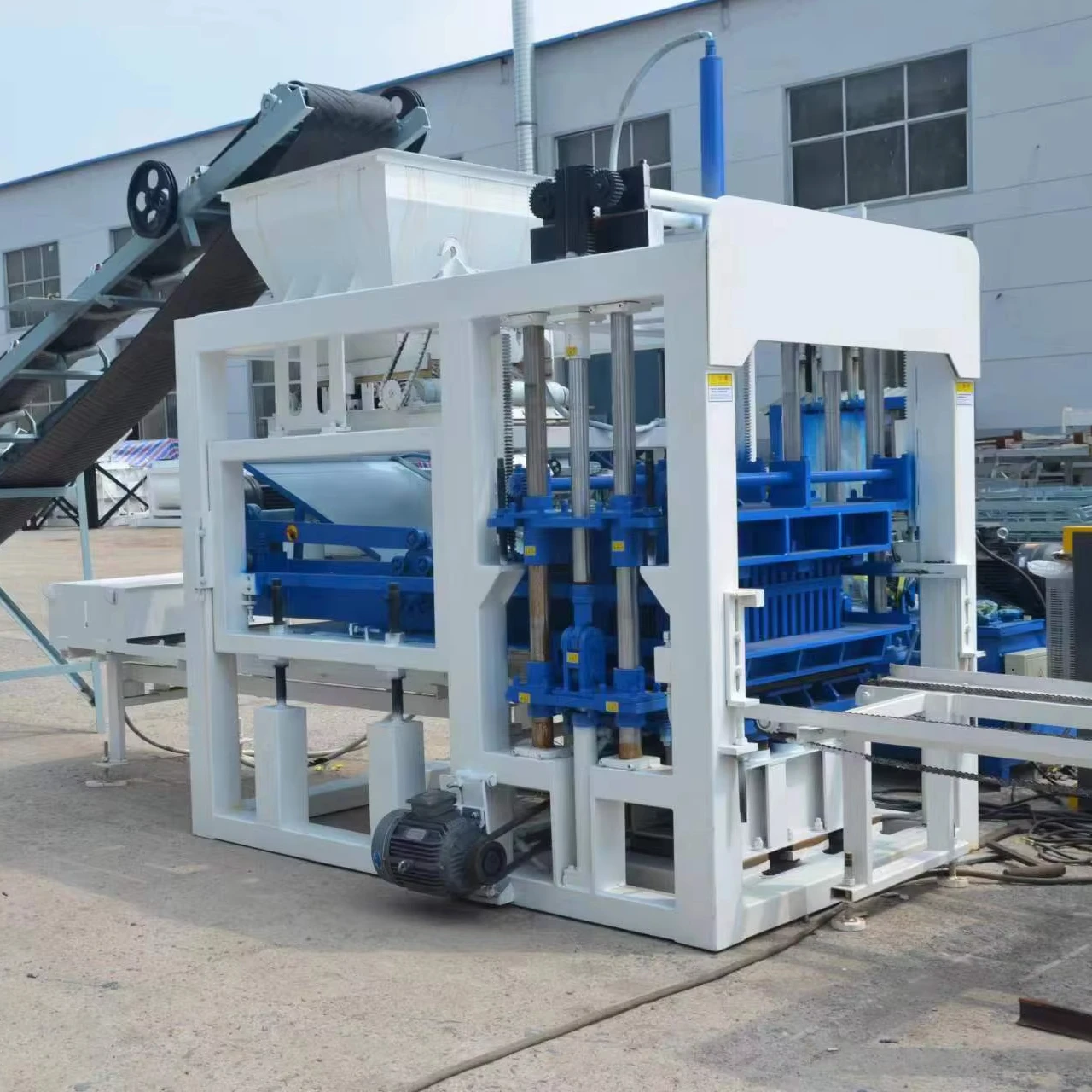
| Host Machine Dimensions | 5870 × 2220 × 2850 mm |
| Host Machine Weight | 5.5 Tons |
| Molding Area | 1050 × 500 mm |
| Pallet Size | 1100 × 550 × 25 mm |
| Vibration Force | 55 kN |
| Vibration Frequency | 2800–4500 Times/Minute |
| Vibration Method | Hydraulic + Platform Vibration |
| Molding Period | 15 Seconds |
| Host Machine Power | 31.5 kW |
| Control System | Siemens PLC with independently developed program |
| Motor | Germany Siemens or CE standard brand |
| Travel Switch | France Schneider / Japan Omron |
| Mould Treatment | Heat treatment + carburizing, 54–58 HRC, lifespan >100,000 cycles |
| Voltage | 220/380/415/440V (Customized) |
| Batching Machine | PLD1200, 3 species, ±2% precision, 56 m³/h theoretical productivity |
| Mixer | JS500, 500 L discharging volume, 25 m³/h capacity, 18.5 kW motor |
| Stacker | SY-4 mobile pallet stack, 3 kW, suitable for hollow blocks and pavers |
| Output Capacity | (basis to be confirmed — depends on block format, material, and thickness) |
| Warranty | 1 year (excluding spare parts) |
Application Suitability
| Application | Material or Output |
|---|---|
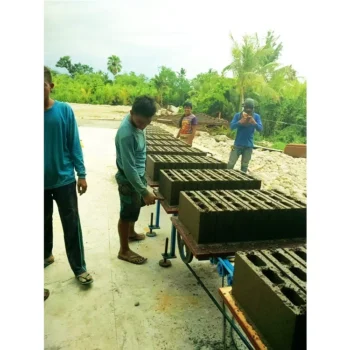
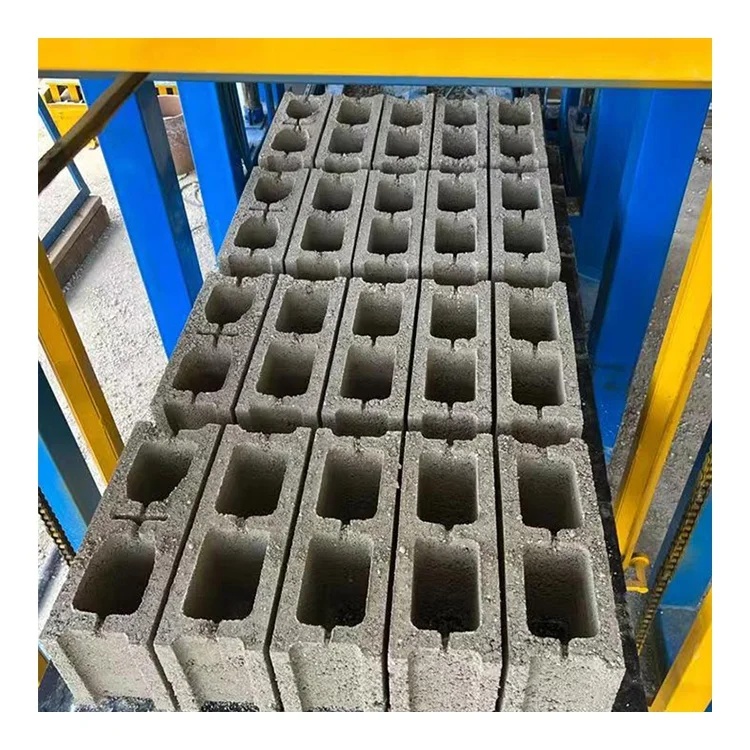
| Hollow brick production | Crushed stone, cement, sand, and fly ash mixes |
| Solid brick manufacturing | Dense aggregate blends for load-bearing walls |
| Interlocking brick production | Graded aggregate for mortarless wall systems |
| Paving brick production | Fine aggregate and cement for high-density surface pavers |
| On-site block production for housing projects | Locally sourced sand and gravel with cement binder |
Why "Fast Delivery" Depends on More Than Just a Warehouse
When a project deadline is closing in, a QT6-15 block machine in stock means little if the voltage is wrong or the mould does not match the block your market actually buys. Real speed to site means the machine arrives configured, tested, and loaded correctly the first time.
I have watched containers get turned around at port because the frequency was 60 Hz and the motor was wound for 50 Hz. That is not a logistics problem — that is a specification failure that costs weeks. Every QT6-15 block machine in stock here ships only after voltage, frequency, PLC language, and mould format are confirmed against the buyer’s destination and production plan [NEED_CITE: voltage and frequency standards by export market]. Without that step, "fast delivery" becomes a delayed commissioning story.
What Stock Availability Actually Covers
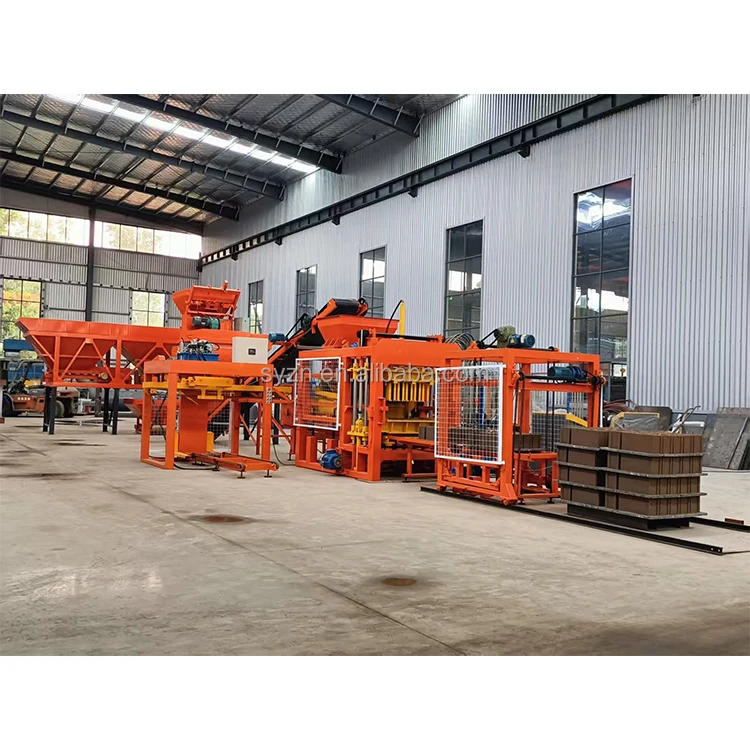
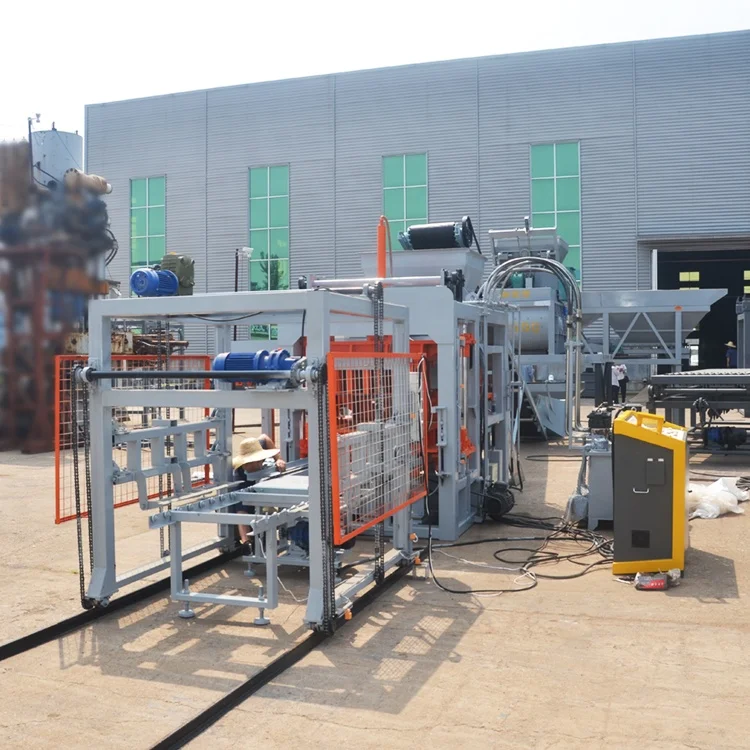
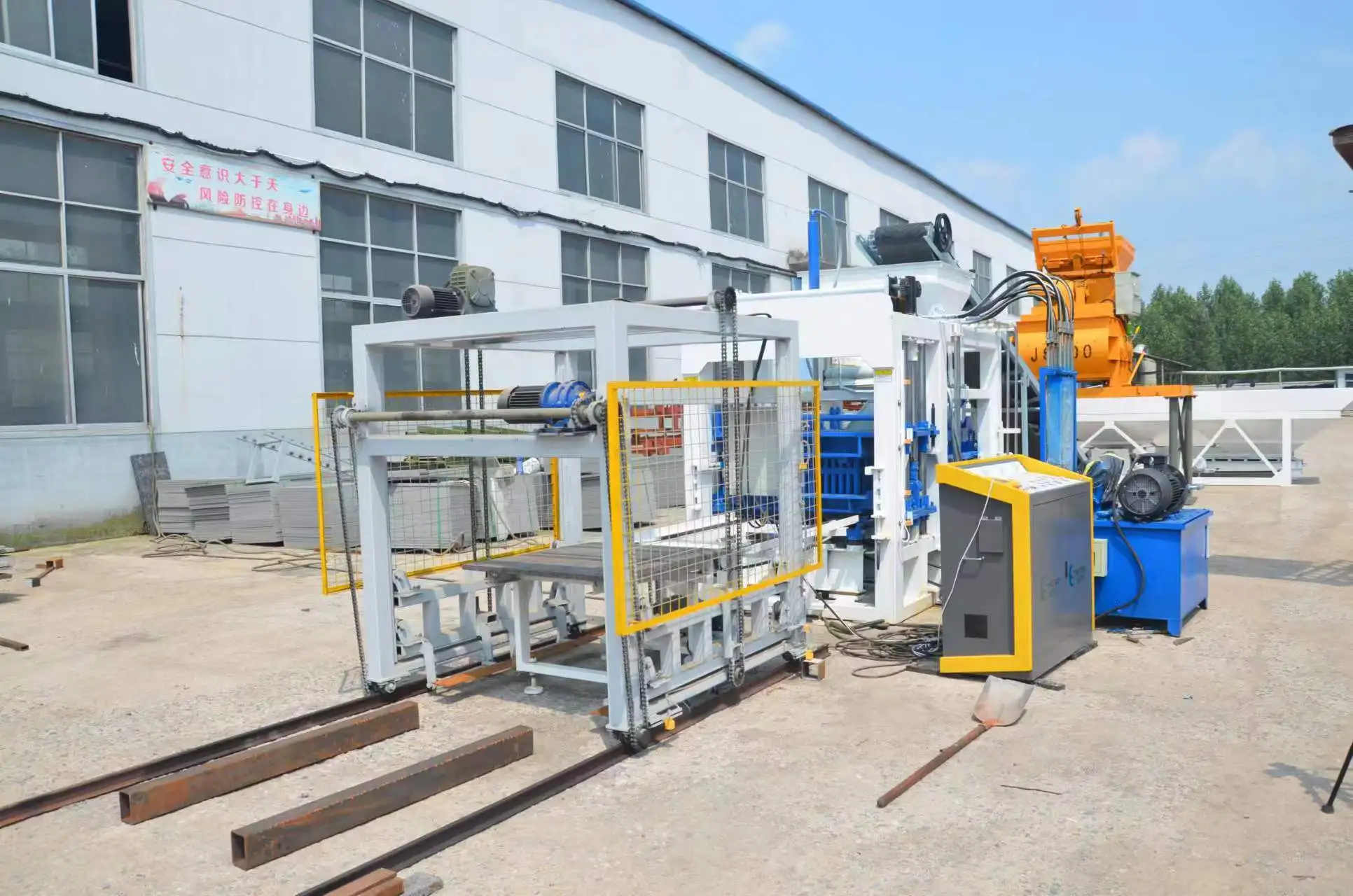
Having a QT6-15 block machine in stock is the starting point. The batching machine, mixer, pallet stacker, hydraulic station, and mould set all need to be matched and staged together before dispatch. A press sitting alone in a warehouse does not help a contractor who needs a complete line producing hollow blocks within days of arrival.
Our stock includes the PLD1200 batching unit, JS500 mixer, and SY-4 stacker configured as a matched set with the host machine. This means container loading plans are pre-drawn and dismantling points are marked before you place the order, cutting the gap between inquiry and dispatch.
How Container Loading and Dispatch Timing Work
Every QT6-15 block machine in stock is dismantled at predefined joints so it fits standard flat-rack or open-top containers without cutting structural welds. The host frame, hydraulic station, and mould are secured separately to prevent transit damage [NEED_CITE: container loading standards for heavy industrial machinery].
Dispatch lead time is quoted from inquiry, not from some unspecified future date. You receive a departure estimate and an arrival window based on the destination port, so your ground crew and forklift are ready when the container clears customs.
Reading the Specs That Matter on Arrival Day
The vibration force of 55 kN combined with hydraulic pressure determines how densely the concrete is compacted into the mould. Higher density means stronger blocks, but only if the mix design matches — a dry mix that works with 55 kN may fail under a weaker press, and a wet mix will produce fragile blocks regardless of vibration frequency.
The pallet size of 1100 × 550 × 25 mm must match the curing racks and forklift tines already on your site. Ordering a machine with incompatible pallets means buying new racking or manually transferring every wet block, which defeats the purpose of automatic stacking.
The Siemens PLC with an independently developed program controls cycle timing, batching sequences, and fault diagnostics. Confirming the display language before shipment avoids the situation where an operator cannot read an error code during first-week commissioning.
The mould heat treatment at 54–58 HRC with carburizing gives a lifespan exceeding 100,000 cycles. This matters because a worn mould produces blocks with inconsistent dimensions, and replacing it mid-project halts the entire line.
The Cost of Skipping Pre-Shipment Verification
I once saw a QT6-15 shipped to the Middle East where the local sand had high clay content. The buyer had planned construction schedules around sample output, but actual production fell to roughly half because the mix was never tested with that specific aggregate. The site crew was waiting for blocks to lay, and the contractor faced penalty claims.
When a machine leaves without a material trial run, the buyer absorbs the cost of discovering incompatibilities on their own time, with their own crew standing idle [NEED_CITE: aggregate testing requirements for concrete block production]. That is why each dispatch now carries test-run parameters matched to the buyer’s stated material.
Why Buyers Source This Line Here
Block machinery is the single focus of this operation, which means the press, mould, pallet, and handling equipment are specified as one system rather than assembled from unrelated suppliers. You get a line that works together, not a collection of machines that happen to sit next to each other.
Voltage, frequency, and PLC display language are confirmed before production or dispatch — not discovered on arrival. The warehouse holds stocked models and standard moulds, and dispatch timing is quoted upfront with container loading details.
Installation and commissioning support includes operator training so your crew can run the line from the first week. Mould and wear parts support continues after the warranty period, meaning you are not searching for replacement hydraulic seals six months into production.
Documentation & Verification
- Line layout with capacity calculation stating the block format assumed
- Machine specification sheet with confirmed voltage and frequency
- Mould drawing and format list matched to your market requirements
- Factory test record on your material mix before dispatch
- Packing photographs showing dismantling and securing points
- Customs documentation support for destination country clearance
Installation, Commissioning & Support
- Workshop area of 200 m² minimum with level concrete foundation for the 5870 mm host frame
- Dedicated 380/415V three-phase circuit sized for the 31.5 kW host plus mixer and batching motors
- Machine dismantled at marked joints for container transit and reassembled on-site per loading plan
- PLC parameter set and cycle timing adjusted during commissioning using your local aggregate
- Operator training on mould change, batching adjustment, and fault code reading
- Wear parts and mould list provided with first shipment for planned replacement scheduling
Before You Send the Inquiry
To get an accurate stock confirmation and dispatch timeline, share the block format you produce most, the daily volume your site requires, and the voltage and frequency standard at your destination. If you already have curing racks and a forklift, tell us the pallet dimensions they accept. This lets us confirm which stocked configuration fits your line without a back-and-forth exchange.
Frequently Asked Questions
Q: Which QT6-15 configurations are currently in stock and what moulds are included?
A: Stocked units include the host machine with PLD1200 batcher, JS500 mixer, and SY-4 stacker as a complete line. Standard moulds for hollow blocks and paving bricks are typically held in inventory. Custom mould formats are produced to your drawings with a separate lead time quoted at inquiry. Confirm your target block dimensions to verify immediate availability.
Q: What is the lead time from order to dispatch, and how is the machine loaded?
A: Dispatch timing depends on current stock levels and your confirmation of voltage and control language. Stocked machines with standard moulds can typically be prepared within a short window after specification sign-off. The machine is dismantled at predefined points and secured in containers with a loading plan provided before departure.
Q: How long does on-site installation and commissioning take?
A: Commissioning duration depends on site readiness — a prepared foundation with correct power supply allows the line to be reassembled and tested efficiently. Our team supports installation, parameter adjustment with your local material, and operator training. Delays usually come from unresolved voltage or foundation issues, not from the machine itself.
Q: Can voltage and frequency be customized for my country before shipment?
A: Yes. Voltage options include 220V, 380V, 415V, and 440V, configured to match your destination standard. Frequency and PLC display language are confirmed during the order process so the control panel is readable and the motors are correctly wound before the machine leaves the factory.
Q: Are spare parts included with the first shipment, and how are replacements supplied afterward?
A: A wear parts and mould list is provided with each shipment, and initial spares can be included based on your agreement. Replacement hydraulic seals, travel switches, and mould components are supplied on request. We recommend ordering critical spares with the machine to avoid downtime while waiting for international shipping.