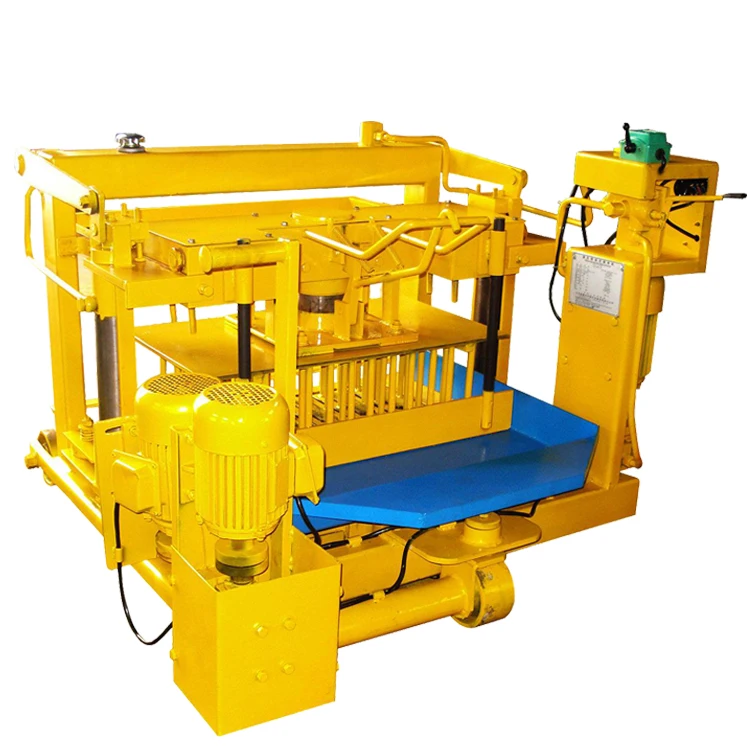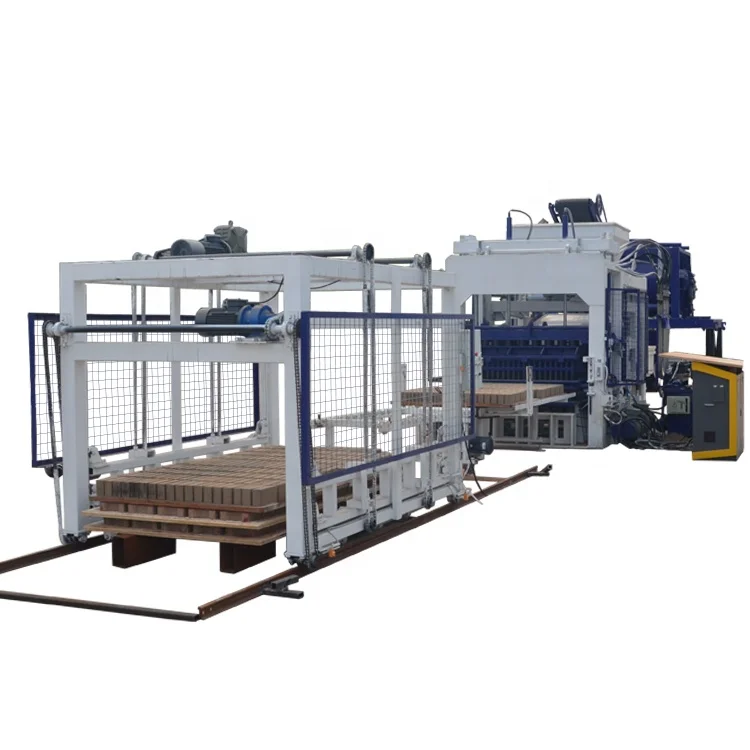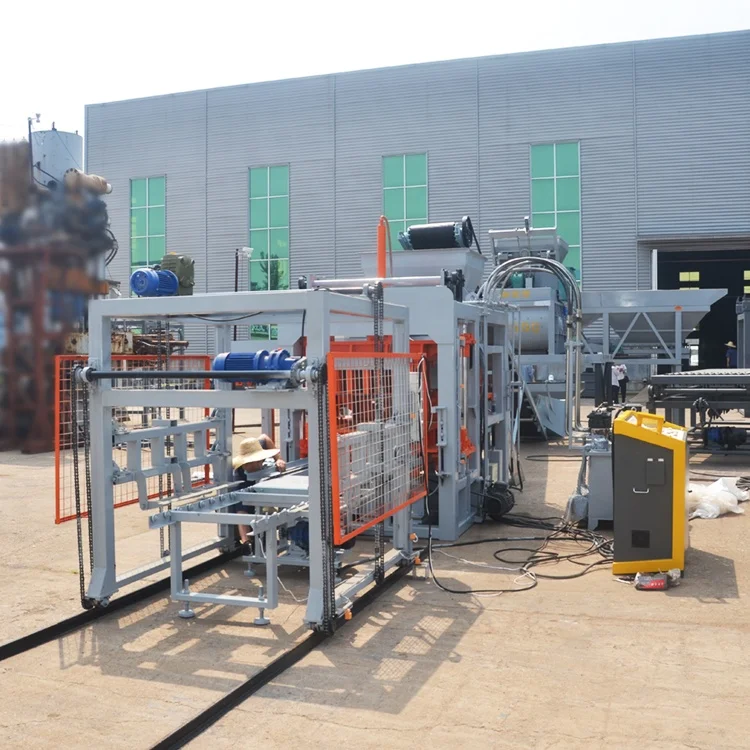
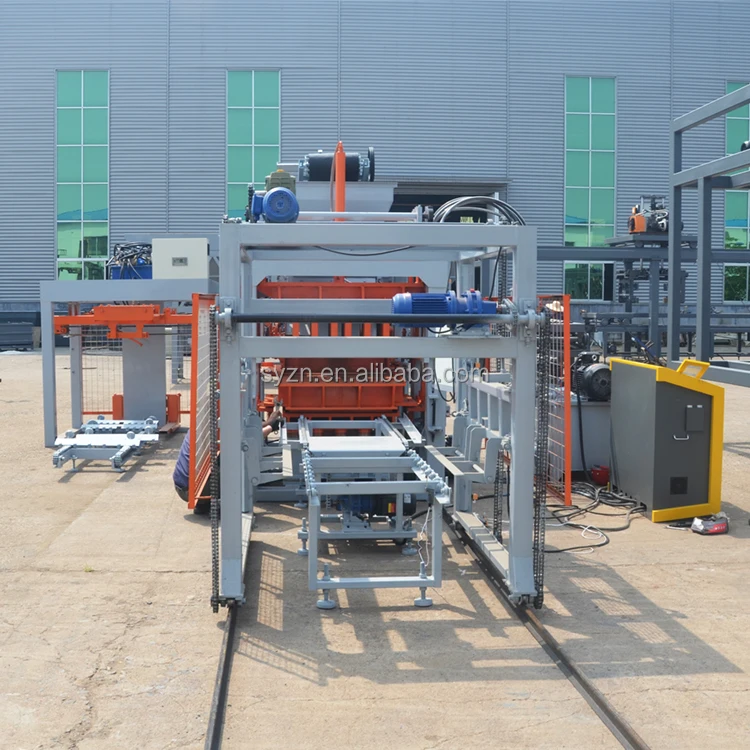

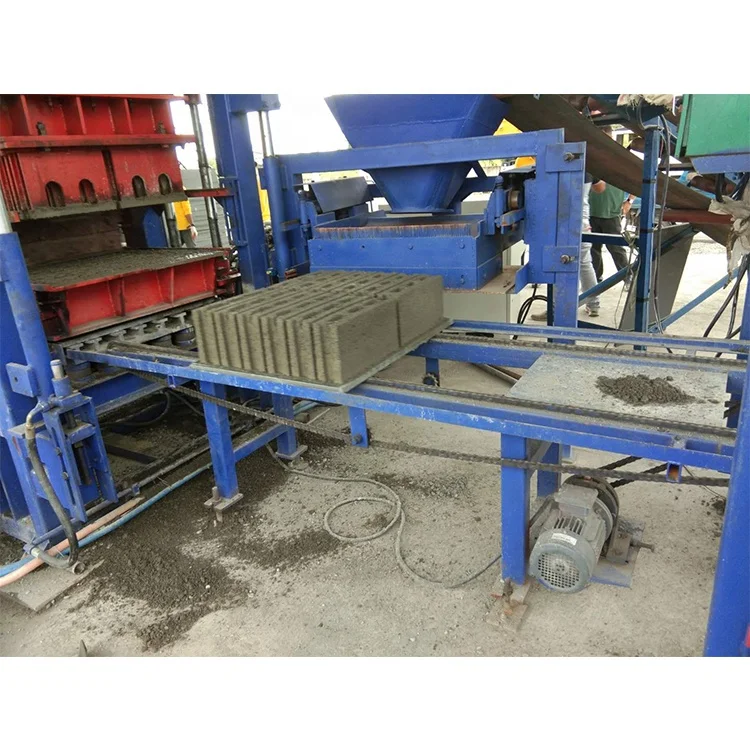

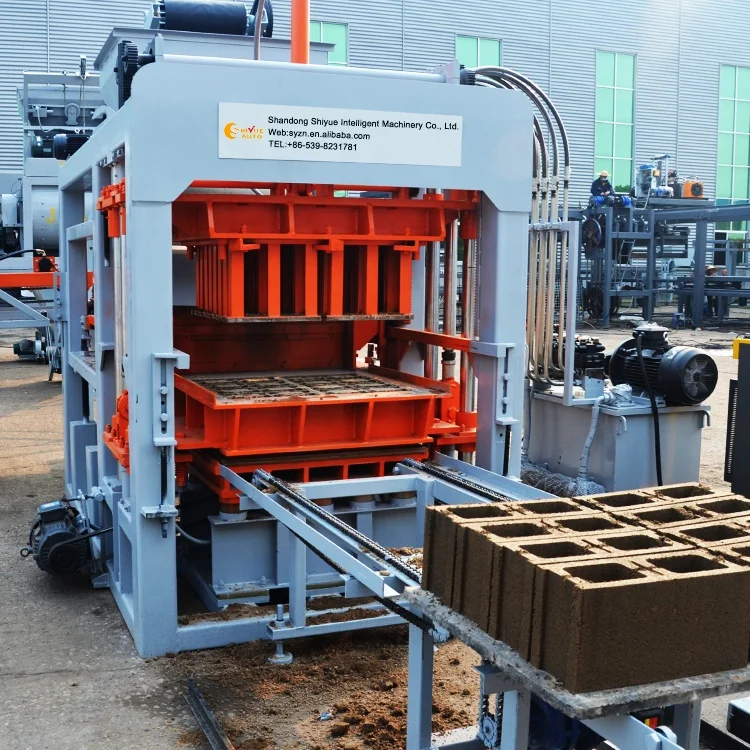
Description
Stocked Configuration — the QT6-15 ships with confirmed pallet size, mould format and container loading plan so dispatch is measured in days, not months.
Technical Specifications
| Parameter | Value |
|---|---|
| Model | QT6-15 |
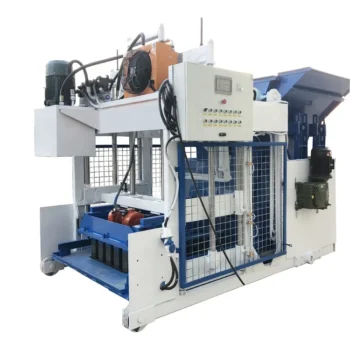
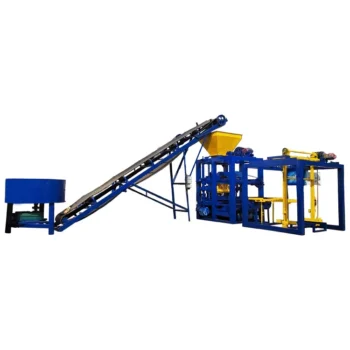
| Product Type | Hollow Block Making Machine |
| Overall Dimensions (L×W×H) | 8200×1700×2950 mm |
| Pallet Size | 880×850 mm |
| Vibration Frequency | 0-60 Hz |
| Vibration Form | Platform Vibration |
| Vibration Force | 45 kN |
| Moulding Mode | Load automatically, vibration moulding |
| Molding Cycle | 15-20 s (basis not stated in source — confirm block format / material / thickness) |
| Demolding Method | Hydraulic |
| Hydraulic System | Independent integrated station, isolated from dust and vibration |
| Overall Power | 37 kW |
| Total Mass | 7 T |
| Factory Area | 1200 m² |
| Control System | PLC with touch screen and fault diagnosis |
| Automation Level | High degree of automation, intelligent electronic control |
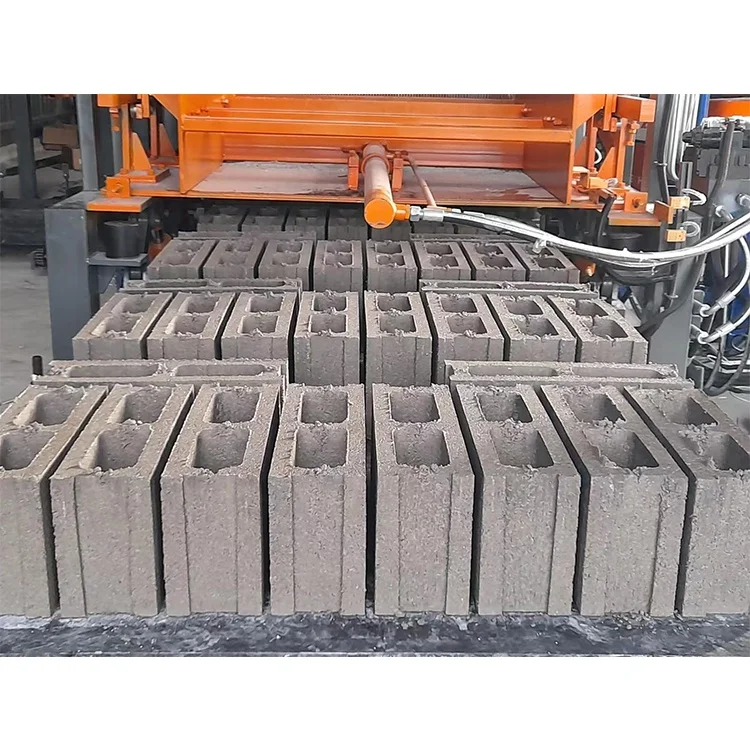
| Output: Hollow Block 400×200×200 mm | 8640-11520 pcs/8hr (based on 6 pcs/mould, 15-20s cycle) |
| Output: Hollow Block 400×150×200 mm | 11520-15360 pcs/8hr (based on 8 pcs/mould, 15-20s cycle) |
| Output: Solid Brick 240×115×53 mm | 46080-61440 pcs/8hr (based on 32 pcs/mould, 15-20s cycle) |
| Output: Rectangular Brick 200×100×60 mm | 17280-23040 pcs/8hr (based on 21 pcs/mould, 20-25s cycle) |
| Output: Zigzag Brick 225×112.5×60 mm | 17280-23040 pcs/8hr (based on 15 pcs/mould, 20-25s cycle) |
| Compressive Strength of Blocks | More than 15 MPa |
| Warranty | 1 year for whole machine (excluding spare parts) |
Application Suitability
| Application | Material or Output |
|---|---|
| Hollow block production for building construction | Cement, crushed stone, sand, and waste ash mixes |
| Solid brick production for masonry walls | Cement-reduced bearing and non-bearing block mixes |
| Paving brick and interlocking brick for roads | Slag, fly ash, and aggregate blends |
| Multi-cellular brick production | Lightweight aggregate with cement binder |
| Projects using industrial by-products | Waste ash and slag as primary raw material |
What "In Stock" Actually Means for Your Project Deadline
A stocked QT6-15 hollow block machine in stock fast delivery only matters if voltage, frequency, and control language are already confirmed before it leaves the factory.
I spent years coordinating dispatch from the assembly floor here in Linyi, and the most painful delays never come from the machine itself. They come from a control cabinet wired for 380V/50Hz arriving at a site running 440V/60Hz, or a PLC touch screen displaying menus in a language the operator cannot read. One buyer signed a contract for a QT6-15 only to discover the voltage mismatch after production had started, adding weeks of electrical rework before the machine could even be tested [NEED_CITE: voltage and frequency standards by export market]. When a buyer says they need a QT6-15 hollow block machine in stock fast delivery, the first question I ask is not about the mould — it is about the grid.
Dispatch Timing and What Leaves the Factory Together
The QT6-15 hollow block machine in stock fast delivery is assembled as a complete press unit with its hydraulic station, PLC cabinet, and standard mould set packed in the same container. Standard moulds for hollow blocks and solid bricks ship alongside the machine, so there is no separate lead time waiting for tooling to arrive on a later vessel. Pallets are bundled and strapped to the machine frame to prevent shifting during transit. This is the difference between a machine that can be commissioned the week it clears customs and one that sits in a yard waiting for a second shipment.
Container Loading and Dismantling for Transit
The QT6-15 breaks down into sections that fit standard container dimensions without cutting or welding on site. The main frame, hydraulic station, and control cabinet each load as separate units, and the 880×850 mm pallets stack flat against the container wall. Knowing the dismantling arrangement before the machine ships means the buyer can arrange the correct crane capacity and forklift rating at the destination port [NEED_CITE: container loading standards for heavy industrial machinery]. Nothing stalls a project faster than a machine arriving at a port where the local equipment cannot lift it off the truck.
Reading the Specs That Actually Matter on Site
The vibration force of 45 kN combined with platform vibration across the 880×850 mm pallet area determines how densely the mix is compacted before the hydraulic demolding head releases the block. A higher vibration frequency range from 0 to 60 Hz allows the operator to adjust compaction for different mix designs — a fly ash blend responds differently than a crushed stone aggregate. The independent hydraulic station sits isolated from the main press vibration and dust, which keeps valve response consistent over long production runs rather than degrading after the first few weeks. The PLC touch screen with built-in fault diagnosis lets the operator trace electrical or hydraulic faults without waiting for a service call, reducing downtime from hours to minutes on common issues.
The Cost of Skipping Pre-Shipment Verification
When voltage and frequency are not confirmed before the QT6-15 leaves the factory, the electrical cabinet must be partially rewired on site, and the PLC may need a new power supply module sourced locally. This turns a commissioning visit into an electrical project, pushing the production start date back while the project deadline does not move. I have watched containers clear customs only for the machine to sit idle because the local grid specification was never cross-checked against the factory wiring diagram [NEED_CITE: common causes of commissioning delays in exported block machinery]. The cost is not the rewiring itself — it is the weeks of lost output while the site crew waits.
Why Buyers Working to a Deadline Source Here
Block machinery is the single production focus, so the QT6-15 press, moulds, pallets, and hydraulic station leave the factory as a matched set rather than components assembled from separate vendors. Dispatch lead time is quoted against actual stock position, not a catalogue promise, so the buyer can plan container booking around a real date. Standard moulds for the formats the buyer’s market actually sells ship with the machine, eliminating a second procurement cycle. Voltage, frequency, and PLC display language are confirmed against the buyer’s site conditions before the electrical cabinet is sealed, not after it arrives. Packing photographs and customs documentation are prepared at the factory so the buyer’s clearing agent has what they need before the vessel docks.
Documentation & Verification
- Factory test record showing QT6-15 cycle time on your specified block format before dispatch
- Voltage and frequency confirmation sheet signed against your local grid specification
- Container loading plan with dismantling arrangement and lifting point diagram
- Packing photographs of QT6-15 sections and mould sets before container sealing
- Customs documentation package prepared for your destination port clearance requirements
Installation, Commissioning & Support
- Foundation must support 7 T total mass across the 8200×1700 mm footprint with level tolerance for platform vibration accuracy
- Dedicated power circuit rated for 37 kW overall draw at your confirmed voltage and frequency
- Machine sections reassemble on site using factory-marked connection points without cutting or welding
- PLC touch screen calibrated to your block format and moulding cycle during first commissioning run
- Operator training covers mould change procedure, fault diagnosis navigation, and hydraulic station maintenance intervals
- Wear parts list provided with QT6-15 hydraulic seals and vibration motor bearings identified for local sourcing
What to Include in Your Inquiry
Tell me which block formats your market actually sells and the daily volume you need to hit, so I can match the mould set and confirm cycle times against your target. Include your site voltage, frequency, and the language your operators read, so the QT6-15 hollow block machine in stock fast delivery leaves here wired and configured for your grid. If you already have pallets or a curing rack system, share the dimensions so the 880×850 mm pallet size is verified against your existing handling equipment before we book the container.
Frequently Asked Questions
Q: Which QT6-15 units and standard moulds are currently available for dispatch?
A: The QT6-15 is held as a stocked standard model with moulds for common hollow block and solid brick formats ready to ship alongside the press. Availability is confirmed against the current production schedule at the time of inquiry, so dispatch dates are based on actual stock position rather than estimated build slots.
Q: What is the dispatch lead time and estimated arrival at my port?
A: Dispatch lead time for a stocked QT6-15 hollow block machine in stock fast delivery depends on pre-shipment verification steps including voltage confirmation and customs documentation preparation. Container booking and transit time vary by destination, and an arrival estimate is quoted once the vessel schedule is confirmed.
Q: How is the machine loaded and what equipment is needed at destination?
A: The QT6-15 is dismantled into frame, hydraulic station, and control cabinet sections that fit standard containers. A container loading plan with lifting points is provided before shipment so the buyer can arrange the correct crane or forklift capacity at the destination port for unloading and positioning.
Q: Can voltage, frequency, and PLC language be set before shipment?
A: Yes. Voltage, frequency, and PLC touch screen display language are confirmed against the buyer’s site conditions before the electrical cabinet is sealed at the factory. This step prevents the QT6-15 from arriving with a control system that requires on-site electrical reconfiguration before commissioning can begin.
Q: What customs and import documentation ships with the machine?
A: A documentation package including factory test records, packing photographs, and customs forms is prepared before the QT6-15 leaves the factory. These documents are provided to the buyer’s clearing agent in advance so import formalities can proceed without waiting for the vessel to arrive.