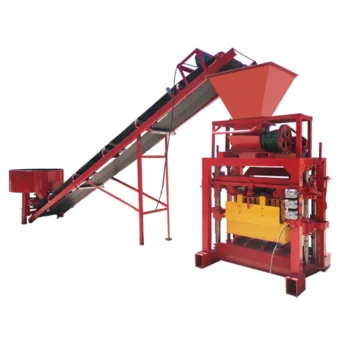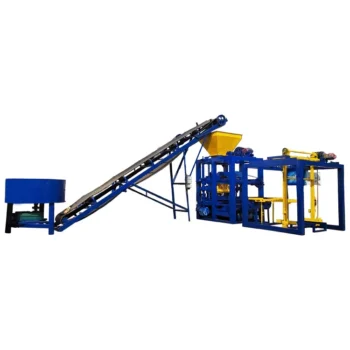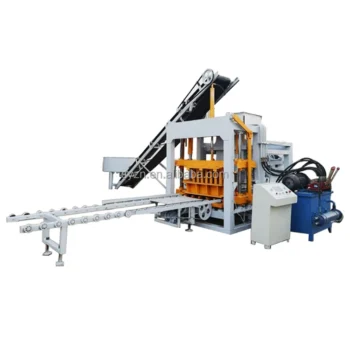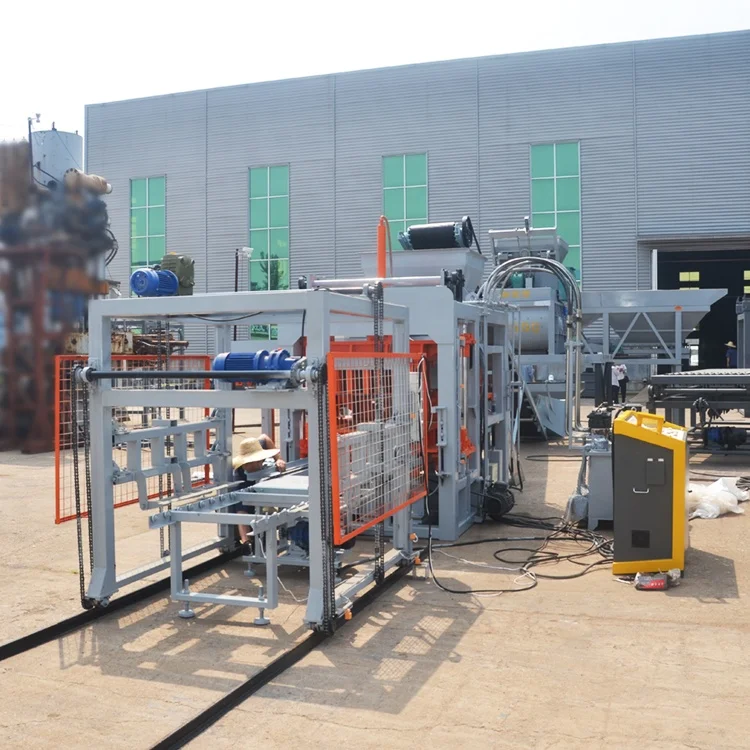
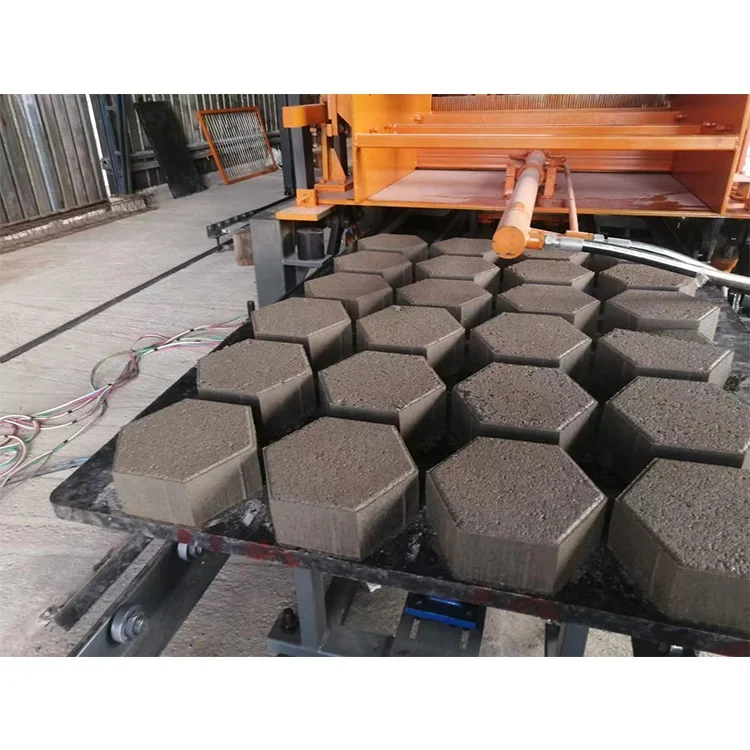
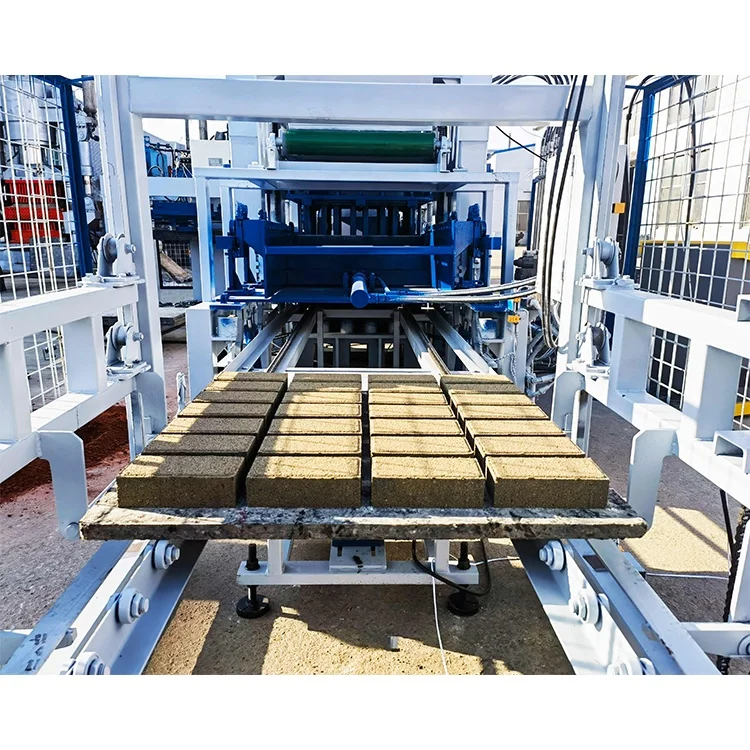
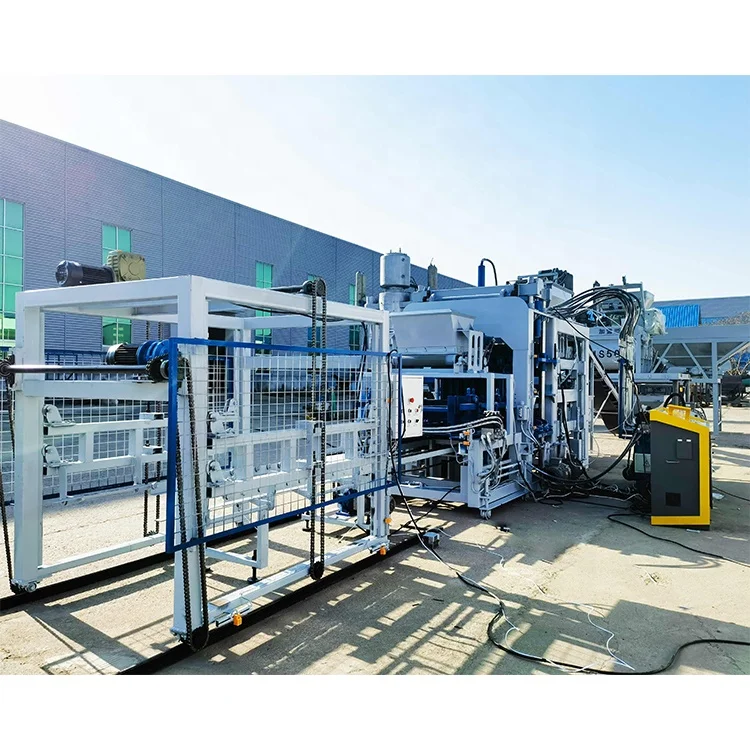
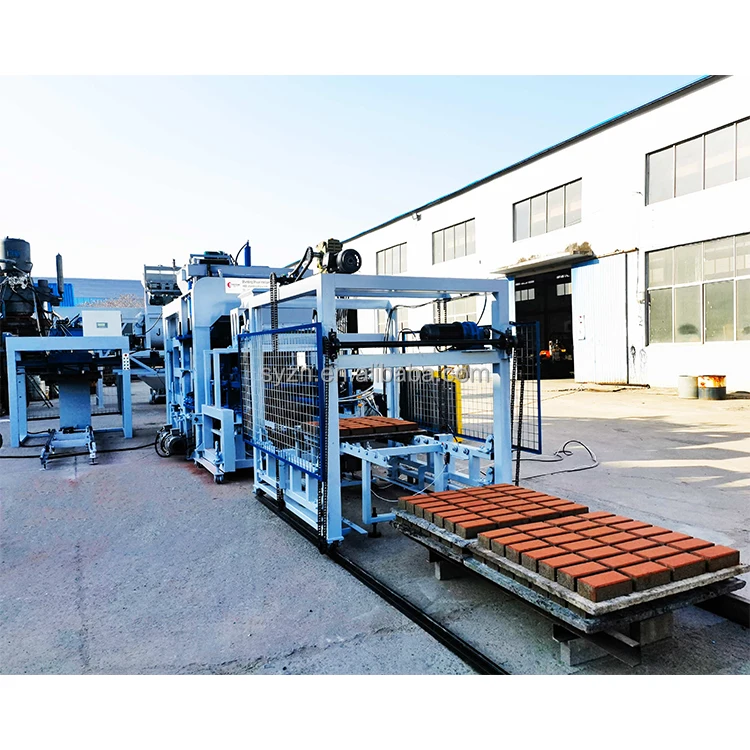
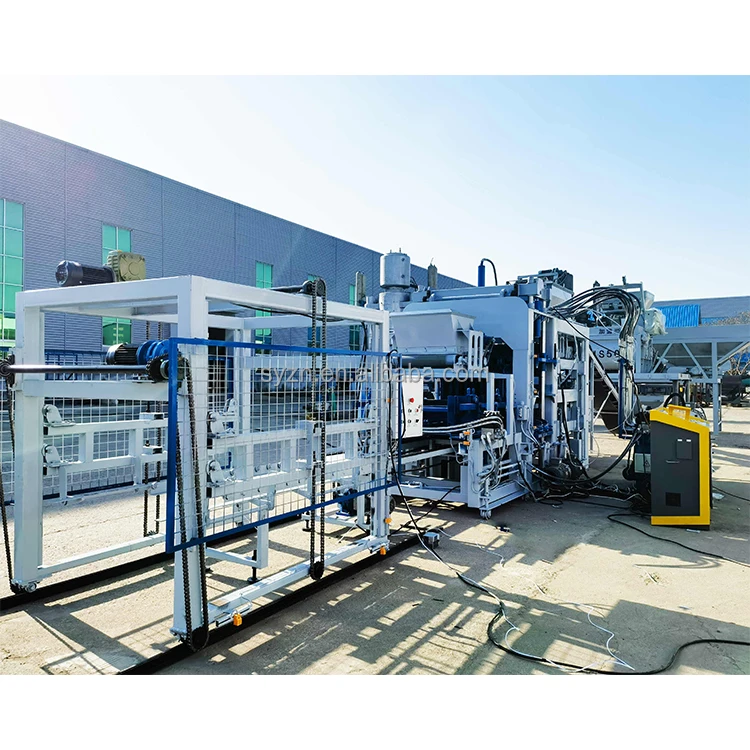
Description
Stock Dispatch Reliability — every QT8-15 hydraulic block machine in stock is verified against your site conditions and container loading plan before it leaves the workshop, not after it arrives.
Technical Specifications
| Parameter | Value |
|---|---|
| Model | QT8-15 |
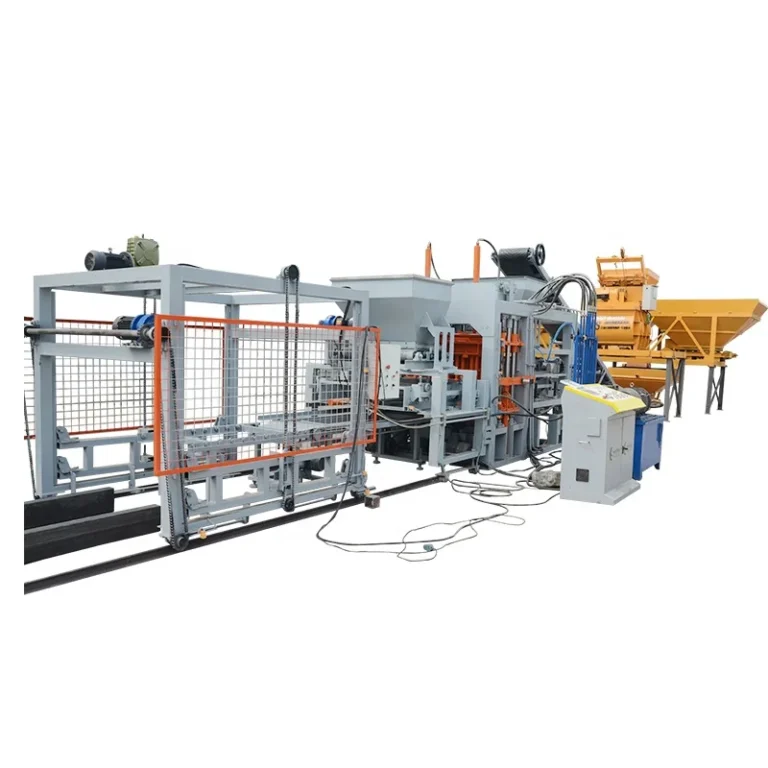
| Product Type | Hydraulic Concrete Block Making Machine |
| Overall Dimensions (L×W×H) | 8300 × 1860 × 3000 mm |
| Total Mass | 8 T |
| Rated Pressure | 21 MPa |
| Main Vibration Form | Platform Vibration |
| Vibration Frequency | 2800–4500 r/min |
| Vibration Force | 45 kN |
| Pallet Size | 950 × 900 mm |
| Molding Cycle | 15–20 s (basis not stated in source — confirm block format and material) |
| Overall Power | 55.5 kW |
| Demolding Method | Hydraulic |
| Factory Area Required | 300 m² |
| Voltage & Frequency | Configurable (confirm with destination grid) |
| Control System | PLC (language configurable before dispatch) |
| Automation Level | Selectable from semi-automatic to fully automatic |
| Stacking Method | Manual pallet handling through automatic stacking and cubing |
Application Suitability
| Application | Material or Output |
|---|---|
| Hollow block production on-site before a project milestone | Crushed stone, sand, cement, fly ash |
| Solid block manufacturing for housing developments | Gravel, slag, dust, cement |
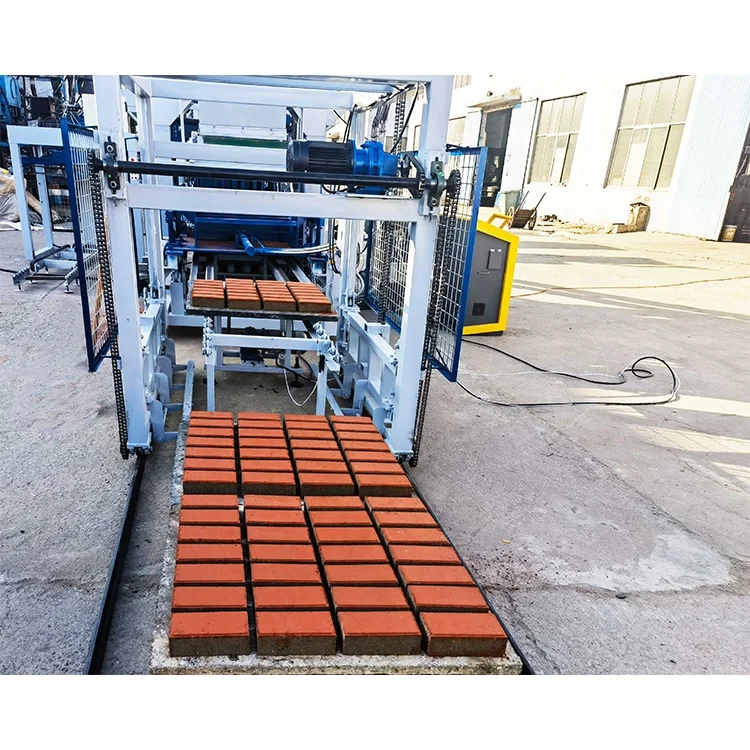
| Paving block and colored paver runs for municipal contractors | Fine aggregate blends with cement and pigment |
| Interlocking block and curbstone production for infrastructure | Coarse aggregate with controlled moisture content |
| Replacement line for a failed machine with minimal downtime | Any locally available aggregate matching buyer mix design |
Why "15-Second Cycle Time" Means Nothing Without the Block Format
A 15–20 second molding cycle only applies when the format, material, and thickness are confirmed.
The QT8-15 block machine in stock is often quoted with a fast cycle figure, but that number assumes a specific block size and mix. A hollow block with thick walls needs more vibration time and higher hydraulic dwell than a thin paving block. Buyers who commit based on the shortest cycle in the table regularly find their actual output falls well below what they planned for, and the whole project schedule shifts. [NEED_CITE: block molding cycle variables across formats and mix designs]
Dispatch Preparation for the QT8-15 Block Machine in Stock
When a QT8-15 block machine in stock ships, it leaves only after a full real-material test run on the workshop floor. The 21 MPa rated pressure and 45 kN vibration force are dialed in against the buyer’s local aggregate sample, not a default setting. Hydraulic demolding is checked repeatedly so the machine arrives ready for immediate commissioning rather than requiring days of on-site troubleshooting.
Container Loading Plan and Arrival Timeline
The QT8-15 hydraulic block machine fits a 40HQ container once dismantled according to a documented loading plan. The 8300 × 1860 × 3000 mm overall dimensions mean the frame, vibration platform, and hydraulic unit must be separated and secured with photographs taken at every stage. Buyers on a fixed construction schedule receive the packing list and container loading photographs before the container doors close, so there are no surprises at destination port. Estimated arrival time is quoted upfront based on the shipping route. [NEED_CITE: typical ocean freight transit times from Qingdao to major global ports]
How Pressure, Vibration, and Pallet Size Shape Every Block
The 21 MPa rated pressure works together with the 45 kN vibration force to compact the mix into a dense, uniform block. Platform vibration at 2800–4500 r/min ensures the aggregate settles evenly throughout the mold cavity, which is critical when using fly ash or slag that can bridge and leave voids. If the vibration frequency is set too low for a fine material, the block surface comes out rough and strength drops. The 950 × 900 mm pallet size must match the curing racks and forklifts the buyer already has on site — a mismatch here means buying new racking or handling equipment that was never budgeted. The 55.5 kW overall power draw requires a dedicated circuit sized to handle the peak load during simultaneous vibration and hydraulic press cycles, so the electrical plan should be confirmed before the machine ships.
What Happens When Voltage and Pallet Specs Are Confirmed Too Late
Buyers who skip the voltage and control language confirmation before dispatch regularly face weeks of delay while a local electrician re-wires the cabinet or a new HMI screen is sourced in-country. A machine that arrived ready to run sits idle, the construction crew waits for blocks, and liquidated damages clauses start ticking. [NEED_CITE: electrical standard mismatches causing commissioning delays in industrial machinery imports] Pallet size is another quiet problem — if the 950 × 900 mm pallet does not match the curing area or the forklift tine spacing, output piles up on the factory floor with nowhere to go, and the whole line bottlenecks at the press.
Why Buyers Source This Machine Here
Block machinery is the single production focus, so the QT8-15 block machine in stock ships as one matched system — press, mold, pallet, and handling equipment specified together rather than assembled from separate suppliers. The machine configuration is set against the buyer’s actual mix design and local aggregate, not a catalog default. Molds for the formats the buyer’s market actually sells are designed and supplied in-house, including custom drawings. Automation level is selectable, so a buyer can start with semi-automatic pallet handling and upgrade to full stacking and cubing later. Factory test records on the buyer’s material are provided before dispatch, and installation support with operator training follows arrival.
Documentation & Verification
- Factory test record on your specific block format and aggregate before dispatch
- Container loading photographs and packing list sent before container doors close
- Voltage, frequency, and PLC display language confirmation sheet signed off pre-shipment
- Hydraulic and electrical schematic matching the as-built machine configuration
- Wear parts and mold list with part numbers for first replacement order
- Customs documentation support for smooth port clearance at destination
Installation, Commissioning & Support
- Foundation plan sized to the 8 T total mass and vibration load of the QT8-15
- Dedicated electrical circuit confirmed for the 55.5 kW peak load before arrival
- Dismantling and re-assembly sequence documented with photographs for the 40HQ container load
- First-run commissioning with real-material test against buyer’s local aggregate and mix
- Operator training covering mold change, pallet handling, and daily maintenance routines
- Spare mold and hydraulic wear parts shipped with the machine to cover the first replacement cycle
What to Share Before Requesting a Quote
To move forward on the QT8-15 block machine in stock, provide the target block format and daily output requirement, the local aggregate type and any known material constraints such as high clay content, and the available workshop area including curing space. Confirm your site voltage, frequency, and preferred PLC display language so the machine leaves the factory ready to run on arrival.
Frequently Asked Questions
Q: Is the QT8-15 currently in stock and what is the dispatch lead time?
A: The QT8-15 block machine in stock is available for fast dispatch. Exact lead time depends on the configuration you confirm — pallet size, automation level, and mold selection. Once these are locked in, the machine undergoes a factory test on your material before loading. Dispatch timing is quoted at the order stage so you can plan your project schedule with certainty.
Q: How is the machine dismantled and loaded into a 40HQ container?
A: The 8300 × 1860 × 3000 mm frame is separated into major assemblies — main frame, vibration platform, hydraulic unit, and mold — then secured with steel bracing inside the container. Photographs are taken at each loading stage and shared with the buyer. The packing list details every component so re-assembly on site follows a clear sequence without guesswork.
Q: What is the estimated arrival time from dispatch to destination port?
A: Arrival time depends on the shipping route from the port of loading to your destination. Typical ocean freight transit ranges are quoted upfront when the order is placed. The dispatch date is confirmed after factory testing, so the total timeline from order to port arrival is transparent and can be matched against your construction milestone.
Q: Are voltage and PLC language confirmed before shipment to avoid on-site delays?
A: Yes. Voltage, frequency, and PLC display language are confirmed and documented before the machine leaves the factory. This prevents the common situation where a machine arrives with the wrong electrical configuration or an unreadable control screen, which can delay commissioning by weeks while local modifications are arranged.
Q: What spare parts and molds ship together with the machine?
A: Each shipment includes a wear parts list and a mold selected for your target block format. Hydraulic seals, vibration springs, and other high-wear components for the first replacement cycle are packed alongside the machine. Additional molds for other block formats can be included in the same container if your market requires multiple product lines from day one.