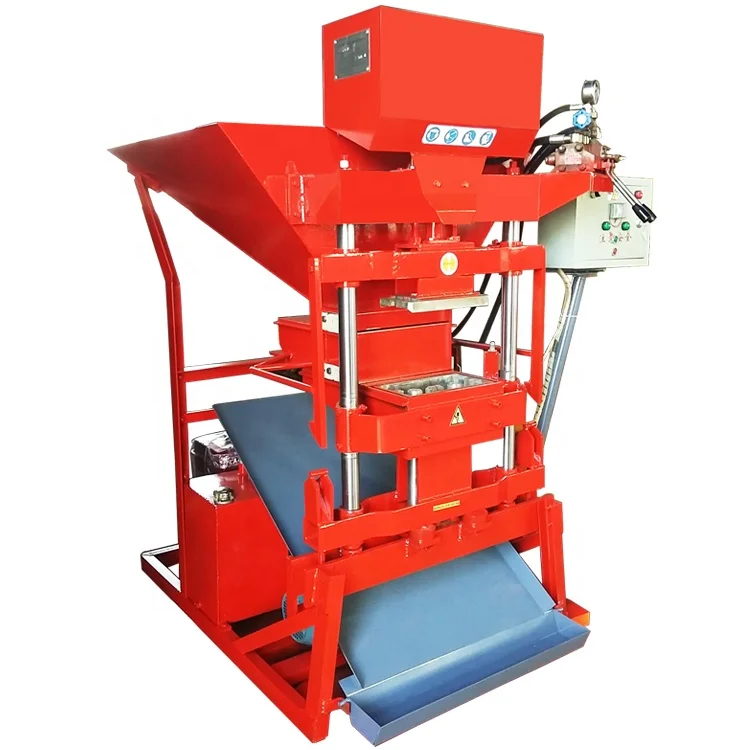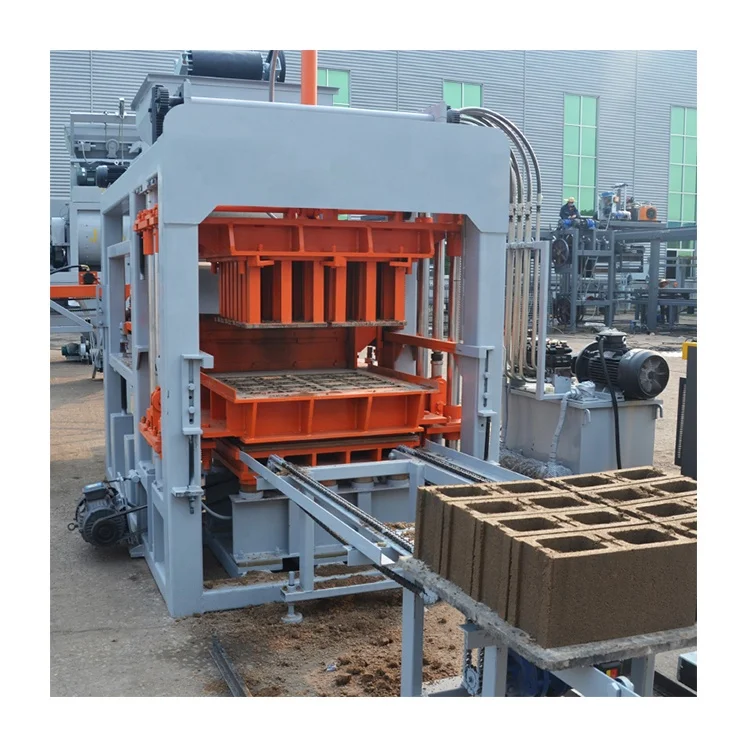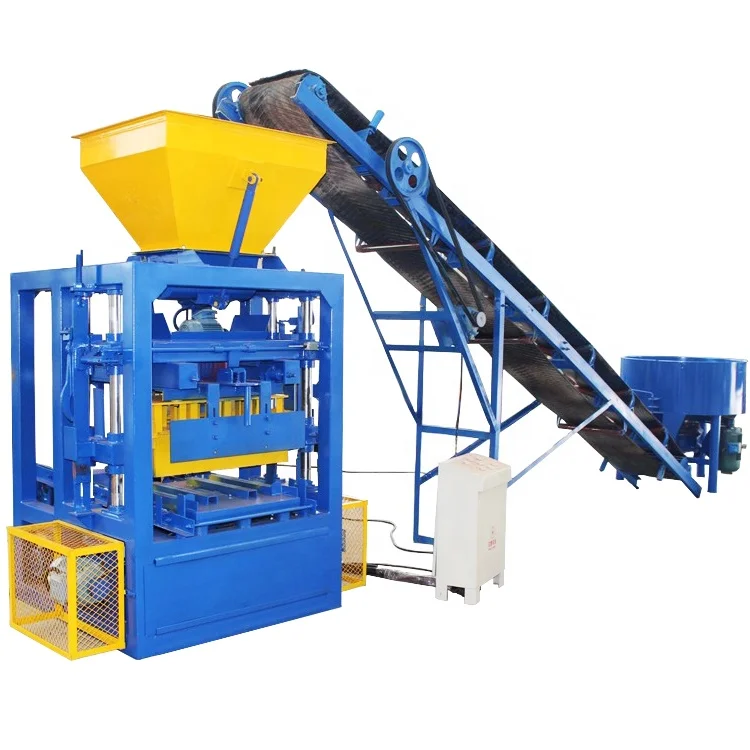
Description
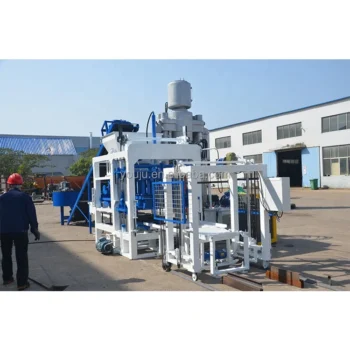
Fast dispatch readiness — The QTJ4-24 block machine in stock ships with voltage confirmed per buyer site before container loading, preventing the three-week motor swap delays that idle crews on arrival.
Technical Specifications
| Parameter | Value |
|---|---|
| Product Type | Semi-Automatic Concrete Block Making Machine |
| Model | QTJ4-24 |
| Overall Dimensions (L×W×H) | 2060×1730×2580 mm |
| Main Vibration Form | Platform vibration |
| Vibration Frequency | 4200 r/min |
| Vibration Force (Exciting Power) | 35.5 kN |
| Rated Pressure | 15 MPa |
| Pallet Size | 880×480×38 mm |
| Molding Cycle | 26 s |
| Total Power | 14.25 kW |
| Control System | Electro-mechanical integration |
| Voltage & Frequency | 380V, 3-phase, 50Hz (customizable to local voltage) |
| Mould Format | Exchangeable moulds (hollow block, interlocking paver, solid block) |
| Automation Level | Semi-automatic |
| Motor Technology | Frequency converting control |
| Vibration System | Dynamic table and static vibrating table structure |
| Warranty | 1 year (excluding wearing parts) |
Application Suitability
| Application | Material or Output |
|---|---|
| Small-scale block and paver production plants | Crushed stone, sand, cement, and fly ash mixes |
| Home business / entrepreneur first block plant setup | Standard hollow blocks and solid bricks for local sale |
| On-site block production for construction contractors | Interlocking pavers and kerbstones for housing projects |
| Interlocking paver and solid block manufacturing | Pigmented concrete mixes for decorative paving formats |
Why the Voltage Question Should Come Before the Price on a QTJ4-24 Block Machine in Stock
A machine wired for the wrong grid sits idle while transformers are sourced locally.
I once watched a crew in the Middle East stand around a freshly delivered unit for three weeks because the motor was wound for 380V and the site ran on 415V three-phase. The electrician could not adapt it on the spot. Every day of that delay cost the contractor more than the machine itself [NEED_CITE: voltage and frequency standards by export market]. The QTJ4-24 block machine in stock leaves our floor only after the buyer signs off on a voltage confirmation sheet matching their exact supply.
Dispatch Timing That Matches Your Project Calendar
Buyers working to a project deadline cannot absorb an eight-week production slot. The QTJ4-24 block machine in stock is held in assembled form so that once the voltage, frequency, and mould format are confirmed, container loading follows within days rather than weeks. The arrival estimate is quoted at the time of order, not after production finishes.
Container Loading and Dismantling for Shipment
The compact footprint of 2060×1730×2580 mm means the QTJ4-24 fits into a standard container with room for additional moulds and spare pallets alongside the main press. The machine is partially dismantled for transit — vibration table secured, hopper folded, electrical panel wrapped — and packing photographs are shared before the container doors close so the buyer knows exactly what arrives at port.
Reading the Specs That Actually Matter on Site
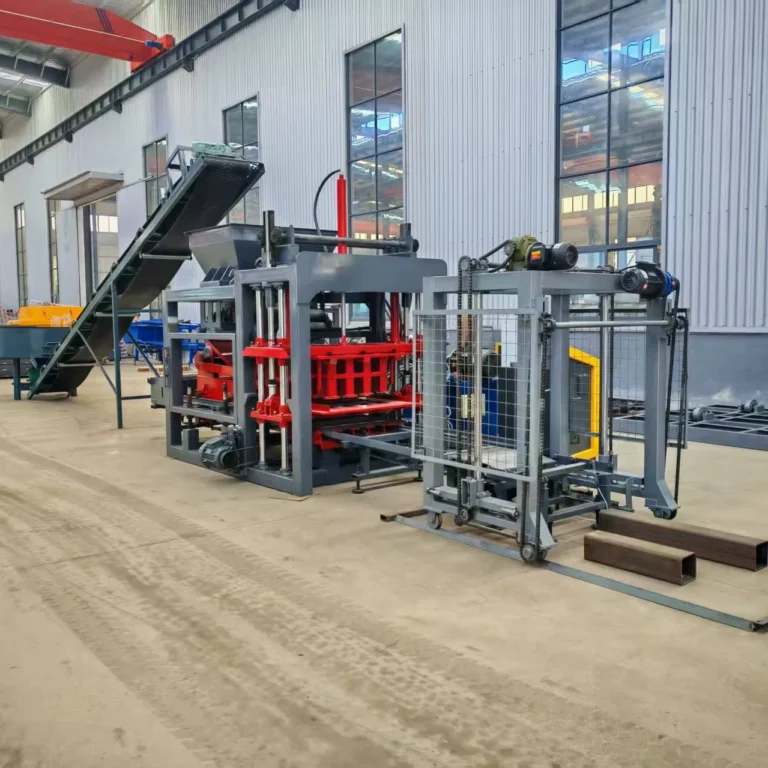
The platform vibration system pairs a dynamic table with a static vibrating table structure, running at 4200 r/min with 35.5 kN of exciting power. This dual-table arrangement compacts the mix from below while the static table stabilises the mould frame, producing consistent block density across the 880×480 mm pallet. The 15 MPa rated pressure works alongside vibration rather than replacing it — hydraulic pressure shapes the block while vibration removes air pockets. The 26-second molding cycle is driven by frequency converting motor control, which lowers inrush current during startup and reduces energy draw across a shift [NEED_CITE: frequency converting control on vibration motors]. Exchangeable moulds allow the same pallet size to produce hollow blocks, interlocking pavers, and solid blocks, but mould change time depends on the operator’s familiarity with the bolt pattern and alignment pins.
What Happens When Pallet Size Is Chosen Without Checking the Curing Yard
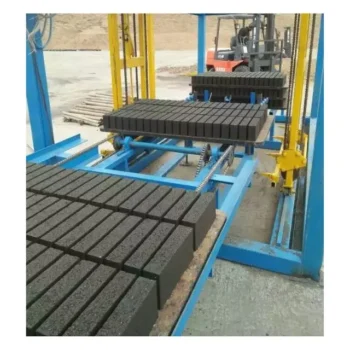
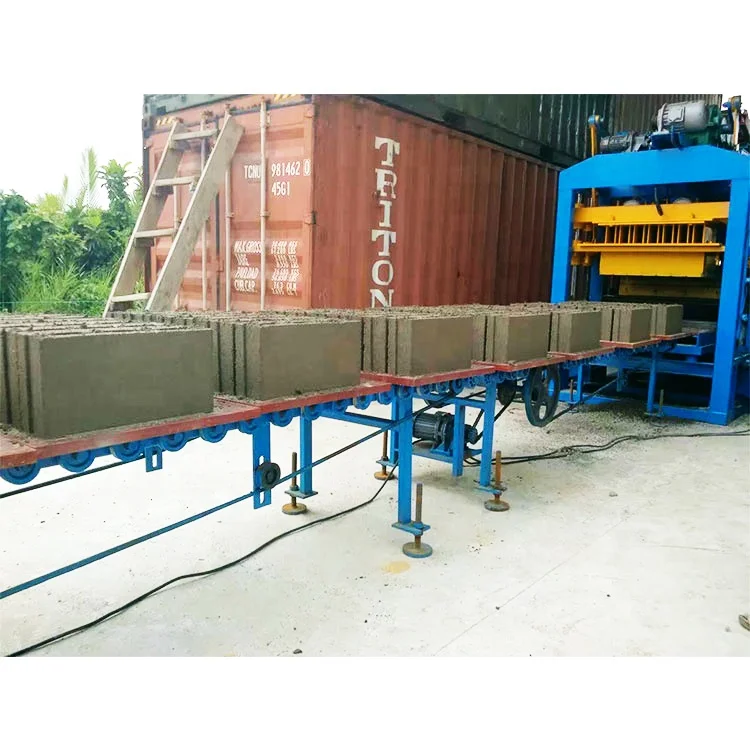
A buyer who accepts a standard pallet size without measuring their curing racks and forklift tines ends up restacking every block by hand before it enters the curing area. The 880×480×38 mm pallet on the QTJ4-24 must match the rack spacing already on site. When it does not, the entire output chain downstream of the press becomes a manual bottleneck, and the cycle time advantage disappears before the first day of production ends [NEED_CITE: pallet handling mismatches in small block plants].
Why Buyers Come Back for a Second Machine
Block machinery is our single focus, so the QTJ4-24 is specified as a matched system — press, mould, pallet, and handling — rather than assembled from separate suppliers. Configuration is set against the buyer’s actual mix design and local aggregate, not a catalogue default. Mould design covers the formats the buyer’s market actually sells, with custom drawings available. The semi-automatic level means a buyer can start here and add automation stations later. Installation support includes operator training so the crew understands mould change procedure and vibration tuning from day one.
Documentation & Verification
- Factory test record run on your specified block format before dispatch
- Voltage and control language confirmation sheet signed before shipment
- Machine specification sheet with pallet size and vibration force ratings
- Mould drawing and format list for every exchangeable mould included
- Packing photographs showing container loading and dismantling method
Installation, Commissioning & Support
- Foundation pad must support 2060×1730 mm footprint with level tolerance for vibration table stability
- Dedicated three-phase circuit matching confirmed voltage rating to prevent motor burnout on startup
- Vibration frequency tuned to your mix design during commissioning to achieve target block density
- Mould change procedure trained on site so operators handle alignment pins without damaging bolt seats
- Wearing parts list provided covering vibration springs, mould liners, and pallet guides for first-year coverage
What We Need From You to Quote Accurately
Tell us which block format sells in your market — hollow, solid, or interlocking paver — and the daily output you need to meet your project timeline. Share your site voltage and frequency so the motor is wound correctly before the QTJ4-24 block machine in stock leaves our floor. Let us know your existing pallet size and curing rack dimensions so the 880×480 mm pallet either matches or we adjust the specification accordingly.
Frequently Asked Questions
Q: Is the QTJ4-24 currently in stock and what is the dispatch lead time?
A: The QTJ4-24 is held as a stocked model. Once you confirm voltage, frequency, and mould format, the machine moves to container loading within a short turnaround. The arrival estimate to your port is quoted at order confirmation, not after production. We share packing photographs before the container is sealed.
Q: What block formats are included with the standard mould, and can additional moulds ship in the same container?
A: The exchangeable mould system supports hollow block, interlocking paver, and solid block formats on the same 880×480 mm pallet. Additional moulds can be loaded into the same container alongside the main press. Each mould ships with its drawing and format specification so your crew knows the cycle adjustment for every format.
Q: What is the container loading method and estimated arrival time to my port?
A: The QTJ4-24 is partially dismantled for container loading — vibration table secured, hopper folded, electrical panel protected. The compact dimensions allow room for spare moulds and pallets in the same container. Arrival time depends on the destination port and shipping line schedule, quoted upfront at order confirmation.
Q: Can the motor voltage be customized to my country’s standard before shipment?
A: Yes. The motor is wound to your confirmed voltage and frequency before the machine leaves our floor. You sign a voltage confirmation sheet specifying phase, voltage, and hertz. This prevents the on-site transformer delays that otherwise idle crews for weeks after arrival.
Q: What wearing parts should I order with the machine to cover the first year of operation?
A: We recommend ordering vibration springs, mould liners, pallet guide rollers, and hydraulic seals alongside the machine. The wearing parts list is included in documentation, and shipping spares in the same container avoids downtime waiting for replacements when the first maintenance interval arrives.