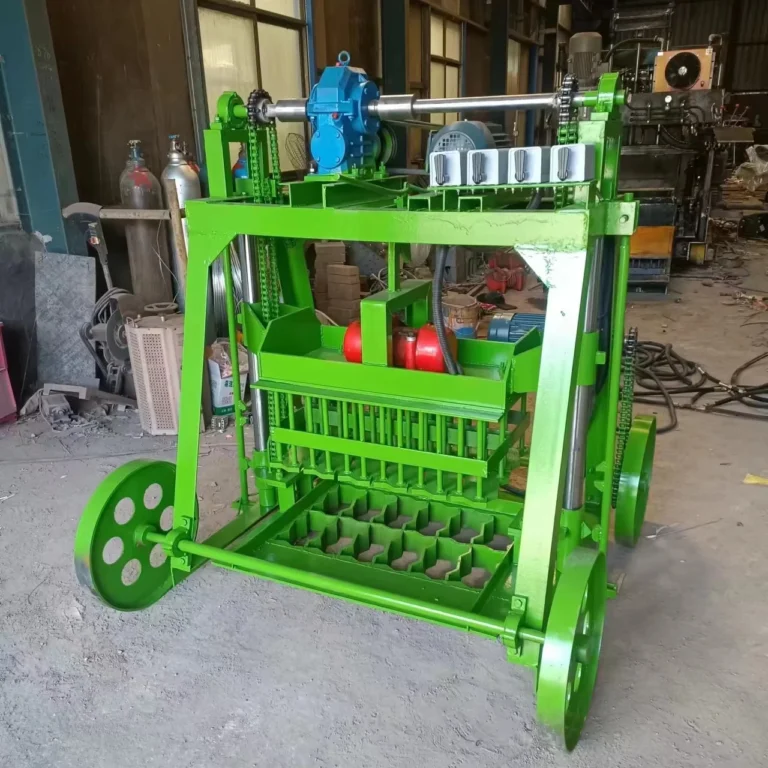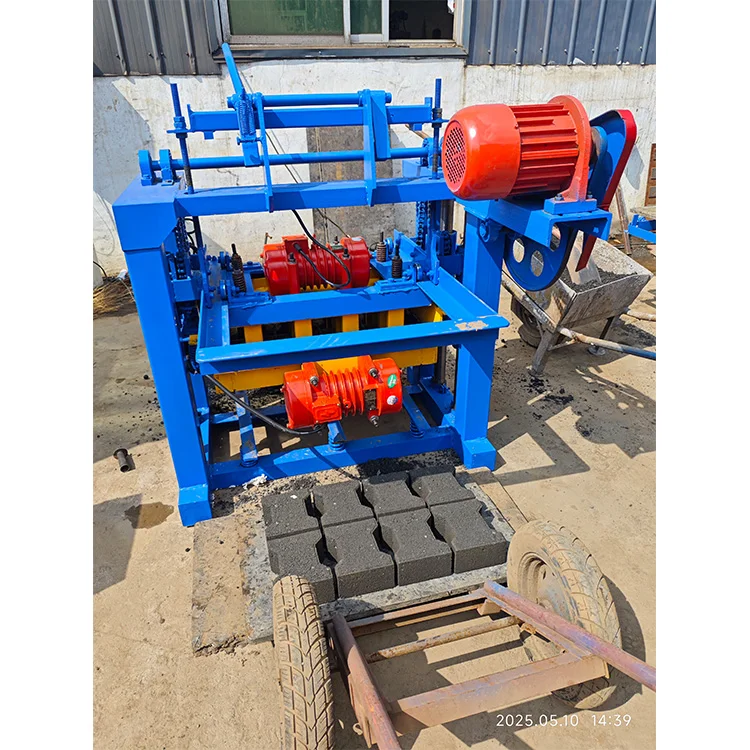

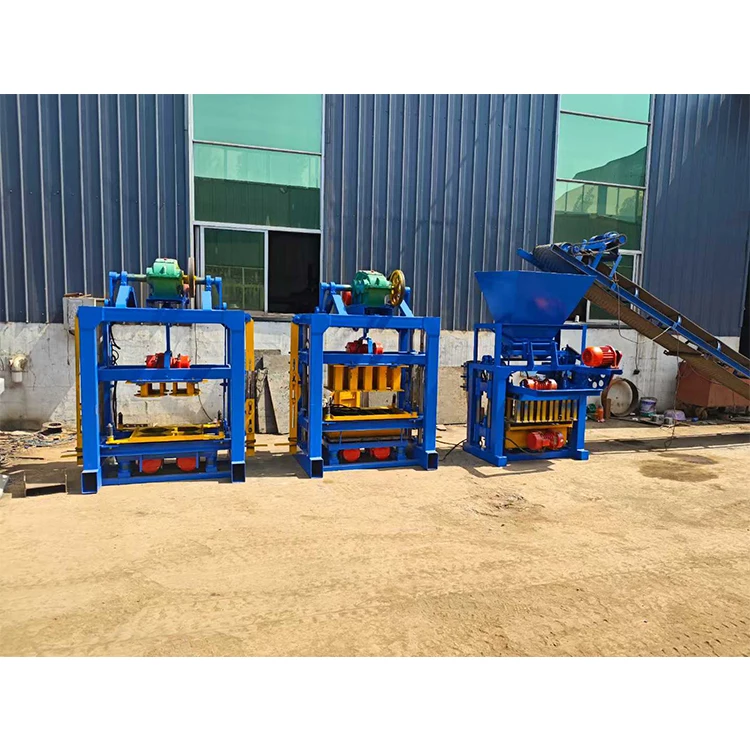
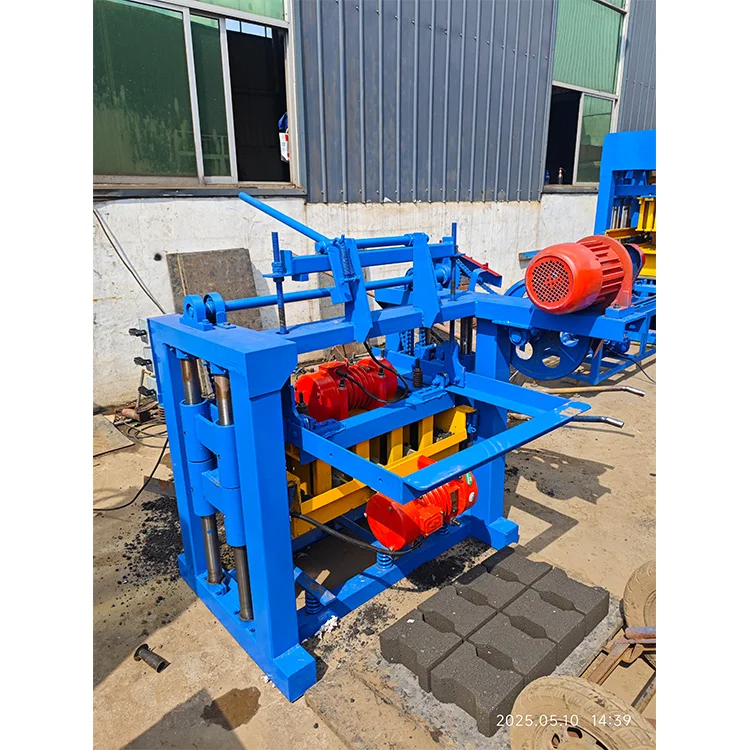
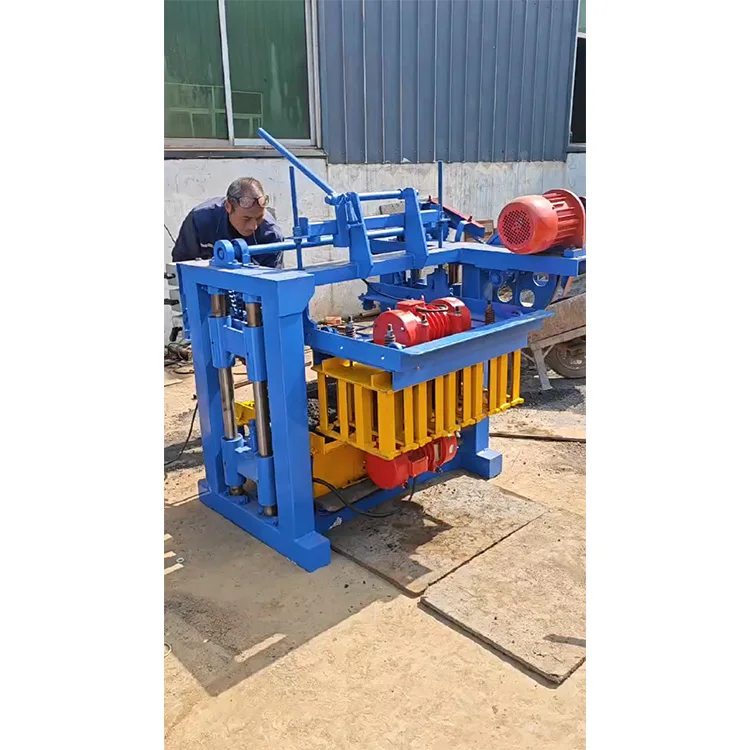
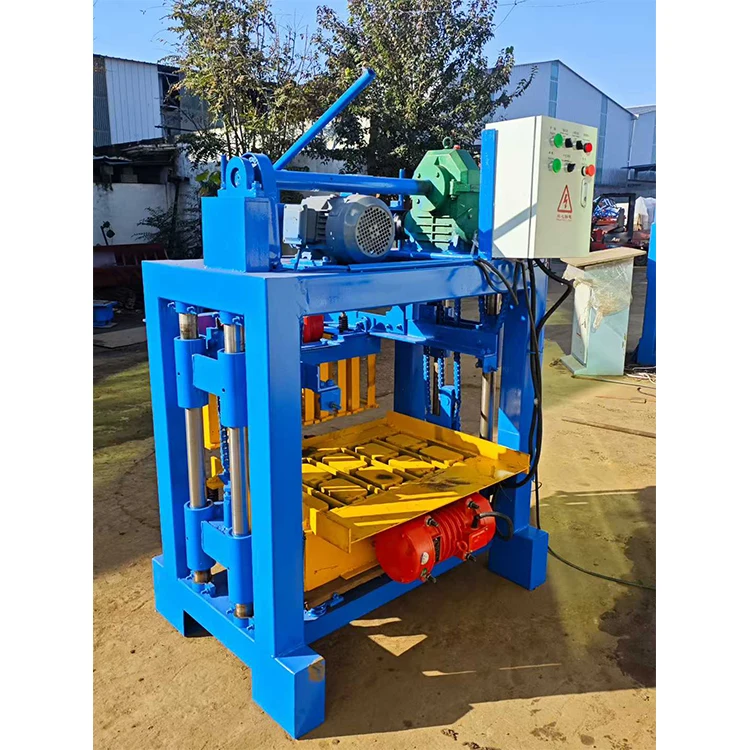
Description
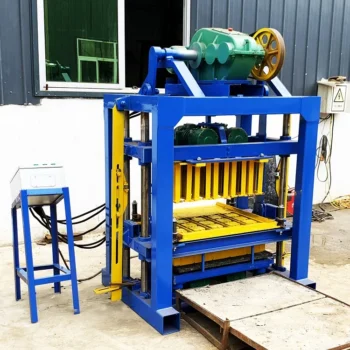
Rapid Dispatch from Stock — QTJ4-40 semi-automatic units are pre-assembled, tested, and staged for container loading so your block production starts weeks earlier than the industry norm.
Technical Specifications
| Parameter | Value |
|---|---|
| Model | QTJ4-40 |
| Product Type | Semi-Automatic Hydraulic Block Making Machine |
| Overall Dimensions (L×W×H) | 1350×1460×1800 mm |
| Machine Power | 10.4 kW |
| Molding Cycle | 40 s |
| Net Weight | 1.2 T |
| Pallet Size | 850×450×20 mm |
| Vibration System | Bed mould vertical vibration + upper mould compression vibration |
| Automation Level | Semi-automatic |
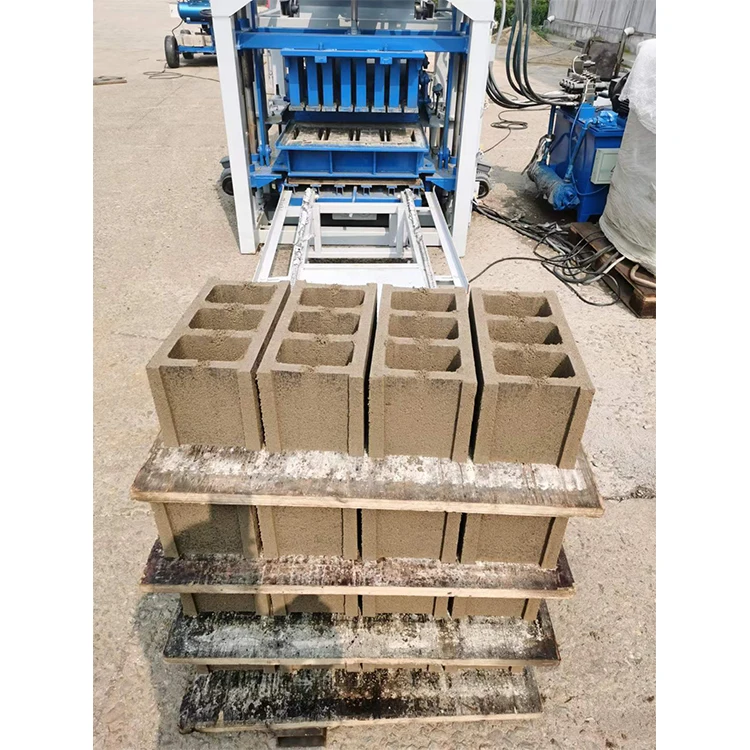
| Mould Compatibility | Hollow (8", 6", 5", 4"), solid, paver; custom sizes available |
| Voltage | Configurable to local voltage (confirm before dispatch) |
| Output (Hollow 400×200×200 mm) | 4 pcs/mould, 360 pcs/hour, 2880 pcs/day (basis: 8-hour shift) |
| Output (Hollow 400×150×200 mm) | 5 pcs/mould, 450 pcs/hour, 3600 pcs/day (basis: 8-hour shift) |
| Output (Solid 225×112.5×60 mm) | 9 pcs/mould, 800 pcs/hour, 6400 pcs/day (basis: 8-hour shift) |
| Raw Materials | Concrete, sand, cement, fly ash, lime, gypsum |
| Required Auxiliary Equipment | Mixer, host machine, block mould, pallets |
| Pallet Material Option | Fiber glass (optional); wooden pallet compatible |
| Certification | CE declaration where applicable |
Application Suitability
| Application | Material or Output |
|---|---|
| Hollow block production for masonry walls | Crushed stone, sand, cement mix — 400×200×200 mm or 400×150×200 mm formats |
| Solid brick production for load-bearing structures | Cement and fine aggregate blend — 225×112.5×60 mm format |
| Paving block production for walkways and yards | Concrete with coarse aggregate — various standard and custom sizes |
| On-site block production for construction contractors | Locally sourced sand and cement, portable setup |
| Small-scale block plant for entrepreneurs | Standard concrete mix, semi-automatic operation with manual pallet handling |
What "2,880 Blocks a Day" Actually Depends On
Output capacity is meaningless unless you know which block format and what mix design were assumed when the number was calculated.
I spent years on the assembly floor and later in after-sales, and the single most common call I get is from buyers who ordered a QTJ4-40 block machine in stock based on a headline capacity figure — only to find that number assumed a specific hollow block size their market does not even sell. The 2,880 pcs/day figure holds for 400×200×200 mm hollow blocks at a 40-second cycle, while switching to a solid brick format changes the per-mould count and the daily total entirely. Beyond format, your local aggregate particle size and moisture content shift the vibration parameters enough to alter real output [NEED_CITE: effect of aggregate gradation on vibration compaction efficiency]. When you request a quotation, ask for the capacity table stated per format rather than accepting one blanket number.
Stocked Units Mean Your Project Timeline Holds
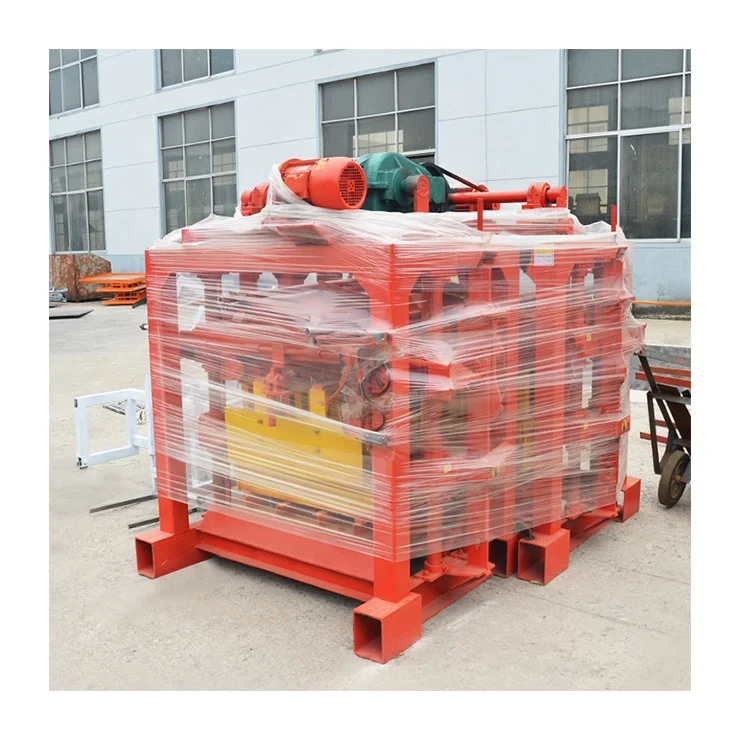
When a construction contractor or a first-time block plant entrepreneur commits to a project milestone, a multi-month manufacturing lead time can collapse the entire schedule. The QTJ4-40 block machine in stock is staged at the factory with standard mould sets already fitted, meaning the machine does not need to enter a production queue before it ships. Container loading plans are prepared upfront, and the dismantling arrangement for shipment is confirmed so that reassembly on site follows a documented sequence.
Matching the Pallet to What You Already Have on Site
The 850×450×20 mm pallet dimension is fixed by the machine frame, but the material choice — wooden or fiberglass — affects both curing-area logistics and forklift handling. A buyer who already operates a curing yard with specific racking spacing needs the pallet spec confirmed before the machine leaves the factory. Dispatching a unit with pallets that do not match existing infrastructure is a delay that surfaces only after the container arrives [NEED_CITE: pallet compatibility issues in block plant setup].
Reading the Specs That Actually Matter for Daily Production
The 10.4 kW motor rating covers both the vibration system and the hydraulic compression circuit. In semi-automatic block machines of this class, the vibration force and hydraulic pressure must be tuned together against the buyer’s actual mix — too much vibration with a lean cement mix fractures the block edges, while insufficient pressure with a stiff mix leaves voids that fail a drop test. The 40-second moulding cycle is the baseline for standard concrete; introducing fly ash or a high-fines material often requires a longer cycle to achieve full compaction. The upper mould compression vibration works in concert with the bed mould vibration to densify the block from both directions, which is why the system is specified as a matched pair rather than independent components. Pallet size at 850×450 mm determines how many blocks fit on a single curing rack tier, which directly shapes the footprint of your curing area.
The Cost of Skipping the Voltage Confirmation Step
Arriving at a job site to find that the machine is wired for 380V/50Hz when the local grid runs 440V/60Hz is a preventable failure that still happens regularly. The QTJ4-40 block machine in stock can be configured to destination voltage before dispatch, but only if the buyer confirms the exact supply standard in writing during the order process — a step that takes minutes but avoids weeks of rewiring delays [NEED_CITE: voltage and frequency standards by export market]. Transformers are a workaround, not a solution, and they add both cost and a failure point to the line.
Why Buyers Source This Machine Here
Block machinery is the sole product focus, so the machine, mould, pallet, and handling equipment are specified as one matched system rather than assembled from separate vendors. Configuration is set against the buyer’s actual mix design and target block format instead of a catalogue default. Mould design covers the formats the buyer’s market actually sells, with custom drawings available. The semi-automatic platform allows a buyer to start with manual pallet handling and add automation later. Factory testing includes a production run on the buyer’s specified format before the machine is packed for shipment.
Documentation & Verification
- Line layout showing QTJ4-40 footprint and pallet flow path before dispatch
- Capacity calculation table stated per block format, not a single headline number
- Mould drawing and format list for each mould included in the shipment
- Factory test record confirming cycle time and block density on your specified mix
- Voltage and control language confirmation signed off before container loading
Installation, Commissioning & Support
- Foundation pad sized to 1350×1460 mm footprint with level tolerance for vibration stability
- Dedicated power circuit rated for 10.4 kW continuous draw at confirmed local voltage
- Machine arrives partially dismantled for container fit; reassembly follows shipped diagram
- Commissioning includes vibration force and hydraulic pressure tuning to your mix design
- Operator training covers mould change procedure and 40-second cycle timing verification
- Wear parts list and first-replacement schedule provided with the machine documentation
What to Share with Your Inquiry
To move from a stock check to a firm dispatch date, the conversation needs your target block format and daily output requirement, your local raw material source and aggregate type, and your site voltage and frequency. If you already have a mixer, curing racks, or forklifts on site, share those details so the pallet and auxiliary equipment spec aligns with what is already in place.
Frequently Asked Questions
Q: Is the QTJ4-40 currently in stock, and what is the realistic dispatch lead time?
A: Standard QTJ4-40 units are staged at the factory with common mould sets. Dispatch lead time depends on the mould configuration you need and the voltage confirmation step. Request written confirmation of stock status and a container loading date rather than relying on a general estimate.
Q: How is the machine packed for container shipment, and what arrives assembled versus dismantled?
A: The QTJ4-40 at 1.2 T and 1350×1460×1800 mm is partially dismantled for container loading. The main frame, hydraulic circuit, and vibration assembly ship as a unit; moulds and pallets are packed separately. A reassembly guide with photographs accompanies each shipment.
Q: What voltage options are pre-wired, and can you confirm my country’s standard before shipping?
A: Voltage is configurable to your local grid. You need to confirm the exact voltage, phase, and frequency in writing during the order process so the electrical cabinet is wired correctly before the machine leaves the factory, avoiding costly rewiring on arrival.
Q: Which moulds ship with the machine from stock, and how quickly can additional formats follow?
A: Stocked units typically carry one standard mould set — hollow, solid, or paver — based on the configuration held. Additional mould formats require separate production. Confirm which mould is on the stocked unit and request a lead time for any supplementary moulds you need.
Q: What supporting equipment should I source locally versus include in the shipment?
A: The QTJ4-40 requires a mixer, pallets, and block moulds as auxiliary equipment. A mixer may be sourced locally if a compatible model is available. Pallets are best included in the shipment to ensure the 850×450×20 mm dimension and material match the machine frame and your curing setup.