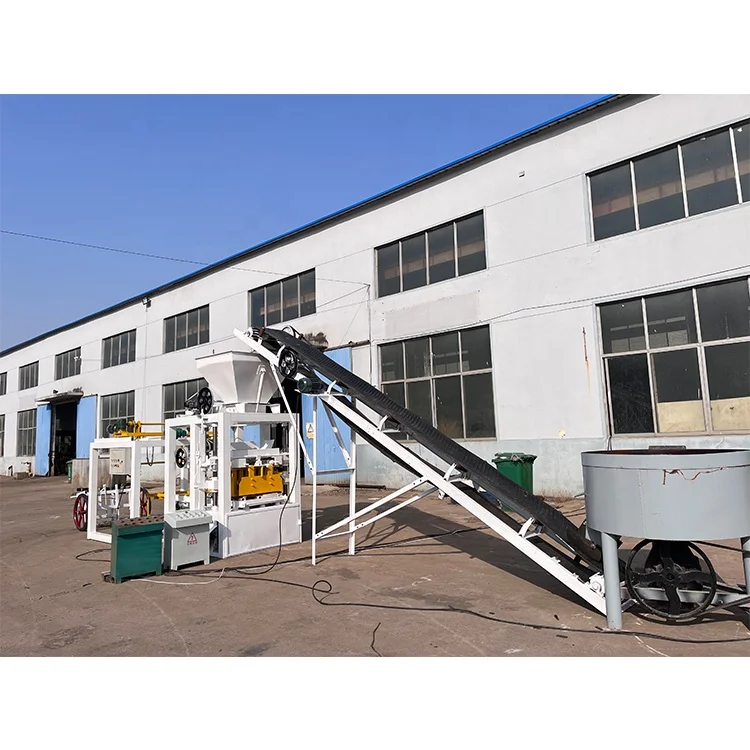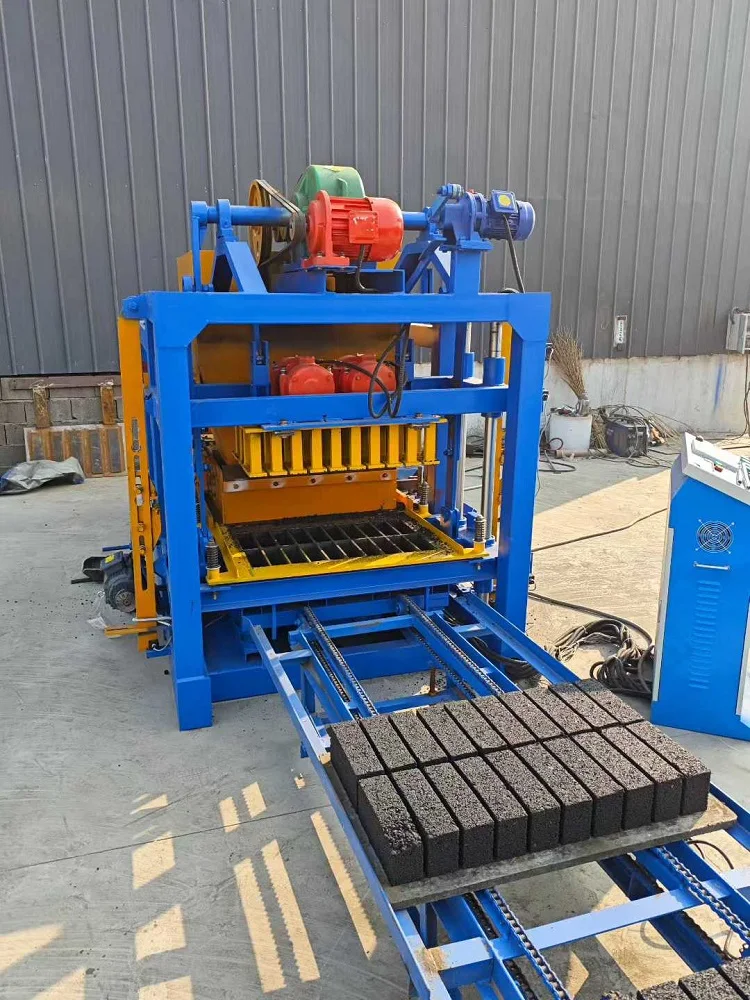

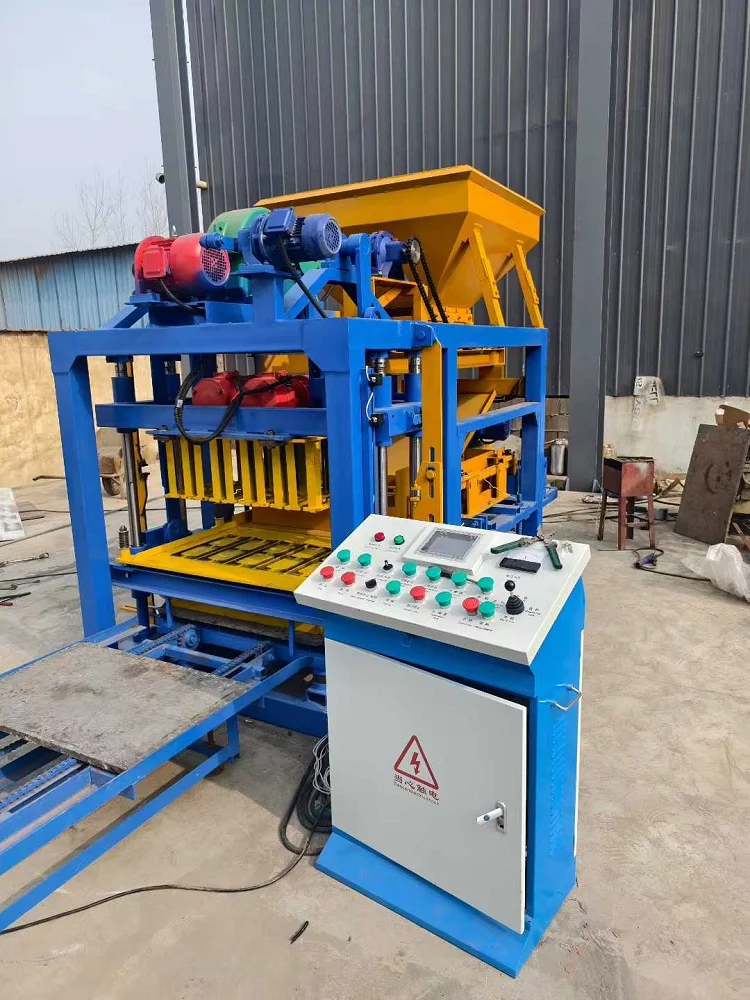
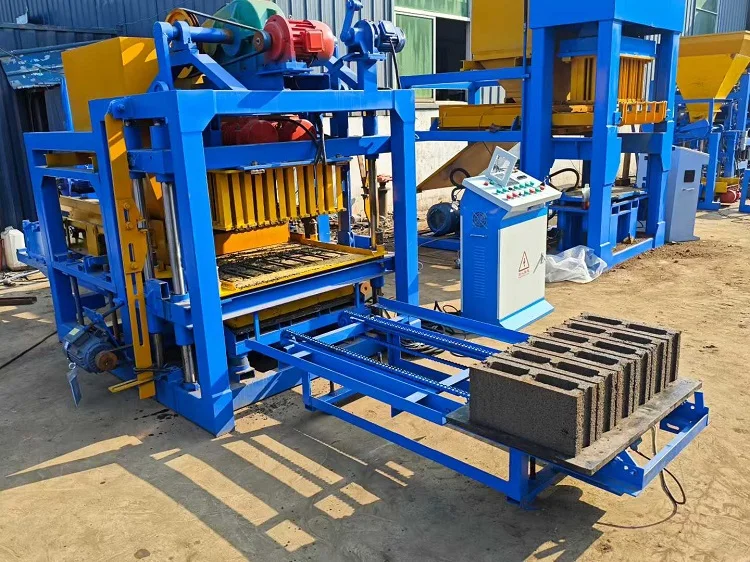
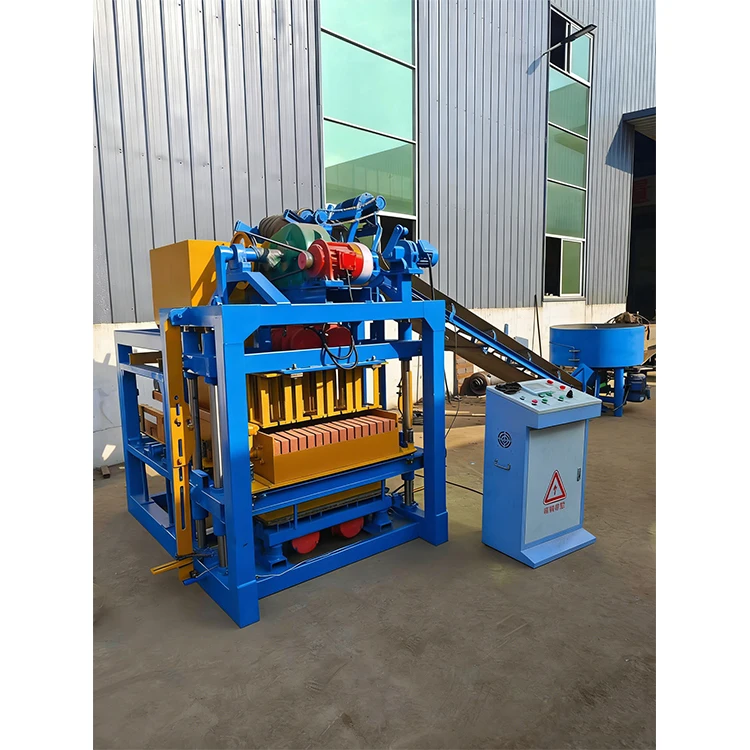

Description
Matched System Configuration — every element from the QTJ4-25 press through pallet, mould and stacking is verified against your actual production target before dispatch, so arrival timing stays on schedule.
Technical Specifications
| Parameter | Value |
|---|---|
| Model | QTJ4-25 |
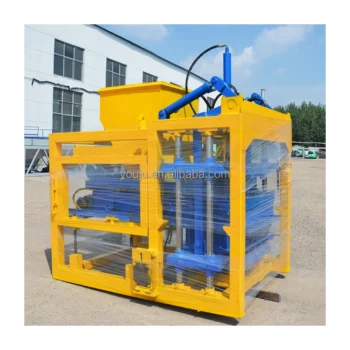
| Product Type | Automatic Concrete Block Making Machine |
| Machine Power | 16.58 kW |
| Molding Cycle | 25 seconds |
| Capacity | 4600 pcs/8hours (basis not stated in source — confirm block format / material / thickness) |
| Machine Weight | 5000 KGS |
| Overall Size | 640015002700mm |
| Raw Material | concrete, sand, cement, fly ash, crushed stone, lime, water, etc. |
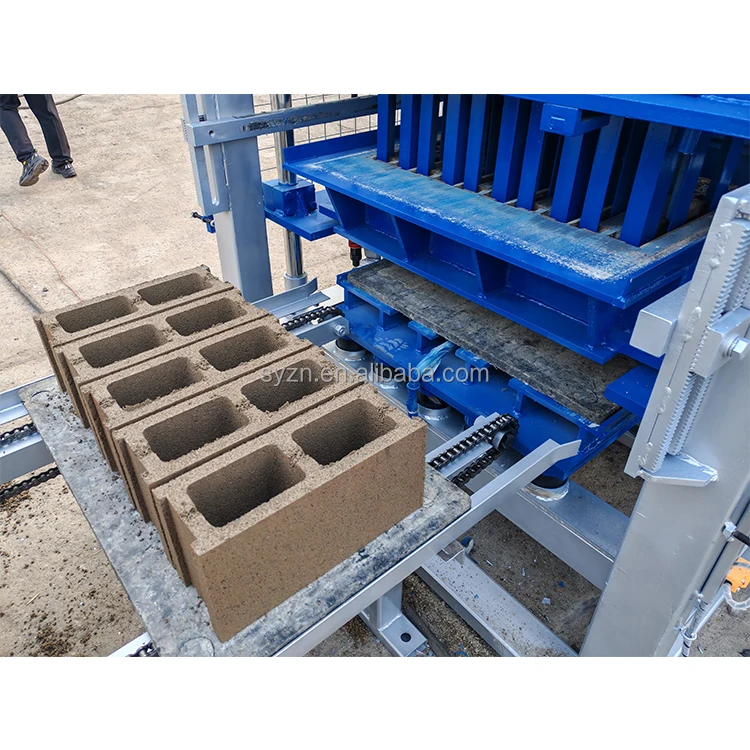
| Pallet Size | 850*480mm |
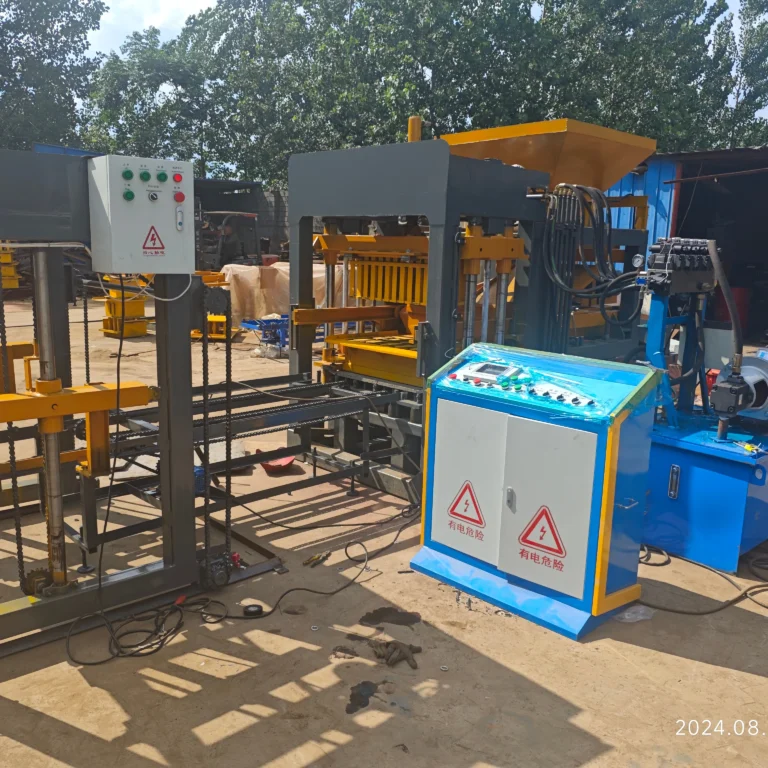
| Control System | PLC controlled fully automatic |
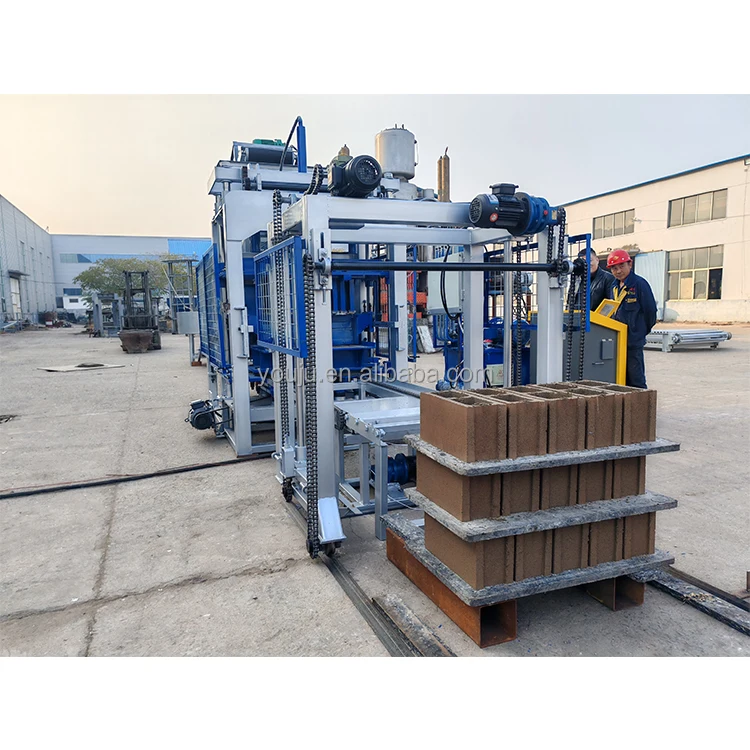
| Automation Level | Fully automatic (pallet feeding, material feeding and scraping, block stacking) |
| Vibration System | Vibration motor with big vibration box (non-hydraulic pressure) |
| Frame | Thickness steel |
| Motor | Siemens motor |
| Warranty | One year |
Application Suitability
| Application | Material or Output |
|---|---|
| Housing project on-site hollow block production | Crushed stone, cement, sand mixed on site |
| Medium factory solid brick mass production | Fly ash, cement, industrial by-products |
| Paver stone brick for municipal contracts | Concrete, aggregate, pigment |
Why "In Stock" Must Mean More Than Just the Press
A hollow block making machine in stock that ships without matched pallets, confirmed moulds and pre-set PLC language creates delays that erase any time saved on the factory floor.
The machine is only ready to ship when the entire line configuration matches your site conditions.
I once watched a contractor lose six weeks after a fast-dispatch press arrived with 380V wiring while his site transformer was 415V, and the HMI defaulted to a language his operators could not read. The press itself was fine; the oversight cost him a project milestone. When a buyer needs fast delivery on a Hollow Block Making Machine in stock, the voltage, frequency, control language and mould format must all be locked in writing before the container is loaded [NEED_CITE: voltage and frequency standards by export market].
Dispatch Lead Time Starts at Inquiry, Not at Payment
Lead time on this hollow block making machine in stock begins the moment you confirm block format, pallet material and site voltage. Standard moulds for common hollow and solid block sizes are held alongside the press, which eliminates the typical wait for custom tooling. Dispatch timing is quoted upfront in days rather than vague weeks, giving your logistics team a real date to plan around.
Container Loading Planned Before You Commit
The 640015002700mm frame and 5000 KGS weight require specific dismantling and lashing arrangements. A container loading plan is provided with the quotation so you know exactly which components are broken down, how they are secured, and what forklift capacity is needed at destination. This eliminates the arrival-day surprise of a machine that will not fit through your yard gate.
Vibration, Cycle Time and the 4600-Number Question
The QTJ4-25 runs a 25-second molding cycle driven by a vibration motor paired with a large vibration box rather than a hydraulic press circuit. This configuration keeps maintenance straightforward for sites without hydraulic specialists. The published 4600-piece capacity assumes a specific block format, wall thickness and mix design that must be confirmed against your target product [NEED_CITE: block format assumptions behind cycle-based capacity quotes]. The Siemens motor delivers 16.58 kW across the system, which is sufficient for continuous shifts on standard hollow and solid blocks but should be verified if your mix uses high-density aggregate or unusually thick faces.
What Happens When Pallet and Curing Area Are Ignored
The 850*480mm pallet is the link between the press output and your curing yard. If that pallet size does not match the racking you already own or the forklift tine spacing on site, every block must be double-handled. I have seen yards where pallets were sourced locally after arrival, only to discover the new pallets were 3mm too thick for the feeding mechanism, causing jams that stopped the line repeatedly. Confirming pallet material and dimensions before shipment prevents this cascade [NEED_CITE: pallet specification mismatch in block production].
Why Procurement Timing Matters Here
This hollow block making machine in stock is configured from inventory rather than built against a blank order sheet, which keeps lead times short for contractors working against project milestones. Voltage and PLC display language are confirmed in writing before dispatch so commissioning begins on day one, not after a round of email exchanges. Moulds for standard formats ship with the press, and a wear parts list is included so your first replacement order can be placed at the same time, avoiding unplanned downtime weeks later.
Documentation & Verification
- Factory test record run on your confirmed block format before container sealing
- Voltage and PLC language confirmation sheet signed off prior to dispatch
- Container loading photographs showing dismantling state and lashing points
- Mould drawing package matching shipped standard format set
- Operation manual with electrical and hydraulic schematics in your specified language
- Wear parts and mould replacement list for first reorder planning
Installation, Commissioning & Support
- Foundation pad sized to 6400*1500mm footprint with anchor bolt template supplied
- Dedicated 16.58 kW circuit at your confirmed voltage and frequency required before power-on
- Dismantling state documented so reassembly sequence is clear on arrival
- PLC parameters pre-loaded with your block format and cycle settings
- Operator training covers pallet feed alignment and vibration box maintenance
- First replacement order for mould inserts and wear parts scheduled at commissioning
What to Include with Your Inquiry
Send your target block format with dimensions, daily output requirement and local aggregate type so the dispatch package is matched to your actual production. Confirm your site voltage, frequency and preferred PLC display language in the same message to lock the electrical configuration before loading. If you have existing pallets or curing racks, share those dimensions so compatibility is checked in advance.
Frequently Asked Questions
Q: Which block formats ship with the standard mould package and what is the dispatch lead time?
A: Standard moulds cover common hollow block and solid brick sizes held alongside the press inventory. Dispatch lead time is quoted in days once block format, pallet specification and voltage are confirmed in writing. Custom moulds require additional tooling time and are quoted separately if your market needs non-standard dimensions.
Q: How are voltage and PLC language confirmed before shipment?
A: Your site voltage, frequency and preferred HMI language are confirmed on a signed sheet before the press leaves the factory. The PLC program and display are set accordingly during the factory test. This prevents commissioning delays caused by language barriers or transformer mismatches on arrival.
Q: What documentation is provided for container dismantling and reassembly?
A: Packing photographs and a container loading plan show how the 640015002700mm frame is broken down and secured. The operation manual includes assembly sequence notes so your team can reassemble the press with standard workshop tools and a forklift matching the machine weight.
Q: Are pallets included in the quotation and what material is standard?
A: Pallets are included and the 850*480mm size is standard for this model. Material is confirmed during the quotation stage to match your curing environment and handling equipment. Specifying pallet material upfront avoids feeding jams caused by thickness or surface variations.
Q: When should the first replacement order for moulds and wear parts be placed?
A: A wear parts and mould list is included with the quotation so the first replacement order can be placed together with the machine shipment. This ensures spares arrive before production volume depletes the original components, avoiding unplanned stoppages.