Description
Stock-Ready Availability — the QTJ4-25 semi-automatic block machine ships from current inventory, cutting typical multi-week production lead times down to container loading schedules.
Technical Specifications
| Parameter | Value |
|---|---|
| Model | QTJ4-25 |
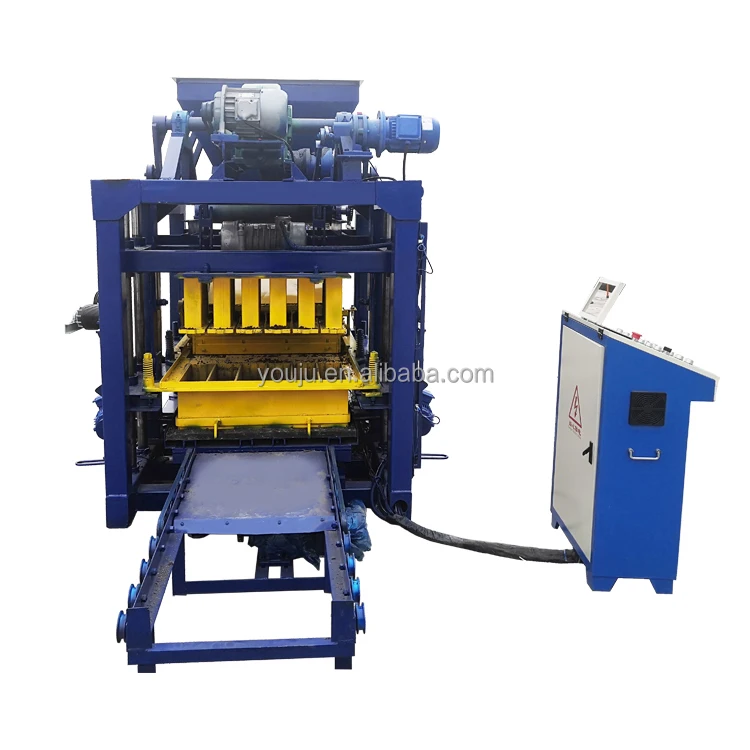
| Product Type | Semi-Automatic Concrete Block Making Machine |
| Rated Power | 17.9 kW |
| Vibration Force | 60 kN |
| Vibration Frequency | 2800 r/min |
| Molding Cycle | 25 s |
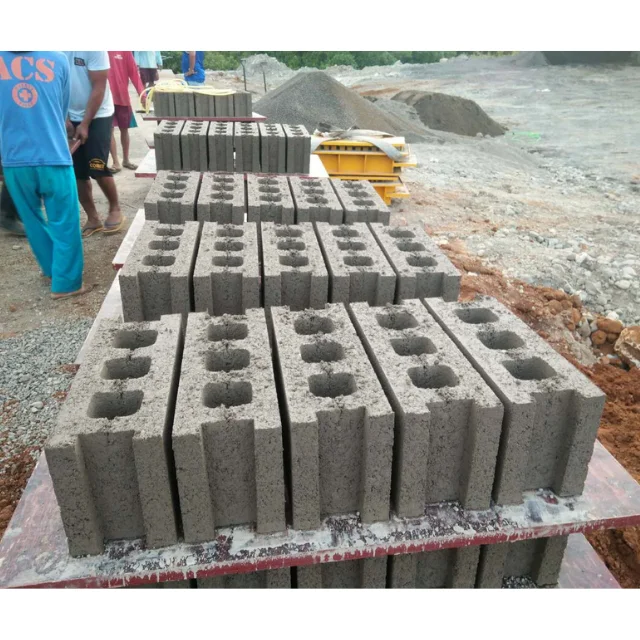
| Output Capacity | 960 pcs/h, 7680 pcs/day (based on 400×200×200mm hollow block, 4 pcs/mould) |
| Pallet Size | 850×550×20 mm |
| Overall Dimensions | 6400×1500×2700 mm |
| Total Mass | 2500 kg |
| Control System | Motor-driven with hydraulic station (PLC availability to be confirmed) |
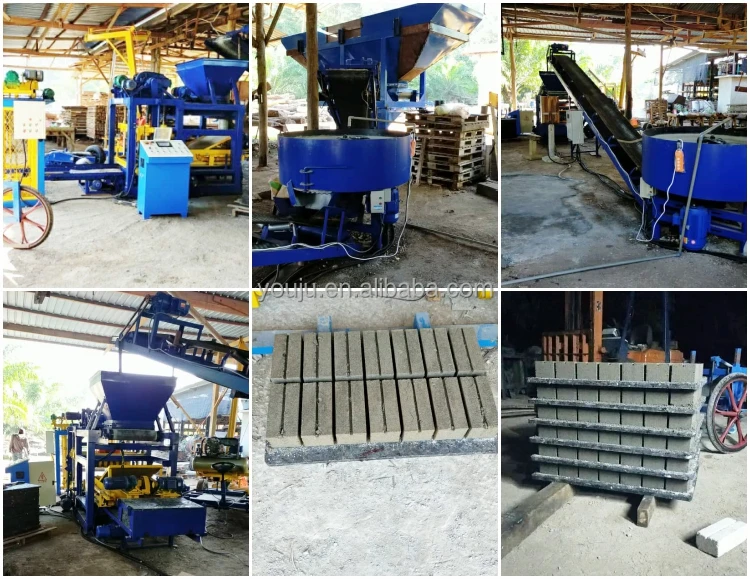
| Mould Format | Hollow, solid, paver, curbstone (mould change required) |
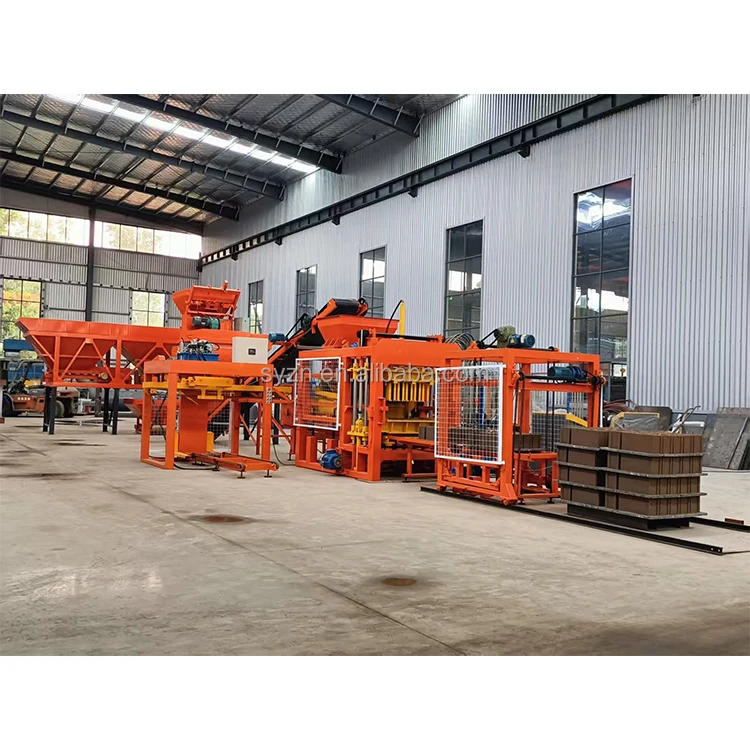
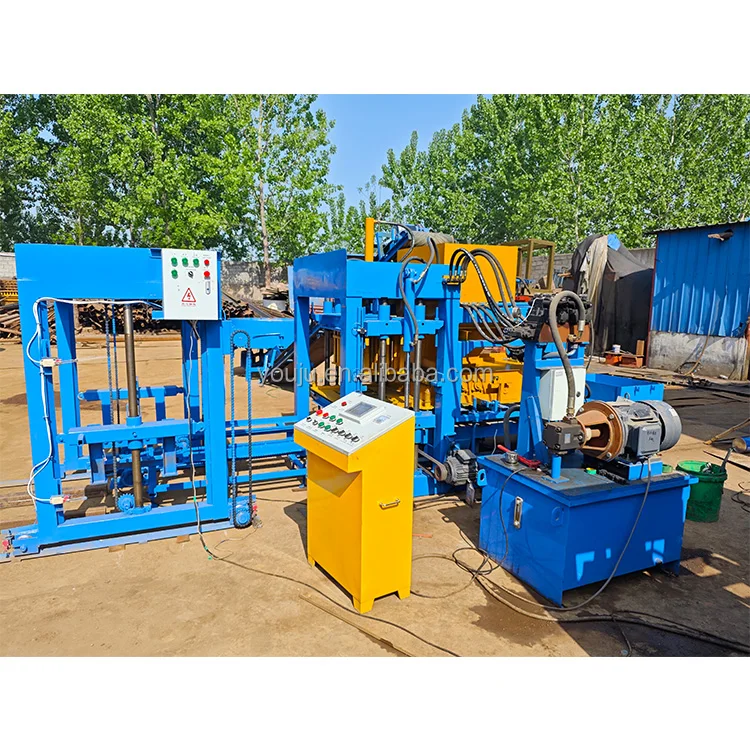
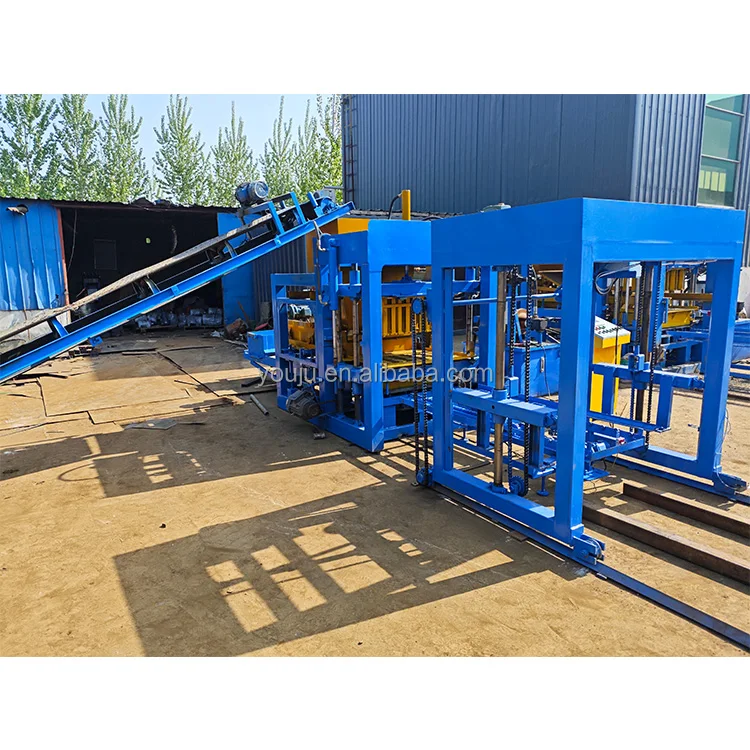
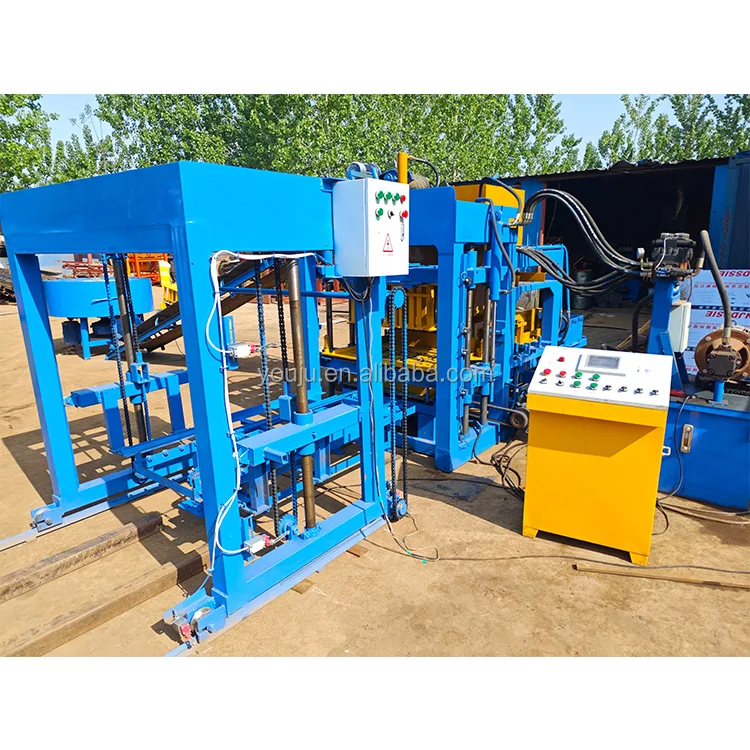
| Configuration | Host machine 1 set, block mould 1 set, JQ350 mixer |
| Automation Level | Semi-automatic |
| Stacking Method | Manual (trolley) |
| Voltage & Frequency | Configurable — confirm before order |
| Hydraulic Pressure | Equipped with hydraulic station (rating to be confirmed) |
| Mould Change Time | To be confirmed |
| Certification | CE (verification required) |
Application Suitability
| Application | Material or Output |
|---|---|
| On-site construction block production | Hollow blocks from local aggregate, sand, and cement |
| First-time block plant startups | Solid blocks and pavers for regional building supply |
| Housing project contractor operations | Kerbstone and interlocking formats for infrastructure |
| Building material distributor imports | Standard hollow blocks for wholesale distribution |
What "Fast Delivery" Actually Means for Your Site Timeline
A semi-automatic block making machine in stock eliminates the factory build queue, but dispatch speed only matters if the electrical and mechanical configuration matches your destination.
When a project start date is already locked in, every week spent waiting for a machine to be manufactured is a week of idle site preparation and deferred revenue. A semi-automatic block making machine in stock with fast delivery shifts the timeline from production scheduling to container logistics. The real risk is not the wait — it is arriving at the port with a motor wired for a voltage your grid does not supply or a PLC displaying a language your operators cannot read. I learned this firsthand when a hydraulic block press sat on a Middle East job site for three weeks because the control cabinet needed a complete retrofit for a 50Hz grid [NEED_CITE: voltage and frequency standards by export market].
Container Loading and Dispatch Readiness
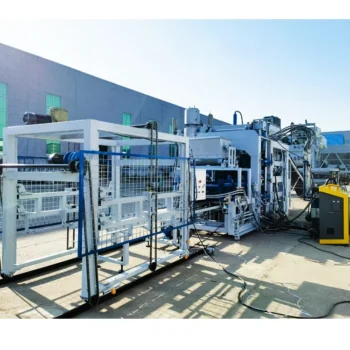
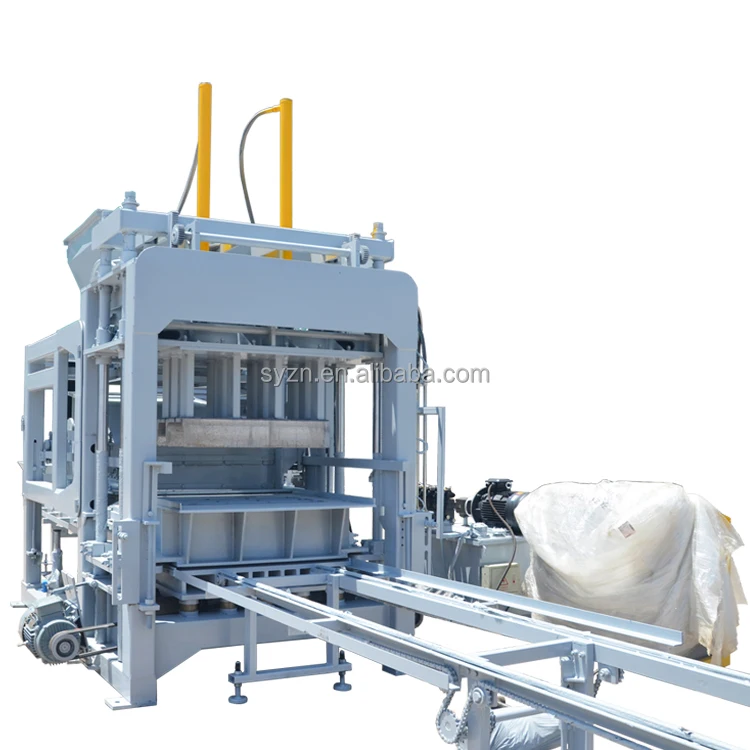
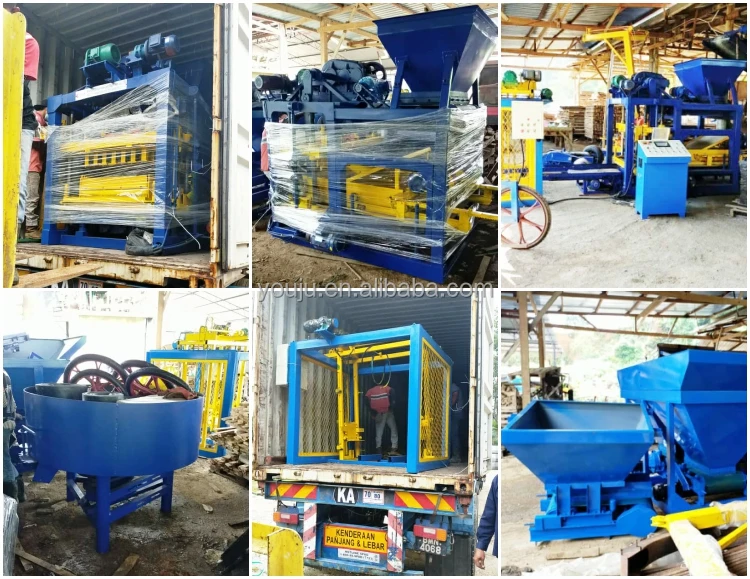
A semi-automatic block making machine in stock means the host frame, hydraulic station, and standard mould sets are physically present in the warehouse, not allocated from a production queue. For the QTJ4-25, the 6400×1500×2700 mm frame requires partial dismantling to fit within standard container door clearances, and the dismantling method should be documented before loading begins.
Arrival Estimates Quoted Before You Commit
The value of stock availability disappears if transit time is vague. An arrival estimate should be calculated from the dispatch date against published shipping lane schedules to your specific port, not a generic regional average. This semi-automatic block making machine in stock with fast delivery allows the timeline to be mapped from factory gate to site commissioning with known variables rather than assumptions.
Reading the Specifications Behind the Cycle Time
The QTJ4-25 operates on a 25-second molding cycle, but that figure only translates to 960 pieces per hour when running the specific 400×200×200mm hollow block format at 4 pieces per mould. Switching to a smaller solid block or a paver format changes the pieces-per-mould count and alters daily throughput accordingly. The 60 kN vibration force combined with hydraulic station pressure determines compaction density — insufficient pressure against a coarse local aggregate produces blocks that crumble at the edges during curing. The 850×550×20 mm pallet size must align with your existing curing rack dimensions and forklift fork width; ordering a machine whose pallets do not match your handling infrastructure creates a bottleneck that no cycle time figure can overcome [NEED_CITE: pallet handling compatibility in block production]. The 17.9 kW rated power requirement dictates whether your site transformer can support simultaneous operation of the host machine and the JQ350 mixer without voltage drop.
The Cost of Skipping Pre-Shipment Confirmation
Skipping voltage and frequency confirmation before dispatch turns a fast delivery advantage into a multi-week delay. A motor wound for 380V/50Hz will overheat and fail on a 440V/60Hz grid, and rewinding or replacing it on-site is neither quick nor inexpensive. Buyers who treat electrical specifications as an afterthought regularly find their semi-automatic block making machine in stock with fast delivery sitting unpowered while electricians source compatible components locally [NEED_CITE: industrial motor voltage mismatch consequences].
Why This Source for Stock Machines
Block machinery as a single focus means the QTJ4-25 host machine, mould, pallet, and JQ350 mixer are specified as one matched system rather than assembled from unrelated suppliers. Configuration is set against your actual local aggregate and target block format, not a catalogue default. Mould supply covers the formats your market sells, with custom drawings available when standard options do not match. The semi-automatic level allows a buyer to start with manual pallet handling and add automation later without replacing the press. Installation support includes operator training so your crew understands mould change procedures and hydraulic station maintenance from day one.
Documentation & Verification
- Line layout with capacity calculation stating the 400×200×200mm hollow block format basis
- Machine specification sheet with voltage and frequency fields completed pre-dispatch
- Mould drawing and format list confirming compatible pallet dimensions
- Hydraulic and electrical schematic for on-site troubleshooting
- Factory test record on your target block format before container loading
- Packing photographs documenting dismantling state and securing method
Installation, Commissioning & Support
- Foundation pad sized to the 6400×1500 mm footprint with anchor bolt template provided
- Dedicated circuit rated for 17.9 kW plus mixer draw to prevent voltage sag during startup
- Host machine dismantled for container loading with reassembly sequence documented
- First-run molding cycle verification against your local mix design and aggregate source
- Operator training covering 25-second cycle pacing and manual pallet trolley workflow
- Hydraulic station bleed procedure and vibration motor inspection schedule included
Before You Request a Quote
To confirm stock status and generate an accurate arrival estimate, provide your destination port, the specific block format and daily volume your project requires, and the voltage and frequency of your site power supply. If you already have curing racks and forklifts on-site, share the pallet dimensions they accommodate so the 850×550×20 mm standard can be verified or an alternative confirmed before dispatch.
Frequently Asked Questions
Q: Which QTJ4-25 configurations and mould formats are currently in stock?
A: Stock status is confirmed at the time of inquiry and varies by mould format. The host machine, hydraulic station, and JQ350 mixer are typically held in inventory, while specific mould sets for hollow, solid, paver, or curbstone formats depend on recent allocation. Requesting a current stock list with your target format ensures an accurate dispatch date.
Q: What is the dispatch lead time once an order is placed?
A: For a stock unit with confirmed voltage and frequency, dispatch lead time covers pre-shipment testing, dismantling for container loading, and customs documentation preparation. This typically shortens the timeline compared to a built-to-order machine. Your arrival estimate depends on the shipping lane schedule to your specific destination port.
Q: How is the machine dismantled and loaded into the container?
A: The QTJ4-25 frame is partially dismantled to clear standard container door dimensions. The hydraulic station, vibration assembly, and mould are secured separately. Packing photographs document the loading state so your site team can match components during reassembly. A reassembly sequence guide is included with the shipping documentation.
Q: What pallet quantity and material should I order alongside the machine?
A: Pallet quantity depends on your curing cycle duration and daily output target. The standard 850×550×20 mm pallet must be compatible with your curing rack spacing and forklift fork width. Confirming your curing area layout and handling equipment before ordering prevents a mismatch that would slow production from the first day.
Q: What electrical details must be confirmed before the machine ships?
A: Voltage, frequency, and phase configuration must match your site supply exactly. A machine wired for the wrong voltage will not start or will suffer motor damage. Confirming these details — along with PLC display language preferences — before dispatch prevents the kind of multi-week on-site delay that defeats the purpose of buying stock equipment.