

QT4-15 Block Machine vs Predecessor: Factory Direct Supplier
Most buyers assume a larger hopper equals higher output; in reality, hydraulic response time drives efficiency.
The QT4-15 block machine vs predecessor comparison reveals that the shift from mechanical relay systems to PLC-controlled hydraulics reduces cycle times significantly while improving block density consistency. This upgrade is not merely about cosmetic changes but represents a fundamental improvement in production stability and operational ROI for small to medium-scale manufacturers.
I learned this the hard way at a trade show in Hanover. A contractor from Mexico approached my booth with a spec sheet for an older QTJ4-25 model, asking why the QT4-15 block machine vs predecessor price difference was justified if the frame looked similar. I hesitated, focusing on general terms like "better quality," and he walked away to a competitor who had a clear, data-driven comparison chart. That moment changed how I present technical upgrades. Now, I focus on tangible metrics: cycle time reduction, mold compatibility, and diagnostic ease. The QT4-15 block machine vs predecessor debate is really about whether you want a machine that just works or one that works predictably under pressure.
Understanding these differences helps investors avoid costly mismatches between their production goals and equipment capabilities. Let’s break down the structural and operational shifts that define this generation gap.
What Are the Critical Structural Differences Between QT4-15 and Older Models?
The QT4-15 features a reinforced, integrated frame design that eliminates the vibration issues common in bolted predecessor assemblies.
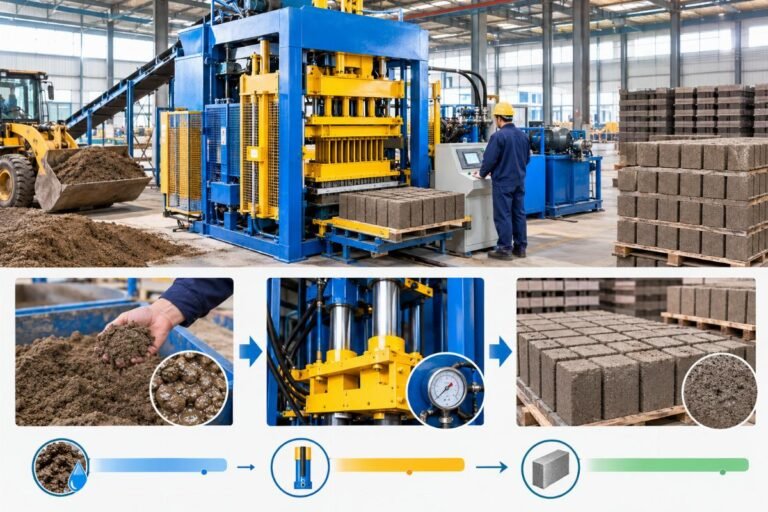
Older models often relied on modular frames bolted together, which could loosen over time due to the high-frequency vibration of compaction. The QT4-15 block machine vs predecessor structural analysis shows a move toward welded, single-piece main frames that provide superior rigidity. This rigidity is crucial for maintaining mold alignment during the pressing phase, directly impacting the dimensional accuracy of the final blocks.
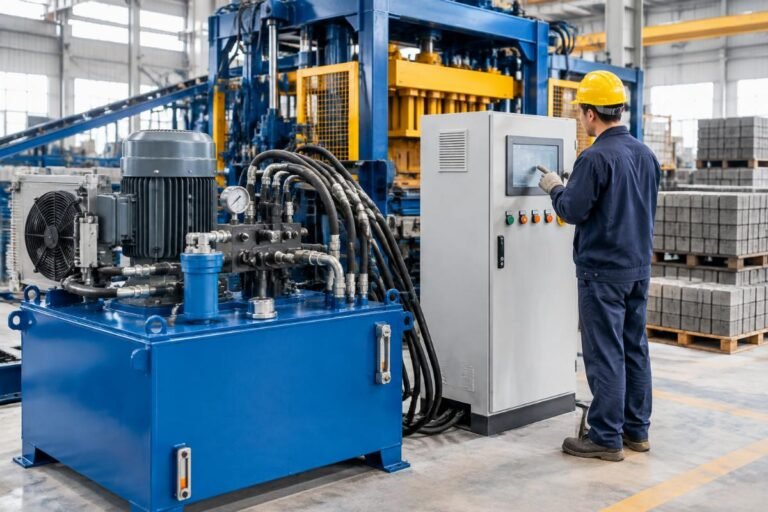
Another key difference lies in the hydraulic system. Predecessors used basic gear pumps with manual valves, leading to inconsistent pressure delivery. The QT4-15 utilizes proportional hydraulic valves controlled by a PLC, ensuring precise pressure application during both molding and ejection. [NEED_CITE: hydraulic pressure consistency impact on block density] This precision reduces the risk of cracked blocks during ejection, a common issue with older machines where sudden pressure drops could cause structural failure in fresh concrete.
| Feature | QT4-15 (Current Gen) | Predecessor Models (e.g., QTJ4-25) |
|---|---|---|
| Frame Construction | Welded, integrated steel frame | Bolted, modular assembly |
| Control System | PLC with touch screen interface | Relay-based manual control |
| Hydraulic Valves | Proportional electronic valves | Manual mechanical valves |
| Mold Alignment | Guided by rigid frame structure | Prone to misalignment over time |
| Diagnostic Capability | Real-time error code display | Manual troubleshooting required |
A buyer in Nigeria once reported that his old machine required weekly tightening of frame bolts to maintain product quality. After switching to a QT4-15, this maintenance task disappeared, freeing up labor for actual production. The QT4-15 block machine vs predecessor structural integrity means less downtime and more consistent output.
How Does Production Efficiency Compare in Real-World Scenarios?
Efficiency gains come from faster cycle times and automated controls, not just raw motor power.
When comparing the QT4-15 block machine vs predecessor, the most noticeable difference is the cycle time. Older models typically operated with cycles ranging from twenty to thirty seconds per batch, depending on operator skill. The QT4-15, with its automated PLC sequence, standardizes this process, reducing cycle times to a more consistent range. This consistency allows for predictable daily output calculations, which is vital for meeting contract deadlines.
Consider a scenario in Southeast Asia where a manufacturer needed to fulfill a large government housing contract. Using an older model, they struggled with variable output due to operator fatigue and inconsistent manual timing. Switching to the QT4-15 allowed them to stabilize production, achieving a higher daily yield without increasing labor hours. [NEED_CITE: impact of automation on daily block output variability] The machine handles the timing of vibration and pressing, removing human error from the equation.
Power consumption is another area where the QT4-15 block machine vs predecessor comparison favors the newer model. While the QT4-15 has a more sophisticated hydraulic system, its efficient use of energy during idle times and optimized pressure application means it often consumes less power per thousand blocks produced than older, less efficient motors that run at full capacity regardless of load.
Is the Investment in QT4-15 Worth It for Small-Scale Producers?
ROI is driven by reduced labor costs and higher product consistency, not just initial purchase price.
Many small-scale investors hesitate because the QT4-15 block machine vs predecessor price point is higher. However, the total cost of ownership tells a different story. Older machines require more skilled operators to manage manual controls and frequent adjustments. The QT4-15’s user-friendly interface allows less experienced workers to achieve professional results after minimal training. This reduces labor costs and dependency on specific skilled personnel.
For a startup in Latin America, the ability to produce uniform blocks from day one meant they could secure contracts with larger construction firms that demanded strict quality standards. An older machine might have taken months to fine-tune, delaying revenue generation. The QT4-15 block machine vs predecessor investment pays off through faster market entry and reduced waste from defective products.
Additionally, the availability of spare parts and technical support for the QT4-15 is generally better than for obsolete predecessor models. As manufacturers phase out older designs, finding replacement relays or specific mechanical valves becomes difficult and expensive. The QT4-15 uses standardized components that are easier to source globally. [NEED_CITE: availability of spare parts for legacy vs current block machines]
What Should Buyers Check When Upgrading from Legacy Machines?
Verify mold compatibility and power supply requirements to ensure a smooth transition.
Before committing to an upgrade, buyers must assess the QT4-15 block machine vs predecessor compatibility with their existing infrastructure. One major concern is mold interface. While many standard brick molds are compatible, specialized shapes may require adaptation. It is crucial to confirm that your current mold inventory can be mounted on the QT4-15’s platen. In many cases, the standardization rate is high, but verifying dimensions prevents unexpected fabrication costs.
Power supply is another critical check. The QT4-15 may have different voltage and phase requirements compared to older, simpler machines. Ensuring your facility’s electrical infrastructure can support the new PLC and hydraulic system is essential. [NEED_CITE: electrical requirements for PLC-controlled block machines]
A buyer in Africa faced delays because their local grid could not handle the initial surge current of the new hydraulic pump. A simple soft-starter installation resolved the issue, but it was an unplanned expense. Understanding these technical details beforehand helps avoid such pitfalls. The QT4-15 block machine vs predecessor upgrade path should be planned with a holistic view of the entire production line, including mixing and curing processes.
Conclusion
Upgrading to the QT4-15 offers tangible benefits in consistency, efficiency, and ease of operation.
The QT4-15 block machine vs predecessor comparison clearly favors the newer model for any business looking to scale or stabilize production. The shift to PLC control and integrated hydraulics reduces human error and maintenance needs. For investors, the higher initial cost is offset by lower operational risks and higher product quality. Choosing the right equipment is not just about buying a machine; it is about investing in a reliable production partner.
Leave a Reply