

QT8-15 Block Machine for Philippines: Factory Direct Sale
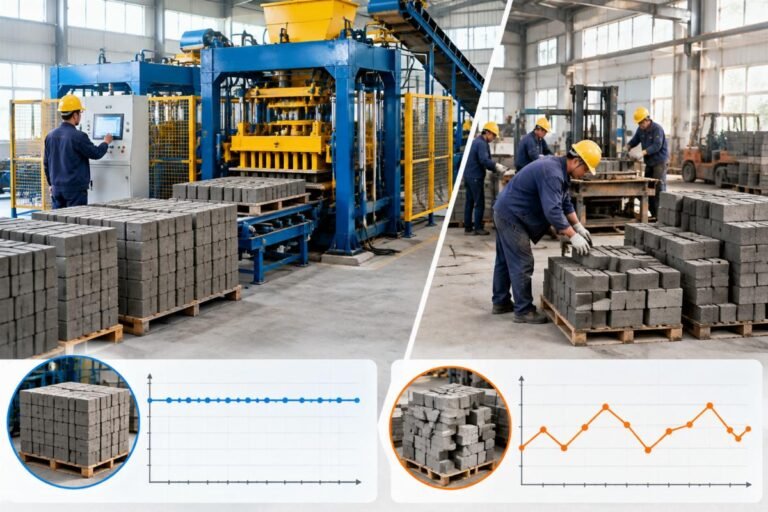
Higher tonnage does not guarantee better block quality. Stability in vibration frequency and mold heat-treatment durability matter far more than raw hydraulic pressure.
For mid-sized investors in the Philippines, the QT8-15 block machine offers the optimal balance between output capacity and initial investment. Success depends entirely on matching local pallet standards and voltage specifications before shipment, rather than simply chasing the lowest factory-direct price.
I started my career welding molds and adjusting vibration tables in a workshop in Suzhou, part of the Yangtze River Delta manufacturing belt. Later, I moved into foreign trade, focusing on the Southeast Asian market. One memorable incident involved a client in Manila who assembled a QT8-15 line from various online sources. When the main unit arrived, they discovered the molds were built to European pallet standards. Local suppliers could not provide matching pallets, leaving the entire production line idle for months while waiting for custom parts. Since then, I have made it a strict rule to verify mold parameters, pallet dimensions, and voltage frequency with clients item by item before production begins. The QT8-15 model is popular in the Philippine market due to high demand, but it comes with specific pitfalls. Below, I break down the key points for selection and direct factory procurement.
Understanding these technical nuances helps avoid costly downtime and ensures a smoother startup for your concrete block business.
Why Does the QT8-15 Fit the Philippine Construction Boom?
The construction sector in the Philippines has seen sustained growth, driven by infrastructure projects and affordable housing initiatives. For small to medium-sized enterprises (SMEs), finding equipment that balances cost and productivity is critical. The QT8-15 block machine Philippines models are designed to meet this specific need.
Unlike smaller manual or semi-automatic units, the QT8-15 offers fully automatic operation with a PLC control system. This allows for consistent output without the labor intensity of older methods. However, it is not as massive or expensive as the QT10 or QT12 series, which are often overkill for startups. The QT8-15 provides a production capacity that is manageable for new plant owners while still delivering a respectable return on investment.
| Feature | Manual/Semi-Auto Machines | QT8-15 Automatic Line | Large Scale QT10/12 Lines |
|---|---|---|---|
| Labor Requirement | High | Moderate | Low |
| Output Consistency | Variable | High | Very High |
| Initial Investment | Low | Moderate | High |
| Maintenance Complexity | Simple | Standard | Complex |
| Suitability for SMEs | Yes | Optimal | Often Over-spec |
[NEED_CITE: market analysis of SME construction material producers in Southeast Asia]
A common misconception is that buying the largest machine available ensures future-proofing. In reality, oversized machines often sit underutilized during the initial months, leading to cash flow issues. The QT8-15 allows for scalability. You can start with standard hollow block molds and later add paver or curbstone molds as your market expands. This flexibility is crucial for navigating the fluctuating demands of the local construction industry.
Choosing the right scale prevents the financial strain of over-investment while ensuring you can meet tender requirements for medium-sized projects.
Critical Specs: Voltage, Frequency, and Pallet Sizes
Technical compatibility is where most import failures occur. The Philippines operates on a 220V/60Hz power grid. Many standard machines from manufacturers accustomed to 50Hz regions may not perform correctly without adjustment.
Ignoring the frequency requirement can lead to motor burnouts. A client once faced repeated motor failures because the hydraulic pump motor was rated for 50Hz. Running it on 60Hz increased the speed but reduced the torque, causing overheating under load. Ensuring the motor specs match the local grid is non-negotiable.
Pallet size is another critical factor. The mold cavity design is directly linked to the pallet dimensions. In the Philippines, common pallet sizes include 1140x540mm and 1100x500mm. If you order a machine with molds designed for 1200x600mm European pallets, you will struggle to source replacements locally. This creates a supply chain bottleneck that can halt production.
| Specification | Standard Export Config | Philippines Custom Config | Risk of Mismatch |
|---|---|---|---|
| Voltage | 380V/50Hz | 220V/60Hz | Motor damage, poor performance |
| Frequency | 50Hz | 60Hz | Hydraulic inefficiency |
| Pallet Size | 1200x600mm | 1140x540mm / 1100x500mm | No local spare pallets available |
| Mold Standard | ISO/European | Local Market Standard | Incompatible block dimensions |
[NEED_CITE: electrical standards and construction material norms in the Philippines]
When sourcing a QT8-15 block machine Philippines, always request a customized configuration sheet. Verify the motor nameplate details and confirm the mold drawing matches your local pallet supplier’s capabilities. This pre-shipment verification saves significant time and money.
Attention to these details ensures your machine integrates seamlessly into your existing or planned production environment.
Factory Direct vs. Local Dealers: Cost and Support Comparison
Buyers often assume that "factory direct" automatically means the lowest possible price. While it eliminates middleman markups, the true value lies in what is included in the package. Local dealers may charge more, but they often bundle installation and immediate spare parts support.
Sourcing directly from a manufacturer like Shiyue can save a significant portion of the budget. However, this requires the buyer to take more responsibility for logistics and technical setup. The risk is not just in the purchase price, but in the potential for hidden costs if things go wrong.
| Factor | Factory Direct Purchase | Local Dealer Purchase |
|---|---|---|
| Equipment Cost | Lower | Higher |
| Shipping Control | Buyer/Manufacturer Coordination | Dealer Managed |
| Technical Support | Remote + On-site (if arranged) | Immediate Local Access |
| Spare Parts Availability | Shipped from Factory | Local Stock |
| Installation Training | Included in Turnkey Packages | Often Included |
[NEED_CITE: comparative cost analysis of construction machinery procurement channels]
A key advantage of working with an experienced manufacturer is the ability to optimize shipping. Poor loading plans can waste up to a fifth of container space. By disassembling the QT8-15 strategically, you can maximize the utility of a 40HQ container. This reduces the per-unit shipping cost significantly.
Moreover, factory-direct packages often include comprehensive operator training. This is not just a manual, but hands-on guidance that reduces the trial-and-error period from weeks to days. Without this, you might face month-long downtimes while figuring out PLC settings or hydraulic adjustments.
Balancing the lower upfront cost of direct buying with the need for robust support requires careful planning. Ensure your supplier offers clear terms for after-sales service and spare parts delivery.
Installation and Training: Ensuring Quick Startup
Receiving the machine is only half the battle. Proper installation and training are what turn a stack of steel into a profitable production line. Many buyers underestimate the complexity of aligning the vibration system and calibrating the hydraulic pressure.
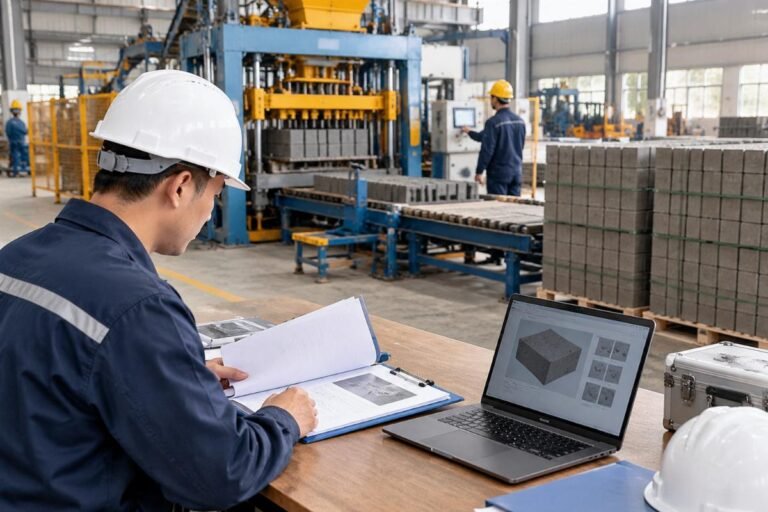
The vibration frequency must be stable to ensure consistent block density. If the table is not leveled correctly, blocks will have uneven surfaces or weak spots. This is not something that can be fixed by simply reading a manual. It requires on-site expertise.
- Foundation Preparation: Ensure the concrete foundation is cured and level. Use precision levels to check the machine base.
- Hydraulic System Check: Inspect all hoses and connections for leaks. Fill with the recommended hydraulic oil grade.
- Electrical Connection: Connect according to the provided diagram, ensuring phase sequence is correct for motor direction.
- Dry Run: Operate the machine without materials to check for abnormal noises or movements.
- Material Trial: Run a small batch with dry mix, then adjust water content and cycle time.
[NEED_CITE: best practices for industrial machinery installation and commissioning]
A common error is rushing the trial phase. Operators may try to run at full speed immediately, leading to jammed molds or sensor errors. Gradual ramp-up allows the team to understand the machine’s rhythm.
Training should cover not just operation, but basic maintenance. Knowing how to replace a proximity sensor or clean a solenoid valve can prevent minor issues from becoming major breakdowns. This knowledge empowers your local team to keep the line running smoothly.
Investing time in proper installation and training pays off in long-term reliability and product quality.
Conclusion
Success with a QT8-15 block machine Philippines depends on technical precision, not just purchase price.
Aligning voltage, frequency, and pallet standards before shipment prevents operational deadlocks. Factory-direct sourcing offers cost advantages, but only when paired with rigorous verification and comprehensive training. Focus on stability and support to build a sustainable block manufacturing business.
Leave a Reply