

Concrete Block Machine OEM Customization from China Manufacturer
Most buyers assume OEM is just slapping a logo on a standard machine.
Successful Concrete Block Machine OEM Customization requires balancing branding desires with technical constraints, specifically mandating raw material testing before mold finalization to prevent production failures. Without this step, cosmetic changes often lead to structural inefficiencies that compromise brick quality and machine longevity.
I remember standing in the humid air of a port in Lagos, watching a container open to reveal a gleaming new interlocking brick line. The buyer was thrilled with the paint job and the branded control panel. But within days, the excitement turned to frustration. Every time the mold lifted, the fresh bricks cracked at the edges. The issue wasn’t the hydraulic pressure or the PLC logic; it was the aggregate ratio in the local soil, which differed significantly from the standard mix used during the factory’s initial calibration. I had skipped the mandatory soil sample test to speed up delivery, assuming the standard mold geometry would suffice. That assumption cost us two months of dispute resolution and nearly ruined a long-term partnership. Since then, my approach to Concrete Block Machine OEM Customization has shifted from simply executing design requests to validating the physical reality of the production environment first.
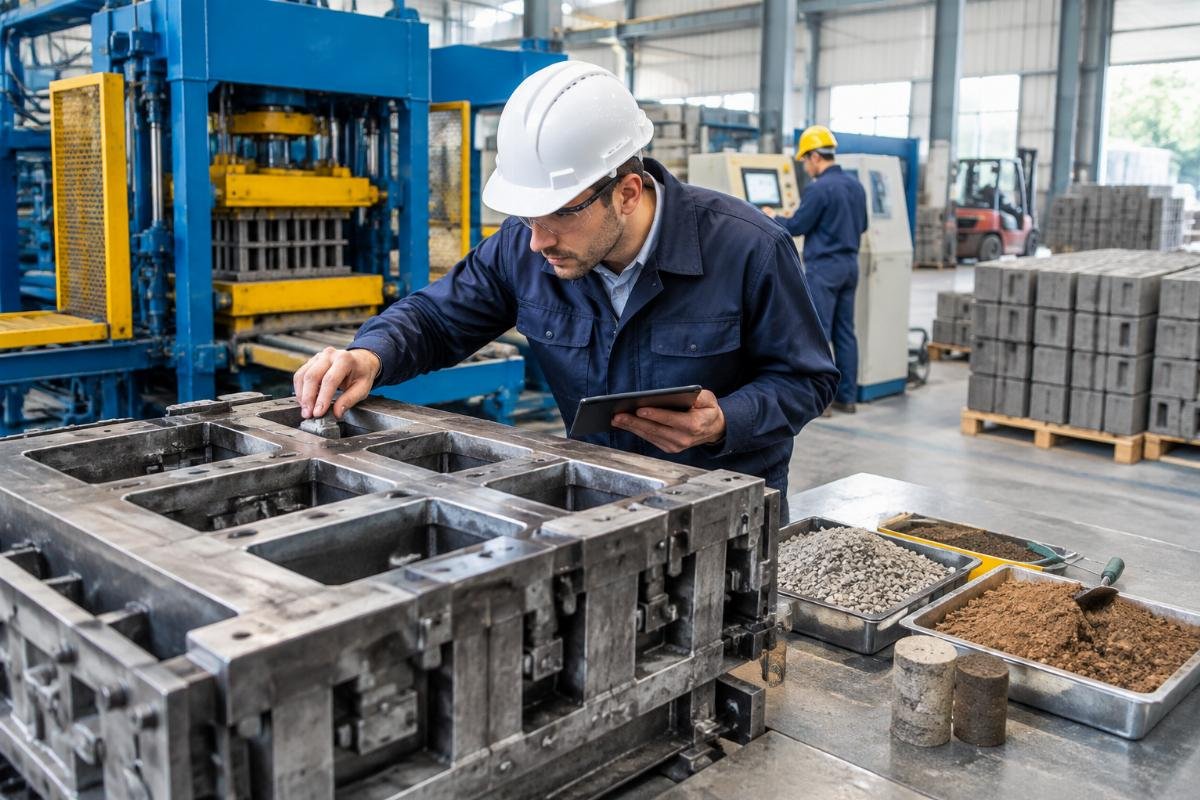
This guide breaks down how to navigate the technical pitfalls of customization, ensuring your branded equipment performs as reliably as it looks.
What Can Be Customized in Concrete Block Machines?
Customization falls into three distinct tiers: cosmetic branding, software localization, and structural mold modification.
Understanding these tiers helps distributors and plant owners prioritize budgets and avoid over-engineering simple requests. Cosmetic changes are low-risk and high-impact for brand visibility. Software adjustments require time for coding and testing but offer significant operational ease for local operators. Structural changes, however, demand rigorous engineering validation because they alter the fundamental physics of the machine.
| Customization Tier | Examples | Technical Risk Level | Lead Time Impact |
|---|---|---|---|
| Cosmetic Branding | Logo placement, color scheme, nameplate design | Low | Minimal |
| Software Localization | PLC interface language, custom alarm messages | Medium | Moderate |
| Structural Mold Changes | Brick dimensions, pallet size, mold cavity geometry | High | Significant |
A distributor in Southeast Asia once requested a full local language interface for their PLC system. While this seemed like a simple translation task, it required re-mapping every error code and menu item to ensure clarity for local operators. The hardware remained unchanged, but the software validation process added several weeks to the timeline. In contrast, a client in Latin America wanted to modify the pallet size to fit an existing conveyor system. This required reinforcing the machine’s frame to handle the altered stress distribution, a change that demanded extensive structural integrity checks [NEED_CITE: structural load calculations for modified frame dimensions].
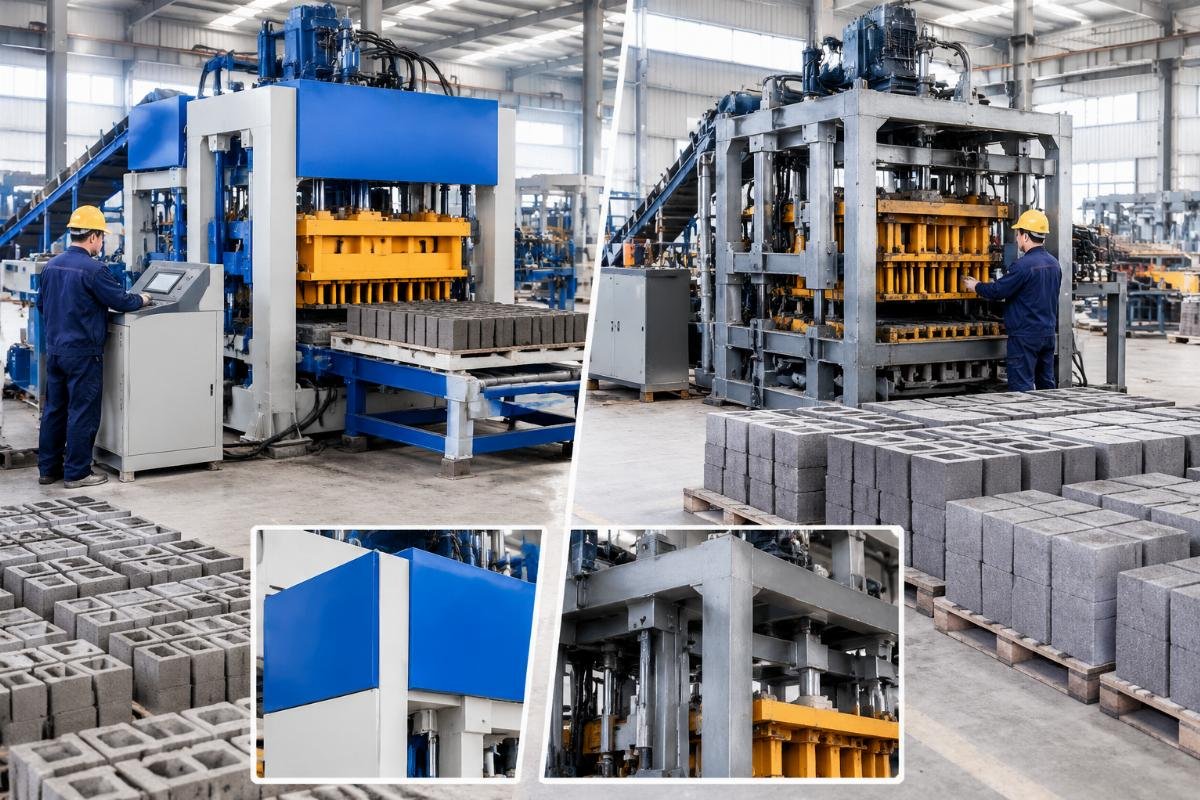
When planning Concrete Block Machine OEM Customization, always distinguish between what changes the look and what changes the function. Functional changes must be treated as new engineering projects, not just aesthetic updates.
Why Raw Material Testing Is Non-Negotiable for OEM Molds
The chemical and physical composition of local aggregates dictates mold design success more than any mechanical setting.
Many buyers believe that a mold is a universal tool, capable of producing perfect bricks regardless of the input material. This is a dangerous misconception. The moisture content, sand-to-cement ratio, and aggregate hardness all influence how the concrete behaves under pressure and during demolding. If the mold geometry does not account for these variables, the result is often cracking, sticking, or uneven density.
In the Lagos incident mentioned earlier, the soil had a higher clay content than the standard test mix. The standard mold release angle was insufficient for this stickier mixture, causing the bricks to tear as they were ejected. Had we tested the actual site material beforehand, we could have adjusted the mold’s taper and surface finish to accommodate the specific soil properties. This "sample-first" rule is now a strict protocol in my workflow.
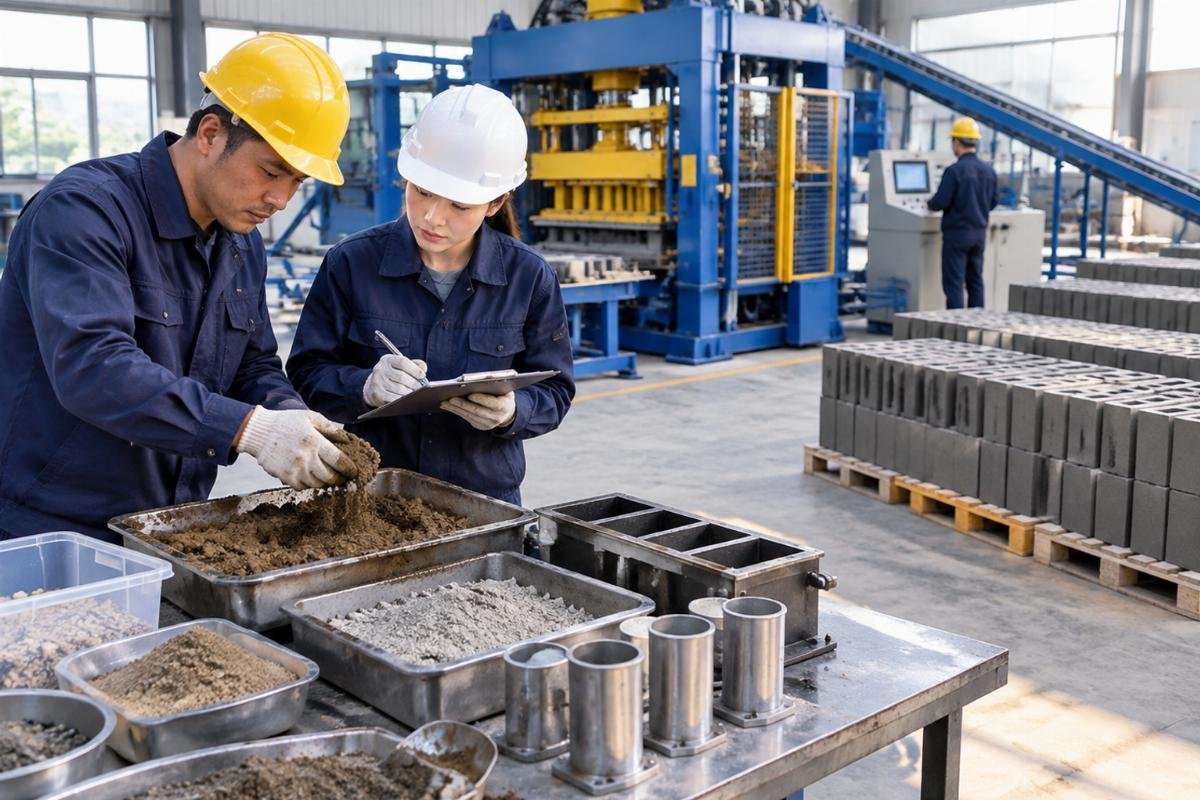
Testing involves more than just checking strength. It includes analyzing abrasion resistance to determine the appropriate steel hardness for the mold [NEED_CITE: mold steel hardness standards for abrasive aggregates]. Soft aggregates may allow for standard steel, while hard, sharp gravel requires hardened surfaces to prevent premature wear. By integrating raw material data into the design phase, Concrete Block Machine OEM Customization becomes a precise engineering solution rather than a guesswork exercise.
The Hidden Costs of Late-Stage Design Changes
Modifying molds after fabrication impacts lead time and cost exponentially compared to early-stage adjustments.
Once a mold is cut and welded, changes are no longer simple edits; they are reconstructions. A buyer might request a slight adjustment to the brick’s edge profile after seeing the first prototype. While this seems minor, it often requires re-machining the entire cavity, re-hardening the steel, and re-testing the fit. These steps add significant time and expense, often doubling the original mold cost.
Consider a project where a client changed the interlocking mechanism’s tolerance after the mold was already finished. The new requirement demanded tighter precision, which meant the existing mold could not be salvaged. A new mold had to be fabricated from scratch, delaying the shipment by several weeks. This delay not only increased costs but also pushed back the plant’s commissioning date, affecting the buyer’s revenue stream.
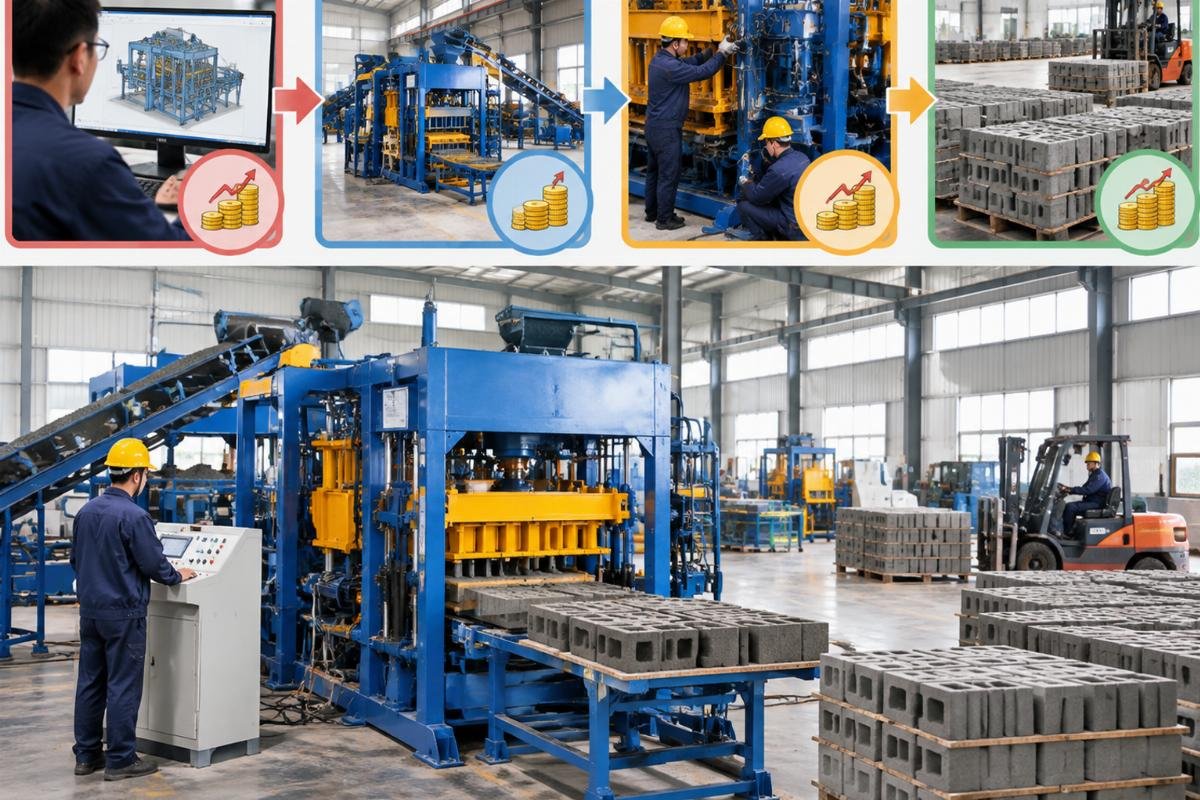
To avoid these pitfalls, finalize all design specifications before manufacturing begins. Use 3D renderings and virtual simulations to confirm dimensions and features. This pre-validation step ensures that when the physical mold arrives, it matches the exact requirements, minimizing the need for costly revisions. Effective Concrete Block Machine OEM Customization relies on thorough upfront planning, not iterative fixes during production.
How to Validate Your OEM Order Before Shipment
Verification must go beyond visual inspection to include functional trial runs and documented performance metrics.
Before the machine leaves the factory, it must undergo a comprehensive validation process. This includes video verification of the trial run, recording of key performance indicators, and alignment of the spare parts kit with the customized components. Simply checking that the logo is correctly placed is insufficient; the machine must prove it can produce the specified brick shape consistently.
At Shiyue, we implement a standard protocol of recording signed video trials. These videos capture the entire production cycle, from mixing to ejection, providing clear evidence of the machine’s capability. We also provide turnkey training materials tailored to the customized features, ensuring that operators understand the specific nuances of their equipment. This approach minimizes the learning curve and ensures smooth operation from day one.
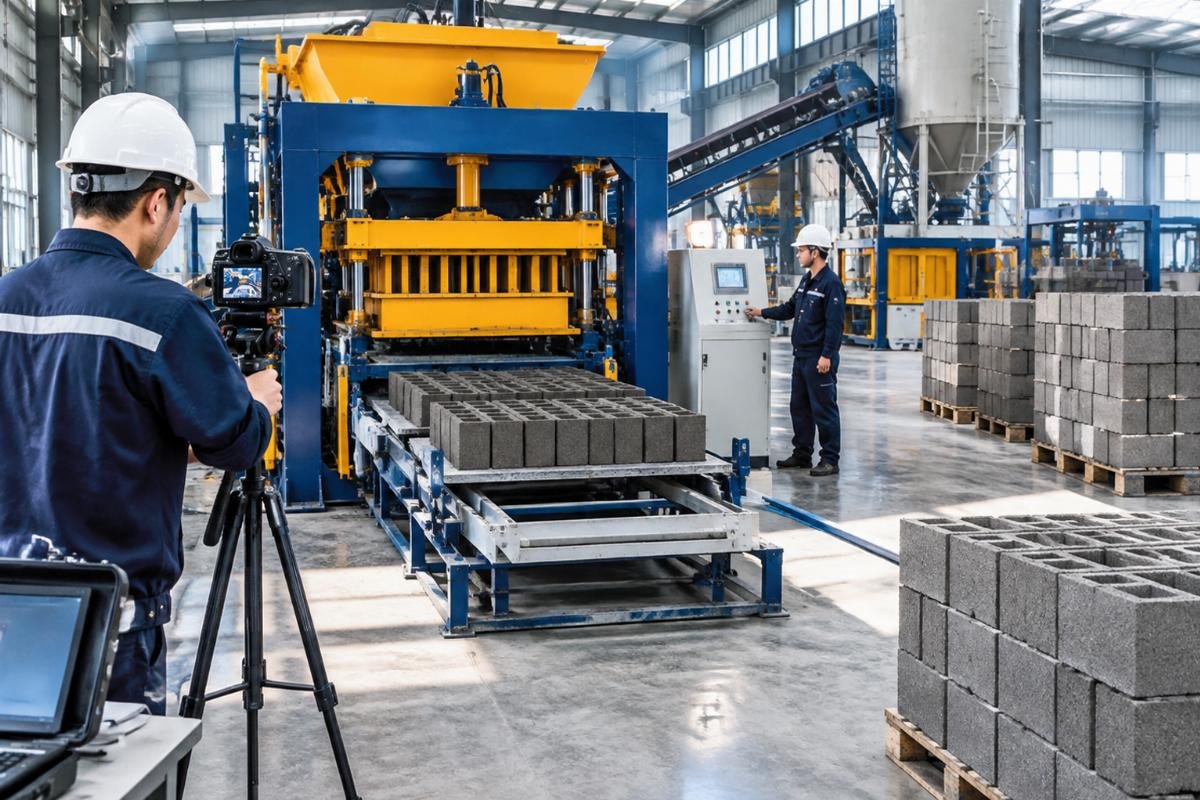
A checklist for validation should include:
- Verification of PLC interface language and functionality.
- Trial run records showing consistent brick quality.
- Confirmation that spare parts match the customized mold dimensions.
- Documentation of hydraulic pressure settings adjusted for the new mold weight.
By adhering to this rigorous validation process, buyers can ensure that their Concrete Block Machine OEM Customization delivers both the brand identity they desire and the technical performance they need.
Conclusion
Customization is not just about branding; it is about engineering precision.
Avoid the common mistake of treating OEM as a cosmetic upgrade. Prioritize raw material testing, finalize designs early, and validate thoroughly before shipment. This disciplined approach ensures that your customized concrete block machine operates efficiently and reliably, protecting your investment and reputation.
Leave a Reply