

QT5-15 Block Machine Specs & Buyer Guide | Factory Direct Supplier
Higher hydraulic pressure does not guarantee stronger blocks; consistent vibration frequency and precise mix water content do.
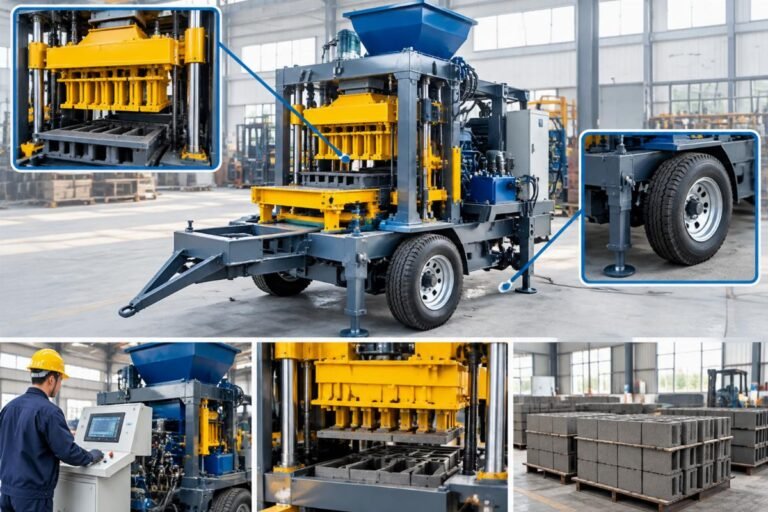
The QT5-15 block machine is a mid-range automatic solution designed to balance daily output with capital expenditure, but its theoretical specifications only translate into real-world ROI if the cycle time and pallet dimensions are strictly matched to local voltage standards and raw material constraints. Buyers must verify frequency adaptation needs and standard pallet compatibility before purchase, rather than relying solely on brochure numbers that assume ideal laboratory conditions.
I started my career on the assembly floor in Linyi, wiring PLC panels for concrete block machines long before I ever sat across from a buyer. That hands-on background shapes how I evaluate equipment today, because I have seen exactly what happens when technical specs are guessed rather than verified against site conditions. A few years ago, a buyer in Veracruz ordered a production line based on a competitor’s brochure promises. The machine arrived, but the vibration motor was rated for 50Hz while the local grid in Mexico operates at 60Hz. The production cycle drifted, output dropped noticeably, and the client initially blamed the machine quality. It was not a manufacturing defect; it was a fundamental mismatch between the spec sheet and local power standards. This incident reinforced a critical lesson: any credible buyer guide must start with the parameters that actually matter on the ground, such as cycle time at local voltage and real-shift daily output, rather than idealized lab figures. [NEED_CITE: impact of motor frequency mismatch on hydraulic cycle time]
Understanding these operational realities is the first step toward selecting the right equipment. Let us break down the core technical specifications that define this machine class.
What Are the Core Technical Specs of the QT5-15?
The QT5-15 is defined by its molding force, cycle time, and power requirements, which together determine its suitability for medium-volume production.
When evaluating a QT5-15 block machine specifications sheet, most buyers focus immediately on the maximum block size or the hourly output claim. However, the true performance indicators are the molding force capacity and the stability of the vibration system. The molding force determines the density and strength of the final product, while the vibration frequency ensures proper compaction of the concrete mix. Without sufficient vibration amplitude, even high hydraulic pressure will result in weak, porous blocks that fail to meet construction standards. [NEED_CITE: relationship between vibration amplitude and concrete block density]
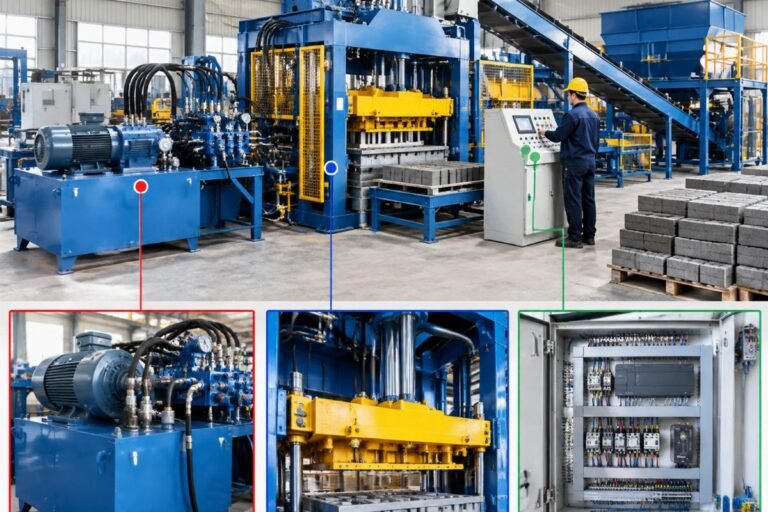
The power requirement is another critical specification that is often overlooked during the initial selection phase. The QT5-15 typically requires a three-phase power supply, but the exact voltage and amperage can vary depending on the specific configuration of the hydraulic pump and vibration motors. Ignoring these details can lead to significant installation delays and additional costs for electrical transformers or rewiring.
| Parameter | Standard Configuration | Customizable Option | Verification Method |
|---|---|---|---|
| Molding Force | High Pressure | Adjustable | Check hydraulic pump rating |
| Vibration Frequency | Fixed Range | Multi-frequency | Verify motor nameplate |
| Power Supply | Standard 3-Phase | Voltage Adaptation | Review electrical schematic |
| Control System | PLC Automated | Remote Diagnostic | Test interface responsiveness |
A Brazilian client once experienced prolonged downtime because the supplied pallets did not match the mold cavity dimensions. The non-standard pallet size caused frequent jamming in the feeding system, halting production for days. This highlights why understanding the full QT5-15 block machine specifications includes not just the machine itself, but also the ancillary components like pallets and molds. [NEED_CITE: common mechanical failures due to pallet size mismatch]
Selecting the right specifications requires a holistic view of the entire production line, not just the main unit.
How Does Local Voltage Impact QT5-15 Output?
Voltage and frequency mismatches directly alter the motor speed, which changes the cycle time and reduces actual production capacity.
Many buyers assume that an "automatic" machine is plug-and-play, but the reality is that motor performance is tightly linked to the local electrical grid. In regions with 60Hz power, such as parts of Latin America, a motor designed for 50Hz will run faster. This might seem beneficial, but it can disrupt the synchronized timing of the hydraulic press and the vibration table. If the vibration phase ends before the mold is fully filled, or if the pressing cycle completes before the concrete has settled, the block quality suffers significantly. [NEED_CITE: effects of frequency variation on hydraulic system synchronization]
For a QT5-15 concrete block maker output capacity to remain stable, the electrical system must be calibrated to the local environment. A Chilean project I consulted on struggled with inconsistent block strength because the local sand fineness varied, but the root cause was exacerbated by unstable voltage fluctuations that affected the hydraulic pressure consistency. The machine could not maintain the required molding force during peak load times, leading to variable product quality.
To avoid this, buyers should request a voltage adaptation service during the ordering process. This ensures that the motors and control systems are configured for the specific frequency and voltage of the target market. Without this adjustment, the theoretical output listed in the brochure will not match the real-world production speed.
| Grid Condition | Impact on Motor | Effect on Cycle Time | Production Outcome |
|---|---|---|---|
| 50Hz Design / 60Hz Grid | Increased Speed | Shorter Cycle | Potential Quality Drop |
| Unstable Voltage | Fluctuating Torque | Irregular Timing | Inconsistent Density |
| Correct Adaptation | Stable Operation | Optimized Cycle | Consistent Output |
Ensuring electrical compatibility is a simple step that prevents complex operational issues later.
Proper electrical setup is foundational to achieving the expected performance from the equipment.
Which Pallet Sizes Work Best for QT5-15 Molds?
Standard pallet dimensions ensure smooth material flow and prevent mechanical jams, while custom sizes require precise mold adjustments.
Pallet incompatibility is one of the most common causes of production delays for new plant investors. The QT5-15 is designed to work with specific pallet sizes that align with the mold cavity and the feeding shoe mechanism. Using non-standard pallets, even if they seem close in dimension, can cause the pallet to stick or misalign during the ejection phase. This not only stops production but can also damage the mold and the pallet itself. [NEED_CITE: industry standards for concrete block pallet dimensions]
When you look to buy QT5-15 block machine from China, it is essential to confirm the pallet specifications with the supplier. Most manufacturers offer standard sizes that are widely available in the market, but some buyers prefer custom sizes to match existing inventory or specific block designs. In such cases, the mold must be custom-built to accommodate the unique pallet dimensions, which adds to the lead time and cost.
A Middle Eastern contractor once attempted to use recycled wooden pallets of varying thicknesses. The inconsistency in height caused the vibration table to operate unevenly, leading to cracked blocks and increased wear on the machine frame. Switching to standardized steel or bamboo pallets with strict tolerance levels resolved the issue immediately.
| Pallet Type | Dimensional Tolerance | Compatibility | Risk Level |
|---|---|---|---|
| Standard Steel | Strict | High | Low |
| Standard Bamboo | Moderate | High | Low |
| Custom Wood | Variable | Low | High |
| Recycled Mixed | None | None | Critical |
Choosing the right pallet material and size is crucial for maintaining continuous operation.
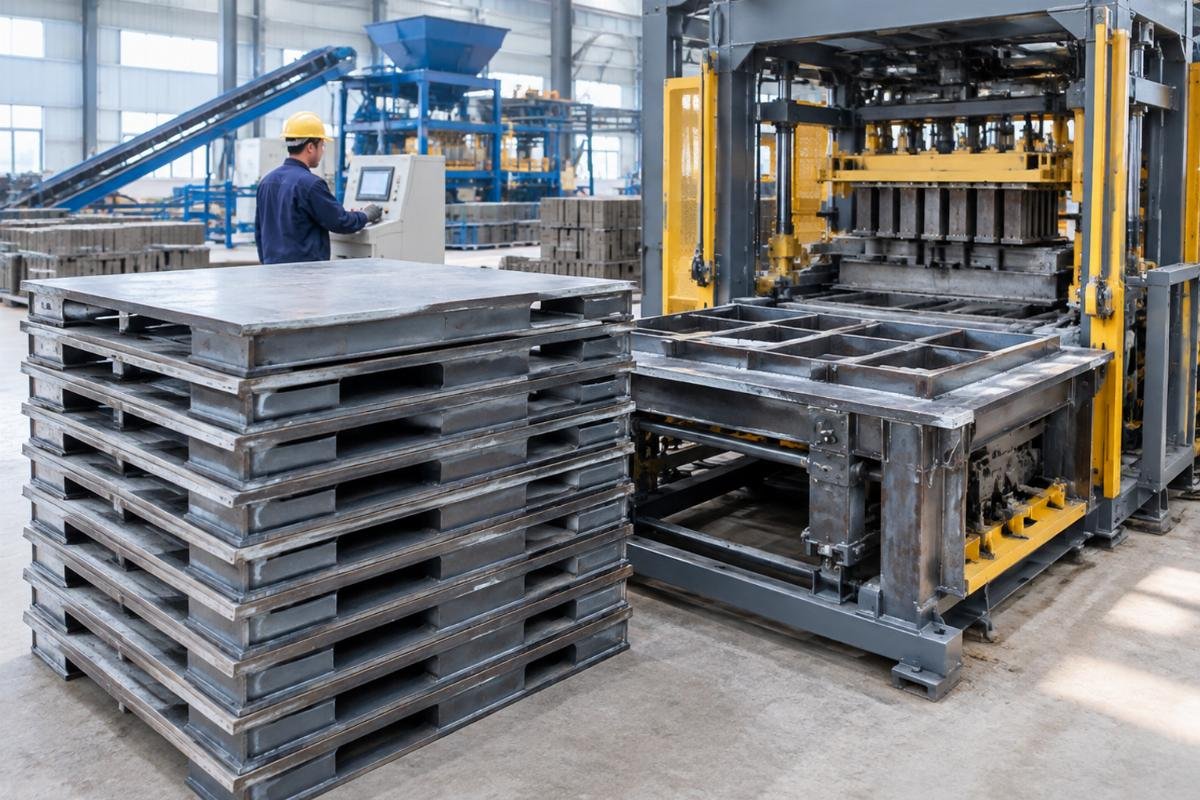
Consistency in pallet specifications supports the overall efficiency of the production line.
What Is the Real ROI for a QT5-15 Line?
Realistic ROI analysis depends on daily output potential against energy and labor costs, not just the initial purchase price.
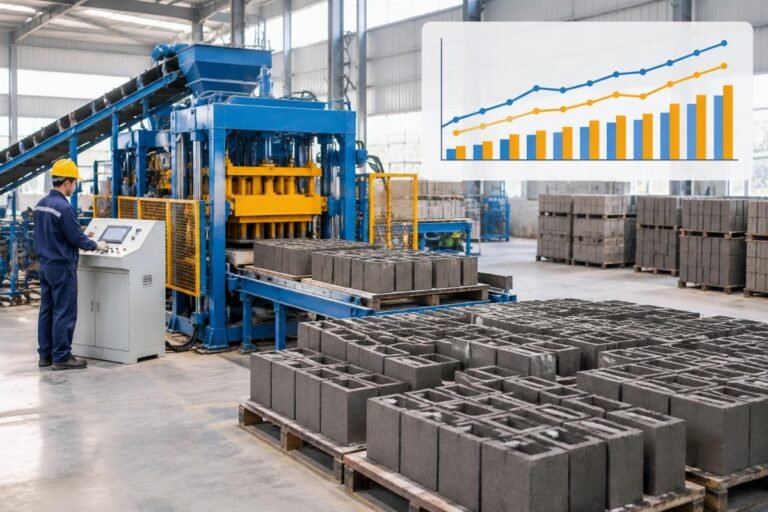
Calculating the return on investment for a QT5-15 hydraulic pressure specs compliant machine requires a detailed breakdown of operational costs. While the initial capital outlay is lower compared to European peers, the ongoing expenses for electricity, raw materials, and labor must be factored in. The power consumption per thousand blocks produced is a key metric that influences the long-term profitability of the plant. [NEED_CITE: average energy consumption per concrete block produced]
Private plant investors in emerging markets often prioritize quick payback periods. To achieve this, the machine must operate at near-maximum capacity with minimal downtime. This means investing in operator training and preventive maintenance schedules. A well-trained team can identify minor issues before they become major failures, keeping the production line running smoothly.
Furthermore, the quality of the raw materials plays a significant role in ROI. Using locally sourced aggregates that are not properly screened or mixed can lead to higher rejection rates. A South American buyer reduced their waste rate substantially by implementing a strict mix design protocol that accounted for the local sand fineness. This adjustment improved block strength and reduced the need for rework, directly boosting the bottom line.
| Cost Factor | Impact on ROI | Mitigation Strategy |
|---|---|---|
| Energy Consumption | High | Optimize cycle time |
| Labor Efficiency | Medium | Operator training |
| Material Waste | High | Strict mix design |
| Maintenance Downtime | Medium | Preventive schedule |
Focusing on operational efficiency maximizes the financial return from the equipment.
Efficient operations are the key to unlocking the full financial potential of the investment.
Conclusion
Success with the QT5-15 depends on matching technical specs to local conditions, not just buying the machine.
The QT5-15 offers a balanced solution for medium-volume production, but its performance is highly sensitive to voltage frequency, pallet dimensions, and raw material quality. Buyers who verify these parameters before purchase and invest in proper operator training will see a much faster and more stable return on their investment. Ignoring these details leads to avoidable downtime and reduced output, undermining the initial cost savings.
Leave a Reply