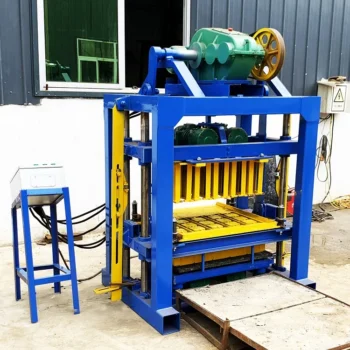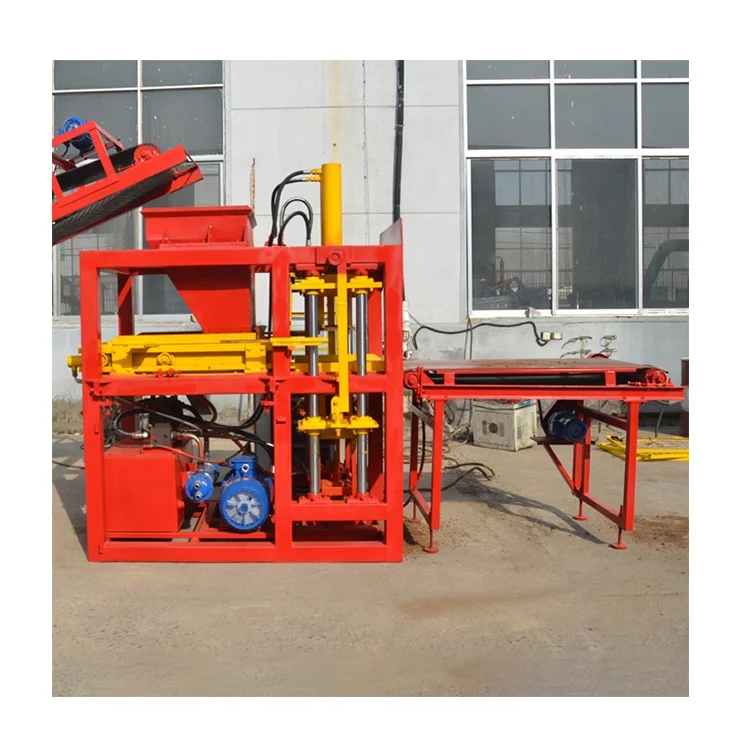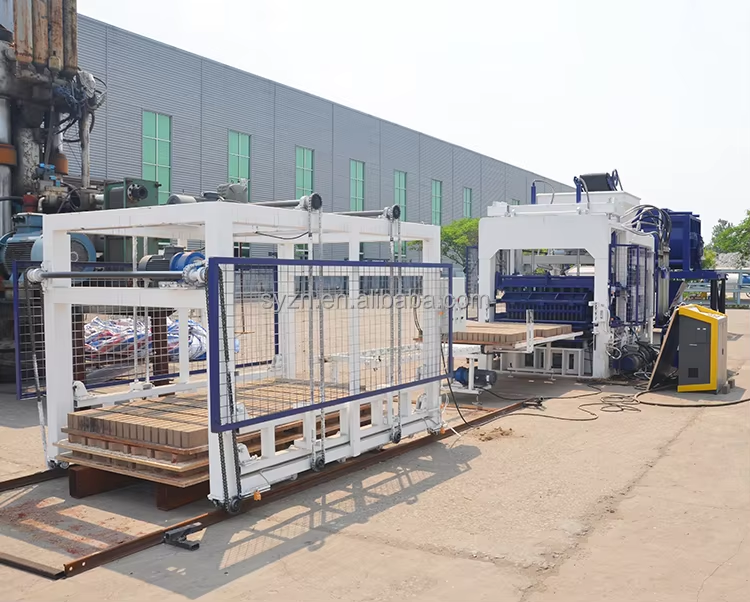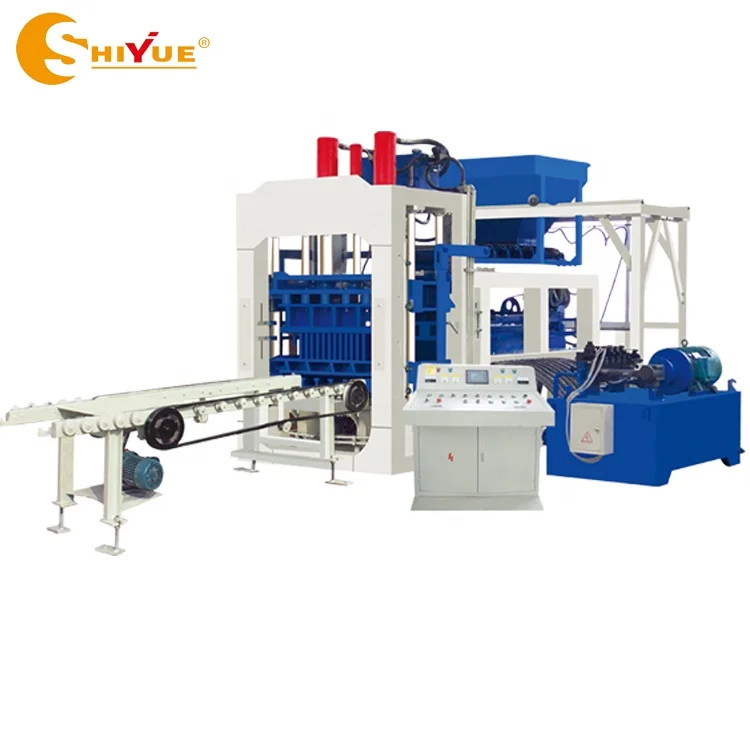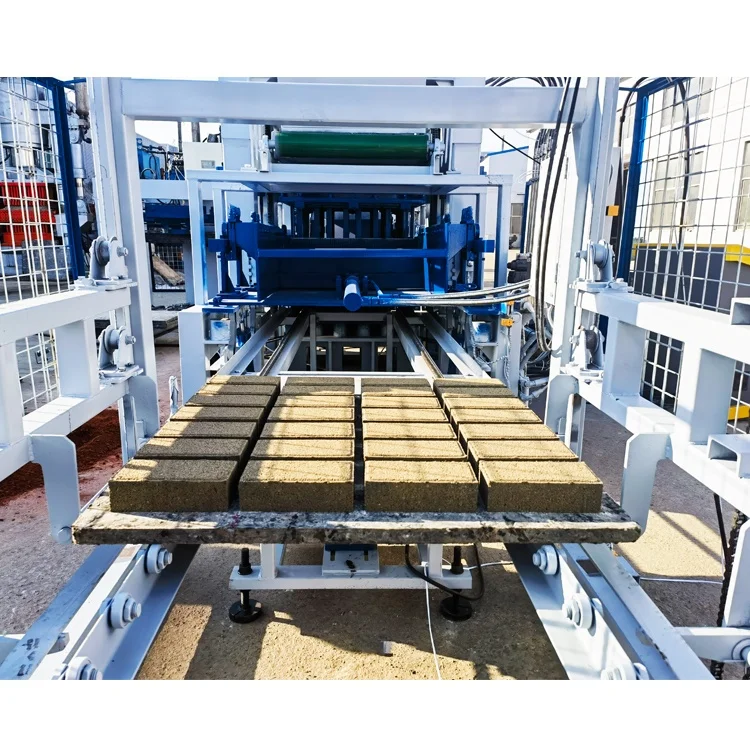
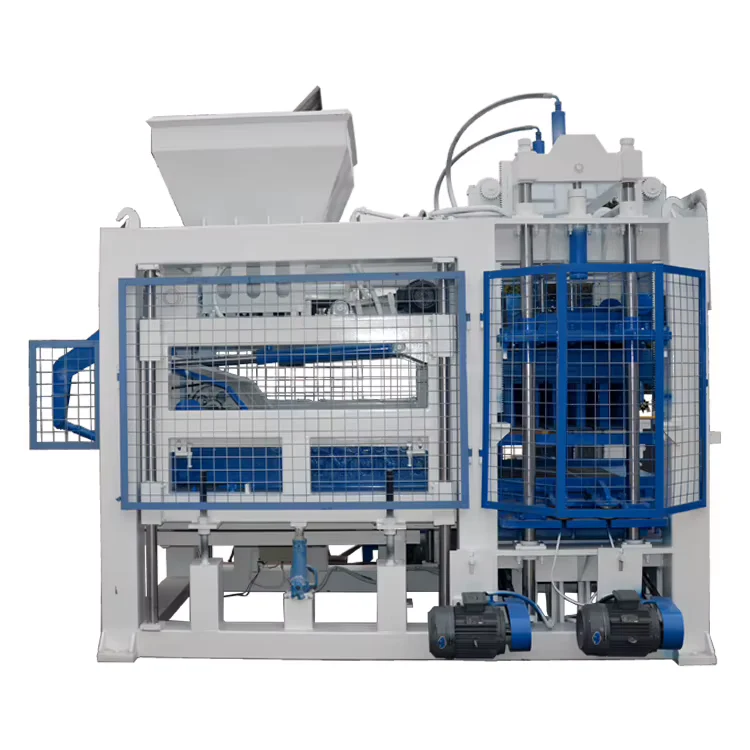
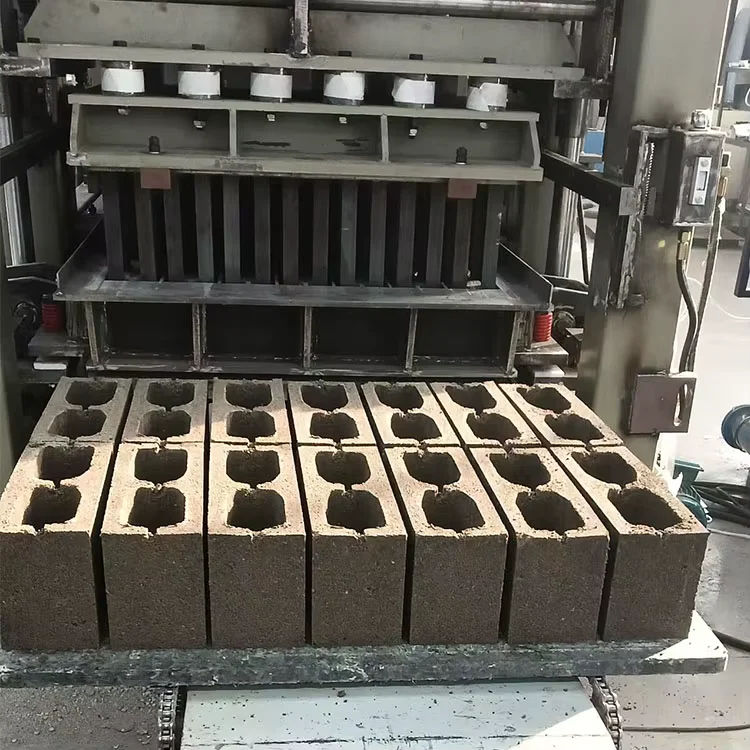
Description
Ready Automation Tiers — standard configurations ship immediately, letting you bypass custom build delays while keeping future upgrade paths open for your project timeline.
Technical Specifications
| Parameter | Value |
|---|---|
| Model | QT10-15 |
| Product Type | Fully Automatic Concrete Block Making Machine |
| Method | Hydraulic pressure |
| Voltage | 380V |
| Overall Dimensions (L×W×H) | 9350 x 2320 x 2950 mm |
| Net Weight | 9500 kg |
| Core Components | Motor, Pump |
| Mould Format Options | 400x200x200 mm, 400x150x200 mm, 200x100x60 mm, and others |
| Molding Cycle | Varies by block format (basis to be confirmed) |
| Warranty | More Than 5 Years |
| Machinery Test Report | Provided |
| Video Outgoing-inspection | Provided |
Application Suitability
| Application | Material or Output |
|---|---|
| Hollow block production | Concrete, cement, crushed stone, sand |
| Paving block manufacturing | Interlock designs using standard aggregates |
| Curbstone forming | Heavy-duty concrete mixes |
| Solid brick production | Clay and cement blends |
Why "Fast Delivery" Must Include Electrical Verification
Securing a QT10-15 block machine in stock only solves half the schedule problem if the electrical configuration does not match your site.
A stocked machine is useless if it sits idle waiting for a compatible transformer.
Early in my career, I oversaw the installation of a QT10-15 unit in Africa where the local grid frequency and voltage were assumed rather than verified. The machine arrived on time, but the mismatched transformer meant the crew stood by for three weeks while the correct electrical components were sourced and shipped. That delay wiped out any advantage gained from the initial rapid dispatch. Today, verifying the exact 380V or alternative voltage requirements and control language happens before the crate is sealed [NEED_CITE: voltage and frequency standards by export market]. A true fast delivery concrete block machine must be electrically ready to run the moment it is unloaded.
Standard Mould Inventory for Immediate Dispatch
When a project deadline is tight, waiting for custom tooling is not an option. Our facility maintains a ready inventory of standard mould formats, including the highly demanded 400x200x200 mm hollow block and various paving sizes. Because these standard formats are pre-matched to the QT10-15 block machine in stock, we can load the press and the tooling into the same shipment. This eliminates the secondary freight delays that often occur when buyers source the press and the moulds from separate suppliers on different timelines.
Container Loading and Dismantling Protocols
The physical dimensions of this equipment dictate the logistics strategy. At 9350x2320x2950 mm and 9500 kg, the mainframe requires precise dismantling to fit standard shipping containers efficiently. We break down the hydraulic stations and feeding assemblies without compromising the structural integrity of the main press. This pre-planned dismantling ensures that the fast delivery concrete block machine arrives in a configuration that your local forklifts and cranes can handle immediately, reducing the time spent on port unpacking and site positioning.
Interpreting the Physical and Electrical Footprint
The 9500 kg net weight reflects the heavy-duty steel required to withstand continuous hydraulic pressure and vibration forces during the molding cycle. This mass is critical for dampening vibrations that could otherwise damage surrounding site structures. The 380V electrical configuration powers the main motor and hydraulic pump, demanding a dedicated industrial circuit with adequate amperage to handle the startup surge. Understanding these physical and electrical realities ensures your site preparation matches the equipment specifications before the vessel even docks [NEED_CITE: industrial power requirements for hydraulic block presses].
The Hidden Costs of Overlooking Dispatch Details
Failing to confirm the exact dismantling state before shipment often leads to port bottlenecks. If a machine is loaded without considering the destination port’s unloading equipment, you face heavy manual labor or expensive third-party crane rentals. Furthermore, assuming a machine is ready to ship without verifying the specific stock unit’s test records can result in receiving a unit that requires immediate hydraulic seal replacements. These oversight-induced delays quietly destroy the project schedule you were trying to protect [NEED_CITE: common causes of port delays for heavy machinery].
Why Source Your Equipment Here
We focus exclusively on block making machinery, meaning the press, pallets, and handling equipment are specified as one matched system from our available stock. Our dispatch lead times and arrival estimates are quoted upfront based on actual inventory, not optimistic production schedules. We provide detailed container loading plans and machine dismantling procedures tailored to your specific port capabilities. Every stock unit is backed by factory test records and video outgoing-inspections to verify its condition prior to dispatch. Finally, our standardized customs documentation support prevents border delays, ensuring your equipment clears transit smoothly.
Documentation & Verification
- Factory test record verifying hydraulic pressure and motor function before dispatch.
- Video outgoing-inspection showing the specific stock unit running standard moulds.
- Detailed container loading plan and dismantling schematic for your port team.
- Machinery test report confirming structural and electrical safety standards.
- Standardized customs documentation package to expedite border clearance.
Installation, Commissioning & Support
- Foundation requirements mapped to the 9500 kg operating weight and vibration profile.
- Dedicated 380V circuit specifications provided to prevent motor startup failures.
- Step-by-step reassembly guide for the dismantled hydraulic and feeding components.
- Initial parameter setting for the specific standard mould formats included in the shipment.
- Wear parts list identifying critical hydraulic seals and pump components for local sourcing.
Preparing Your Site for Arrival
To ensure the equipment integrates smoothly into your operation upon arrival, please provide your exact local voltage and frequency standards, along with the available transformer capacity. We also need to know your port’s maximum unloading weight limits and the dimensions of your prepared curing area to confirm the pallet handling flow. Sharing these site-specific details allows us to finalize the electrical configuration and loading plan before the machine leaves our floor.
Frequently Asked Questions
Q: What is the exact dispatch lead time for the QT10-15?
A: Because this unit is maintained in our ready-to-ship inventory, dispatch lead times are significantly shorter than custom builds. Once the electrical configuration and standard mould selection are verified against your site requirements, we provide an upfront arrival estimate and immediately begin the container loading process to meet your project deadline.
Q: Which standard moulds are currently in stock for this machine?
A: We keep a robust inventory of standard formats, including the 400x200x200 mm hollow block and various paving block sizes. These standard moulds are pre-engineered to fit the QT10-15, allowing us to include them in the same immediate shipment without waiting for custom tooling fabrication.
Q: How is the machine dismantled for fast shipment?
A: The 9350x2320x2950 mm mainframe is carefully dismantled at our facility to optimize container space. We separate the hydraulic pump stations and feeding assemblies, securing them for transit. This ensures the equipment fits standard shipping containers and can be easily reassembled using standard site equipment upon arrival.
Q: Are test reports available for the specific stock unit?
A: Yes, every stock unit undergoes a rigorous factory test before crating. We provide the specific machinery test record and a video outgoing-inspection of your exact machine running its designated moulds, giving you complete verification of its condition prior to dispatch.