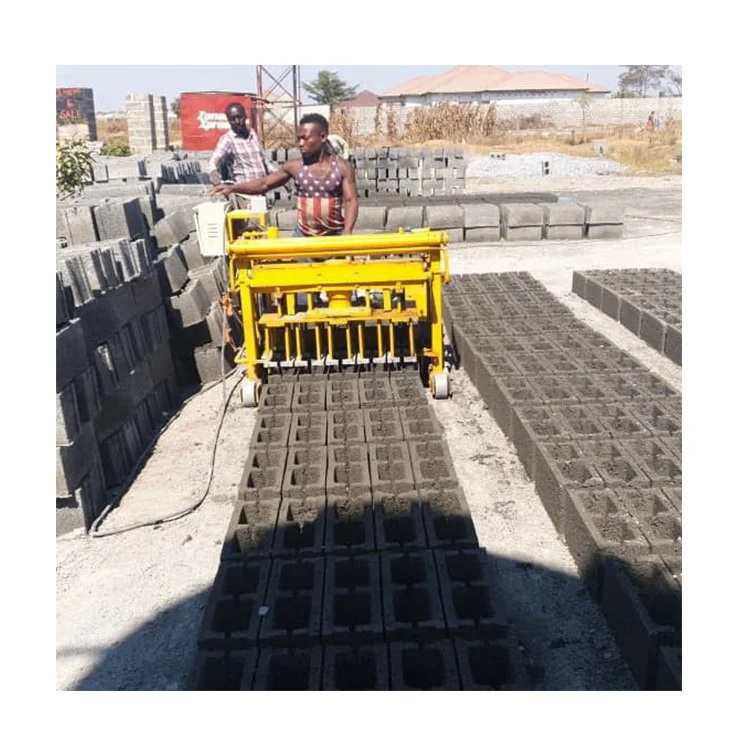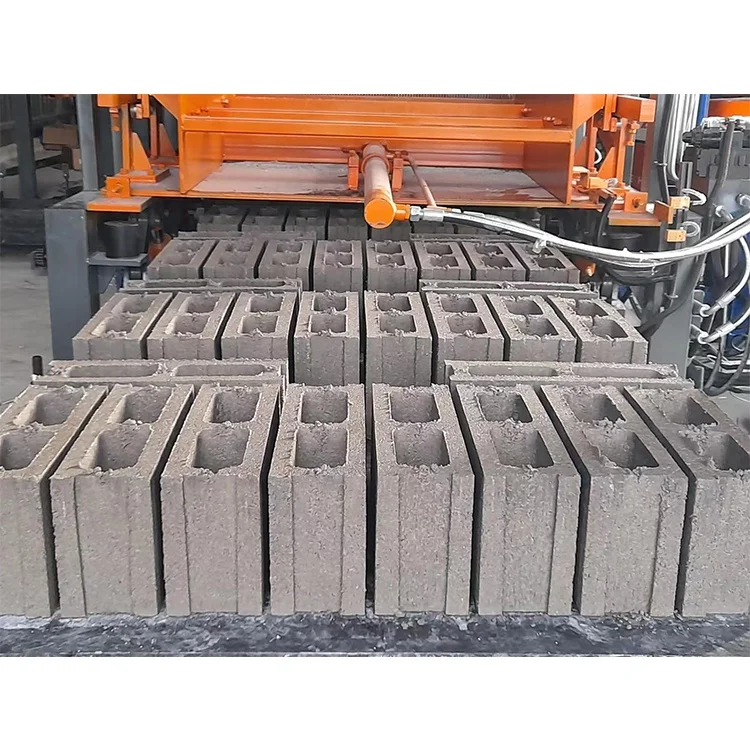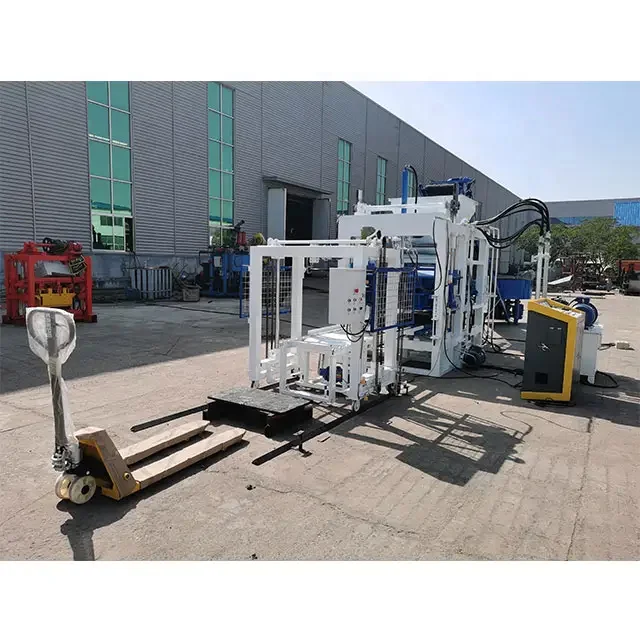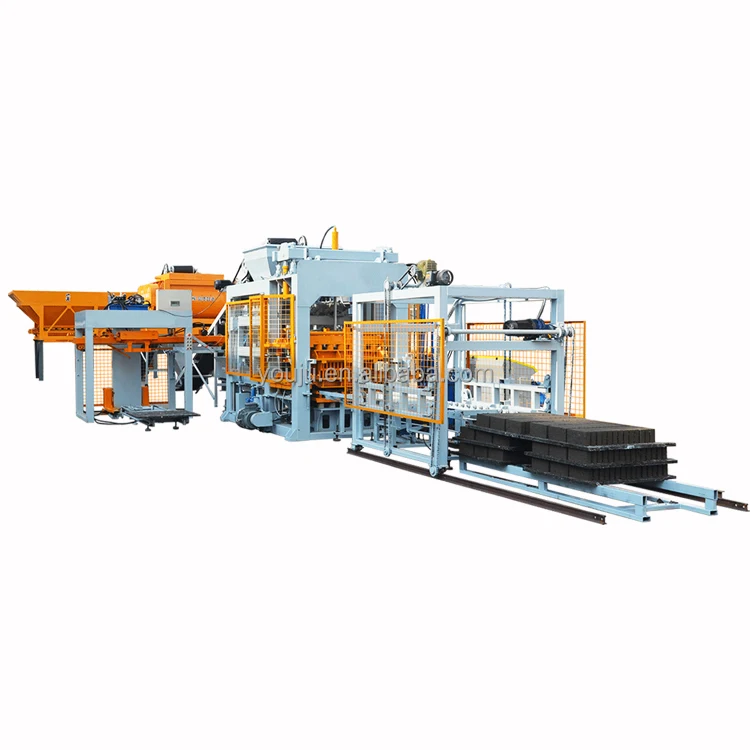
Description
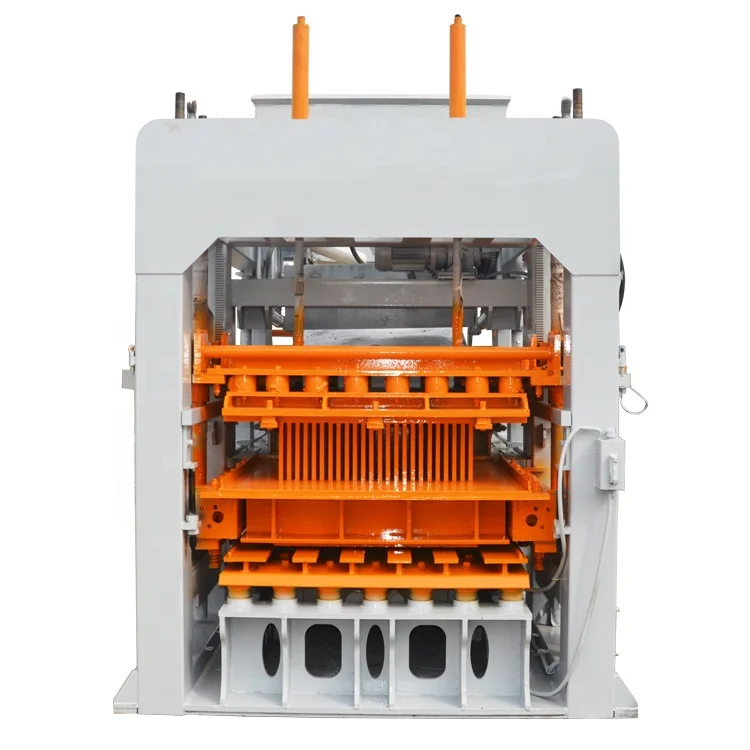
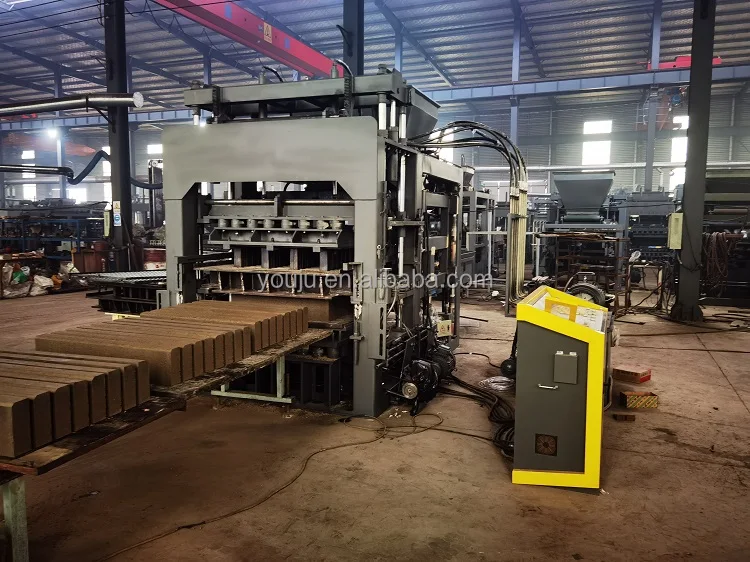
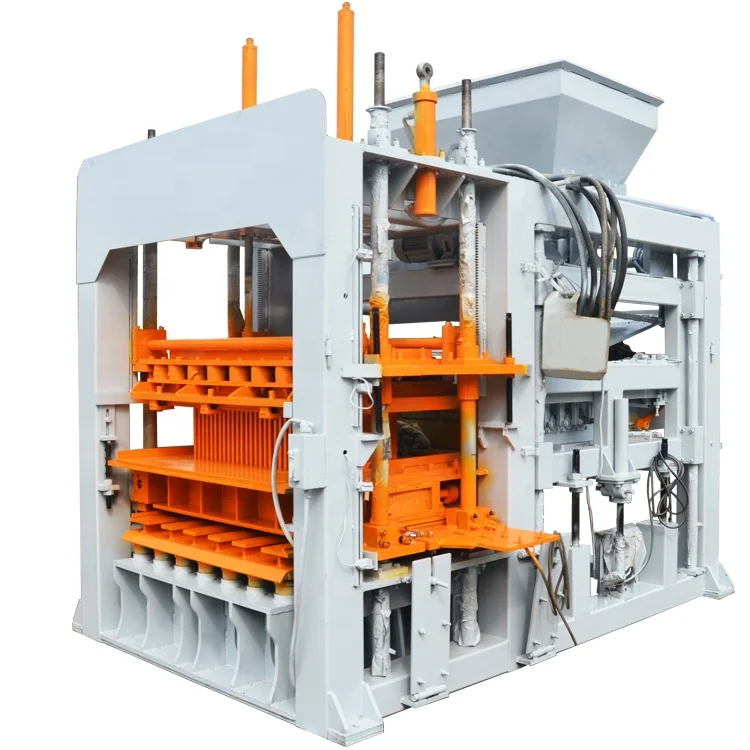
Stocked QT8-15 Dispatch — container loading plan and arrival estimate confirmed before payment, so project timelines stay intact.
Technical Specifications
| Parameter | Value |
|---|---|
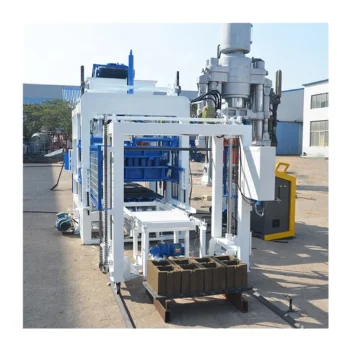
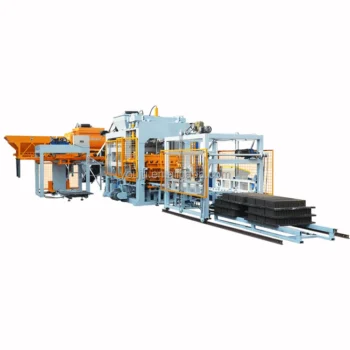
| Product Type | Automatic Concrete Block Making Machine |
| Model | QT8-15 |
| Forming Cycle Time | 15–20 s |
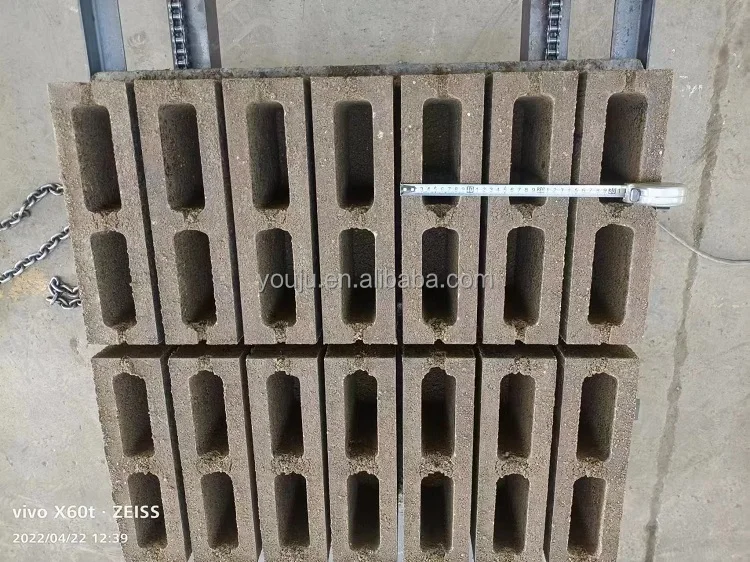
| Output Capacity (400×200×200 mm hollow block) | 1,600–1,900 pcs/h; 12,800–15,000 pcs/8 hr (8 pcs/mould) |
| Output Capacity (240×115×53 mm solid brick) | 8,000–10,000 pcs/h; 64,000–80,000 pcs/8 hr (45 pcs/mould) |
| Output Capacity (200×160×60 mm paver) | 3,000–3,600 pcs/h; 24,000–28,800 pcs/8 hr (15 pcs/mould) |
| Output Capacity (225×112.5×60 mm paver) | 4,000–5,000 pcs/h; 32,000–40,000 pcs/8 hr (24 pcs/mould) |
| Mould Formats Supported | Hollow block, solid brick, paver, kerbstone (via mould change) |
| Mould Heat Treatment | Yes |
| Warranty | 1 year |
| Automation Level | Automatic (PLC and language options to be confirmed per destination) |
| Stacking Method | To be configured per buyer’s line layout |
| Voltage & Frequency | Configurable to destination standard (to be confirmed before dispatch) |
| Rated Power | To be confirmed at inquiry |
Application Suitability
| Application | Material or Output |
|---|---|
| High-volume hollow block production plants | Crushed stone, sand, and cement mixes producing 400×200×200 mm cavity blocks |
| Solid brick manufacturing for housing projects | Fly ash or aggregate blends forming 240×115×53 mm dense bricks |
| Paving and interlocking paver supply | Granite dust and fine aggregate for 200×160×60 mm or 225×112.5×60 mm pavers |
| Kerbstone and curb production | Stiff concrete mixes shaped through dedicated mould tooling |
| On-site block production for construction contractors | Local aggregate and cement combinations with format changes as the build progresses |
What "15-20 Seconds" Actually Means for Your Daily Target
Cycle time only tells half the story; output per format is the number that pays the bills.
Most block machine quotations lead with a single headline figure — pieces per hour — without stating which block format that figure assumes. When the QT8-15 block machine in stock arrives and you run a different format, the daily total can fall well short of what was projected. I have seen project schedules slip because the planning spreadsheet used the hollow block capacity figure while the first production order was for pavers. Every output figure above is tied to a specific block size and mould cavity count, so the buyer can match real production targets to real orders before the machine ships. [NEED_CITE: common causes of block plant output shortfall versus quoted capacity]
Dispatch Timing That Matches Your Project Deadline
Buyers working to a fixed construction handover date cannot absorb a long engineering lead time. The QT8-15 block machine in stock is positioned for those schedules — a known configuration that can be allocated, inspected, and loaded once the electrical and pallet details are locked in. The value here is not custom engineering but predictable timing: a confirmed dispatch date, a container loading plan shared before payment, and an arrival estimate the buyer can build a project programme around.
Container Loading and Shipment Transparency
A block machine of this output class requires careful dismantling and bracing inside the container. The main press, hydraulic station, pallet feeder, and mould set must each be secured to prevent transit damage. Before dispatch, packing photographs and a loading plan are provided so the buyer can confirm the machine will arrive in the same condition it left the factory. Customs documentation is prepared in parallel, reducing the chance of the container sitting at the port because a paperwork field was missed. [NEED_CITE: standard container loading practice for heavy block making machinery]
Reading the Capacity Table Correctly
The QT8-15 achieves a 15–20 second forming cycle, but what that translates into per hour depends entirely on the block format in the press. With the 400×200×200 mm hollow block mould loaded, eight blocks form per cycle, yielding up to 1,900 pieces per hour. Switch to the 240×115×53 mm solid brick mould with 45 cavities, and the same cycle produces a much higher count — a difference driven by cavity count, not by the machine running faster. Understanding this relationship prevents the mistake of sizing a plant around the highest headline number while the market demand is for a lower-count, higher-value format.
When the Voltage Question Comes After Shipment
Last year a QT8-15 block machine in stock was dispatched to a Middle East project without a written voltage confirmation. The site ran a different frequency standard, and the press could not be powered on. The entire line stood idle for weeks while a transformer was sourced locally. Since that incident, every electrical confirmation — voltage, frequency, and PLC display language — is verified in writing before the machine leaves the factory floor. A two-day delay at dispatch is always shorter than a three-week delay at a job site. [NEED_CITE: voltage and frequency standards by export market]
Why Source This Configuration Here
Block machinery is the single focus of this operation, meaning the press, mould, pallet, and handling stations are specified as one matched system rather than assembled from unrelated suppliers. The QT8-15 is configured against the buyer’s actual mix design and local aggregate, not a catalogue default. Mould tooling is designed for the formats the buyer’s market actually sells, and heat-treated for extended working life on abrasive mixes. Stocked configurations reduce engineering lead time, while the option to add custom moulds before shipment keeps format flexibility open. Dispatch and container loading are planned in-house, so the arrival estimate is based on real booking slots, not optimistic guesses.
Documentation & Verification
- Line layout with capacity calculation stated per block format, not a single headline figure
- Machine specification sheet confirming pallet size, voltage, and control language
- Mould drawing and format list matching the buyer’s target product range
- Factory test record on the buyer’s specified block format before dispatch
- Packing photographs and container loading plan shared before shipment
- Customs documentation support including CE declaration where applicable
Installation, Commissioning & Support
- Foundation plan and curing area layout sized to the QT8-15 pallet dimensions and output rate
- Dedicated power circuit matching confirmed voltage and frequency before first start-up
- On-site assembly supervision covering press alignment, hydraulic line connection, and pallet feeder calibration
- PLC parameter setting for the buyer’s specific block format and cycle time targets
- Operator training on mould change procedure, daily inspection points, and safety interlocks
- Wear parts list and mould inventory recommendation for the first year of production
What to Prepare Before Requesting a Quote
To match a stocked QT8-15 block machine in stock to your site, share the block formats your market demands, the daily volume each format requires, and the local aggregate available. Confirm your site voltage, frequency, and preferred control language. If you already have pallets or a curing rack system in place, send the pallet dimensions so the machine can be checked against your existing equipment.
Frequently Asked Questions
Q: What is the dispatch lead time for a stocked QT8-15, and how is container loading planned?
A: Stocked units can typically be allocated and prepared within a short window once electrical and pallet details are confirmed. A container loading plan is shared before payment so the buyer can review how the press, hydraulic station, and mould set are secured for transit.
Q: How is arrival timing estimated once the machine leaves the factory?
A: An arrival estimate is quoted based on the shipping route and current vessel schedules at the time of booking. The estimate accounts for port transit and typical customs clearance windows so the buyer can plan site preparation accordingly.
Q: Which block formats ship with the standard configuration, and can extra moulds go in the same container?
A: The standard shipment includes moulds selected to match the buyer’s target formats. Additional moulds for pavers, kerbstones, or other shapes can be included in the same container if space and weight allowance permit.
Q: What voltage and frequency options are available from stock for common destination markets?
A: Common industrial voltage and frequency standards are supported. The exact configuration must be confirmed in writing before dispatch to ensure the press and PLC match the site power supply without requiring local transformers.
Q: What documentation ships with the machine for customs and installation?
A: Documentation includes the packing list, factory test record, operation and maintenance manual, and customs paperwork. A CE declaration is provided where applicable, and all documents are prepared to support smooth clearance at the destination port.