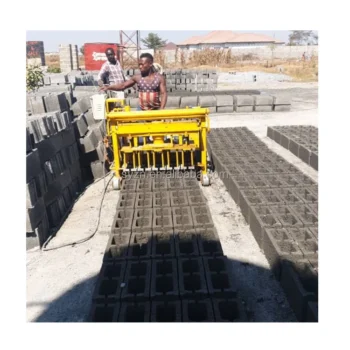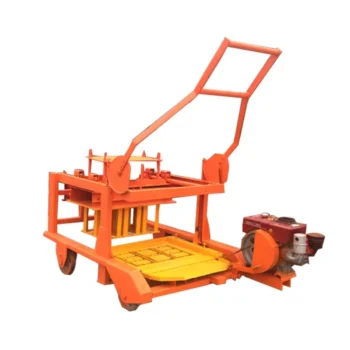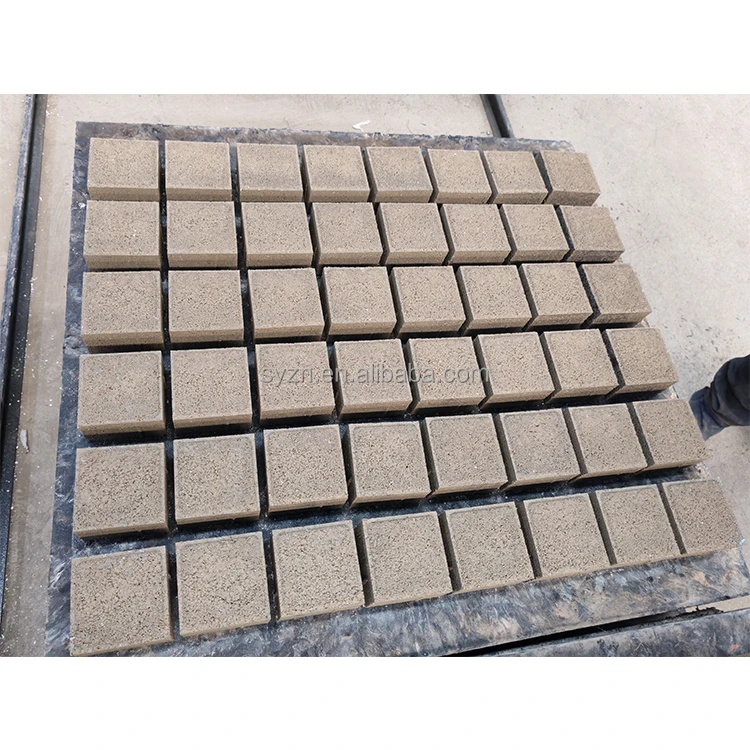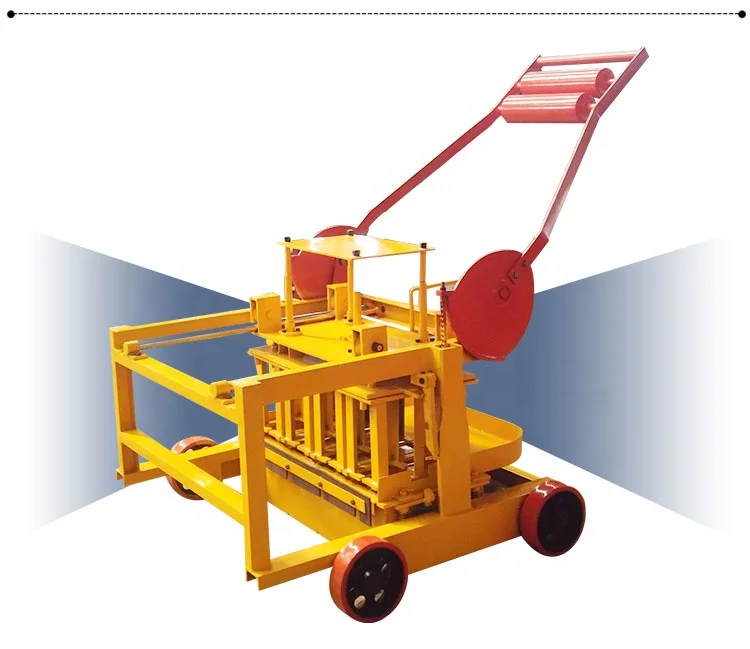



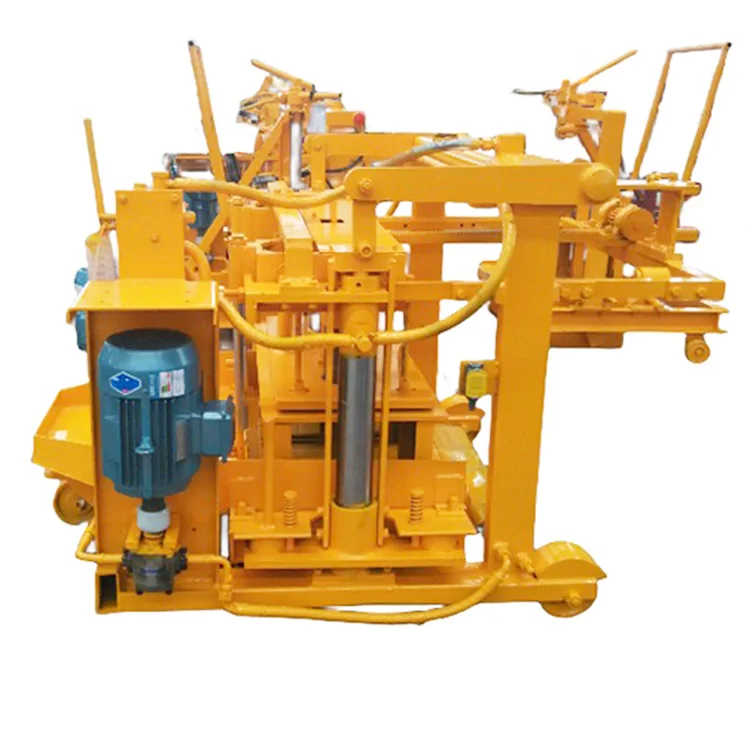
Description
Stocked configuration — every QMY4-30 ready for dispatch has been factory tested and voltage confirmed, meaning container loading schedules do not slip while electrical details are resolved after arrival.
Technical Specifications
| Parameter | Value |
|---|---|
| Model | QMY4-30 |
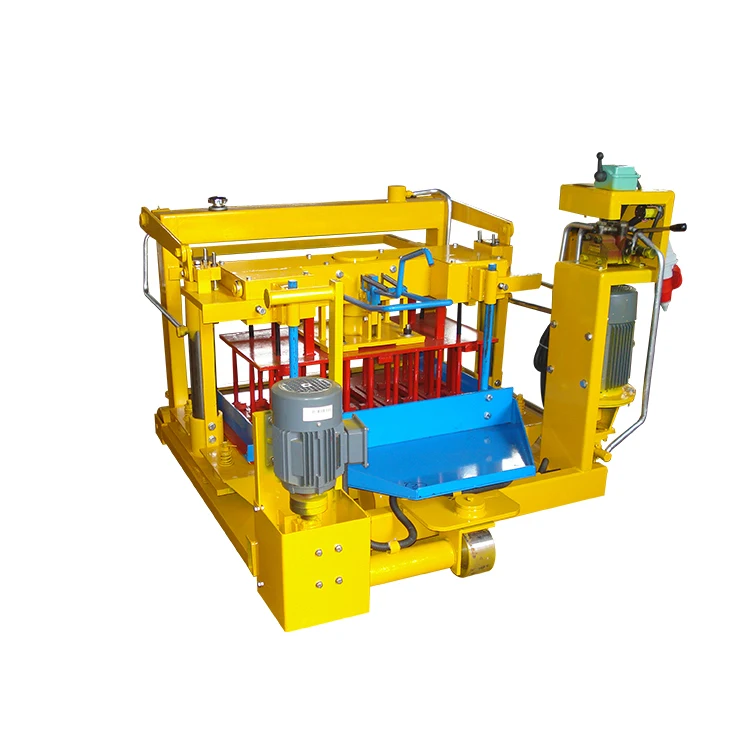
| Product Type | Mobile Hydraulic Block Making Machine |
| Machine Type | Mobile (egg-laying) |
| Rated Power | 5 kW |
| Moulding Cycle Time | 30 seconds |
| Overall Dimensions (L×W×H) | 1200 × 1200 × 1100 mm |
| Net Weight | 950 kg |
| Automation Level | Manual hydraulic |
| Control System | Manual hydraulic (PLC not indicated) |
| Mould Format | Changeable moulds for hollow block and solid brick |
| Raw Materials | Cement, sand, crushed stones, slag |
| Output (400×200×200 mm hollow block) | 4 pcs/mould, 480 pcs/hour, 3840 pcs/8 hours |
| Output (400×150×200 mm hollow block) | 5 pcs/mould, 600 pcs/hour, 4800 pcs/8 hours |
| Output (400×100×200 mm hollow block) | 7 pcs/mould, 840 pcs/hour, 6720 pcs/8 hours |
| Pallet Size | basis not stated in source |
| Hydraulic Pressure | basis not stated in source |
| Vibration Force | basis not stated in source |
| Voltage & Frequency | basis not stated in source |
Application Suitability
| Application | Material or Output |
|---|---|
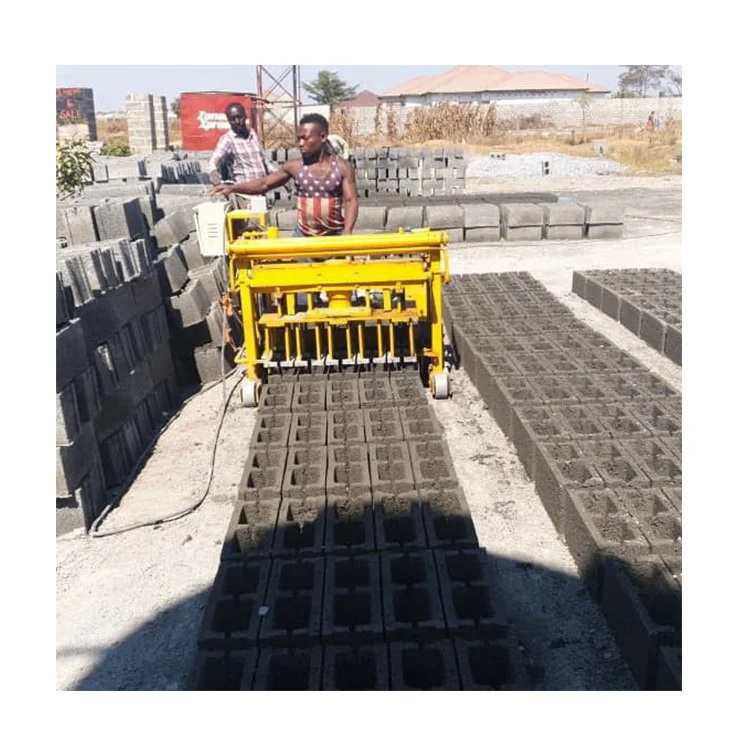
| On-site hollow block production for housing projects | Cement, sand, crushed stone mix producing 400×200×200 mm blocks |
| Small-scale solid brick manufacturing | Cement and slag blend forming standard solid bricks |
| Contractor self-supply for remote construction sites | Local aggregate and cement producing hollow and solid formats |
| First plant launch by entrepreneurs | Sand and crushed stone mix with changeable mould inventory |
What "Fast Delivery" Actually Means for a Block Machine Buyer
Stocked inventory eliminates the production queue, so your machine ships on a vessel schedule rather than a factory slot.
When a mobile block machine in stock fast delivery is what you need, the real concern is whether the unit sitting in the warehouse has been tested with your target market’s voltage and frequency. I once watched a QMY4-30 sit idle on an African job site for three weeks because the electrical confirmation was skipped to rush the shipment [NEED_CITE: voltage and frequency standards by export market]. The contractor had crews waiting, forms built, and aggregate stockpiled — all stalled by a mismatch that a single confirmation document would have prevented. Dispatch speed only matters if the machine arriving at your port can be plugged in the same week it clears customs.
Stock Status Versus Build Slot
A stocked QMY4-30 mobile block machine in stock fast delivery means the physical unit exists in the warehouse with a serial number you can reference before payment. Build-to-order units enter a production queue that shifts depending on factory workload and component availability, adding weeks to the timeline. For contractors working against a project milestone or entrepreneurs who have already committed to a site lease, confirming the exact machine and available mould formats in writing removes the scheduling guesswork [NEED_CITE: machinery procurement lead time variability in construction supply chains].
Packing, Volume, and Container Loading
The QMY4-30 ships in plywood packaging at approximately 3 CBM, which keeps freight costing straightforward and fits alongside other equipment in a shared container. The compact footprint — 1200 × 1200 × 1100 mm at 950 kg — means dismantling for shipment is minimal, and the machine can be reassembled on-site without heavy rigging equipment. Knowing the shipping volume before you order lets your freight forwarder book space on the next available vessel rather than holding for a full container load.
Cycle Time and Output by Block Format
The 30-second moulding cycle produces output that varies significantly depending on which block format you run. At 400×200×200 mm hollow blocks, the QMY4-30 yields 4 pieces per mould for 3,840 pieces over an eight-hour shift. Switching to 400×100×200 mm hollow blocks raises that figure to 7 pieces per mould and 6,720 pieces per shift. These figures assume continuous operation and do not account for mould change intervals, mix preparation time, or block curing logistics that every egg-laying operation must plan around.
Reading the Specs That Affect Your Daily Output
The 5 kW rated power reflects what is needed to run the hydraulic system and vibration mechanism without a separate industrial power drop — important for remote sites where generator capacity is limited. The manual hydraulic control keeps the operator in direct charge of each cycle, which reduces the complexity of electrical troubleshooting in areas where PLC technicians are scarce. Changeable moulds for hollow block and solid brick mean a single machine can serve multiple product lines, but the time required to swap moulds between runs determines whether that flexibility translates into real production variety or just a catalogue claim. Raw material compatibility with cement, sand, crushed stones, and slag covers the aggregates most readily available across African and Southeast Asian markets, so buyers do not need to source specialty materials to begin production [NEED_CITE: common aggregate availability in developing market construction sectors].
When Rushed Dispatch Creates Downstream Delays
Skipping pre-shipment verification to meet a vessel booking can cost more time than the production slot you were trying to avoid. Machines that arrive with unconfirmed voltage specifications require local electricians to source transformers or rewire motors, pushing commissioning back by weeks while crews stand idle. Missing packing photographs before container loading leave buyers unable to file damage claims when crates arrive shifted or broken. Dispatch without a written customs documentation package — HS code, commercial invoice, packing list — means clearance delays at the destination port that no amount of shipping speed can recover [NEED_CITE: customs clearance documentation requirements for industrial machinery imports].
Why Procurement Through This Channel Works
Every QMY4-30 offered as mobile block machine in stock fast delivery has its stock status confirmed in writing with the exact serial range and available mould formats before any payment changes hands. Packing photographs are provided showing the plywood crate condition and machine securing method before the unit enters the container, so you know what left the factory. The dispatch lead time and vessel booking estimate are quoted in your order confirmation rather than revised after production begins. Customs documentation including HS code, packing list, and commercial invoice is prepared at the time of shipment to prevent clearance holds at destination. The machine, mould, and handling specifications are evaluated as a matched system rather than assembled from separate supplier catalogues, so the pallet format and curing logistics align with the block formats you actually plan to produce.
Documentation & Verification
- Stock confirmation letter listing exact model, serial range, and available mould formats
- Packing photographs showing plywood crate and securing method before container loading
- Dispatch lead time and vessel booking estimate stated in writing at order confirmation
- Customs documentation set including HS code, packing list, and commercial invoice at shipment
- Factory test record covering cycle time verification across ordered block formats
Installation, Commissioning & Support
- Site must provide level ground adequate for 1200 × 1200 mm footprint and 950 kg operating weight
- 5 kW power requirement demands a dedicated circuit matching confirmed voltage and frequency
- Plywood-packed machine requires basic hand tools for on-site reassembly after container unloading
- First production run should verify 30-second cycle timing against your specific mix design and aggregate
- Changeable mould mounting system requires operator familiarization for format swaps without excessive downtime
- Manual hydraulic controls simplify field maintenance where PLC diagnostic support is unavailable locally
What to Prepare Before Requesting a Quote
Share the block formats your market demands along with your target daily output so the right mould inventory can be confirmed against stock. Provide your site’s voltage and frequency so the electrical confirmation happens before dispatch, not after arrival. Let us know your available raw materials and whether you have existing curing space or pallet handling equipment, since these determine which supporting items need to ship alongside the QMY4-30.
Frequently Asked Questions
Q: Is the QMY4-30 currently in stock or built to order?
A: Stock availability is confirmed per order with a written letter naming the exact serial range and available mould formats. Built-to-order units enter a production queue, while stocked machines bypass that wait entirely. Dispatch lead time and vessel booking estimates are quoted before you confirm the order.
Q: How is the QMY4-30 packed for shipment?
A: The machine ships in plywood packaging at approximately 3 CBM. Packing photographs are taken before container loading to document crate condition and securing method. The 1200 × 1200 × 1100 mm dimensions and 950 kg weight allow loading in shared containers without specialized rigging.
Q: Which moulds are included with a stocked QMY4-30?
A: Standard stocked units include changeable moulds for hollow block and solid brick formats. Additional mould formats may be available from inventory depending on current stock levels. The stock confirmation letter details exactly which moulds ship with your machine at the time of order.
Q: What is the estimated arrival timeline after dispatch?
A: Arrival estimates depend on the destination port and vessel routing. The dispatch lead time and vessel booking are confirmed in writing at order placement so your freight forwarder can plan accordingly. Transit time from a Chinese port to West Africa or Southeast Asia typically spans several weeks.
Q: What customs documentation is provided at shipment?
A: A complete documentation package including HS code, packing list, and commercial invoice is prepared at the time of shipment. This prevents clearance delays at your destination port. Additional documents such as a certificate of origin can be arranged based on your import requirements.