

Description
Stocked configuration, verified voltage — Every QTJ4-24 leaves our Linyi yard only after motor nameplate and control cabinet match your site’s confirmed power supply, preventing the on-site delays we have seen stall projects across West Africa.
Technical Specifications
| Parameter | Value |
|---|---|
| Model | QTJ4-24 |
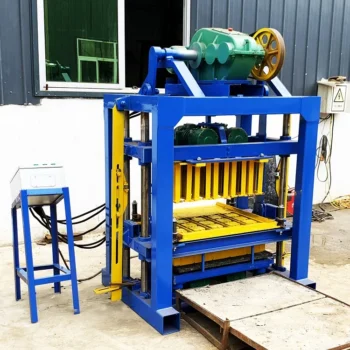
| Product Type | Semi-Automatic Concrete Block Making Machine |
| Molding Type | Platform Vibration |
| Overall Dimensions | 3600 mm × 1700 mm × 2560 mm (working state) |
| Total Mass | 1750 kg |
| Pallet Size | 850 mm × 450 mm |
| Overall Power | 14.25 kW |
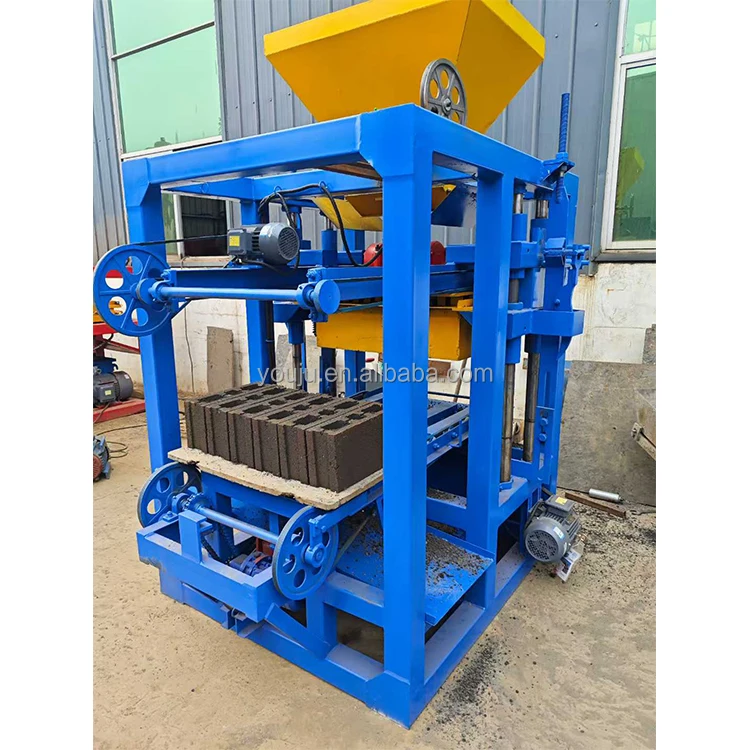
| Vibration System | Lower platform 2 × 3 kW + Upper 1.5 kW attached device |
| Frame Type | Dragon gate style, super steel |
| Elevating System | Cone-shape motor with JZQ250 speed reducer |
| Delivery Device | Cycloidal pin wheel speed reducer with chain and V-belt drive |
| Material Storage | Dual-hopper (releasing hopper + storing hopper) |
| Automation Level | Semi-automatic |
| Basic Supporting Equipment | JQ350 pan mixer, 6 m belt conveyor, trolley |
| Optional Equipment | Auto stacker (3–6 layers depending on block height) |
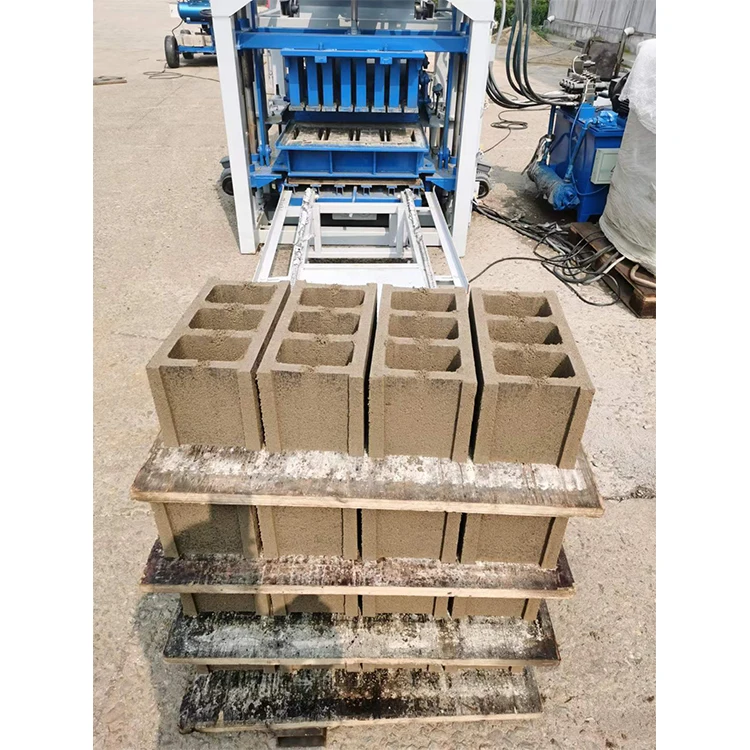
| Mould Format (Hollow Block) | 390 mm × 190 mm × 190 mm, 4 pcs/mould |
| Mould Format (Solid Brick) | 240 mm × 115 mm × 53 mm, 21 pcs/mould |
| Hydraulic Pressure | Not applicable (mechanical vibration) |
| Cycle Time | (basis to be confirmed — depends on block format and mix) |
| Output Capacity | (basis to be confirmed — depends on block format and mix) |
Application Suitability
| Application | Material or Output |
|---|---|
| On-site hollow block production for building contractors | Crushed stone, sand, cement mix on construction sites |
| First-plant entrepreneurship | Standard cement-based mixes with local aggregate |
| Solid brick supply for masonry work | River sand, fly ash, or stone dust blends |
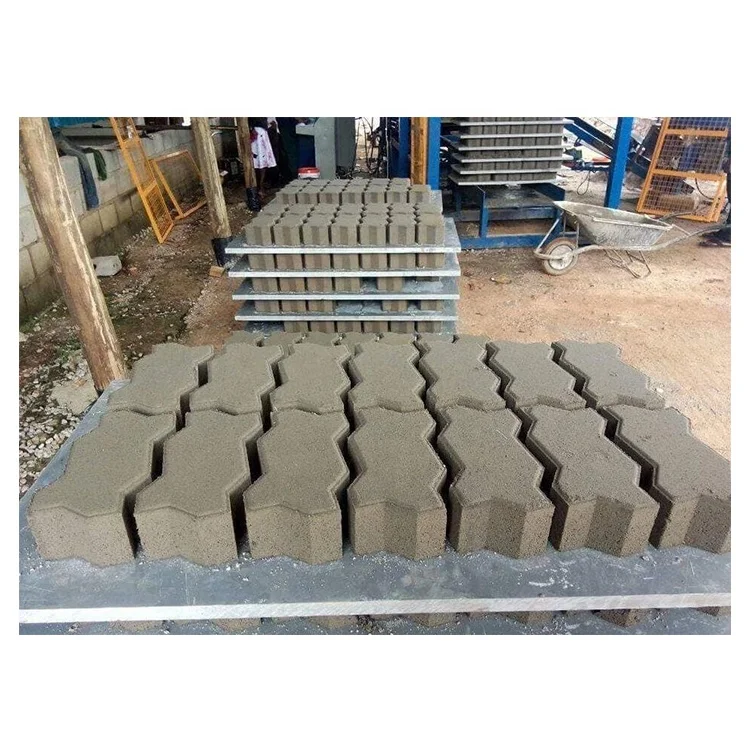
| Distributor product range expansion | Multiple block formats on a single pallet size |
What "Ready to Ship" Actually Means When You Order a Semi-Automatic Block Machine
A stocked machine only moves your project forward if voltage, frequency, and control language match your site before the container is sealed.
I have watched a container sit at a Lagos port while the buyer scrambled to source a step-down transformer because the motor was wired for a frequency that did not exist on their grid. The semi-automatic block machine in stock was technically perfect — for a workshop three time zones away. Dispatch speed means nothing when commissioning stalls on day one [NEED_CITE: voltage and frequency standards by export market]. We treat the pre-shipment confirmation call as the most important step in the entire order, not a formality.
Dispatch Lead Time and What Ships in the Container
When a buyer in Accra or Abuja needs a semi-automatic block machine in stock for a fast delivery window, the question is not just whether the press is built — it is whether the entire basic line is ready. The QTJ4-24 package includes the JQ350 pan mixer, the 6 m belt conveyor, and the block trolley. These three stations must arrive together, or the press sits idle while you source a mixer locally. We quote the semi-automatic block machine in stock as a complete basic line so nothing is left to chance at the port.
Dismantling, Loading, and Arrival Condition
The 1750 kg frame fits inside a standard 20-foot container, but how it is broken down matters. The dragon gate frame, vibration platform, and hopper assembly each have specific bolt patterns that must be matched during reassembly. We photograph every connection point before dismantling and include those images with the operation manual. A semi-automatic block machine in stock should not require guesswork when your crew is putting it back together on a dusty site with a printed photo sheet and a set of spanners [NEED_CITE: container loading methods for light industrial machinery].
Reading the Specs That Actually Affect Your Daily Production
The 850 mm × 450 mm pallet size is the dimension your curing racks, forklifts, and drying yard must accommodate — not the block size. If your existing yard is set up for 680 mm pallets, every pallet of green blocks will need a new handling workflow. The vibration system pairs two 3 kW lower motors with a 1.5 kW upper device, which is sufficient for standard hollow blocks but may need adjustment when you switch to a denser paver mix. The 14.25 kW overall power draw tells your electrician what dedicated circuit to prepare, and it must be confirmed against your site’s actual voltage and frequency before the motor is wound at the factory.
The Hidden Cost of Skipping Pre-Shipment Verification
Buyers who skip the voltage confirmation step often discover the problem only when the electrician throws the breaker on commissioning day. The motor may hum, overheat, or refuse to start — and the nearest replacement might be weeks away by sea freight. Control panel labels in a language your operator cannot read add training time that was not in your project plan. We have seen sites lose an entire curing cycle because the PLC display was set to a default language nobody on the crew could follow [NEED_CITE: common commissioning failures in exported block machinery].
Why Source This Machine Through Our Dispatch Channel
We hold semi-automatic block machines in stock and match each unit to a confirmed destination voltage before release. The mould formats — 4 pcs hollow block and 21 pcs solid brick per cycle — are included in the stock quotation so there are no surprise line items. Factory test records are captured on your specified block format, not a generic demonstration run. Packing photographs document the exact condition of every assembly before the container doors close. The basic line ships complete, so your mixer, conveyor, and trolley arrive with the press.
Documentation & Verification
- Factory test record run on your confirmed block format before dispatch
- Voltage and frequency confirmation sheet signed before motor winding
- Pallet specification matched to your existing curing area dimensions
- Packing photographs documenting condition before container loading
- Mould format list confirming hollow and solid brick cavity counts
- Container loading plan showing dismantling method and bolt map
Installation, Commissioning & Support
- Foundation pad sized to the 3600 mm × 1700 mm footprint with vibration isolation
- Dedicated 14.25 kW circuit prepared at confirmed voltage and frequency
- Reassembly guided by pre-dispatch photographs of every bolted connection
- First run supervised with vibration timing adjusted to your local mix design
- Operator training covers dual-hopper feed sequence and mould change procedure
- Wear parts list identifies vibration motor brushes and reducer oil intervals
Before You Send the Inquiry
Tell us your target block format, the daily volume your site needs, and the exact voltage and frequency available at your location. If you already have curing racks and forklifts, share the pallet dimensions they accept so we can confirm compatibility with the 850 mm × 450 mm pallet before dispatch. This information lets us lock the right semi-automatic block machine in stock for your delivery window.
Frequently Asked Questions
Q: What is the dispatch lead time for a stocked QTJ4-24 with standard moulds?
A: A stocked unit with the standard hollow block and solid brick moulds can typically be prepared for container loading within a short window once voltage and frequency are confirmed. The confirmation step is what determines whether the machine ships immediately or waits for a motor swap.
Q: How is the machine dismantled for container loading, and what reassembly support is provided?
A: The dragon gate frame, vibration platform, and hopper are unbolted at their factory joints. Each connection is photographed before separation, and those images ship with the manual so your crew can match bolt patterns during reassembly without engineering support on site.
Q: Can voltage and frequency be confirmed before shipment to match my site in Ghana or Nigeria?
A: Yes, and we require it. The motor nameplate and control cabinet are verified against your confirmed supply before the machine leaves our yard. This prevents the most common cause of commissioning delays on exported semi-automatic block machines.
Q: Which spare parts and wear items ship with the machine?
A: The standard shipment includes a wear parts list identifying items specific to this model, including vibration motor components and reducer service parts. We confirm first-replacement availability before dispatch so you are not waiting on a freight shipment when maintenance is due.
Q: Is the auto stacker available from stock, or does it require a separate production run?
A: The auto stacker, which handles three to six layers depending on block height, may require a separate lead time. We confirm its availability at the time of your inquiry so the dispatch schedule for the complete line is accurate.