Description
Technical Specifications
| Parameter | Value |
|---|---|
| Model | ECO 2700 |
| Product Type | Clay Block Making Machine |
| Overall Dimensions (L×W×H) | 1000 × 1000 × 1800 mm |
| Shaping Cycle | 15–20 seconds (basis not stated in source — confirm block format / material / thickness) |
| Rated Power | 5.5 kW |
| Hydraulic Pressure | 16 MPa |
| Total Weight | 1000 kg |
| Voltage & Frequency | 380V, 3-phase, 50Hz (customizable to local voltage) |
| Automation Level | Manual / small sized (no power required for forming) |
| Mould Format | Interlocking clay blocks (basis to be confirmed) |
| Output Capacity | Not stated (basis to be confirmed) |
| Control System | Not stated (basis to be confirmed) |
| Warranty | 1 year |
Application Suitability
| Application | Material or Output |
|---|---|
| Small business brick production | Interlocking clay blocks for local sale |
| On-site clay block forming | Clay blocks produced directly at housing or infrastructure project sites |
| Low-investment block plants | Interlocking clay blocks for rural and developing market construction |
| Rural and developing market construction projects | Clay-based walling blocks using locally available soil |
Why the Voltage Question Should Come Before the Price for an ECO 2700 Clay Block Making Machine in Stock
Confirming grid voltage and frequency before loading the container prevents a machine that sits idle on arrival.
When a small block machine lands at a port in a region where the local grid runs at a different frequency or phase configuration than the motor was wound for, the machine cannot be powered on. I have watched projects lose weeks of production time while a transformer was sourced and installed on site — labour costs burning through the budget every single day. An ECO 2700 clay block making machine in stock ships fast, but speed only matters if the electrical specification matches the destination. Voltage confirmation is a five-minute conversation that saves a three-week standstill [NEED_CITE: voltage and frequency standards by export market].
Dispatch Readiness and Container Loading
Having an ECO 2700 clay block making machine in stock means the lead time is measured in days of packing and transit, not weeks of production scheduling. The compact footprint — just one metre square — allows two or more units to share a single container, which matters when the buyer is a distributor stocking a regional warehouse or a contractor mobilising equipment to a remote site.
Before the crate is sealed, the motor winding, control panel labelling, and any ancillary electrical components are verified against the destination grid specification written on the purchase order. This step is non-negotiable for a stocked machine because there is no production run during which to adjust the specification — what ships is what was on the floor, so the confirmation must happen before dispatch [NEED_CITE: CE machinery directive requirements for industrial equipment].
Dismantling and Packing for Transit
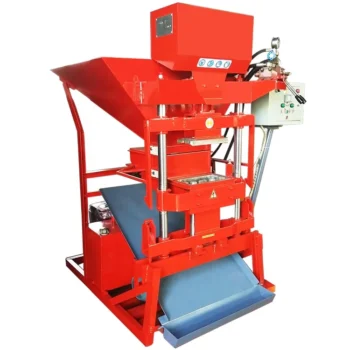
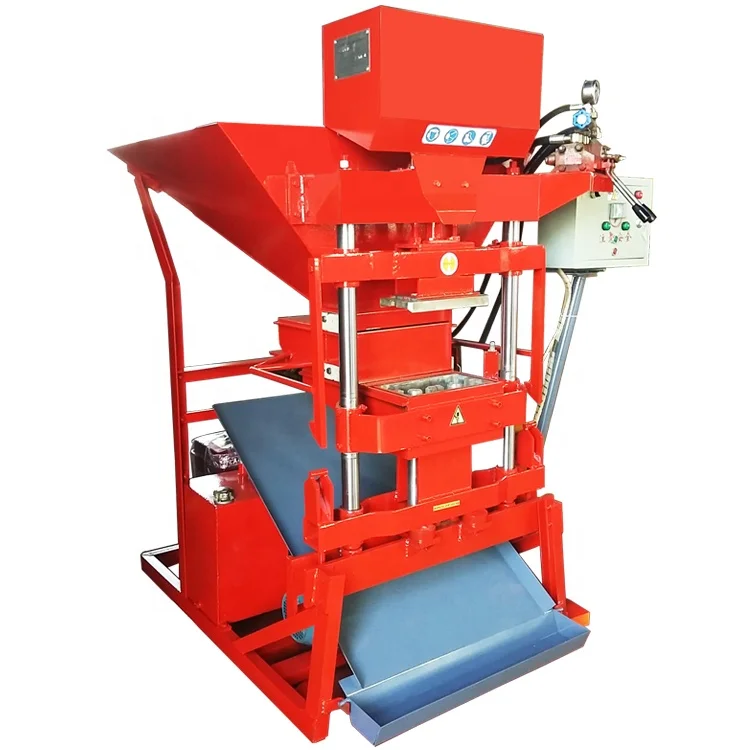
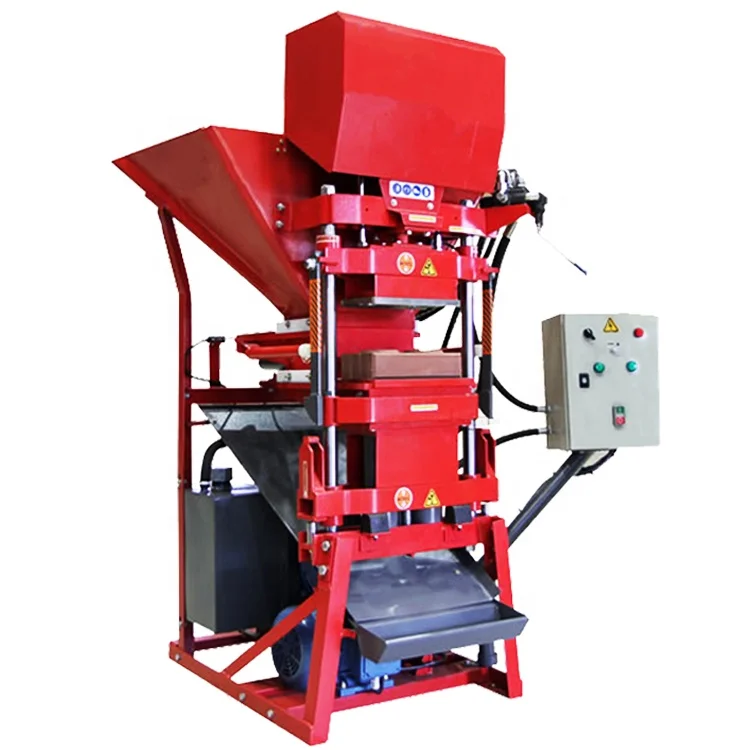
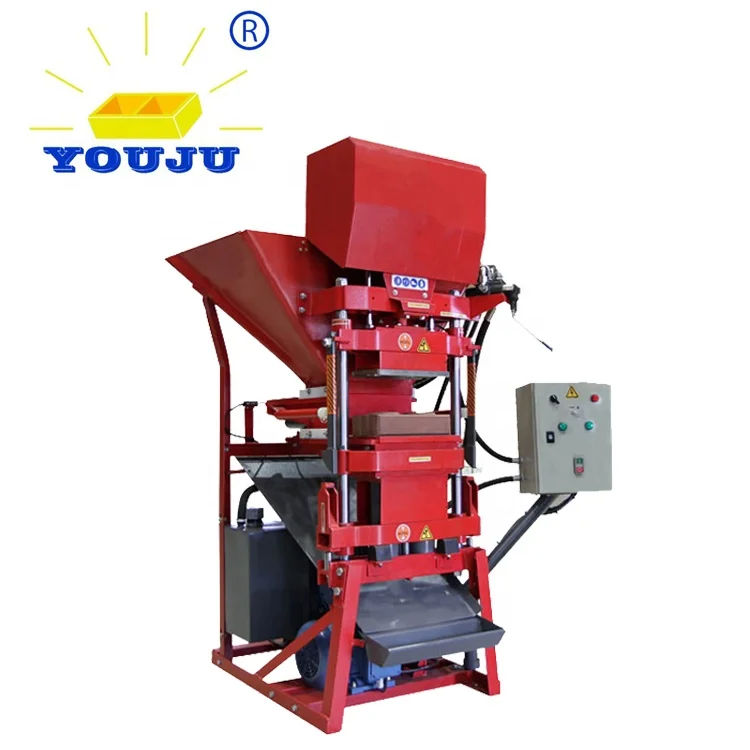
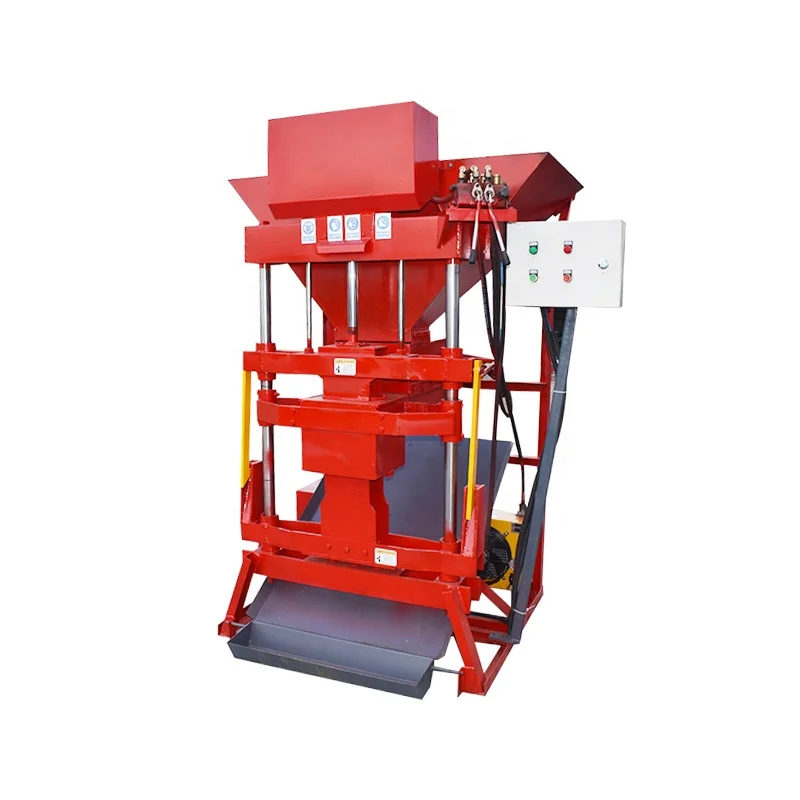
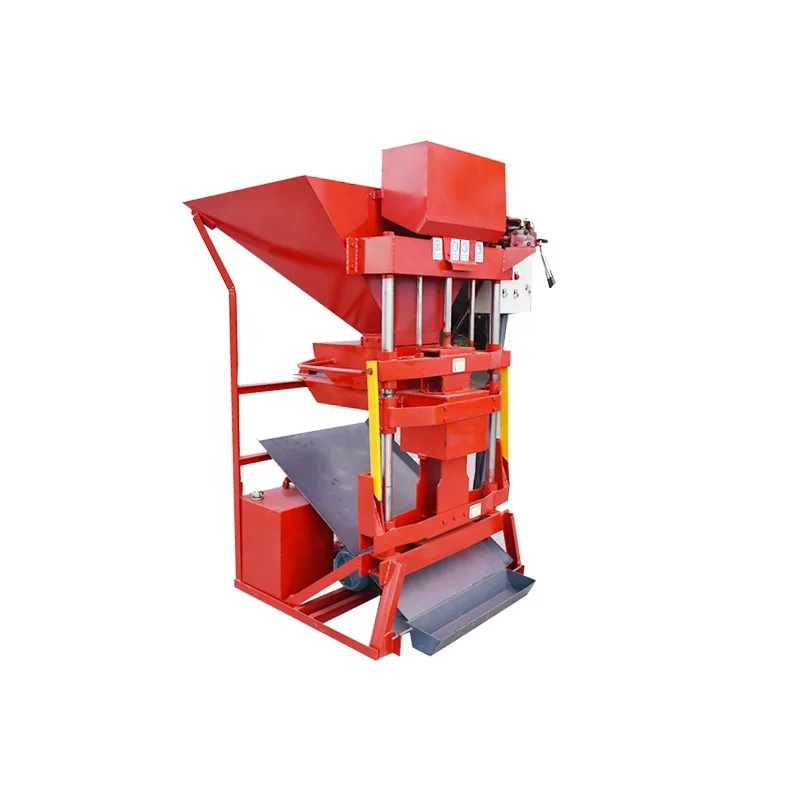
The ECO 2700 is a single-column press with a low centre of gravity, which simplifies container loading compared to larger automatic lines. The hydraulic power pack, mould assembly, and frame are separated into manageable sections that fit within standard flat-rack or 20-foot container dimensions without overhanging. Each section is bolted to the container floor or braced against the walls to prevent shifting during sea transit.
Packing photographs are taken before the container doors close, giving the buyer a visual record of how the machine was secured and where each component is positioned inside the crate. This documentation helps the receiving team plan the unloading sequence and reassembly on site.
Reading the Numbers That Matter
The 16 MPa hydraulic pressure is the force that compresses the clay mix into a dense, interlocking block. At this pressure level, the press is suited to clay-based mixes rather than high-aggregate concrete — the material must be plastic enough to consolidate under moderate pressure without cracking on ejection. Pairing this machine with a mix that is too lean or too coarse will result in blocks that crumble at the edges.
The 15–20 second shaping cycle determines how many blocks an operator can produce in a shift, but the actual daily output depends on how quickly the operator can load the mould, eject the finished block, and move it to the curing area. Manual-paced production means throughput is tied to the rhythm of the operator and the availability of prepared clay mix at the press.
At 5.5 kW, the total power draw is low enough that a small diesel generator can run the machine in locations without stable grid power. This matters for on-site production in rural areas where connecting to a three-phase supply may require infrastructure work that delays the project [NEED_CITE: typical power supply conditions in rural construction sites].
The 1000 × 1000 × 1800 mm overall dimensions mean the machine can be placed inside a standard workshop or under a temporary shelter on a construction site without requiring a dedicated factory building. The 1000 kg weight is light enough for a standard forklift to position.
What Happens When Stock Speed Overrides Specification Checks
Ordering a machine because it can ship this week — without confirming the block format the local market actually buys — leads to a mould that produces the wrong shape. Interlocking clay blocks come in different thicknesses and locking profiles, and a mould designed for one regional standard will not satisfy a building code that specifies another. The machine runs, but the output cannot be sold [NEED_CITE: regional building code requirements for interlocking clay blocks].
Skipping the voltage confirmation means the motor may be wound for 50 Hz while the local grid runs at 60 Hz, or the phase configuration may not match. The result is a machine that sits in a container yard while the buyer sources a transformer or rewinds the motor — costs and delays that erase any advantage gained by buying from stock.
Why Procurement Through This Channel Works
Block machinery is the single focus here, so the ECO 2700 is not bundled with unrelated equipment from different suppliers. The machine, its mould, and the supporting tools are specified as one matched set.
Stocked machines are available for immediate dispatch, which suits contractors working to a project deadline where a multi-week production lead time is not an option. The container loading plan and arrival estimate are provided before the order is confirmed.
Voltage, frequency, and control language are confirmed in writing before the machine leaves the floor — a step born from past experience with machines arriving at sites where they could not be powered on.
Factory test records are generated before dispatch, so the buyer receives documentation showing the machine was run and inspected, not just packed.
Packing photographs and customs documentation support are included, reducing the risk of delays at the destination port.
Documentation & Verification
- Factory test record showing the ECO 2700 ran under load before packing
- Voltage and frequency confirmation sheet signed before dispatch
- Packing photographs documenting container loading and bracing
- Operation manual covering mould change and daily maintenance procedures
- Wear parts list identifying seals and hydraulic components for first replacement
- CE declaration where applicable to the destination market
Installation, Commissioning & Support
- The 1000 × 1000 mm footprint requires only a level concrete pad — no special foundation
- A dedicated 5.5 kW three-phase circuit with correct breaker rating must be in place before arrival
- Machine sections are bolted together on site using standard hand tools and the included fastener kit
- First-run commissioning includes verifying hydraulic pressure at 16 MPa and checking mould alignment
- Operator training covers clay mix consistency, loading technique, and the 15–20 second cycle rhythm
- Wear parts list provided so the buyer can stock hydraulic seals before the first replacement is due
What to Include in Your Inquiry
Send the block format and thickness your local market requires, along with the clay type and any additives you plan to use. Include the destination port so that container transit time can be estimated and the correct voltage, frequency, and phase configuration can be confirmed before the ECO 2700 clay block making machine in stock is reserved for your order.
Frequently Asked Questions
Q: Which ECO 2700 units and standard moulds are currently stocked for immediate dispatch?
A: Stocked inventory changes as orders are fulfilled. When you inquire, the available units and the standard interlocking clay block mould formats on the floor are confirmed in writing, along with the estimated container loading date. This avoids quoting a lead time that no longer reflects what is physically available.
Q: What is the realistic container loading and transit timeline to my destination port?
A: Once the voltage and block format are confirmed, the machine is packed and loaded into the container within a matter of days. Sea transit time depends on the destination port and shipping route. An arrival estimate is provided before you place the order so you can plan site preparation around a known timeline.
Q: Can the motor voltage be customized to my local grid before the machine ships?
A: Yes. The motor winding, control panel, and any auxiliary electrical components are verified or adjusted to match your local voltage, frequency, and phase configuration before dispatch. This confirmation is captured in writing on the order documentation to prevent the kind of on-site electrical mismatch that delays commissioning.
Q: What documentation ships with the machine?
A: Each ECO 2700 ships with a factory test record, an operation and maintenance manual, a wear parts and mould list, packing photographs, and a CE declaration where applicable. Voltage and frequency confirmation is documented separately. Customs documentation support is provided to help clear the machine at the destination port.
Q: How is the machine dismantled and packed for container shipment?
A: The hydraulic power pack, mould assembly, and frame are separated into sections that fit standard container dimensions. Each section is bolted or braced inside the container to prevent transit damage. Packing photographs show the loading arrangement so the receiving team knows where each component is positioned for unloading and reassembly.