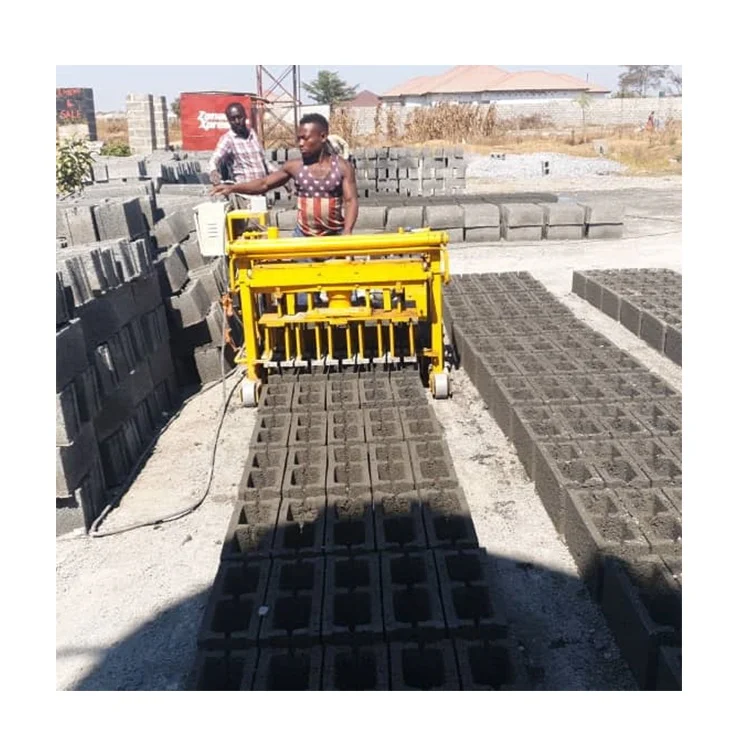


Description
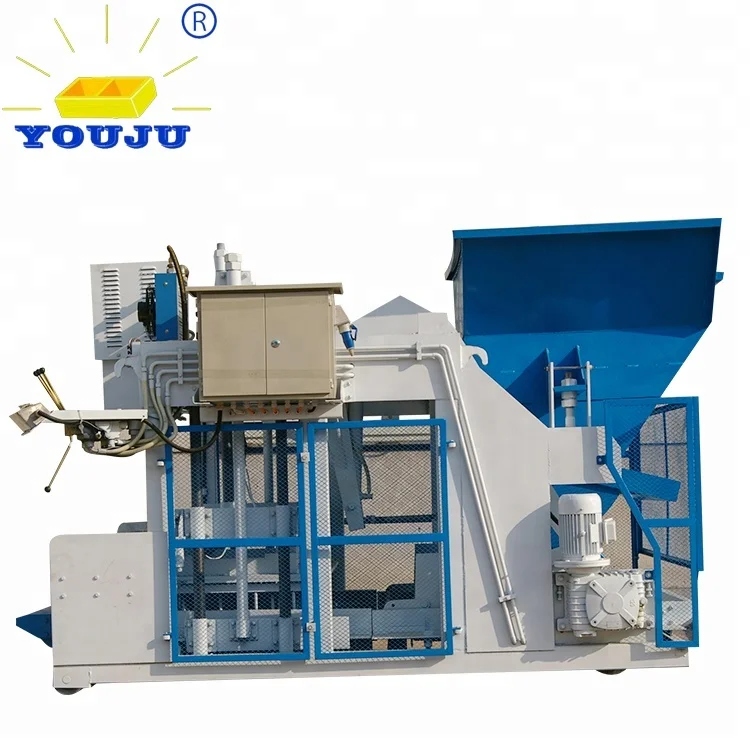
Stocked for dispatch — QMY4-30 mobile block machines are assembled, factory-tested, and held in our Linyi yard so buyers on a project deadline can secure a confirmed lead time instead of an open-ended production slot.
Technical Specifications
| Parameter | Value |
|---|---|
| Model | QMY4-30 |
| Product Type | Mobile Concrete Block Making Machine |
| Machine Operation | Mobile, egg-laying type, manual operation |
| Assembly State | Fully assembled mobile unit |
| Overall Dimensions | 1200 × 1200 × 1100 mm |
| Net Weight | 950 kg |
| Rated Power | 5 kW |
| Voltage & Frequency | Configurable to buyer’s site requirement (confirm before dispatch) |
| Control System | Manual operation (no PLC stated) |
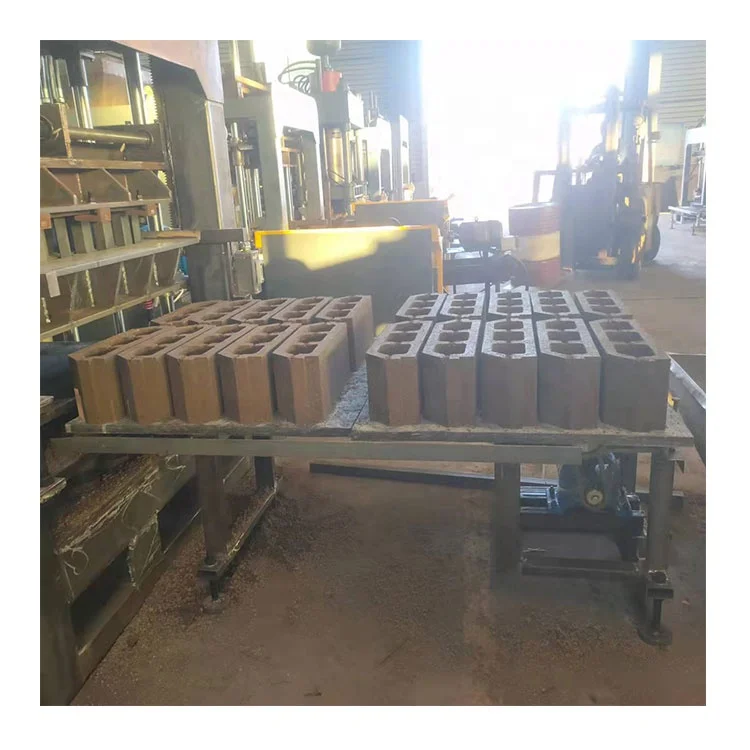
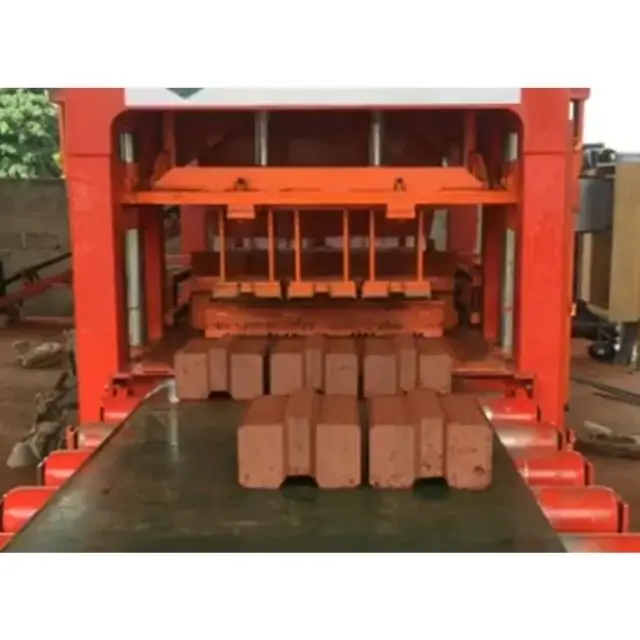
| Mould Formats | Hollow block and solid brick (400×200×200 / 400×150×200 / 400×100×200 mm) |
| Pcs per Mould | 4 / 5 / 7 pcs depending on block size |
| Cycle Time | 30 seconds |
| Output Capacity | 480 pcs/h based on 400×200×200 mm hollow block (4 pcs/mould) [NEED_CITE: typical output calculation assumes continuous operation without material handling delays] |
| Daily Output | 3,840 pcs / 8 h based on 400×200×200 mm; 4,800 pcs / 8 h based on 400×150×200 mm; 6,720 pcs / 8 h based on 400×100×200 mm |
| Raw Materials | Cement, sand, crushed stones, slag |
| Pallet Size | Not applicable (egg-laying machine deposits on ground) |
| Warranty | 5 years (verify against manufacturer catalog) |
Application Suitability
| Application | Material or Output |
|---|---|
| On-site construction block production | Hollow blocks from cement, sand, and crushed stone without a fixed plant |
| Small-scale entrepreneurial block plant | Solid bricks and hollow blocks for local building material supply |
| Project-based contractor block making | Format-flexible output using locally sourced aggregate and slag |
| Remote or rural housing projects | Low-utility egg-laying production on prepared ground surfaces |
What "Cycle Time" Leaves Out When Planning a Mobile Block Machine in Stock Purchase
A 30-second cycle only holds if your mix feeds the mould consistently and your aggregate is clean.
Many buyers receive a capacity quote tied to an ideal block format, then find daily output falls short on site because the local sand carries high clay content or the crushed stone grading does not match the machine’s vibration profile. I have seen egg-laying machines stall repeatedly because the operator spent more time clearing mix from the mould than actually pressing. Before we confirm dispatch on any mobile block machine in stock, we ask for a sample of the buyer’s local sand and aggregate to verify that the vibration force and cycle time will produce a block that meets the required density [NEED_CITE: effect of aggregate clay content on concrete block compressive strength].
Dispatch Timing and What Determines Your Arrival Date
Stocked QMY4-30 units are held fully assembled in our yard, which removes the production queue from your lead time calculation. The gap between order confirmation and container loading typically narrows to the time required for final voltage verification and mould fitment. Buyers working against a construction start date need this certainty more than any catalogue specification.
Container Loading and Machine Preparation for Shipment
The QMY4-30 packs into approximately 3 m³, which allows it to share container space with spare moulds and wearing parts. The machine is dismantled only to the extent required for loading — typically the hopper and handle assembly — and reassembled on site without special tools. We confirm the packing photographs and loading plan with the buyer before the container is sealed.
How Power, Weight, and Cycle Time Interact on the Job Site
The 5 kW rated power means the QMY4-30 can run from a standard job-site diesel generator, removing the need for a dedicated grid connection that a fixed plant would require. At 950 kg, the machine is heavy enough to maintain stability during vibration but light enough to be repositioned by two operators as the laying path progresses. The 30-second cycle time applies across all three listed mould formats, though actual throughput depends on the speed of your manual mix feeding and the distance the operator must move between laying positions [NEED_CITE: relationship between mobile block machine weight and vibration stability during egg-laying operation].
The Cost of Skipping Voltage Confirmation Before Dispatch
Buyers who treat voltage as an afterthought face a machine that sits idle on arrival while a transformer or motor swap is arranged locally. The QMY4-30’s 5 kW motor must be wound for the buyer’s exact voltage and frequency before it leaves the factory. A mismatch discovered at the destination port means weeks of downtime and a cost that often exceeds the price difference between confirming early and replacing later.
Why Buyers Source This Mobile Block Machine in Stock from Our Linyi Facility
Block machinery is our single focus, which means the QMY4-30 is specified as a matched system with its moulds rather than assembled from separate component suppliers. Every capacity figure we quote is tied to a specific block format so buyers can plan daily output without guessing. Mould formats cover the hollow and solid sizes that local building codes require, with custom drawings available for non-standard dimensions. We confirm voltage, frequency, and control language before production or dispatch, eliminating commissioning delays. Installation guidance covers ground preparation and first-run mix adjustment so the machine produces acceptable blocks from the first day on site [NEED_CITE: importance of matched mould and vibration settings for consistent block density].
Documentation & Verification
- Line capacity calculation stating the block format assumed for each output figure
- Machine specification sheet with confirmed voltage and frequency
- Mould drawing and format list for hollow and solid block sizes
- Factory test record on the buyer’s target block format before dispatch
- Operation and maintenance manual covering mould change and daily greasing points
Installation, Commissioning & Support
- Ground must be level and compacted; no fixed foundation required for the 1200 × 1200 mm footprint
- Confirm 5 kW power supply at the ordered voltage and frequency before first start
- Machine arrives with hopper and handles detached; reassembly requires basic hand tools
- First-run commissioning includes mix adjustment against your local aggregate sample
- Operator training covers mould change procedure and daily vibration motor inspection
- Wearing parts list identifies mould liners and vibration springs for initial spare ordering
What We Need Before Confirming Your Dispatch Date
Provide the exact block formats your local market requires, including dimensions and whether hollow or solid. Confirm your site voltage and frequency so the motor is wound correctly before loading. Share a sample or lab report of your local sand and crushed stone so we can verify the QMY4-30’s vibration force will produce the density your building code demands.
Frequently Asked Questions
Q: What is the dispatch lead time for a stocked QMY4-30?
A: Stocked units are held assembled in our yard, so lead time narrows to the period needed for voltage confirmation, mould fitment, and final testing. Once these are verified, the machine is moved to container loading. Exact dispatch dates depend on current stock position and the buyer’s speed in confirming electrical specifications.
Q: How is the machine packed and loaded into a container?
A: The QMY4-30 is loaded with only the hopper and handle assembly detached to fit within approximately 3 m³ of container space. Plywood crate packing protects the frame and vibration motor during transit. The machine is reassembled on site using standard hand tools, and packing photographs are shared with the buyer before the container is sealed.
Q: Which voltage and frequency options are available before shipment?
A: The motor can be configured to match the buyer’s local power supply, but the exact voltage and frequency must be confirmed before dispatch to avoid on-site delays. Common configurations are discussed during the inquiry stage, and the final specification is locked once the buyer provides their site electrical details.
Q: How do I confirm the correct mould format for my local block market?
A: Provide the block dimensions and format types — hollow or solid — that your market and building codes require. Standard moulds cover 400×200×200, 400×150×200, and 400×100×200 mm formats. Custom mould drawings can be produced to buyer specifications for non-standard sizes before dispatch is confirmed.
Q: What is the estimated arrival time at my destination port?
A: Arrival estimates depend on the destination port and the shipping line’s current schedule. We quote an estimated transit time once the loading port and destination are confirmed, so buyers working against a project deadline can plan their site preparation around a realistic arrival window rather than a vague estimate.