

Description
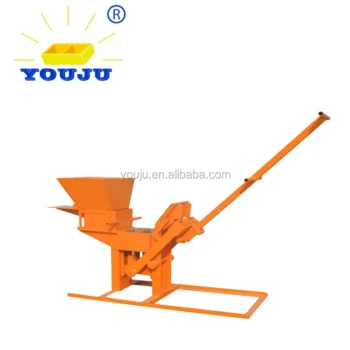
Fast dispatch from stock — the LY2-40 manual clay interlocking brick machine is built, tested, and ready to load so your project deadline does not slip while waiting on production.
Technical Specifications
| Parameter | Value |
|---|---|
| Model | LY2-40 |
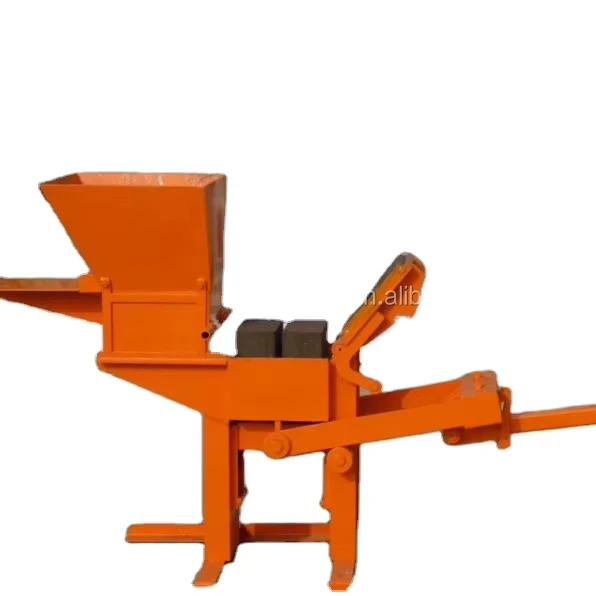
| Product Type | Manual Clay Interlocking Brick Making Machine |
| Total Power | No Power, Completely Manual |
| Overall Dimensions (L×W×H) | 1600 x 700 x 1200 mm |
| Net Weight | 200-240 kg |
| Molding Cycle | 30-40 seconds |
| Output Capacity | 400-1000 pcs/day (basis to be confirmed with block format and material) |
| Mobility | Steel wheels |
| Automation Level | Completely Manual |
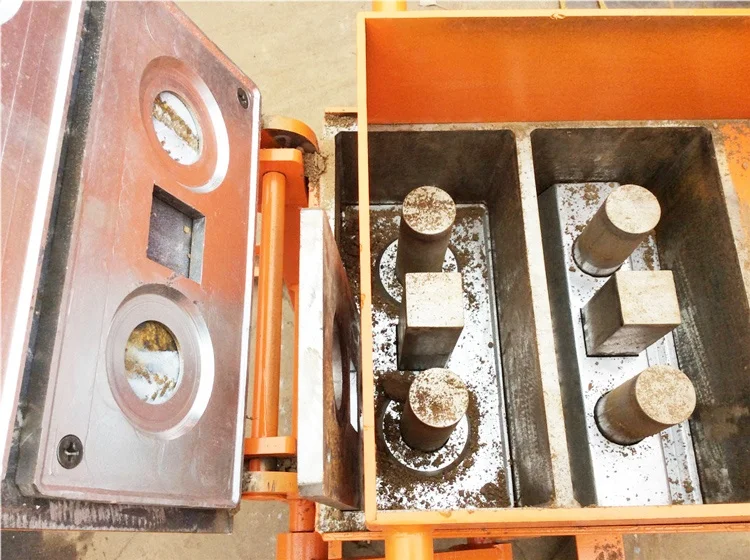
| Mould Configuration | Changeable for various interlocking block formats |
| Recommended Mixing Equipment | JFA-1 or JQ350 Mixer |
| Warranty | 1 Year |
Application Suitability
| Application | Material or Output |
|---|---|
| On-site interlocking brick production for housing projects | Soil-cement mix using local red soil, black cotton soil, or laterite |
| Off-grid rural construction where power is unavailable | Unstabilized or cement-stabilized clay |
| Small-scale community block enterprises | Locally sourced earth blended with 5-10% cement |
| Remote infrastructure and fencing projects | Site-excavated soil meeting basic plasticity requirements |
What "400 to 1000 Bricks a Day" Actually Means on a Manual Press
The daily output figure only becomes real once you lock in the exact interlocking brick profile and your operator rotation schedule.
Catalogue sheets often quote a broad output range without naming the brick format behind it. On a completely manual machine like the LY2-40, a larger interlocking block with deeper shear keys demands more lever strokes and a longer ejection sequence than a slim walling brick, so the cycle time shifts noticeably between formats. [NEED_CITE: typical manual press cycle variation by block geometry]. Without confirming which mould you will run most days, the number on the spec sheet remains a starting assumption rather than a production plan.
Dispatch Speed When the Project Clock Is Already Running
When a contractor commits to a handover date and the block supply chain breaks down, every week of machine lead time erodes the schedule buffer. The LY2-40 manual clay interlocking brick machine in stock is crated and ready for container loading, cutting the gap between purchase order and port dispatch from typical multi-week production waits down to a matter of days. That difference keeps foundation and walling crews from sitting idle on site.
Stock Availability versus Built-to-Order Reality
Most manual block presses in this class are assembled after the order is placed, which introduces a queue dependent on workshop load and component supply. Holding completed machines means the LY2-40 skips that queue entirely. Buyers working against a project deadline can align vessel booking with a known dispatch date instead of a factory estimate that shifts with each batch [NEED_CITE: container booking lead times for breakbulk and LCL machinery shipments]. This is the advantage the stock-focused supply model is built around.
Reading the Molding Cycle Against Your Crew Stamina
The 30-to-40-second molding cycle sounds brisk on paper, but on a manual press every second is paid for in operator effort — pulling the lever, releasing the mould, and wheeling the brick to the curing area. A two-person team rotating every hour can sustain this rhythm across a full shift, while a single operator will see output taper as fatigue sets in. Planning crew rotation and rest breaks into the daily schedule gives you a more honest output projection than the raw cycle time alone.
Dimensions, Weight, and What They Mean for Your Site
At 1600 x 700 x 1200 mm and 200-240 kg, the LY2-40 is sized to roll through a standard doorway and fit into the back of a light truck, but it still needs a firm, level working surface to produce consistent bricks. The steel-wheel base provides mobility across the site, yet the frame must sit flat during pressing to avoid uneven compaction that leads to cracked corners on ejection. A simple compacted gravel pad is usually enough, but soft ground will introduce variation into every brick [NEED_CITE: soil stabilization practices for temporary block production yards].
The Mixer Pairing That Makes or Breaks Daily Output
The recommended JFA-1 or JQ350 mixer is not a casual suggestion — a manual press is only as fast as the mix reaching it. If the soil-cement blend arrives in inconsistent batches or the moisture content drifts, operators spend time reworking the feed instead of pressing. Matching mixer batch size to the press cycle keeps the workflow continuous and avoids the bottleneck where the machine waits on material.
When a "Simple Manual Machine" Costs More Than Expected
Ordering a manual press without confirming the mould format, the soil type, or the packing arrangement creates problems that surface only after arrival. A mould that does not match the interlocking profile the local market buys means the machine sits unused while a replacement is shipped. Soil with higher clay content than assumed causes sticking in the mould box, requiring frequent cleaning that cuts actual output. And if the container loading plan was never reviewed, the machine may arrive with bent lever arms or a cracked frame from shifting during transit [NEED_CITE: common freight damage causes for unpackaged heavy machinery].
Why Buyers Source This Machine Here
Block machinery is the single focus of this operation, so the LY2-40 is specified alongside its moulds, recommended mixer, and handling accessories as a matched set rather than a standalone press. Stock machines are factory-tested before crating, not assembled and tested in a rush to meet a deadline. Dispatch lead time is quoted upfront with container loading details so freight booking can proceed in parallel. Moulds for the interlocking formats the buyer actually needs are confirmed before the order is finalized, avoiding the costly discovery that the wrong profile arrived.
Documentation & Verification
- Factory test record showing brick ejection on a standard soil-cement mix before dispatch
- Mould format list confirming the exact interlocking profiles included with your machine
- Packing photographs showing crating and bracing before the container door closes
- Dimensional drawing for container loading plan and freight booking alignment
Installation, Commissioning & Support
- Steel-wheel base requires only a compacted, level gravel pad — no concrete foundation needed
- No electrical connection required, eliminating voltage and frequency confirmation steps
- Machine arrives fully assembled; operators can begin pressing the same day it is unloaded
- Recommended JFA-1 or JQ350 mixer pairing guidance included to match batch size to the 30-40 second cycle
- Mould change procedure covered in the operation manual so format switching stays within a shift
Before You Request a Quote
Send the exact interlocking brick profile your market demands, the soil type you will source locally, and your target daily output so the correct mould is allocated from stock. Confirm your port of destination and preferred vessel schedule so dispatch timing aligns with your project deadline. If you have an existing mixer on site, share its batch capacity so the workflow pairing can be verified before shipment.
Frequently Asked Questions
Q: Is the LY2-40 actually in stock and what is the real dispatch lead time?
A: Completed machines are held in stock, so dispatch is measured in days for crating and container loading rather than weeks of production. Exact lead time depends on current stock level and your port schedule, which we confirm at the quotation stage so you can book freight with a reliable date.
Q: Which interlocking brick moulds ship with the machine from stock?
A: Standard interlocking profiles commonly stocked include straight and curved walling formats. If your market requires a specific shear-key or lug profile not currently held, a replacement mould can be ordered alongside the machine. We confirm the available format list before your order is finalized.
Q: How is the machine packed for container shipment?
A: The LY2-40 is secured on a pallet with steel strapping and protective wrapping to prevent frame movement during transit. Packing photographs are shared before the container door closes so you can verify the bracing arrangement matches your freight insurance requirements.
Q: What soil-cement mix ratio works with this manual press?
A: A starting range of 5 to 10 percent cement by weight with locally sourced soil is common, but the exact ratio depends on your soil plasticity and the block strength your project requires. We recommend sending a soil sample for a trial press before dispatch so the mix and mould clearance can be adjusted in advance.
Q: What is the estimated arrival time from dispatch to destination port?
A: Transit time depends on the shipping route and carrier schedule from the port of loading to your destination. We provide the vessel schedule at the time of booking so you can align site preparation and crew mobilization with the expected arrival date.