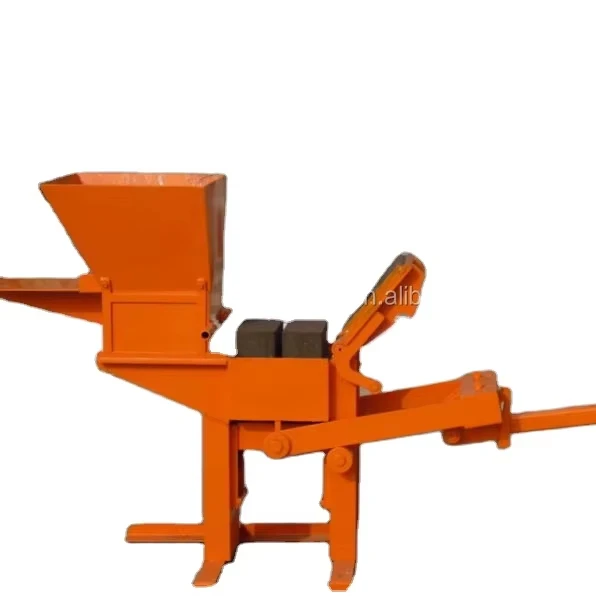


Description
Rapid Dispatch Focus — stock units ready to load, with cycle time and dispatch estimate locked before the container departs.
Technical Specifications
| Parameter | Value |
|---|---|
| Model | LY2-40 |
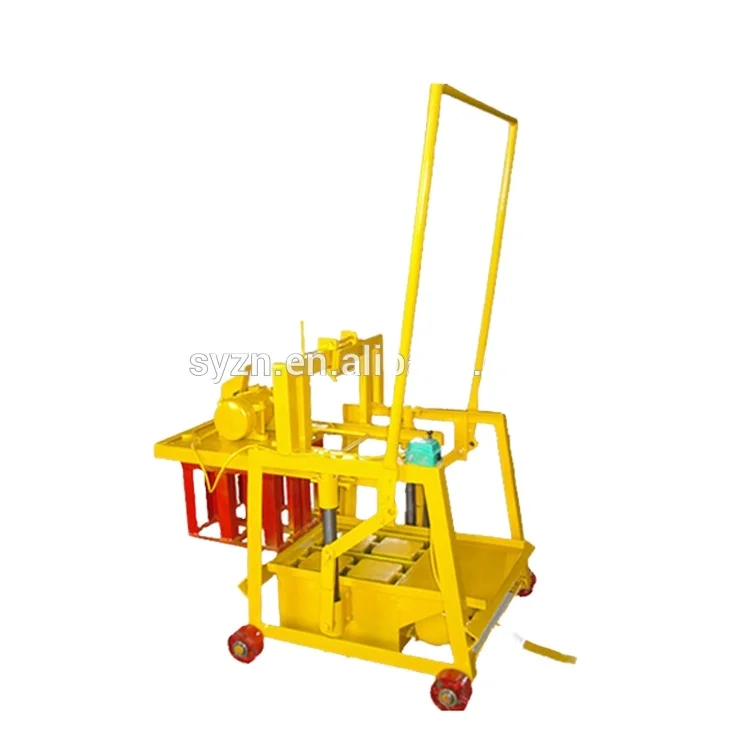
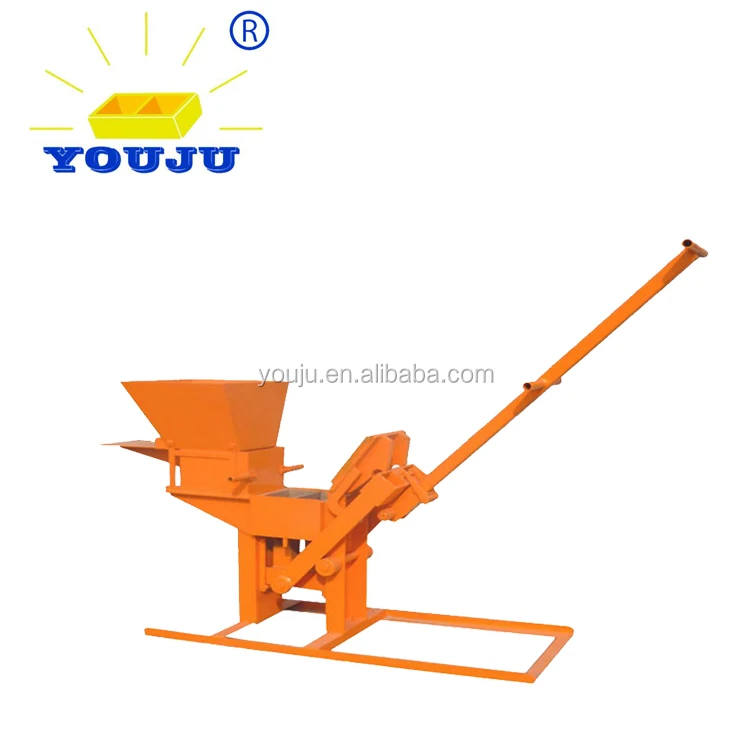
| Product Type | Manual Clay Interlocking Brick Machine |
| Total Power | No Power, Completely Manual |
| Overall Dimensions (L×W×H) | 1600 x 700 x 1200 mm |
| Net Weight | 200-240 kgs (source value — verify against manufacturer catalog) |
| Molding Cycle | 30-40s |
| Output Capacity | 400-1000 pcs/day (basis not stated in source — confirm block format / material / thickness) |
| Lifting System | Manual |
| Mobility | Steel wheels |
| Mould | Changeable for various block formats |
| Basic Equipment | JFA-1 Mixer or JQ350 Mixer |
| Warranty | 1 Year |
| Assembly State | Mobile, egg-laying type |
Application Suitability
| Application | Material or Output |
|---|---|
| On-site interlocking clay brick production | Soil-cement mixes in areas without electricity supply |
| Small-scale compressed earth block manufacturing | Local clay blended with stabilizers for rural housing |
| Manual brick production for construction contractors | Interlocking profiles laid directly on a building site |
| First brick operation for entrepreneurs | Low-capital entry with no grid power requirement |
What "In Stock" Actually Means for Your Project Deadline
Dispatch timing is only useful when it includes the mould format, mixer pairing, and spare parts you need on day one.
I have stood on job sites in Colombia where a machine arrived on schedule but the right interlocking profile mould was back in China waiting for a production run. The contractor lost two weeks while his crew sat idle. Stock availability matters, but only when it covers the full configuration you need to start pressing bricks immediately [NEED_CITE: lead time impact on project-critical construction schedules]. A manual clay interlocking brick machine in stock is valuable only if it arrives ready to produce the exact block your market requires.
What Sits on the Warehouse Floor Right Now
The LY2-40 manual clay interlocking brick machine in stock is configured for completely manual operation, requiring zero electrical supply. This matters when your project site has no generator and no grid connection. The steel-wheel chassis lets a small crew reposition the press along a foundation line without waiting for a forklift, keeping brick output flowing as the building footprint expands.
Mould Availability and Container Loading
A stocked frame means little if the interlocking brick profile mould your buyer expects is not beside it. Standard moulds for common soil-cement interlocking formats ship alongside the press unit and the selected mixer, either the JFA-1 or JQ350 depending on your batch size preference. The entire setup — press, mould, mixer — loads into a single container, and the dismantling plan for shipment is confirmed before the booking is made [NEED_CITE: standard container loading practices for mobile brick machines].
Reading the Specifications That Matter
The 30-40 second molding cycle is the rhythm your crew will settle into, but daily output of 400-1000 pieces depends entirely on which brick format the mould produces, how quickly the operator feeds the soil-cement mix, and how well the team organizes pallet-free curing. The cycle itself is fixed by the manual lever stroke and the soil mixture consistency. The 200-240 kg net weight keeps the press stable during compaction without requiring a bolted-down foundation, which is exactly why the egg-laying format works for contractors moving between sites.
The Cost of Ordering Without Confirming Mould Stock
I have watched buyers confirm a machine order, celebrate a fast shipping date, then discover that the specific interlocking profile they needed required a four-week mould fabrication. The machine sat in a container port while the mould crossed an ocean separately. When a project has a deadline and penalties attached, a delay like that erases whatever advantage the low unit price offered [NEED_CITE: construction project penalty clauses for material supply delays]. Always confirm which mould profiles are physically in the warehouse before placing the order.
Why Sourcing Here Reduces Arrival Uncertainty
Every LY2-40 unit is specified alongside its mould and mixer as a matched set, so you do not receive a press that works with a mould format you cannot sell locally. Dispatch lead time is quoted from the moment of order confirmation, covering production or stock allocation, container booking, and an arrival estimate based on your destination port. Standard moulds and hydraulic wear parts are packed into the same shipment so your crew is not waiting for a second delivery when the first gear shows wear. The 1-year warranty starts from the bill of lading date, and the operation manual arrives in the language your operators read.
Documentation & Verification
- Factory test record confirming manual lever operation and cycle timing before dispatch
- Mould format list showing which interlocking brick profiles ship from stock
- Container loading plan with dismantling instructions for arrival reassembly
- Operation and maintenance manual in your preferred language
- Hydraulic and mechanical schematic for the lifting and compaction assembly
Installation, Commissioning & Support
- No electrical supply required, so no voltage confirmation or dedicated circuit needed at site
- Steel-wheel mobility allows repositioning across the 1600 mm footprint without heavy equipment
- Assembly state confirmed before shipment, with reassembly guidance for egg-laying operation
- JFA-1 or JQ350 mixer pairing documented for correct soil-cement batch ratios
- Spare gears and bearings packed inside the container to avoid local sourcing delays
- Manual lever stroke and mould change procedure covered during operator training
What to Include in Your Inquiry
To get an accurate dispatch date and arrival estimate, share your destination port, the interlocking brick profile your local market sells, and whether you need the JFA-1 or JQ350 mixer based on your daily mixing volume. If your site has curing space constraints, mention the brick dimensions so we can confirm the mould is in stock rather than requiring a production run. Any spare part quantities beyond the standard set should be listed now so they ship in the same container.
Frequently Asked Questions
Q: How is the 400-1000 pieces per day capacity calculated and for which brick format?
A: That range depends entirely on the interlocking brick size the mould produces, the soil-cement mix consistency, and how quickly your crew feeds the chamber and clears each pressed brick. Smaller formats cycle faster than larger ones. Share your target brick dimensions and we will provide a format-specific daily estimate rather than a generic range.
Q: What moulds are in stock now versus which require a production run?
A: Standard interlocking brick profiles commonly used in soil-cement construction are typically available from stock. If your market requires a custom profile or a non-standard dimension, the mould must be fabricated to your drawing before shipment. Confirm your required format at inquiry stage so the dispatch date reflects reality.
Q: What is the dispatch lead time from order to container loading?
A: Stocked units with standard moulds ship within a typical multi-week window, including container booking and loading. If your required mould is not in stock, add the mould fabrication period to that timeline. The exact dispatch date is confirmed in writing before production or stock allocation begins.
Q: Does the machine arrive assembled or dismantled, and what are the container loading requirements?
A: The LY2-40 ships dismantled to fit efficiently into a standard container alongside the mixer and spare parts. Reassembly on site is straightforward given the 1600 x 700 x 1200 mm overall dimensions and the 200-240 kg weight. A loading plan is provided before dispatch showing how the components are secured.