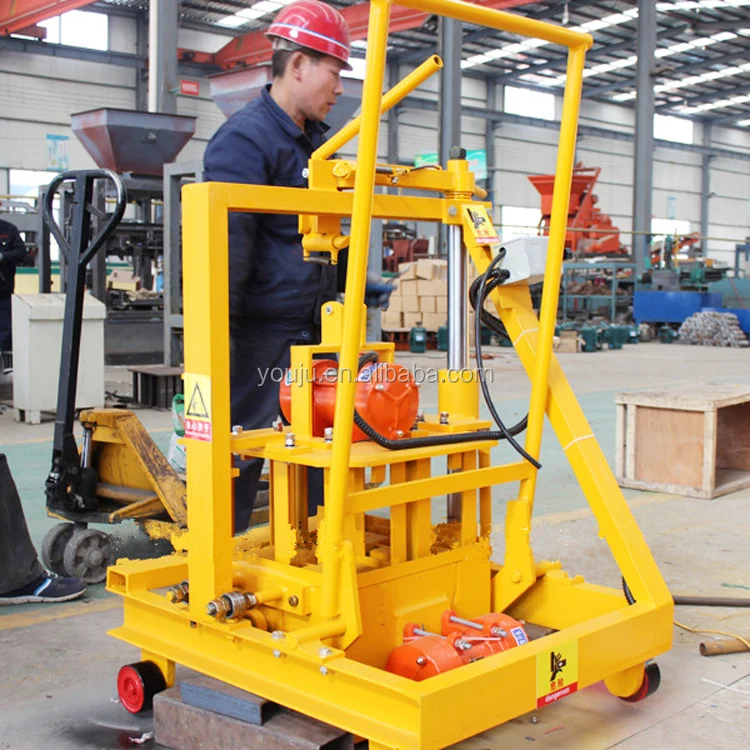
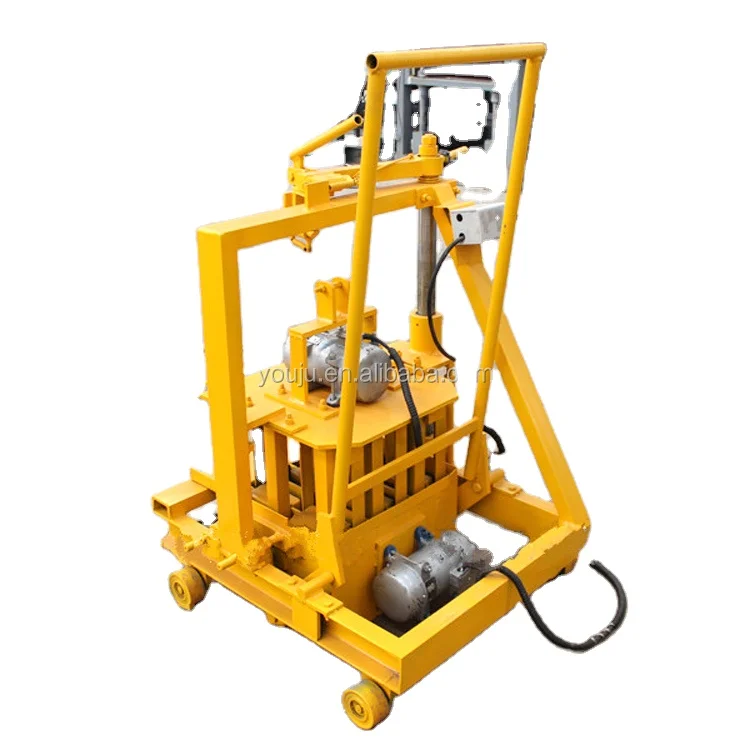
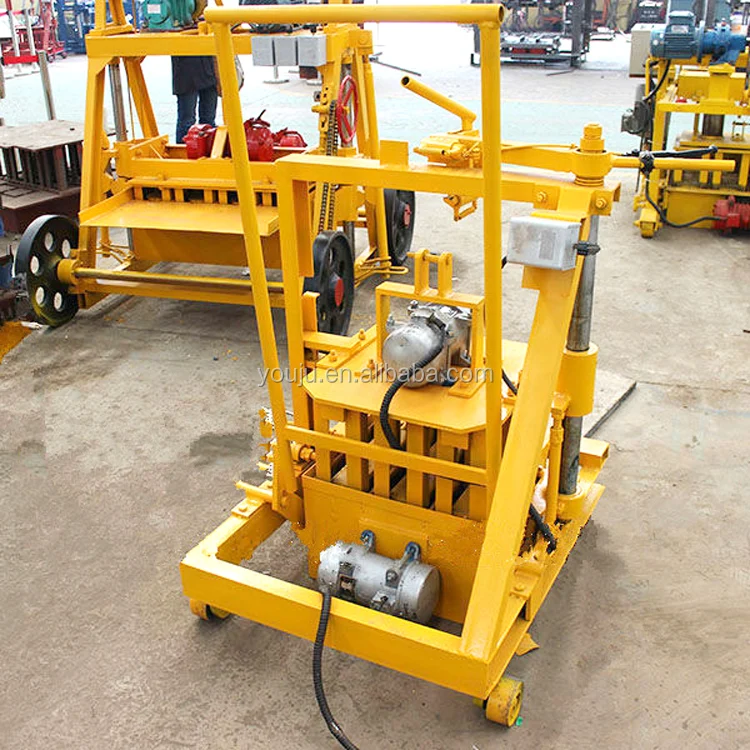
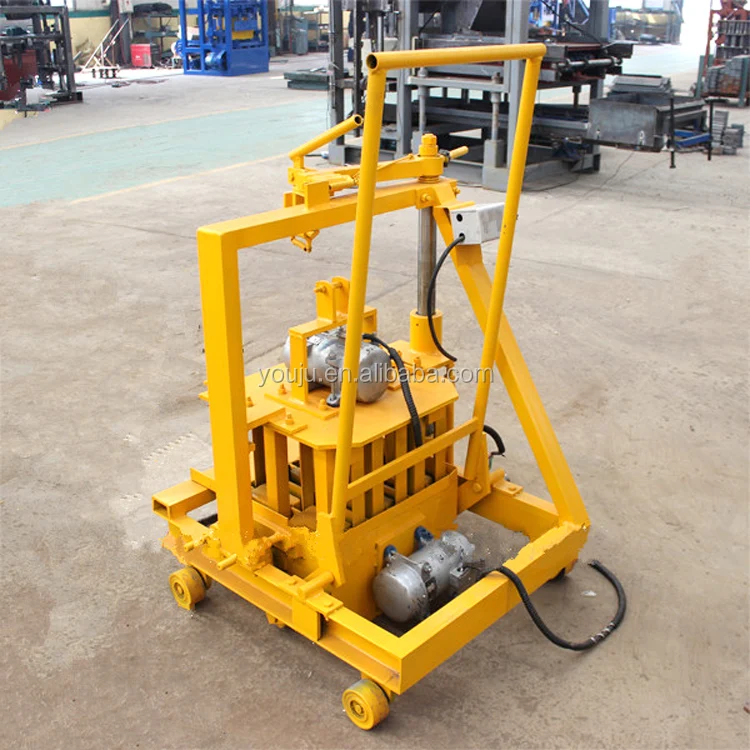
Description
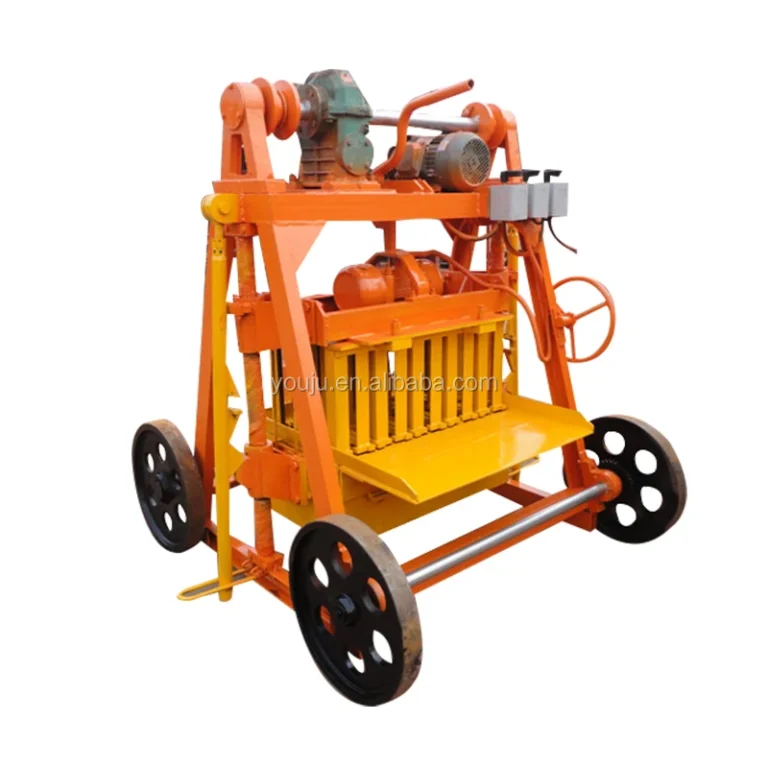
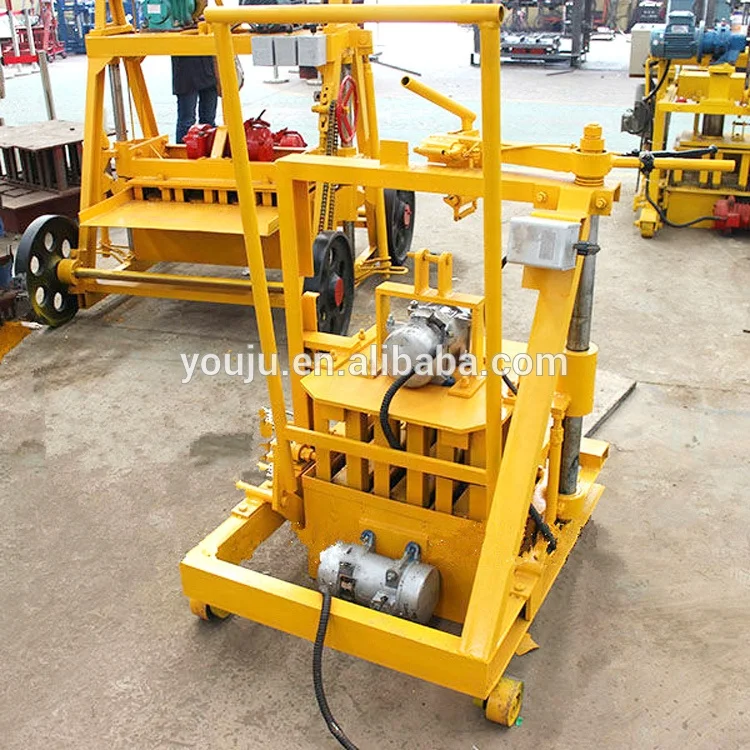
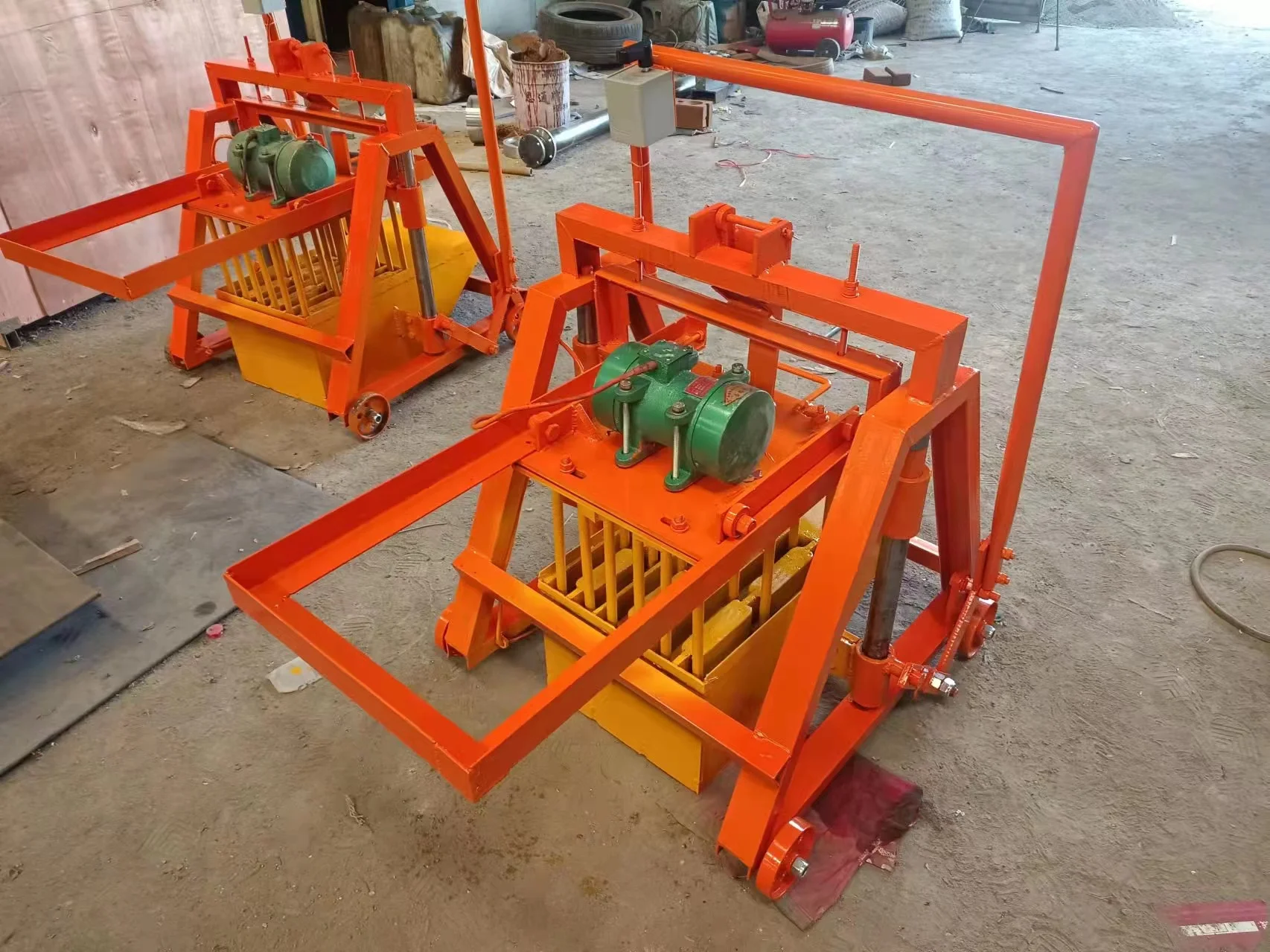
Ready-to-ship mobile block press — QMJ2-45 units are assembled and held in stock, so dispatch and container loading schedules are confirmed at the order stage rather than after a production run.
Technical Specifications
| Parameter | Value |
|---|---|
| Model | QMJ2-45 |
| Product Type | Mobile Concrete Block Making Machine |
| Machine Type | Mobile, egg-laying, manual operation |
| Pallet Requirement | None (pallet-less / egg-laying) |
| Power Source | Electric motor (no diesel or three-phase dependency stated) |
| Labor Requirement | 1 to 3 workers |
| Cycle Time | 25–30 s |
| Output — 400×200×200 mm hollow block | 2 pcs/mould, 160 pcs/h, 1,280 pcs/8 hr |
| Output — 400×150×200 mm hollow block | 3 pcs/mould, 240 pcs/h, 1,920 pcs/8 hr (corrected from 4,800) |
| Output — 400×100×200 mm hollow block | 4 pcs/mould, 320 pcs/h, 2,560 pcs/8 hr |
| Mould Format Options | 400×200×200 / 400×150×200 / 400×100×200 mm hollow brick |
| Mould Change | Manual |
| Automation Level | Manual |
| Vibration Force | (basis not stated in source) |
| Voltage & Frequency | Configurable to site supply (basis to be confirmed) |
| Certification | ISO 9001:2000, CE (documentation to be verified before dispatch) |
Application Suitability
| Application | Material or Output |
|---|---|
| On-site hollow block production for housing projects | Local sand, crushed stone, and cement |
| Small workshop block manufacturing | Crusher dust and river aggregate with Portland cement |
| Construction contractor self-production at building site | Masonry waste, gravel, and cement |
| First-plant entrepreneurs with limited capital | Locally sourced aggregate, no pallet inventory required |
Why Dispatch Timing Matters More Than Cycle Time
A mobile block making machine in stock is only useful if it actually leaves the warehouse before your project deadline. The QMJ2-45 is held as a complete unit with standard moulds fitted, meaning the lead time covers packing and container loading rather than manufacturing from scratch. When a contractor is mid-build and blocks must start arriving on site, the gap between order date and dispatch date is what determines whether the schedule holds. Confirming stock status and a realistic container loading plan before payment prevents the most common cause of delayed equipment arrival.
I have seen project timelines slip because the quoted lead time assumed production had already started, when in reality the machine was still waiting for component procurement. Buyers working to a construction deadline should receive a written dispatch estimate, packing photographs, and a container loading plan before the balance payment is released [NEED_CITE: standard container loading practices for industrial block machinery].
Dispatch and Container Loading Sequence
A mobile block making machine in stock is typically prepared by removing the vibration motor guard and lowering the mould assembly for transport stability. The QMJ2-45’s compact footprint allows it to fit inside a standard 20-foot container alongside the three standard hollow block moulds, basic tooling, and spare vibration rubbers. Before sealing, packing photographs are taken from multiple angles so the buyer can verify condition against the bill of lading.
Arrival Estimate and Port-Side Documentation
Shipping duration depends entirely on destination port and current liner schedules. Once the container is booked, an arrival estimate is provided based on the carrier’s published transit time, not a generic regional average. The export documentation package — commercial invoice, packing list, and certificate of origin — is prepared alongside the machine so there is no separate delay at customs clearance [NEED_CITE: export documentation requirements for concrete block machinery shipments].
What the Specification Sheet Tells You About On-Site Output
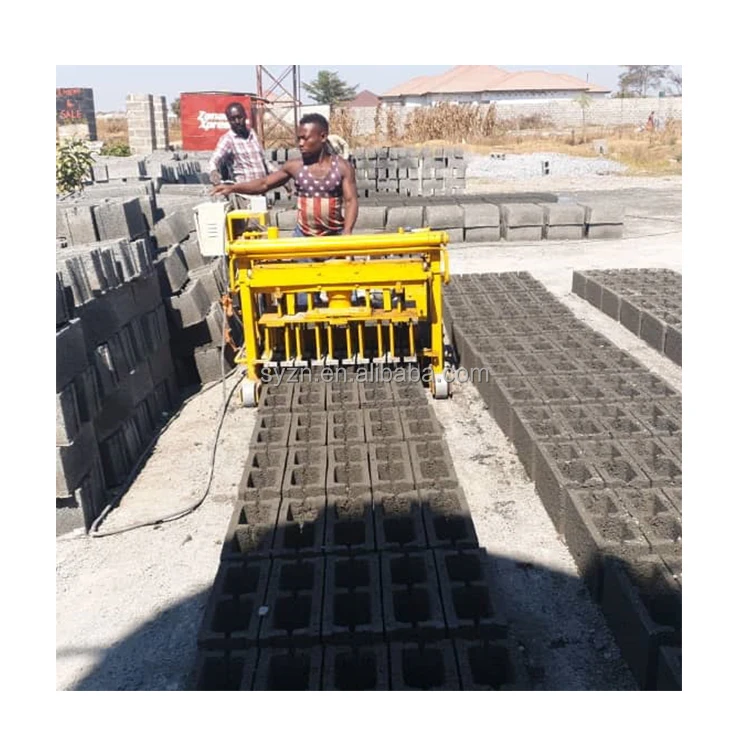
The 25–30 second cycle time for the QMJ2-45 applies across all three hollow block formats, but the pieces-per-shift figure changes because each mould cavity count differs. A 400×200×200 mm block uses a 2-cavity mould yielding 1,280 pieces in an 8-hour shift, while the narrower 400×100×200 mm block uses a 4-cavity mould reaching 2,560 pieces in the same shift. These figures assume continuous operation with a prepared concrete mix ready at the hopper and clear ground ahead for the machine to travel. In practice, mix preparation time, mould changeover, and ground leveling reduce achievable output. The vibration mechanism compacts the concrete into the mould cavity during each cycle, and because the machine lays blocks directly on the ground in an egg-laying pattern, there is no pallet return loop to manage. This keeps the labor requirement to between one and three workers, but it also means the ground surface must be level enough for the freshly formed blocks to hold shape without slumping.
When a "Quick Start" Turns Into a Two-Week Standstill
Arriving at a job site only to discover the local voltage does not match the motor winding is a delay no project schedule absorbs easily. I once watched a mobile block machine sit idle in a South Asian yard for over a week because the motor was wound for 380V/50Hz while the site generator produced 440V/60Hz, and no one had confirmed the specification before loading [NEED_CITE: voltage and frequency mismatch consequences in industrial equipment]. The QMJ2-45’s electric motor can be configured to match the buyer’s site supply, but that configuration must be locked in before dispatch, not after the container arrives.
Why Buyers Choose This Supply Route
Stock availability of the QMJ2-45 means the buyer sees the machine before paying the balance, not a rendering or a factory tour of a different unit. Each machine undergoes a test run using a standard mix to verify vibration timing and mould release before packing. The three standard hollow block formats cover the most common masonry dimensions across African and South Asian construction markets, reducing the need for custom mould orders. Voltage and control language are confirmed against the buyer’s site conditions as part of the dispatch checklist. Export packing is documented photographically, and the container loading plan is shared with the buyer so they can prepare site-side unloading equipment in advance.
Documentation & Verification
- Factory test record showing cycle time on standard mix before packing
- Voltage and frequency confirmation sheet signed off prior to dispatch
- Mould drawing set for all three hollow block formats with dimensional tolerances
- Packing photographs from multiple angles taken at container loading
- CE declaration copy available for customs clearance at destination port
Installation, Commissioning & Support
- Level ground surface required; no concrete foundation or anchor bolts needed for the QMJ2-45
- Single-phase or three-phase electric supply matched to motor winding confirmed before dispatch
- Machine arrives partially dismantled; vibration motor guard and hopper reinstalled on site
- First test run conducted with buyer’s local aggregate to verify block cohesion and vibration timing
- Operator covers mix ratio adjustment, mould change procedure, and daily vibration rubber inspection
- Spare vibration rubbers and mould wear plates included in the shipment for initial production period
What to Confirm Before Requesting a Quote
To match the QMJ2-45 to your site conditions, provide the hollow block dimensions your market requires, the type of aggregate available locally, and the voltage and frequency of your site power supply. If the ground at your production area is unpaved or uneven, mention that as well — it affects how consistently the egg-laying blocks hold their form during the first hours of curing.
Frequently Asked Questions
Q: Is the QMJ2-45 currently in stock and what is the dispatch lead time?
A: Yes, QMJ2-45 units are held in stock as assembled machines with the three standard hollow block moulds. Dispatch lead time covers packing, export documentation preparation, and container loading rather than manufacturing. A written dispatch date is provided at the time of order confirmation so buyers can align it with their project schedule.
Q: How is the machine dismantled and loaded into a container for shipment?
A: The vibration motor guard is removed and the mould assembly is lowered to reduce the transport profile. The QMJ2-45 fits inside a standard 20-foot container along with the moulds and spare parts. Packing photographs are taken before the container is sealed, and a loading plan is shared with the buyer for site-side unloading preparation.
Q: What voltage and frequency options are available, and is it confirmed before dispatch?
A: The electric motor can be wound to match the buyer’s site voltage and frequency. This specification is confirmed in writing before the machine is packed. Dispatch does not proceed until the voltage confirmation sheet is signed, preventing the costly delay of receiving a motor that does not match the local power supply.
Q: Which block formats are included as standard moulds?
A: Three hollow block moulds are included: 400×200×200 mm, 400×150×200 mm, and 400×100×200 mm. These cover the most common load-bearing and partition wall block sizes. Additional mould formats can be ordered separately if the buyer’s market requires dimensions outside this range.
Q: What is the realistic daily output on site, and what factors reduce it?
A: Output depends on the block format: the 400×200×200 mm block yields approximately 1,280 pieces per 8-hour shift, while the 400×100×200 mm block yields approximately 2,560. Real-world output is reduced by mix preparation time, ground leveling, mould changeover, and the consistency of the local aggregate. A well-organized site with pre-mixed material ready at the hopper comes closest to the stated figures.