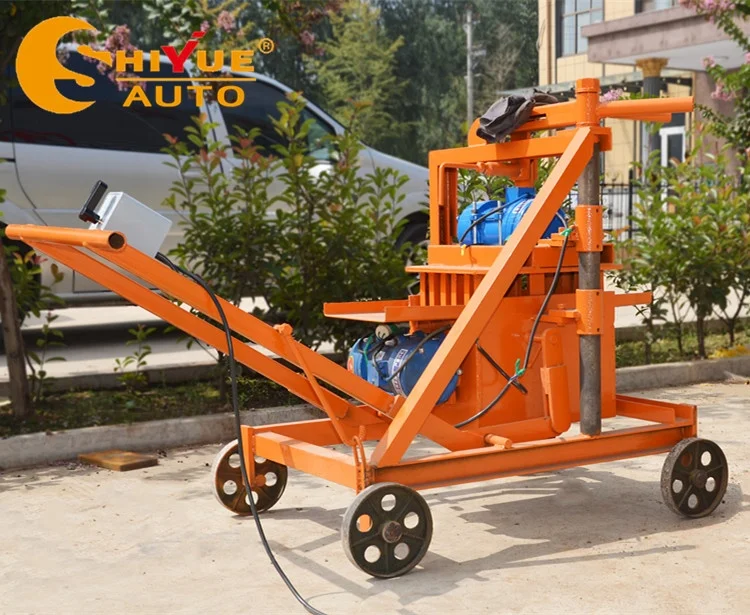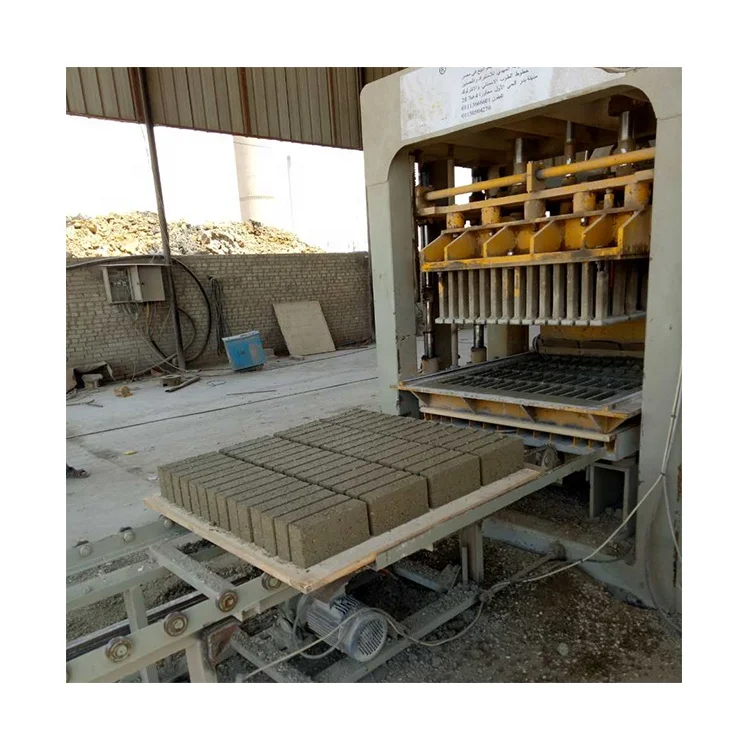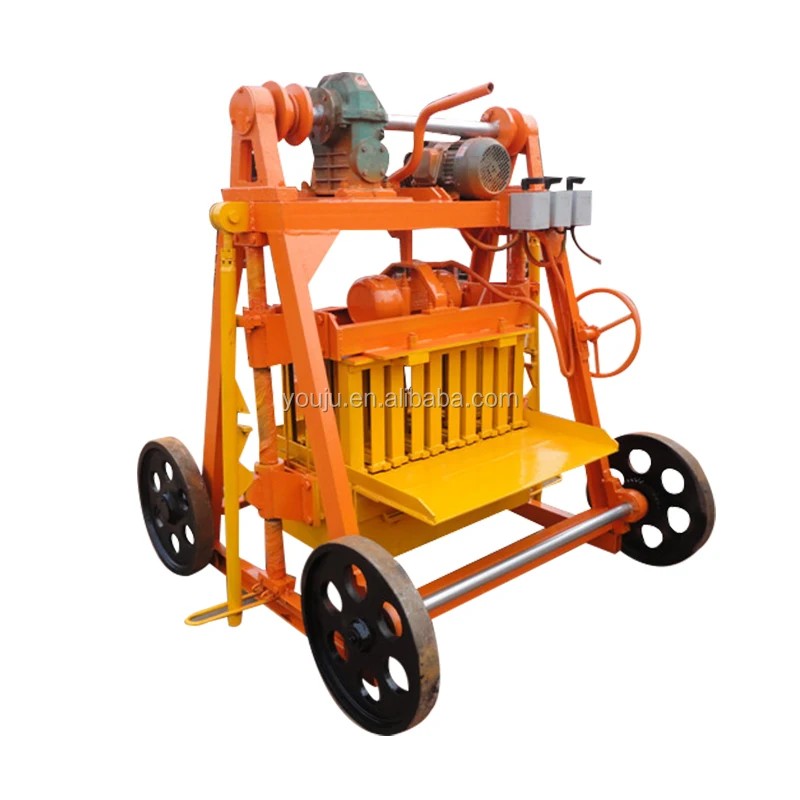


Description
Stocked Dispatch — QMJ4-45 mobile block machines are held in inventory and loaded into containers within days of order confirmation, not weeks after a production run finishes.
Technical Specifications
| Parameter | Value |
|---|---|
| Model | QMJ4-45 |
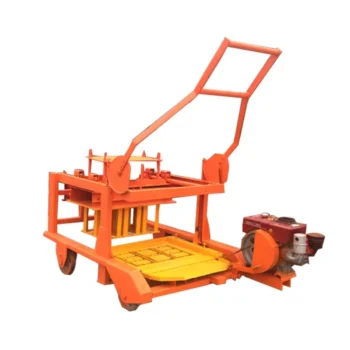
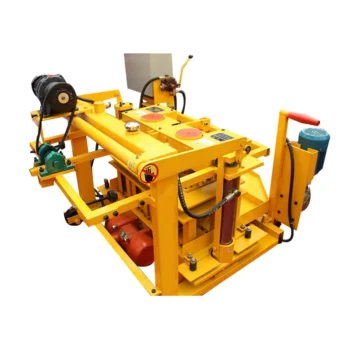
| Product Type | Mobile Egg Laying Block Making Machine |
| Molding Capacity | 4 pcs/mould (basis: 400×200×200mm hollow block) |
| Vibration Frequency | 2400 r/m |
| Vibration Method | Mold vibration |
| Molding Cycle | 40–45 s (basis: hollow block formats listed below) |
| Hollow Block Format 1 | 400×200×200 mm — 4 pcs/mould — 40–45 s cycle — approx. 3000 pcs/day (8 hours) |
| Hollow Block Format 2 | 400×150×200 mm — 5 pcs/mould — 40–45 s cycle — approx. 3500 pcs/day (8 hours) |
| Hollow Block Format 3 | 400×120×200 mm — 6 pcs/mould — 40–45 s cycle — approx. 4500 pcs/day (8 hours) |
| Demold Method | Manual |
| Turning Method | Manual |
| Total Power | 6 kW |
| Power Source | Diesel / Petrol engine |
| Automation Level | Manual (egg laying, no pallet required) |
| Pallet Requirement | None (egg laying on ground) |
| Control System | Manual operation (no PLC) |
| Productivity | 2600–4000 pcs/day (basis not stated in source — confirm block format / material / thickness) |
| Warranty | One year for the whole machine |
| Certification | CE |
Application Suitability
| Application | Material or Output |
|---|---|
| On-site hollow block production at construction zones | Crushed stone, river sand, cement |
| Remote housing projects without grid electricity | Local aggregate with diesel-powered operation |
| Small-scale block entrepreneurship | Hollow blocks in 400×200, 400×150, 400×120 formats |
| Contractor self-supply before fixed plant investment | Standard concrete mix with manual batching |
What "In Stock" Actually Means Before You Commit
The QMJ4-45 mobile block machine in stock fast delivery promise only matters if the machine is physically built, tested, and ready to load — not sitting in a production queue. [NEED_CITE: typical lead time differences between stocked and built-to-order block machinery]
I have watched project timelines slip because a buyer assumed "available" meant "crated and waiting." In reality, some suppliers list machines as in stock while the frame is still being welded. When you are racing a contractor deadline in a place like rural Kenya or upcountry Sri Lanka, a two-week gap between order and dispatch can push an entire build schedule into the next rainy season. The QMJ4-45 is an egg laying type, which means fewer sub-assemblies to pack and a simpler container load — but that advantage disappears if the unit has not been factory-run before it ships. Confirming actual stock status and a container loading date up front is the single most useful question you can ask before placing a deposit.
Dispatch Lead Time and Container Loading
The QMJ4-45 mobile block machine in stock fast delivery timeline begins the moment the unit passes its factory test and the crate is sealed. Because the egg laying design eliminates pallets, curing racks, and automatic stackers from the shipment, the machine occupies less container space and loads faster than a full stationary line. The diesel or petrol engine configuration also removes the need for electrical panel crating and voltage-specific components, which simplifies customs inspection at the destination port.
Arrival Estimate and Port-Side Reality
Shipping duration depends on your destination port and current vessel schedules, but the dispatch date is the variable you control. A QMJ4-45 mobile block machine in stock fast delivery order that is crated and handed to the freight forwarder within days — rather than weeks — shifts the arrival window in your favor. [NEED_CITE: average ocean freight transit times from Chinese ports to East African and South Asian destinations] I have seen machines arrive just in time for a project kickoff because the supplier had the unit tested and ready before the next available sailing. The opposite is also true: a delayed dispatch can mean missing a vessel and waiting for the next one.
Why Vibration Frequency and Cycle Time Matter on the Ground
The 2400 r/m vibration frequency and the 40–45 second molding cycle across all three hollow block formats define how quickly the QMJ4-45 lays blocks on a prepared ground surface. Because the vibration is applied directly to the mold rather than through a table or pallet, the energy transfer depends heavily on how level and firm your laying surface is. A soft or uneven ground absorbs vibration and produces blocks with inconsistent density — the same problem I ran into last month when a client’s river sand had too much clay content and the blocks cracked on demold. The manual turning and demold method keeps the machine simple and field-repairable, but it also means operator rhythm directly affects cycle consistency.
The Cost of Assuming Stock Without Proof
Ordering a machine labeled "in stock" without requesting packing photographs or a factory test video can result in a unit that is still in assembly when you expect it on a ship. [NEED_CITE: common disputes arising from unverified stock claims in machinery procurement] For an egg laying machine like the QMJ4-45, the consequences are compounded: you likely have a crew waiting on-site, a concrete mix ordered, and a project milestone tied to block production. If the machine arrives late or with unconfirmed engine specifications, the delay cascades through your entire site plan. Always ask for a dated test-run video and container loading photos before the vessel departure.
Why Source This Machine Here
Block machinery is the single focus of this operation, so the QMJ4-45 is specified, tested, and documented as a complete working unit rather than assembled from unrelated components. The diesel and petrol engine options are matched to the vibration motor requirements before dispatch, eliminating on-site electrical compatibility surprises. Moulds for all three hollow block formats are held alongside the machines, so you can confirm format stock at the same time you confirm machine stock. Factory test records are generated for every unit before crating. One-year warranty coverage applies from the dispatch date, and wear parts lists ship inside the crate so your first replacement order can be planned before the machine even arrives.
Documentation & Verification
- Factory test record on your selected hollow block format before dispatch
- Engine specification sheet confirming diesel or petrol configuration
- Mould drawing and format list for all three hollow block sizes
- Packing photographs showing crate condition and container loading
- Customs documentation support for destination country clearance
Installation, Commissioning & Support
- Level ground surface required; no fixed foundation needed for egg laying operation
- Diesel or petrol engine eliminates site electrical connection requirements
- Machine arrives partially assembled; mold and hopper fitted on-site
- First-run block test with your local aggregate recommended before full production
- Manual demold and turning — operator training covers rhythm and cycle consistency
- Wear parts list included; vibration motor and mold liner identified for reorder
Before You Request a Quote
Send your target block format from the three available sizes, your destination port for an arrival estimate, and whether you need diesel or petrol engine configuration. If your site uses local aggregate with unusual clay or moisture content, a sample description helps confirm whether the 2400 r/m vibration frequency will produce clean demold results. Also specify if you need additional moulds beyond the standard hollow block format included with the unit.
Frequently Asked Questions
Q: Is the QMJ4-45 currently in stock, and what is the dispatch lead time?
A: Stock status is confirmed at the time of inquiry with a specific unit serial number. When available, the machine goes through a factory test, is crated, and handed to the freight forwarder within a short window. If the unit is not in stock, a build-to-order lead time is quoted upfront so you can plan against your project deadline.
Q: How is the machine packed for container shipment?
A: The egg laying design means fewer sub-assemblies than a stationary line. The QMJ4-45 is partially dismantled — typically the hopper and mold are separated from the main frame — and secured in a steel-reinforced crate. Packing photographs are shared before the container door closes so you can verify condition.
Q: What is the estimated arrival time to my destination port?
A: Arrival depends on your port and current vessel schedules. The dispatch date is quoted against the next available sailing from the loading port. Once the machine is on the water, transit time follows the carrier’s published schedule to your destination.
Q: Are standard moulds for 400×200×200 hollow blocks included and in stock?
A: The standard mold for 400×200×200mm hollow blocks is included with the machine. Molds for 400×150×200 and 400×120×200 formats are available separately and stock status is confirmed at the same time as the machine. All molds are tested with the unit before dispatch.
Q: What customs and shipping documentation do you provide?
A: Documentation includes the commercial invoice, packing list, bill of lading, CE declaration where applicable, and certificate of origin if required by your destination country. A factory test record and engine specification sheet are also included to support customs clearance on arrival.