


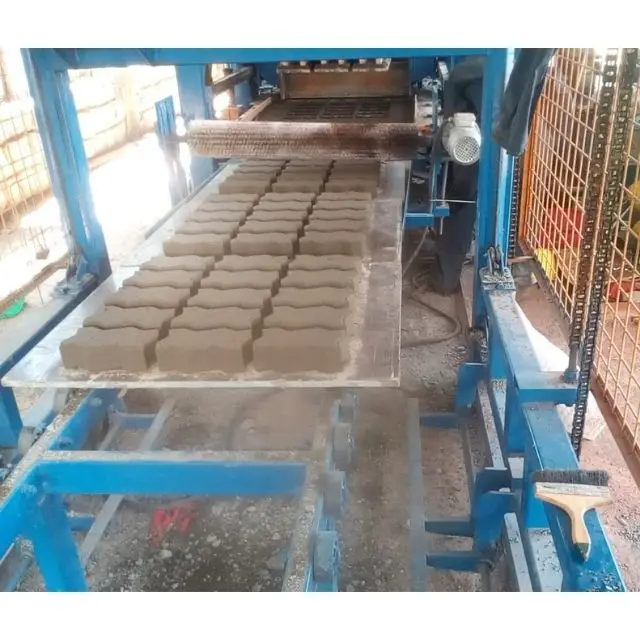
Description
Prompt Dispatch Availability — QT4-15 block machines and standard moulds are allocated against confirmed shipping slots rather than open-ended warehouse counts, so the dispatch lead time you receive is tied to a real loading date.
Technical Specifications
| Parameter | Value |
|---|---|
| Model | QT4-15 |
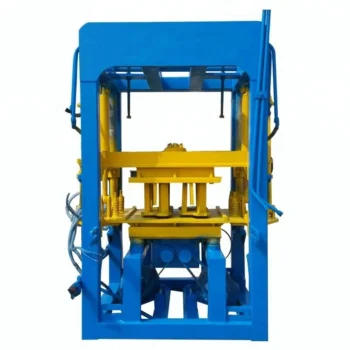
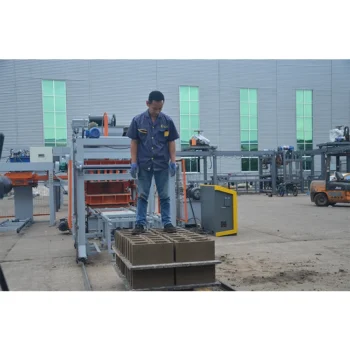
| Product Type | Automatic Concrete Block Making Machine |
| Overall Dimensions (L×W×H) | 7100 × 1600 × 2610 mm |
| Rated Pressure | 16 MPa |
| Vibration Form | Platform Vibration |
| Pallet Size | 1020 × 570 mm |
| Molding Cycle | 15–25 s (basis not stated in source — confirm block format, material and thickness) |
| Overall Power | 27.5 kW |
| Control System | PLC electronic console |
| Automation Level | Automatic (pallet feeding, material feeding, molding, block conveying) |
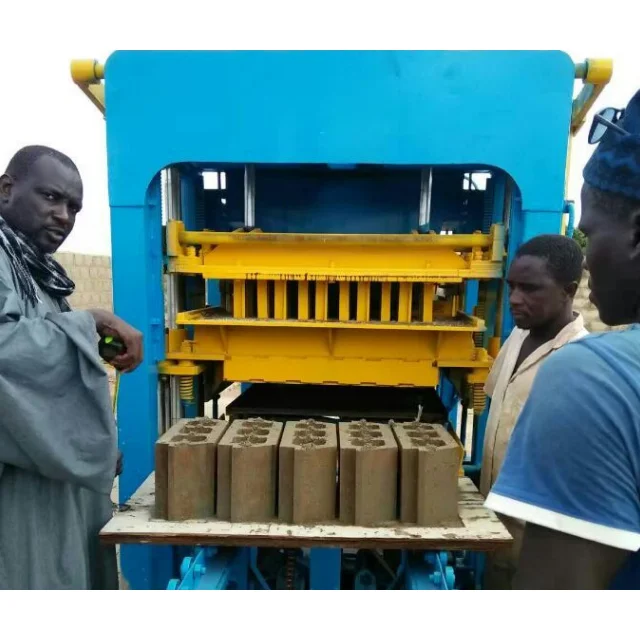
| Mould Format | Interlocking, Hollow, Paving (standard moulds stocked for quick dispatch) |
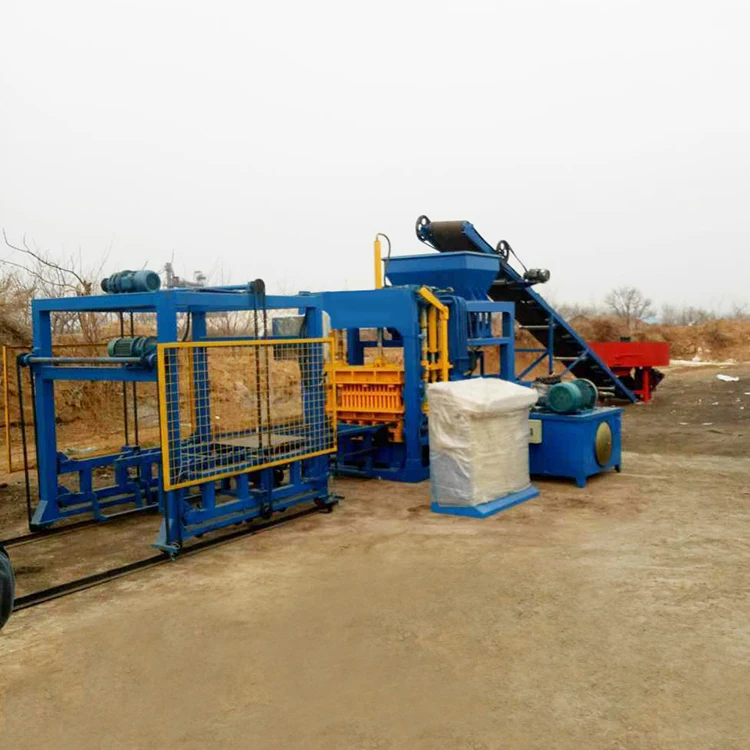
| Line Composition | Mixer, pallet conveyor, molding machine, block conveyor, hydraulic station, electronic console |
Application Suitability
| Application | Material or Output |
|---|---|
| Concrete hollow block production | Cement, crushed stone, sand and aggregate blends for structural masonry |
| Interlocking brick manufacturing | Low-slump concrete mixes with fine aggregate for dry-stack wall systems |
| Paving block production | High-strength face mixes with graded quarry dust and cement for pedestrian and vehicular surfaces |
| Cement brick manufacturing | Standard building material mixes for on-site construction projects and regional building supply |
Why "Quick Dispatch" Only Works When the Container Plan Is Already Done
A QT4-15 block machine in stock still takes weeks off a project if it arrives with the wrong pallet size or an incompatible voltage.
I learned this the hard way years back in our assembly bay. A contractor in West Africa had a housing handover deadline and ordered on a pure lead-time basis. The machine shipped fast, but his curing racks were built for a different pallet dimension. Every wet block had to be double-handled before it could cure, and the time gained on shipping was lost twice over on the yard floor. The QT4-15 block machine in stock now goes through a container loading plan, pallet cross-check and destination voltage confirmation before the crate is closed [NEED_CITE: container loading and pallet dimension verification before shipment].
Dispatch Lead Time as a Written Commitment, Not a Catalogue Estimate
When a buyer says the site must produce blocks by a fixed date, the only number that matters is the day the container clears the port of loading. For the QT4-15 concrete block making machine, dispatch lead time is confirmed in writing at quotation stage, tied to either a stocked unit or a scheduled production slot. The arrival estimate is calculated port-to-port against known sailing schedules, not guessed from a generic regional average [NEED_CITE: typical ocean freight transit windows by destination region].
Matching the Pallet, the Mould and the Container Before the Machine Ships
A fast delivery concrete block making machine only saves time if the rest of the line arrives in the same container. The QT4-15 ships with a pallet size of 1020 × 570 mm, and the quotation locks in the pallet count, the standard mould set (hollow, interlocking or paving) and any additional moulds that fit the remaining container volume. The dismantling layout is agreed before loading, so the reassembly sequence on site matches how the machine was broken down for the box.
Reading the Specs That Actually Affect Your Site
The platform vibration and 16 MPa rated pressure on the QT4-15 work together to compact the mix into the mould cavity. Vibration settles the aggregate, pressure locks it in place; if your local sand runs high in clay content, the cycle has to be adjusted on site and the stated 15–25 s molding window becomes a starting point, not a guarantee. The 27.5 kW overall power draw determines the transformer size and dedicated circuit you need to prepare before the machine arrives, and the PLC electronic console must be set to your local language and voltage frequency before it leaves the factory, not after it has been sitting on a dock.
The Cost of Skipping the Pre-Shipment Cross-Check
Machines that ship fast but arrive misconfigured cost more in site rework than they save in transit days. A pallet size that does not fit existing curing racks forces a yard redesign. A voltage and frequency that do not match the local grid stalls commissioning until a transformer is sourced locally. A PLC display left in a language the operators cannot read turns every fault code into a phone call [NEED_CITE: commissioning delays caused by unconfirmed voltage and control language].
Why This QT4-15 Concrete Block Making Machine Ships as a Matched Set
Block machinery is the single focus here, so the press, mould, pallet and handling equipment are specified as one line, not sourced separately. Standard moulds for hollow, interlocking and paving formats are stocked alongside the machine, which is what makes the fast delivery concrete block making machine claim realistic rather than promotional. The container loading plan and machine dismantling layout are issued before shipment, and voltage, frequency and PLC display language are confirmed against the destination country during the order stage. Packing photographs and customs documentation support ship with every unit.
Documentation & Verification
- Factory test record showing cycle times on the block format you will actually produce
- Container loading plan and dismantling layout issued before the crate is closed
- Pallet specification sheet cross-checked against your curing rack dimensions
- Voltage, frequency and PLC display language confirmation signed at order stage
- Hydraulic and electrical schematic matching the as-built machine configuration
Installation, Commissioning & Support
- Foundation pad sized to the 7100 × 1600 mm footprint with anchor bolt layout provided before pour
- Dedicated circuit rated for the 27.5 kW overall power draw and confirmed voltage before energization
- Reassembly sequence follows the container loading plan so the molding machine, hydraulic station and PLC console reconnect in site order
- First-run cycle adjustment against your local aggregate and mix design, starting from the 15–25 s baseline
- Operator training on mould change procedure and PLC fault codes in the confirmed display language
- Wear parts list covering hydraulic seals and mould liners, matched to the first replacement interval
What to Include in Your Inquiry
To confirm availability and an arrival estimate, send the block format you will produce most often, the target daily output and your local raw material source. Include the voltage, frequency and preferred PLC display language for your country, plus the pallet dimensions of any curing racks already on site. If the project has a fixed handover date, state it upfront so the dispatch slot is reserved against a real deadline.
Frequently Asked Questions
Q: Is the QT4-15 in stock or made to order, and what is the dispatch lead time?
A: Stocked units are allocated against confirmed orders, not held on open warehouse counts. Dispatch lead time is quoted in writing at the quotation stage, tied to either a stocked machine or a scheduled production slot, and the arrival estimate is calculated port-to-port against published sailing schedules.
Q: How is the QT4-15 loaded into a container, and what dismantling is required on arrival?
A: The machine is broken down to fit standard container dimensions and a dismantling layout is agreed before loading. Reassembly on site follows the same sequence in reverse, with the molding machine, hydraulic station and PLC console reconnecting according to the issued electrical and hydraulic schematics.
Q: Which standard moulds ship with the machine, and can additional moulds be added?
A: Standard hollow, interlocking and paving moulds are stocked for quick dispatch alongside the QT4-15. Additional moulds can be added to the same container if the loading plan confirms remaining volume, and all mould formats are listed in the quotation before shipment.
Q: What voltage and frequency options are confirmed before dispatch?
A: Voltage, frequency and PLC display language are confirmed against the destination country during the order stage, not left for on-site adjustment. The overall 27.5 kW power draw is checked against your local grid capacity and transformer requirements before the machine is released for shipment.