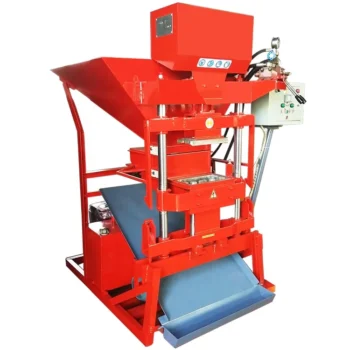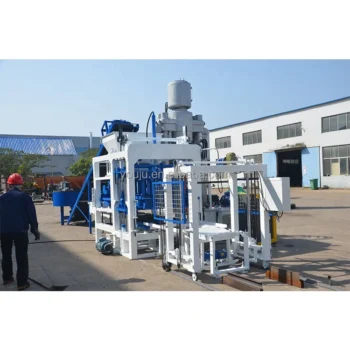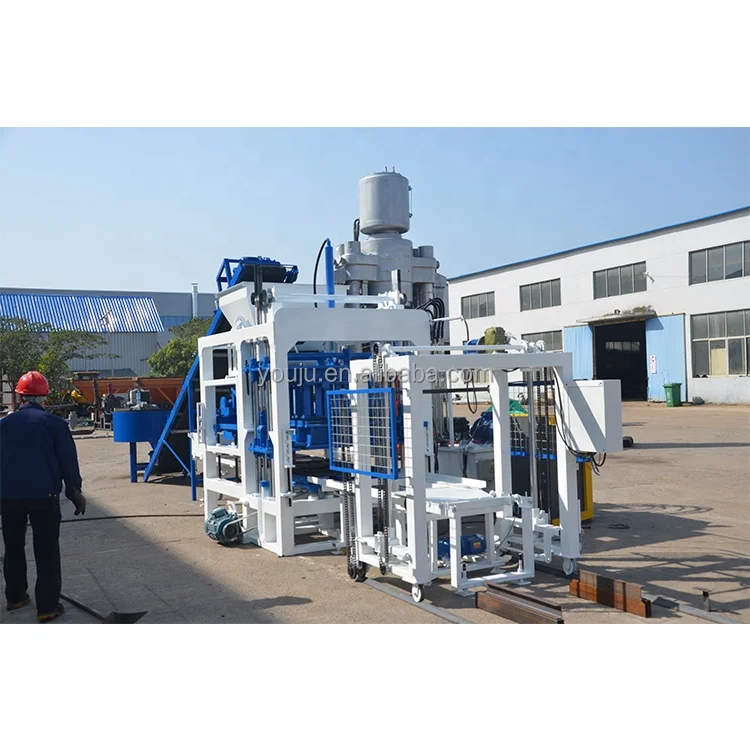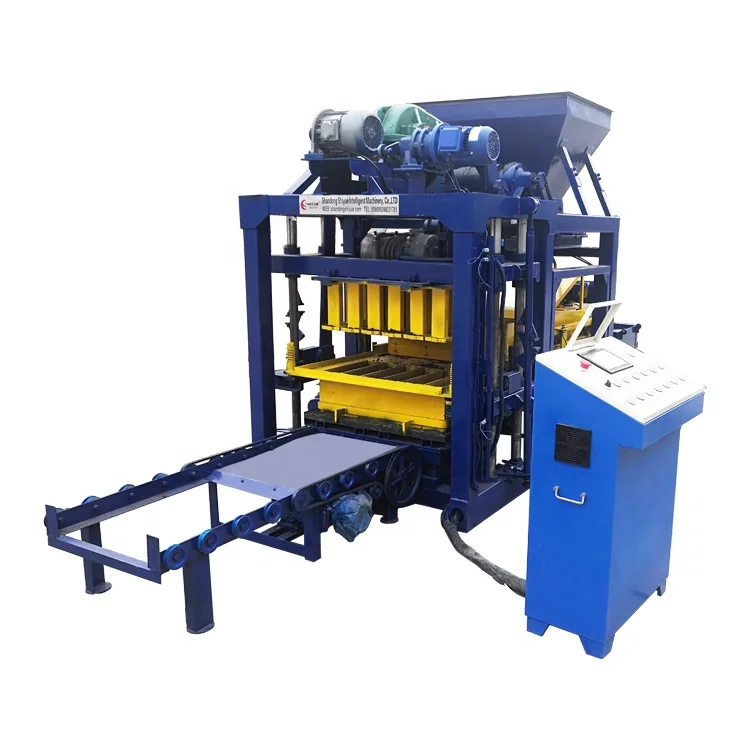
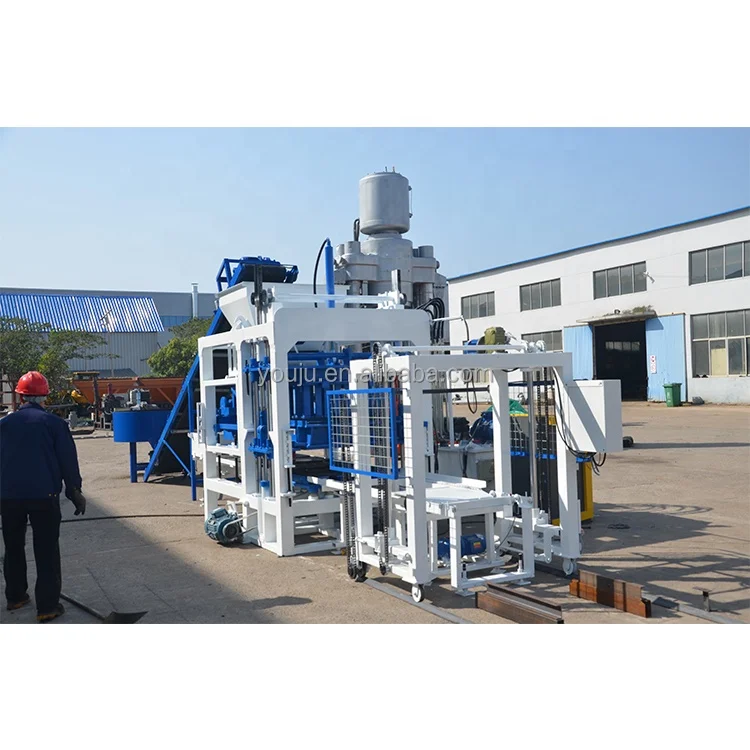


Description
Dispatch-Ready Configuration — the QT4-18 is held as a stocked or short-lead-time build with voltage, pallet size, and mould format confirmed in writing before the container is booked.
Technical Specifications
| Parameter | Value |
|---|---|
| Model | QT4-18 |
| Product Type | Automatic Concrete Block Making Machine |
| Overall Dimensions (L×W×H) | 2500 × 1750 × 2200 mm |
| Rated Pressure | 16 MPa |
| Vibration Form | Platform Vibration |
| Pallet Size | 950 × 550 mm |
| Molding Cycle | 18–25 s (basis not stated in source — confirm block format / material / thickness) |
| Overall Power | 27.5 kW |
| Control System | PLC with frequency converter |
| Electrical Components | Schneider |
| Mold Lifting Mechanism | Double-sided sync gears |
| Material Feeding System | Distribution belt hopper |
| Assembly State | Mixer, pallet conveyor, molding machine, block conveyor, hydraulic station, electronic console |
| Automation Level | Automatic (single-operator PLC control) |
| Support Equipment Options | JQ500 concrete mixer, 8 m or 6 m belt conveyor, stacker, block gripper, trolley, concrete batching plant |
| Mould Configuration | One free hollow mould included; extra moulds customizable (source value — verify against manufacturer catalog) |
| Output Capacity | (basis not stated in source — confirm block format / material / thickness) |
| Standards | CE (mentioned in company documentation scope; source value — verify for this specific model) |
Application Suitability
| Application | Material or Output |
|---|---|
| Hollow block production for residential and commercial walls | Crushed stone, sand, cement, fly ash blends |
| Solid block production for load-bearing structures | Dense aggregate mixes with cement binder |
| Paving block and interlocking brick for walkways and yards | Fine aggregate with pigment additives |
| On-site block production for housing and infrastructure projects | Locally sourced sand, gravel, and cement |
What "Fast Delivery" Actually Means on a Block Machine Order
A machine on the water is useless if the site cannot power it when it arrives.
Sellers often quote a short lead time without confirming whether the electrical configuration matches the destination grid. I once watched a block machine sit idle for three weeks at a Saudi site because the control cabinet was wired for a frequency the local transformer could not supply — the contractor had to source a step-down unit while the crew stood around. With the QT4-18 automatic block machine in stock or scheduled for short-lead dispatch, voltage, frequency, and PLC display language are locked down in writing before the machine leaves the factory floor [NEED_CITE: voltage and frequency standards by export market].
Dispatch Timeline and Container Loading
Buyers working against a project deadline need to know the gap between payment and machine arrival. The QT4-18 is configured from stocked sub-assemblies — hydraulic station, PLC console, vibration platform, and pallet conveyor are pre-staged so that final assembly and factory testing compress into a short window. Before the container is booked, a loading plan is shared showing how the press, mixer, conveyor sections, and mould crate are dismantled and braced inside the container, giving the buyer a realistic arrival estimate rather than a vague shipment promise.
Support Equipment Included Versus Optional
A quotation that lists only the press leaves the buyer stacking wet blocks by hand on the first day of production. This page distinguishes what ships with the QT4-18 and what remains optional. The standard package includes the mixer, pallet conveyor, molding machine, block conveyor, hydraulic station, and electronic console. Items such as the stacker, block gripper, trolley, and concrete batching plant are available as add-ons, so the buyer can see the full line cost before committing rather than discovering gaps after the machine arrives [NEED_CITE: typical block production line equipment scope].
Matching Specs to the Production Floor
Three numbers on this machine decide whether it fits a given site. The 950 × 550 mm pallet size must align with the curing racks and forklift tines the buyer already owns — a mismatch means new racks or damaged pallets on day one. The 16 MPa rated hydraulic pressure, combined with platform vibration, determines the density and compressive strength of the finished block; lower pressure yields a softer block that may fail local building code drop tests. The 27.5 kW overall power draw dictates the transformer capacity and cable gauge needed at the site, a detail often overlooked until the machine trips the main breaker during commissioning.
The Cost of Skipping Electrical Confirmation
When voltage and frequency are assumed rather than verified, the consequences cascade. A motor wound for the wrong frequency runs at the incorrect speed, altering vibration force and producing blocks with inconsistent density. PLC components rated for one voltage range can burn out within hours on another, leaving the operator with a dead console and no local replacement. Confirming these parameters in writing before the QT4-18 ships eliminates the most common commissioning delay on export block machine projects [NEED_CITE: CE machinery directive requirements for industrial equipment].
Why Buyers Source This Machine Here
Block machinery is the single focus of this supplier, meaning the QT4-18 press, moulds, pallets, and handling equipment are specified as a matched system rather than pulled from separate vendors. The configuration is set against the buyer’s actual mix design and local aggregate, not a catalog default. Mould design covers the formats the buyer’s market actually sells, with custom drawings available when standard options fall short. Automation level is selectable — a buyer can start with the standard single-operator PLC setup and add a stacker or cubing system later as volume grows. Installation and commissioning support includes operator training so the crew can run the line independently from the first shift.
Documentation & Verification
- Factory test record on the buyer’s specified block format before dispatch
- Voltage, frequency, and PLC language confirmation signed before production
- Line layout and capacity calculation stating the block format assumed
- Packing photographs and customs documentation for smooth import clearance
- Hydraulic and electrical schematic matching the shipped configuration
- Operation and maintenance manual with wear parts and mould list
Installation, Commissioning & Support
- Foundation pad sized to the 2500 × 1750 mm footprint with anchor bolt template provided
- Dedicated 27.5 kW circuit with voltage and frequency verified at the panel before first start
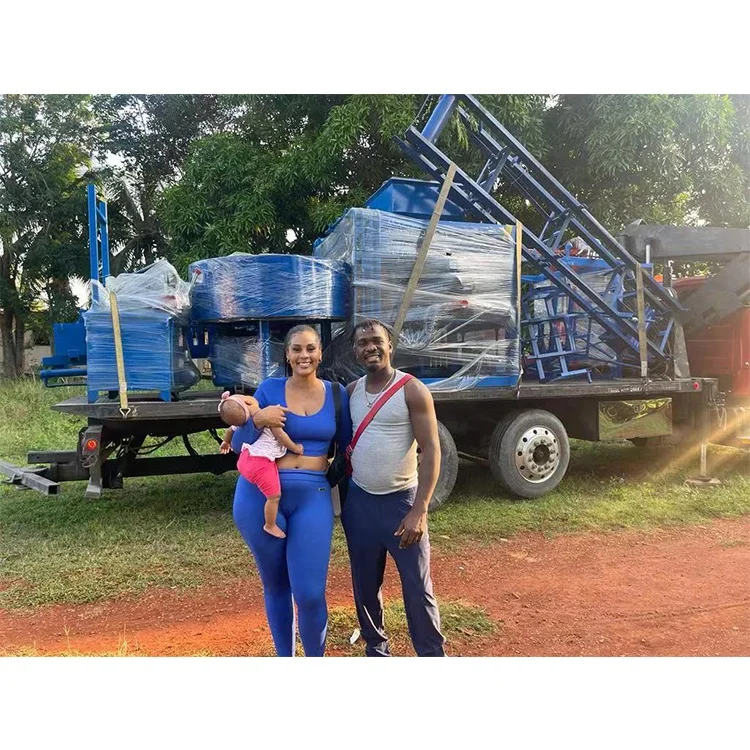
- Machine ships dismantled into press, mixer, and conveyor sections for container loading and on-site reassembly
- First-day commissioning covers PLC parameter entry, hydraulic pressure set to 16 MPa, and cycle timing on the buyer’s mix
- Operator training on single-operator PLC control, mould change procedure, and daily lubrication points
- Schneider electrical components with spare relay and sensor list included in the manual
What to Share When Requesting a Quote
To get an accurate dispatch timeline and arrival estimate, provide the target block format and dimensions, the daily volume the project requires, and the local voltage and frequency at the site. If a curing area and forklift are already in place, share the pallet dimensions and rack spacing so the 950 × 550 mm pallet can be confirmed or adjusted. Note any preferences on control language and whether support equipment such as the stacker or batching plant should be included in the quotation.
Frequently Asked Questions
Q: What is the dispatch lead time for the QT4-18, and is it currently stocked or built to order?
A: The QT4-18 is offered as a stocked or fast-lead-time configuration, with sub-assemblies pre-staged for quick final assembly. The exact dispatch date depends on the support equipment selected and the voltage confirmation step. A realistic arrival estimate is quoted before the order is finalized so the project timeline holds.
Q: Which support equipment is included versus optional in the quotation?
A: The standard package includes the mixer, pallet conveyor, molding machine, block conveyor, hydraulic station, and electronic console. The JQ500 mixer, belt conveyor length, stacker, block gripper, trolley, and batching plant are optional add-ons. The quotation clearly separates included and optional items so the buyer sees the complete line cost upfront.
Q: How is the machine dismantled and loaded into the container?
A: The QT4-18 is broken down into the press frame, hydraulic station, PLC console, mixer, conveyor sections, and mould crate. Each component is braced and secured inside the container with a loading plan shared before dispatch. This approach protects the machine during transit and allows straightforward reassembly on site with standard tools.
Q: Will voltage, frequency, and PLC language be confirmed before shipment?
A: Yes. These three parameters are confirmed in writing and matched to the buyer’s site electrical supply before the control cabinet is wired. The PLC display language is set to the operator’s preference. This step prevents the most common cause of commissioning delays on export block machine orders.
Q: What block format is the stated molding cycle based on?
A: The 18–25 second molding cycle is listed without a stated block format or material basis. Actual cycle time varies with block dimensions, wall thickness, and mix design. Buyers should request a capacity calculation that names the specific block format assumed so daily output expectations align with reality.