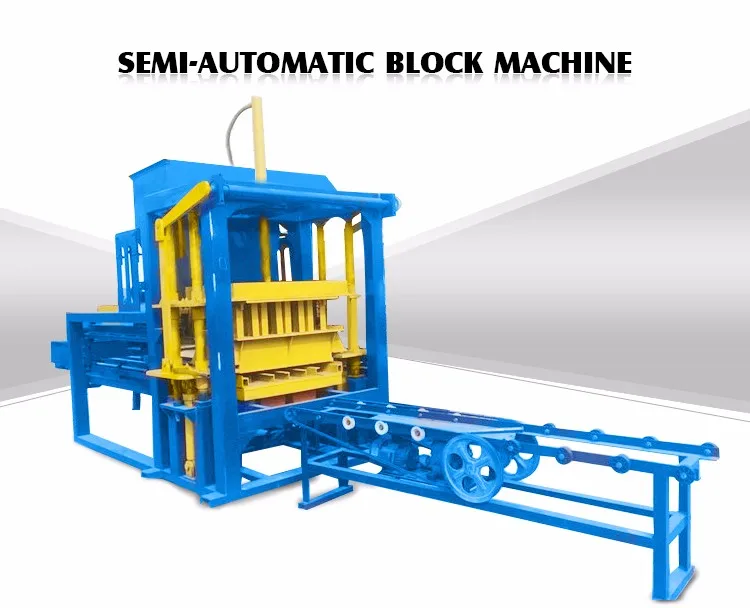
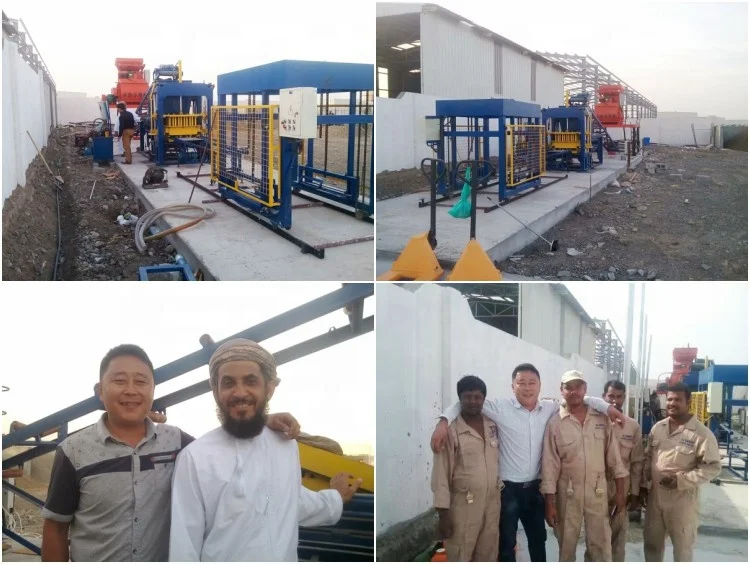
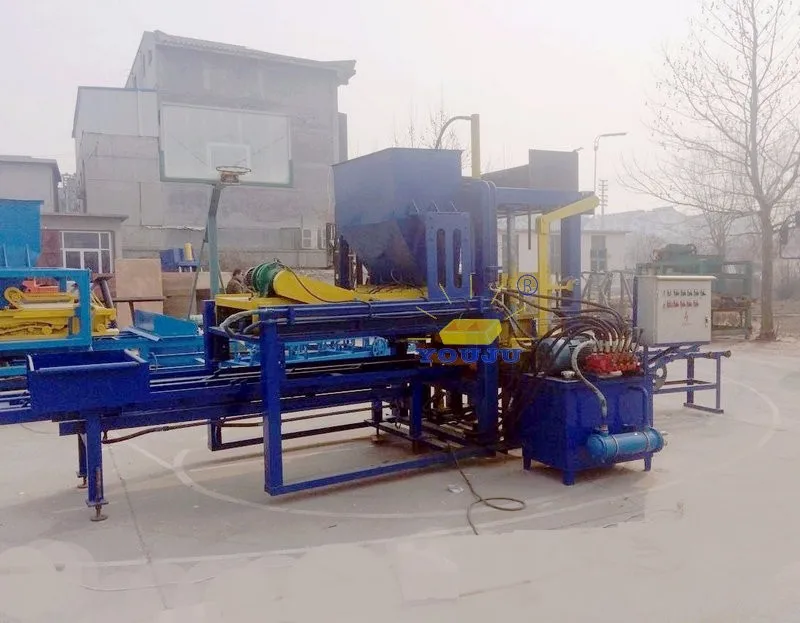
Description
Stocked Configuration — QT4-20 units are held ready for dispatch with standard moulds and pallets matched to the block format you confirm at inquiry, so container loading schedules are quoted in days rather than months.
Technical Specifications
| Parameter | Value |
|---|---|
| Model | QT4-20 |
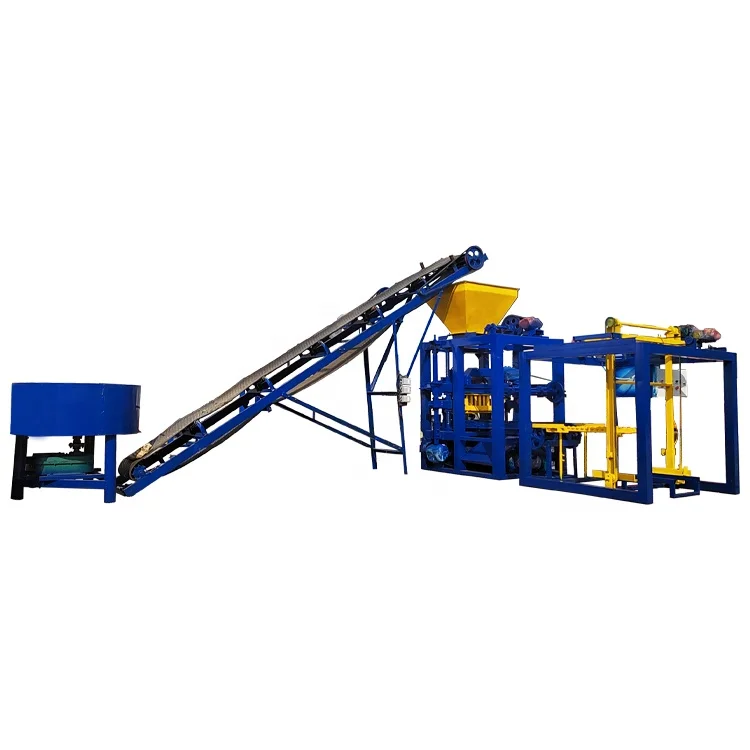
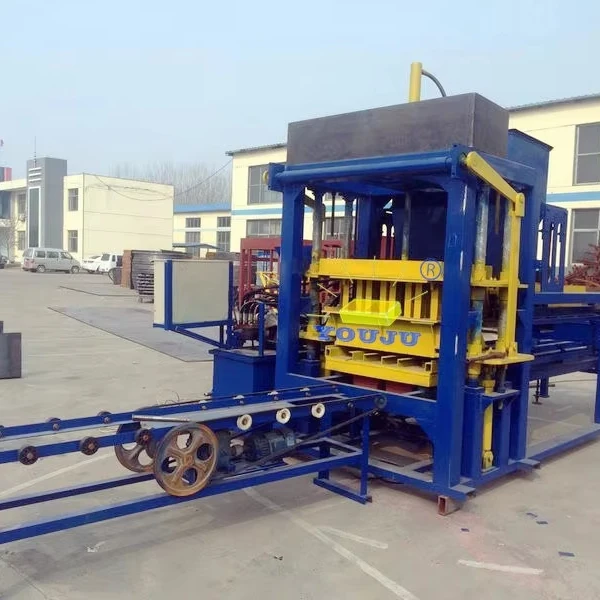
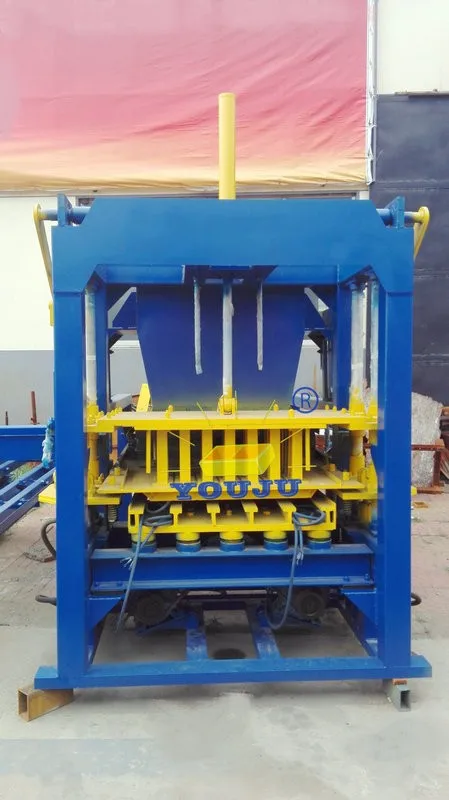
| Product Type | Stationary Hydraulic Block Making Machine |
| Overall Dimensions (L×W×H) | 7100×1600×2610 mm |
| Rated Hydraulic Pressure | 16–21 MPa |
| Vibration Form | Platform Vibration |
| Vibration Frequency | 4600 r/min |
| Vibration Force | 40 kN |
| Pallet Size | 1020×570 mm |
| Molding Area | 400×800 mm |
| Cycle Time | 15–25 s (basis not stated in source — confirm block format / material / thickness) |
| Overall Power | 27.5 kW |
| Total Mass | 5 T |
| Demolding Method | Hydraulic |
| Recommended Factory Area | 500 m² |
| Control System | PLC (brand and language to confirm before order) |
| Voltage & Frequency | Configurable per destination market — confirm before order |
| Raw Materials | Crushed stone, sand, cement, fly ash, gravel, slag, dust |
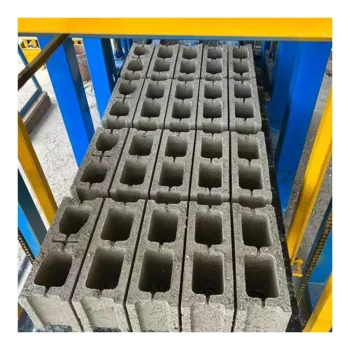
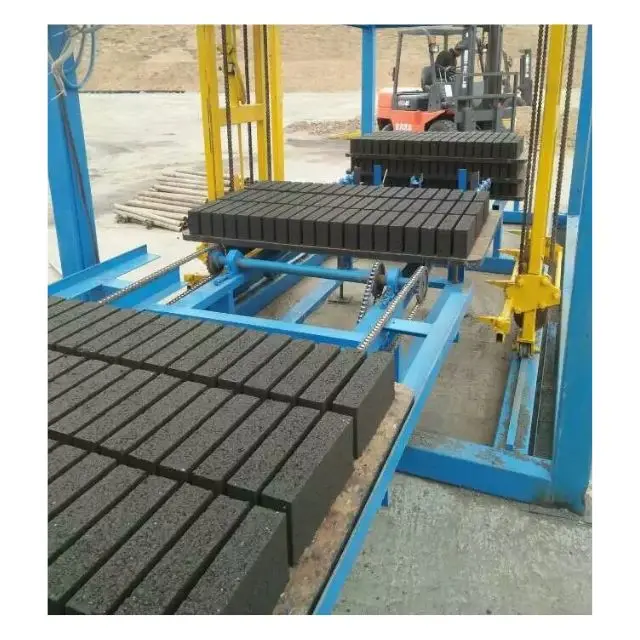
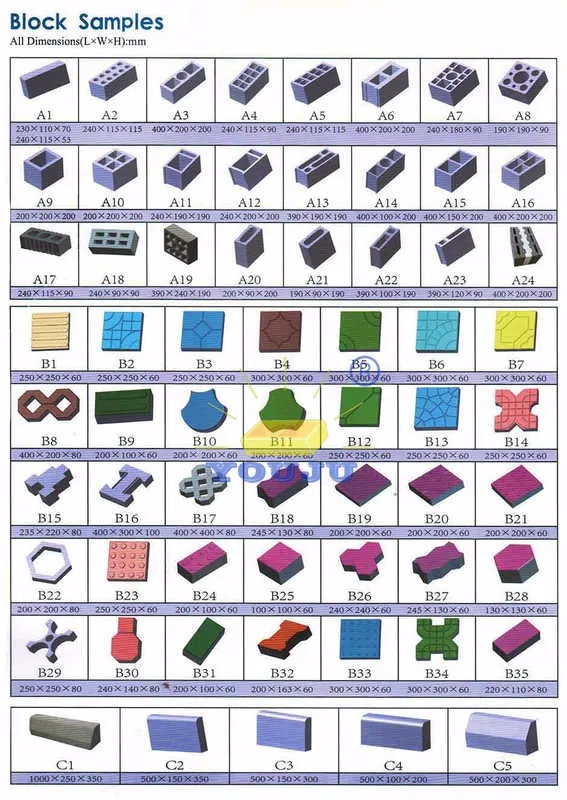
| Applied Products | Hollow blocks, solid blocks, porous bricks, paving bricks |
| Output — Hollow Brick 400×200×200 mm | 4 pcs/mold, 15–20 s cycle, 7,200–9,600 pcs/day |
| Output — Porous Brick 240×115×90 mm | 14 pcs/mold, 15–20 s cycle, 20,200–26,800 pcs/day |
| Output — Standard Brick 240×115×53 mm | 28 pcs/mold, 15–17 s cycle, 47,400–53,700 pcs/day |
| Warranty | 1 year |
Application Suitability
| Application | Material or Output |
|---|---|
| Hollow block production for load-bearing and partition walls | Crushed stone, sand, cement, fly ash blends |
| Porous brick manufacturing for thermal insulation | Lightweight aggregate and cement mixes |
| Solid paving brick runs for driveways and walkways | Sand, gravel, slag, and cement |
| Standard brick output for masonry and cladding | Local aggregate with cement binder |
| On-site block production for housing developments | Site-available materials blended with cement |
Why Voltage Confirmation Must Come Before Container Loading
Every QT4-20 block machine in stock leaves our yard only after the buyer’s voltage and frequency are verified against the motor nameplate and PLC supply.
I have watched a fully automatic hollow block line sit idle for three weeks on a Southeast Asian job site because the standard 50 Hz motor was shipped to a 60 Hz grid. The crew was on payroll, the mixer was loaded, and the only thing missing was a transformer nobody thought to order. That kind of delay is not a shipping problem — it is a specification problem that should have been caught before the container door closed. When a buyer requests a QT4-20 block machine in stock for fast delivery, the first question I ask is not about quantity or mould format but about the three-phase supply at the destination panel [NEED_CITE: voltage and frequency standards by export market].
Dispatch Readiness and What It Actually Covers
Having a QT4-20 block machine in stock means the press frame, hydraulic station, vibration platform, and PLC cabinet are assembled and factory-tested before your purchase order arrives. Standard moulds for hollow block, porous brick, and standard brick formats are racked beside the machine, and pallets cut to 1020×570 mm are bundled in the same holding area. When you confirm the order, we are not starting production — we are pulling a tested unit from the yard and scheduling container loading.
How Container Loading Affects Your Arrival Date
The QT4-20 ships dismantled into press frame, hydraulic power pack, pallet return system, and control cabinet. Each component is bolted — not welded — to the base, so dismantling for loading and reassembly on your foundation follow the same sequence. A 40-foot high-cube container holds the complete machine plus a set of standard moulds and a pallet stack. Loading plans are photographed before the doors close so your crew can match the unpacking sequence to the installation manual [NEED_CITE: container loading practices for heavy industrial machinery].
Reading the Specs That Matter on the Shop Floor
The 40 kN vibration force working against 16–21 MPa hydraulic pressure is what determines block density and green strength at demolding. If your local aggregate is coarse crushed stone rather than fine sand, the vibration frequency of 4600 r/min needs to consolidate a stiffer mix, and the hydraulic head must hold pressure long enough for the cement paste to lock around larger particles. The 1020×570 mm pallet size is not arbitrary — it is sized so that a standard forklift can move two loaded pallets per trip from the press to the curing area, keeping the cycle time from stretching while the operator waits for empty pallets to return. At 27.5 kW total power, the machine draws within the capacity of a dedicated 40 A three-phase breaker, which most small to mid-size block plants already have on their distribution board.
What Happens When Dispatch Details Are Skipped
When a buyer focuses only on the machine price and skips the voltage, frequency, and PLC language confirmation, the machine arrives looking correct but cannot run. A 50 Hz motor on a 60 Hz supply overspeeds and overheats within the first shift. A PLC display in a language the operator cannot read turns a simple fault code into a full-day troubleshooting session. These are not warranty claims — they are specification gaps that could have been closed with a single pre-shipment checklist [NEED_CITE: CE machinery directive requirements for industrial equipment].
Why Sourcing This Machine Through Our Stock Channel Works
Block machinery is our single focus, which means the QT4-20 is not assembled from a press vendor, a hydraulic vendor, and a pallet vendor who have never tested together. Machine, mould, pallet, and handling are specified as one matched system. Configuration is checked against your local aggregate and target block format, not pulled from a catalogue default. Voltage, frequency, and control language are confirmed in writing before the unit leaves our yard. Installation support includes operator training on your actual mix, not a generic video. And because we stock the moulds and wear parts that match the QT4-20, your first replacement order ships from the same warehouse — not from a different supplier on a different timeline.
Documentation & Verification
- Factory test record run on your confirmed block format before dispatch
- Voltage, frequency, and PLC language written confirmation sheet
- Mould drawing and format list for every mould included in the shipment
- Pallet specification matched to your curing area and forklift capacity
- Packing photographs taken before container doors are sealed
- Operation and maintenance manual in your operator’s language
Installation, Commissioning & Support
- Foundation must level the 7100×1600 mm footprint within tolerance before the press frame is bolted down
- Dedicated three-phase circuit rated for 27.5 kW with the confirmed voltage and frequency at the main breaker
- Press frame, hydraulic pack, and PLC cabinet arrive as separate bolted assemblies for straightforward reassembly
- First-run cycle time and pressure settings adjusted on your local aggregate mix during commissioning
- Operator training covers mould change sequence, pallet return, and PLC fault reading in the confirmed language
- Initial wear parts and hydraulic seal kit packed in the same container as the machine
What We Need to Schedule Your Shipment
Send us the block format you intend to run most often, the three-phase voltage and frequency at your site, and your preferred PLC display language. If you already have a curing area and forklift, share the pallet dimensions you are using so we can confirm whether the standard 1020×570 mm pallet fits your workflow or whether an adjustment is needed before the machine is loaded.
Frequently Asked Questions
Q: What block format and shift length are assumed in the 7,200–9,600 hollow block daily output?
A: That figure is based on the 400×200×200 mm hollow block at four pieces per mould, with a 15–20 second cycle, running standard shifts. If your target block is a different size or your shift pattern differs, we recalculate the capacity per format and send a written output table with your quotation so there is no gap between expectation and actual daily production.
Q: Can the motor and PLC be configured for 60 Hz markets before the machine ships?
A: Yes. Voltage and frequency are confirmed in writing before the QT4-20 leaves our yard. We match the motor nameplate to your grid supply and set the PLC power supply accordingly. The display language is also locked in at this stage so your operator can read fault codes and cycle parameters from the first day of production.
Q: Which mould formats are in stock and how long does a custom mould take?
A: Standard hollow block, porous brick, and standard brick moulds are stocked alongside the machine and can ship in the same container. Custom moulds designed to your drawing or market-specific block format require a separate lead time that we quote at inquiry, and we confirm the dispatch date before you commit.
Q: What site conditions must be ready before the QT4-20 arrives?
A: You need a level concrete foundation sized to the 7100×1600 mm footprint, a dedicated three-phase circuit for the 27.5 kW total load at the confirmed voltage, and a curing area that matches the 1020×570 mm pallet. We share the foundation drawing and electrical schematic before shipment so your contractor can prepare the site in parallel with the shipping transit.
Q: What spare parts are included with the first shipment?
A: A wear parts list and hydraulic seal kit ship in the same container as the machine. The list is based on the components that see the most wear during the first months of operation. Additional moulds and spare pallets can be added to the container while space allows, and we quote them alongside the machine so everything arrives together.